
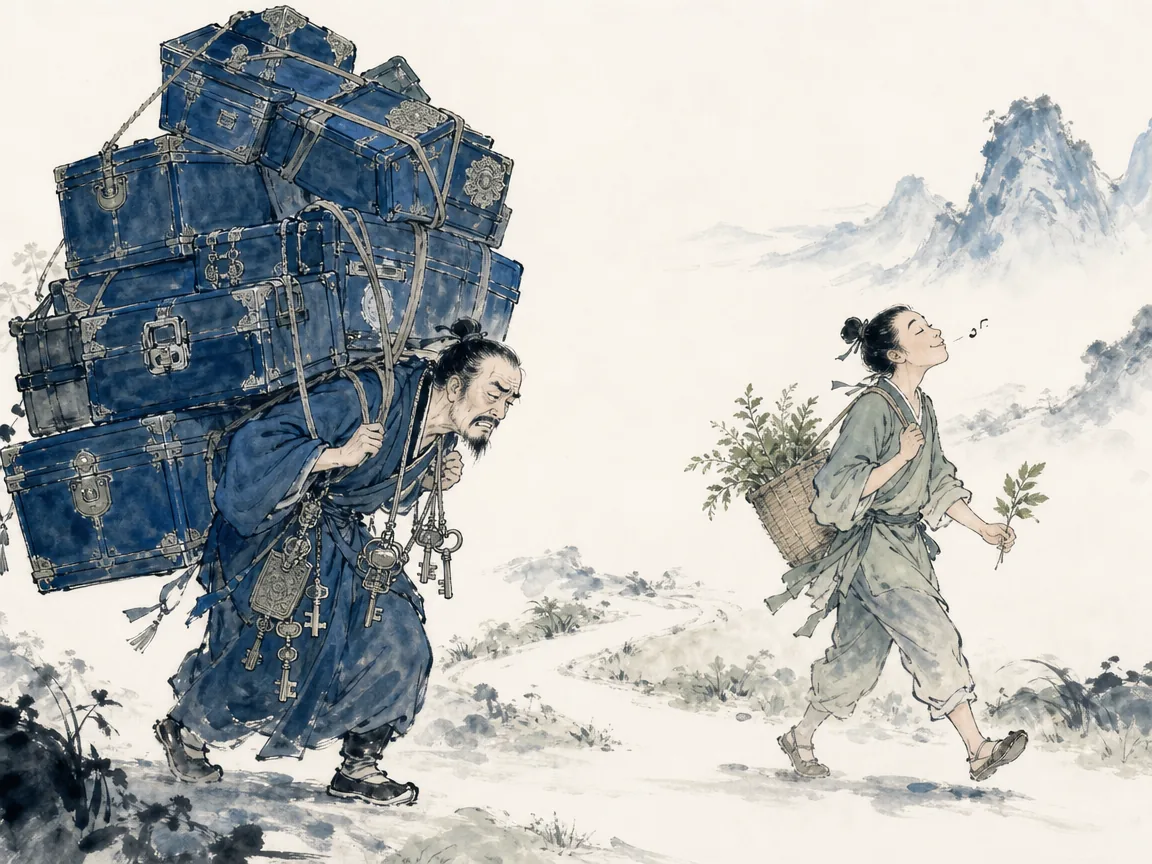
In a world that measures success by accumulation—more wealth, more titles, more followers, more achievements—it is easy to assume that having everything means being at peace. Yet anyone who has climbed high enough to look down knows a quieter truth: the higher you rise, the heavier the burden of holding everything together. Sleep becomes scarce. Contentment feels like a luxury you cannot afford. And the very things that once seemed like prizes begin to feel like chains.
Ancient Chinese philosophy offers a striking lens on this paradox. More than two thousand years ago, the philosopher Zhuangzi explored exactly this mystery through a conversation between a wandering hermit and a powerful ruler. The story flips our modern assumptions on their head: the one who appears to have nothing may be far freer than the one who owns everything. What emerges is not a rejection of ambition, but a clearer way of seeing what true exhaustion looks like—and how it can be eased—a foundational perspective explored in Zhuangzi Chapter 24.
Zhuangzi Chapter 24: The Misunderstood Hardship of Power
The chapter known as “Xu Wugui” from the Zhuangzi opens with a scene that reads almost like a modern boardroom encounter dressed in ancient robes. Xu Wugui, a hermit living in the mountains, is introduced to Marquis Wu of Wei by a court figure named Nü Shang [1]. The marquis, accustomed to dispensing favors and measuring worth by status, greets his guest with what he takes to be kindness: “Sir, you must have suffered. Living so hard among the forests and mountains—you have come to see me because your condition has worsened.”
It sounds generous. It is not. Beneath the words lies an unexamined assumption: that the hermit’s life is inherently harder than the ruler’s, and that the ruler’s palace is a place of comfort by comparison. Xu Wugui’s reply dismantles this gently but firmly. He tells the marquis that he is the one who needs consolation, not the other way around. If the ruler indulges his desires and inflames his preferences, his true nature will grow sick. If he suppresses his desires and restrains his preferences, his senses will suffer. Either way, as long as his spirit is pulled by external things—wealth, power, reputation—he cannot find rest [1].
This is the core of Zhuangzi’s diagnosis. Bodily labor can be rested. A day of physical work ends when the sun sets. But the exhaustion of a mind chained to desire, status, and the fear of loss has no clear endpoint. It follows you home. It keeps you awake. It turns every achievement into a new thing to protect rather than a source of genuine relief.
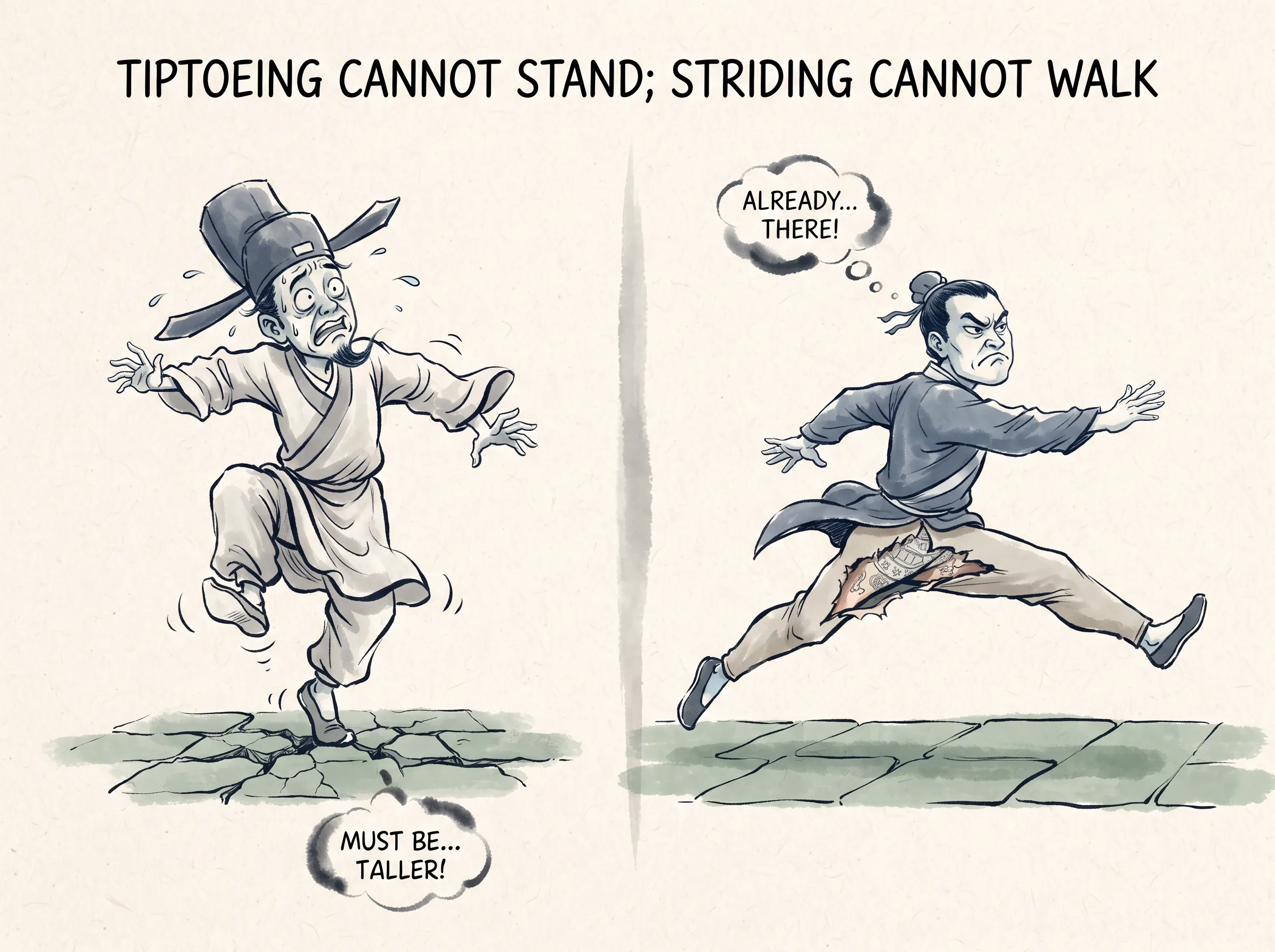
Modern readers who have spent years climbing the ladder often recognize this pattern. The promotion brings the corner office, but also the sleepless nights. The bank account grows, but so does the anxiety about maintaining it. The public image is polished, but the effort to keep it polished never stops. Zhuangzi saw this long before the modern hustle economy existed. His point is not that ambition is evil, but that whatever drives a person—whether the pursuit of gain or the defense of what they already have—keeps the mind in a state of permanent tension [1].
Continue with the deeper interpretation and practical application.
ChiDestiny members get access to the full analysis, modern applications, and the growing Chinese Wisdom Library.
FAQ
Q: Does Zhuangzi’s philosophy mean I should give up my ambitions? No. Zhuangzi is not advocating for renunciation or self-sabotage. His concern is with what happens inside you as you pursue your goals. If ambition becomes the sole source of your identity and peace, then you are dependent on outcomes you cannot fully control. The suggestion is to pursue what you do with awareness—so that your work serves your life rather than consuming it.
Q: How can I tell if I’m exhausted from desire rather than from actual work? Bodily exhaustion tends to ease with rest. Spiritual or mental exhaustion—driven by worry about status, fear of loss, constant comparison, or the pressure to maintain an image—often persists even when you are physically rested. If you find yourself relaxed for only a moment before your mind starts generating new anxieties, the fatigue may be rooted in desire rather than labor.
Q: What can I do with the idea that true companions challenge us? This does not mean surrounding yourself with conflict or seeking out people who are difficult. It means valuing those who engage with your ideas honestly, who notice your blind spots, and who care enough to push back. It also means recognizing that agreement alone is not the same as connection. In friendships, teams, and creative partnerships, the deepest growth often comes from those who take you seriously enough to not let you off easy.
Q: Is the “Xu Wugui” chapter actually from the Zhuangzi? Yes. The chapter is part of the Zhuangzi and the stories of Xu Wugui meeting Marquis Wu of Wei and Zhuangzi’s reflection after Hui Shi’s death are recorded in the extant text [1].
Moving Forward
The paradox at the heart of this question is simple: having everything does not guarantee freedom, and freedom is not the same as having nothing. Zhuangzi’s contribution is to redirect our attention from the external scoreboard to the internal condition. Are you being driven—or are you driving? Are your achievements serving your life, or has your life become the cost of your achievements?
A practical starting point is to examine one area of your life where you feel the gap between outward success and inner exhaustion. Ask yourself not “what more do I need to acquire?” but “what is holding my attention hostage?” Sometimes the answer is not a grand decision but a small permission: to let go of one source of comparison, to rest without guilt, to value stillness as much as achievement.
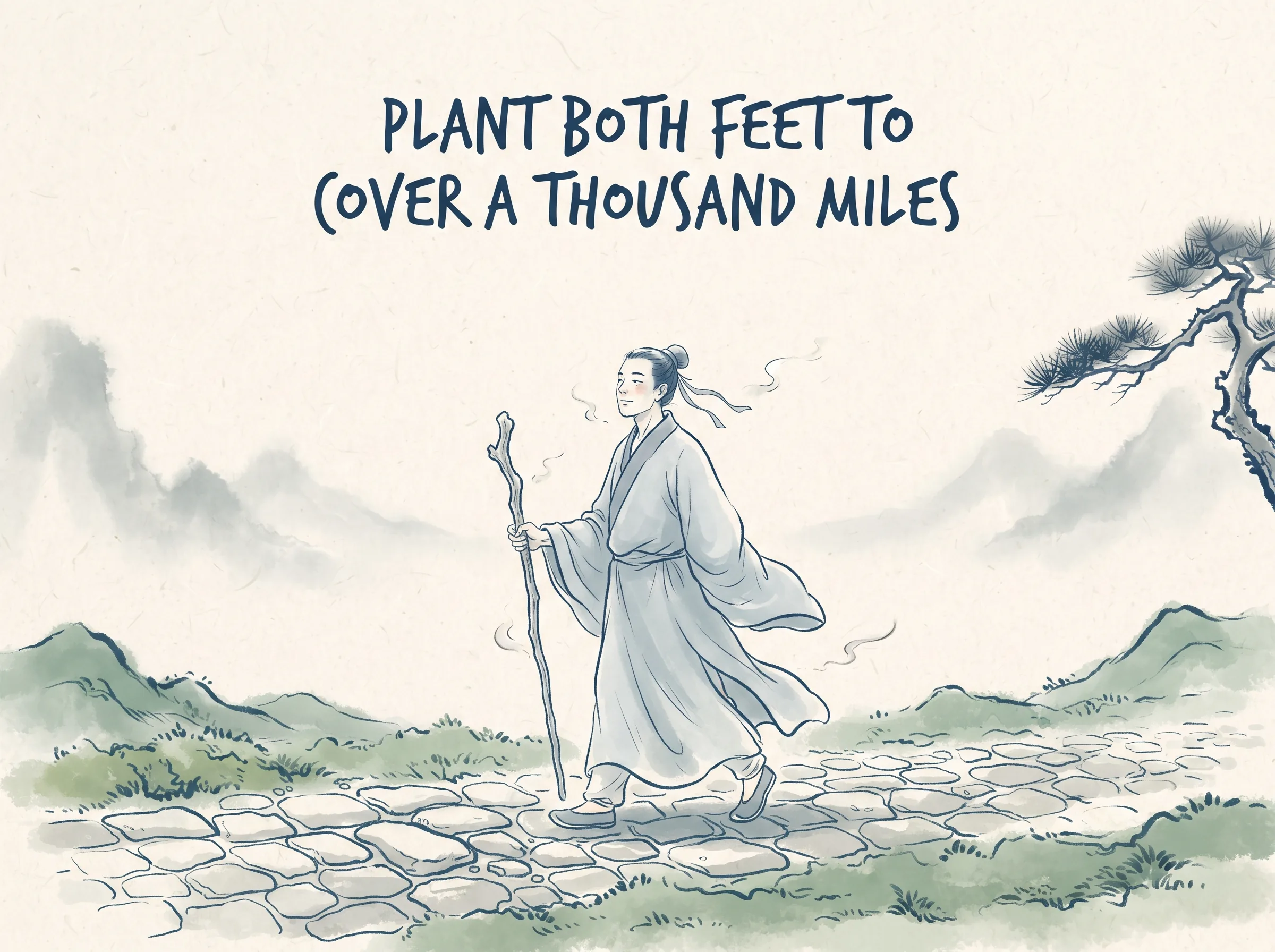
If you want to explore this further, the “Xu Wugui” chapter of the Zhuangzi offers many more layers beyond what this article can cover. It is a chapter about power, language, friendship, perception, and the quiet art of seeing through the surface of things. Reading it with an open mind may be the simplest form of self-cultivation available: the practice of looking more closely at what you already have, and discovering whether it is truly yours, reflecting the enduring wisdom of Zhuangzi Chapter 24.
Discover the historical and philosophical roots in the classical foundation in Ze-yang: War on the Horns of a Snail and the Petty Feuds of Empires.
For a deeper comparative examination of these ideas, explore our related study on Why Knowing More Doesn’t Make Us Wiser: Zhuangzi’s Warning About Fragmented Truth.
Sources & Further Reading
[1] Chapter 24: Xu Wugui — Zhuangzi — Zhuangzi | Forage — Primary source for the Xu Wugui and Marquis Wu of Wei narrative, the dog-and-horse dialogue, and the story of Zhuangzi at Hui Shi’s tomb.
[2] School of Names > Life of Hui Shi (Stanford Encyclopedia of Philosophy) — Scholarly context on Hui Shi and the literary nature of the Zhuangzi–Hui Shi relationship as presented in the text.
Further Reading
- Zhuangzi: Basic Writings, translated by Burton Watson (Columbia University Press) — Accessible translation of key Zhuangzi chapters.
- The Complete Works of Zhuangzi, translated by Ivan Chen (Columbia University Press) — Comprehensive collection with commentary.







[…] For a deeper comparative examination of these ideas, explore our related study on Why the Most Exhausted People Often Have Everything. […]
[…] Deepen your understanding of these principles in our reflection on Why the Most Exhausted People Often Have Everything. […]