
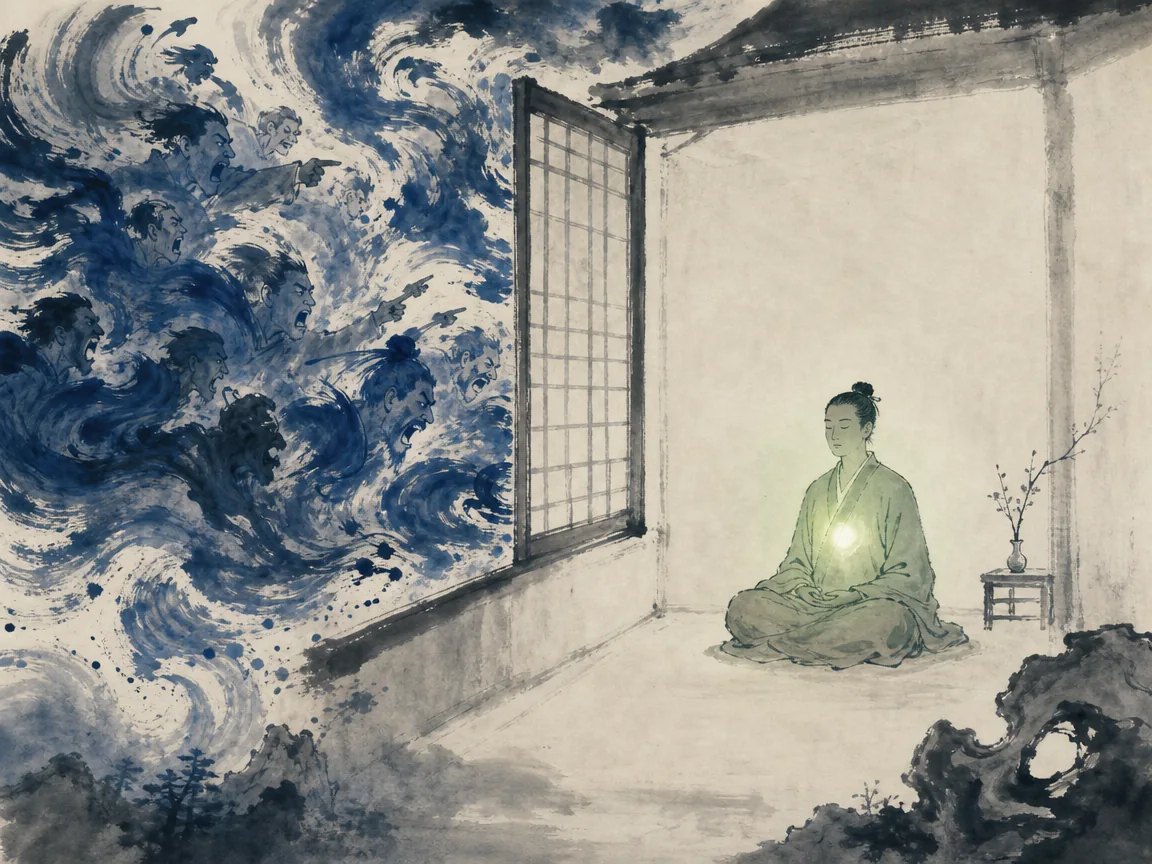
You have read the books. The thick one on Laozi, the collection of Analects passages, perhaps some modern retelling of Zhuangzi, some practice guide on mindfulness borrowed from Eastern thought, and a stack of other wisdom literature that promised something your anxiety had not found elsewhere. And yet — when you set the last one down, the feeling does not lift. If anything, the knowledge itself becomes another weight, another standard by which you measure yourself and find yourself lacking.
This is not a failure of your reading or your effort. It is a different problem entirely — one that the Zhuangzi already understood. In the chapter known as Gengsang Chu (庚桑楚), traditionally numbered as chapter twenty-three in the received thirty-three-chapter version of the text, the question is asked plainly: the Dao is everywhere, yet people remain blind to it [1]. The answer is not that they lack enough information. It is that their inner space is unsettled. You cannot see clearly when the room itself is shaking—a foundational perspective explored in Zhuangzi Chapter 23 Meaning.
The gap between knowing and being at peace is not a knowledge gap. It is a stability gap. Zhuangzi does not offer a new theory to add to your shelf. He offers a diagnosis: the mind must first be gathered before it can be clear.
Zhuangzi Chapter 23 Meaning: An Inner Cosmos Before Any External Light
The central image of the Gengsang Chu is one of the most compact and striking passages in the entire Zhuangzi: "When the inner space is deeply settled, heavenly light shines from within" (yǔ tài dìng zhě, fā hū tiān guāng, 宇泰定者,发乎天光) [2]. This sentence contains the whole argument of the chapter.
The character yǔ (宇) here is not the outer universe but the inner space of the person — what we might call the internal cosmos. The Chinese philosophical tradition sometimes speaks of the body-mind as a microcosm; the Zhuangzi is one of its earliest and most vivid expressions of this intuition. When this inner space is in disorder — crowded with ambitions, fears, comparisons, evaluations, and ceaseless planning — no amount of external wisdom can penetrate it. The teaching itself becomes noise, absorbed and catalogued but never lived.
The passage continues: "When heavenly light shines forth, people see the person, and things see themselves" [2]. True clarity, in this frame, is not something you manufacture. It is what emerges when the clutter subsides and the inner mirror becomes still enough to reflect.
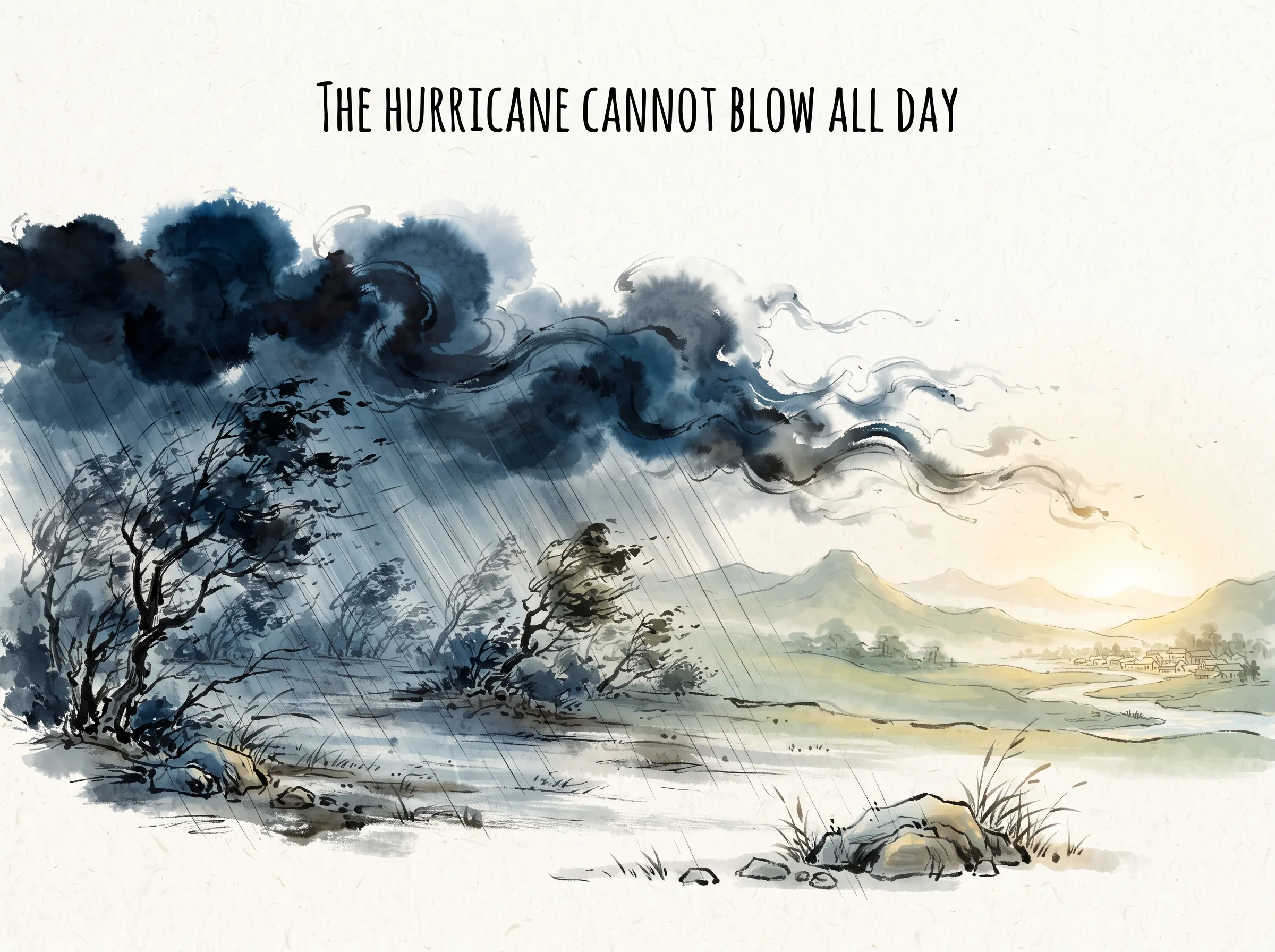
Modern readers often reach for artificial versions of this light — forced positivity, productivity optimization, aestheticized mindfulness, spiritual performance. These are lights switched on by effort, sustained by maintenance, and liable to flicker the moment conditions change. Heavenly light (tiānguāng, 天光) is different. It is not produced; it is permitted. It appears when the inner conditions for vision are met.
This matters because much of what passes for self-improvement today is actually intensification — more strategies, more awareness exercises, more identity work, more optimization. The Zhuangzi points in the opposite direction. The problem is not that you need more input; it is that your attention is dispersed, and until it gathers, additional input only adds to the noise.
Continue with the deeper interpretation and practical application.
ChiDestiny members get access to the full analysis, modern applications, and the growing Chinese Wisdom Library.
Frequently Asked Questions
Is the Gengsang Chu chapter genuinely part of the Zhuangzi? Yes. In the received thirty-three-chapter version of the Zhuangzi, the Gengsang Chu is conventionally numbered as chapter twenty-three and is classified among the "Miscellaneous Chapters" (杂篇) [1]. Scholars note that the text as a whole was produced by multiple authors across different periods, and definitive attribution of any single passage to the historical figure Zhuangzi is considered difficult [2].
What does "When inner space is settled, heavenly light shines forth" (yǔ tài dìng zhě, fā hū tiān guāng, 宇泰定者,发乎天光) actually mean? The literal sense of the phrase is close to "When the inner space is thoroughly settled, heavenly light shines forth." The term yǔ (宇) refers here to the inner space of the person rather than the external cosmos, and tiānguāng (天光) is commonly understood as a natural luminosity or clarity that arises spontaneously once the mind is sufficiently still [2]. The passage does not define these terms explicitly, so interpretations vary across commentarial traditions.
Does Zhuangzi want people to become like infants? No. The infant imagery in the Gengsang Chu is not an argument for regression or ignorance. It describes a state of undivided presence — harmony, preserved vitality, and attention that does not stray outward — that adults can approximate after having lived through complexity [2]. The ideal is not naivete but wholeness retained through experience rather than lost to it.
Can this chapter be read without adopting any religious or spiritual practice? Yes. The Gengsang Chu offers observations about attention, identity, and the dynamics of inner disorder that do not require belief in any particular metaphysical system. Readers approach it for psychological insight, literary interest, philosophical reflection, or cultural study. How one applies its observations is a personal matter.
A Closing Note
The anxiety that survives a stack of wisdom books is not a personal failing. It is a signal that the wrong remedy has been applied. Knowledge is useful. Stillness is more useful. The Zhuangzi does not ask you to read less. It asks you to gather more.
If this resonates, the next step is not another book. It is a few minutes of deliberate quiet — not as an achievement, but as an experiment. Sit without agenda. Notice where attention drifts. Do not punish the drift. Simply notice it. Return. Repeat. This is not a technique for productivity. It is the simplest form of inner unity.
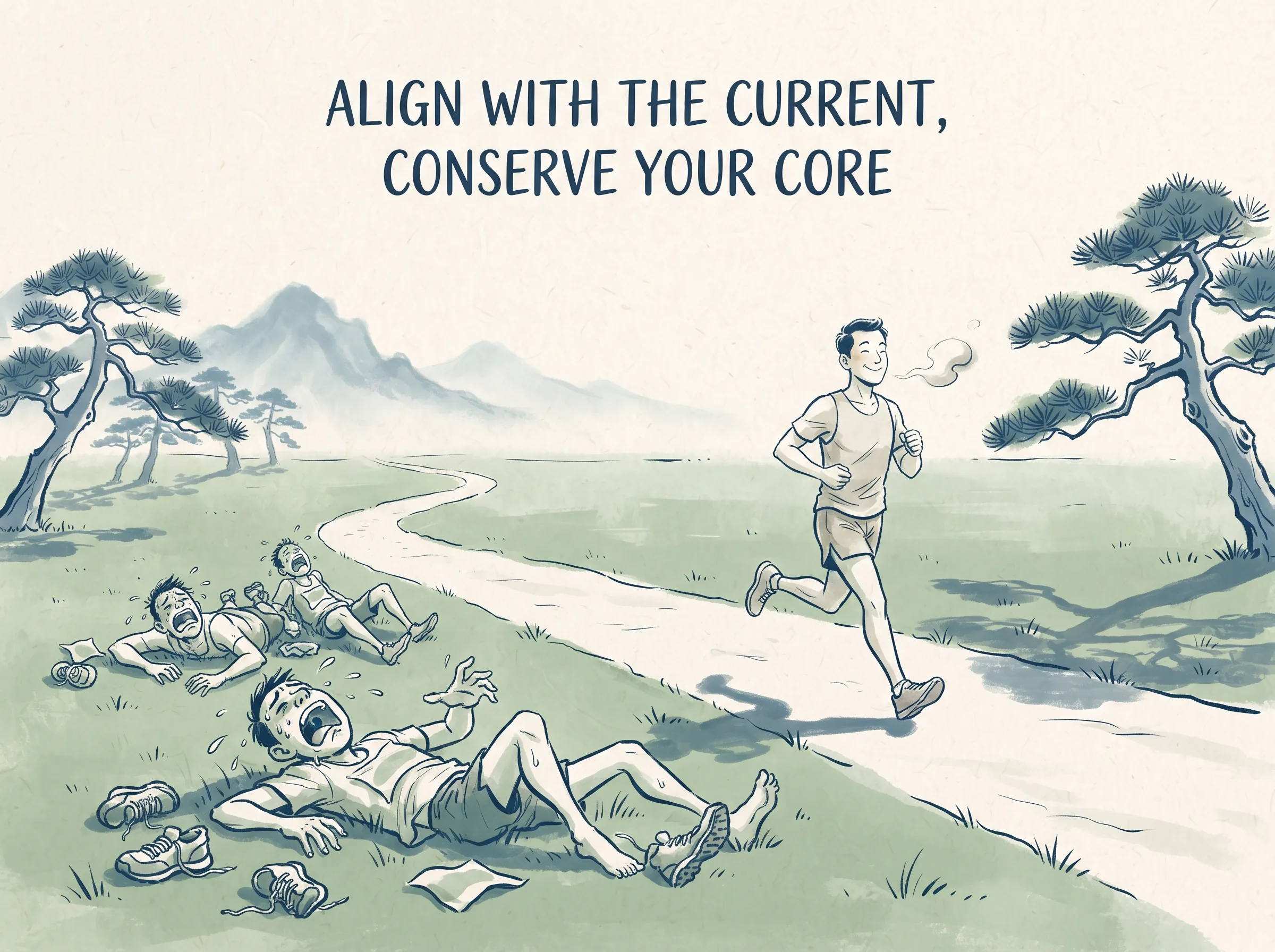
If you would like to continue exploring, the Zhuangzi chapter that follows Gengsang Chu — Xu Wugui (徐无鬼) — extends these concerns into questions of language, reputation, and the ways in which even sincere seekers can become trapped by their own efforts. It is a natural next read, reflecting the enduring wisdom of Zhuangzi Chapter 23 Meaning.
To explore these themes from another angle, read our related reflection on Why People Hear Truth But Still Resist It — A Zhuangzi Guide to Speaking That Actually Lands.
Deepen your understanding of these principles in our reflection on Why Copying Others’ Paths Is the Greatest Loss — Zhuangzi’s Tian Yun and the Art of Walking Your Own Road.
Sources & Further Reading
[1] Zhuangzi, Chapter 23: Gengsang Chu (庚桑楚) — Wikisource. The received Chinese text of the chapter used for all classical citations in this article.
[2] Zhuangzi — Stanford Encyclopedia of Philosophy. Discussion of the composition, authorship, and structure of the received thirty-three-chapter text, including the classification of chapters 23–33 as Miscellaneous.
Further Reading
- Burton Watson, trans. Chuang Tzu: Basic Writings. Columbia University Press. Accessible English translation with notes.
- Robin Wang, ed. The Zhuangzi: A New Translation of the Classic with Commentary. Hackett Publishing. Contemporary scholarship paired with translation.
- Brook Ziporyn, trans. Zhuangzi: The Complete Writings. Oxford University Press. Full translation with interpretive commentary.
- Victor Mair, ed. and trans. The Complete Works of Chuang Tzu. Columbia University Press. Bilingual edition with extensive annotations.






