
Zhuangzi Chapter 14 Meaning: Core Thesis
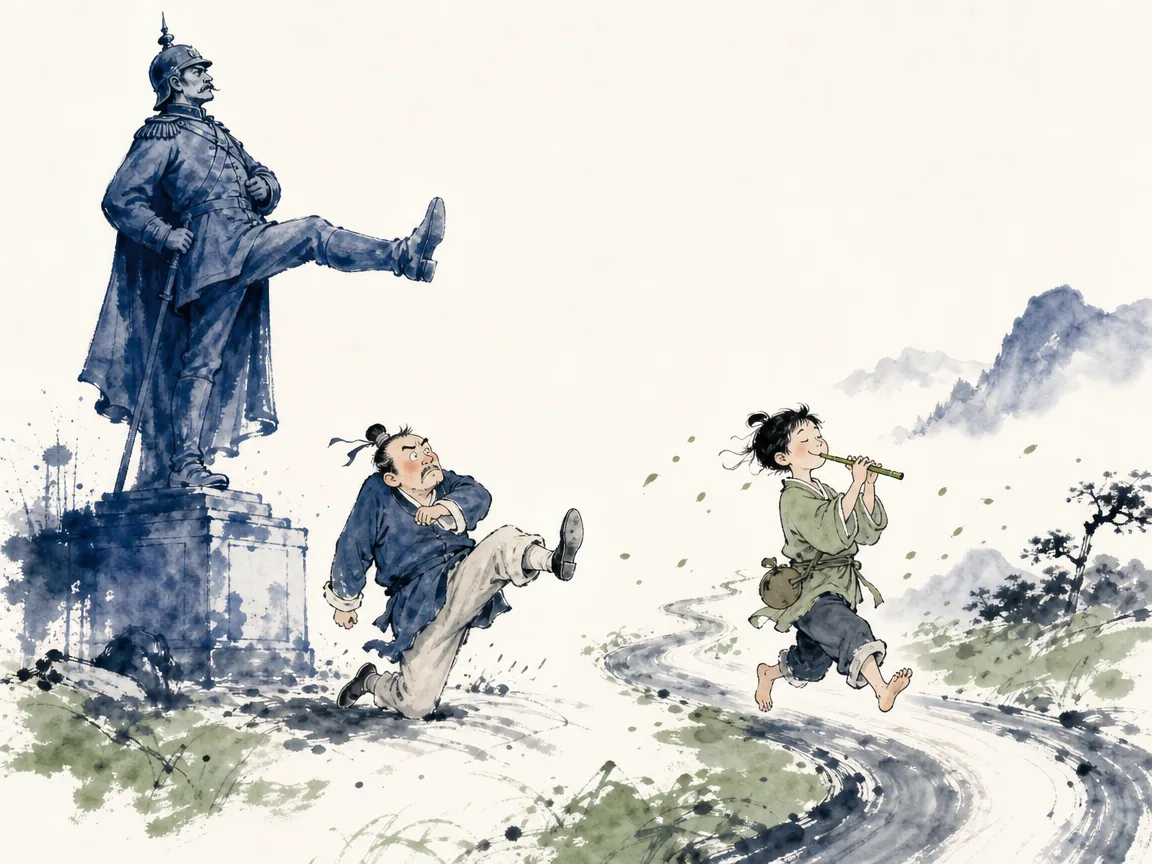
The deepest trap of modern life is mistaking someone else's footprints for your own road. Zhuangzi's Tian Yun chapter argues that the Dao is not a fixed formula to copy, but a living process of constant transformation. True wisdom means reading the times, preserving your nature, and letting your path emerge from your own conditions—not performing borrowed gestures.
Continue with the deeper interpretation and practical application.
ChiDestiny members get access to the full analysis, modern applications, and the growing Chinese Wisdom Library.
FAQ
Q: Is Tian Yun considered one of the original chapters written by Zhuangzi himself?
A: Most scholars classify Tian Yun as part of the Outer Chapters of the Zhuangzi, sections that likely developed from students or later thinkers working in Zhuangzi's tradition rather than from Zhuangzi's own hand [2]. This does not diminish the chapter's philosophical value, but it does mean that the ideas presented should be understood as part of a broader Zhuangzi school rather than as direct quotations from the historical figure.
Q: What does "Tian Yun" actually mean?
A: The concept of heavenly revolution (tiānyùn, 天运) can be understood as "the turning" or "the operation" of heaven — that is, the ongoing, dynamic movement of the cosmos rather than a fixed destiny or predetermined fate. The exact phrase does not appear in every translation, and interpretations vary among scholars [1].
Q: Does Zhuangzi reject all tradition and learning?
A: No. Zhuangzi distinguishes between living tradition — which adapts to new conditions and preserves the spirit of wisdom — and dead tradition, which clings to outward forms while losing the inner life that gave them meaning. The critique in Tian Yun is aimed at the latter, not at learning itself.
Q: Can the Dongshi fable be taken as a simple warning against copying others?
A: That is the common surface reading, but the deeper point is more specific: the story warns against extracting an external gesture from its original context and treating it as transferable. The problem is not imitation per se but imitation that ignores the living conditions — temperament, situation, era — that make any gesture meaningful in the first place, reflecting the enduring wisdom of Zhuangzi Chapter 14 Meaning.
To explore these themes from another angle, read our related reflection on From Noise to Light: Why Studying Wisdom Doesn’t Stop Inner Turmoil.
For a deeper comparative examination of these ideas, explore our related study on Letting Be: Why the Will to Control Is the Root of Modern Suffering (A Lesson from Zhuangzi’s Zai You).
Sources & Further Reading
[1] Zhuangzi — Stanford Encyclopedia of Philosophy
[2] The Complete Works of Zhuangzi — Columbia University Press
Further Reading
- Burton Watson, translator. The Complete Works of Zhuangzi. Columbia University Press. (Includes Watson's translation of "The Turning of Heaven," chapter 14.)
- Stanford Encyclopedia of Philosophy — Overview of Zhuangzi's life, texts, and philosophical themes.
- Columbia University Press — Full bibliographic information for Watson's definitive English translation of the Zhuangzi.







[…] Deepen your understanding of these principles in our reflection on Why Copying Others’ Paths Is the Greatest Loss — Zhuangzi’s Tian Yun and the Art of Wa…. […]