
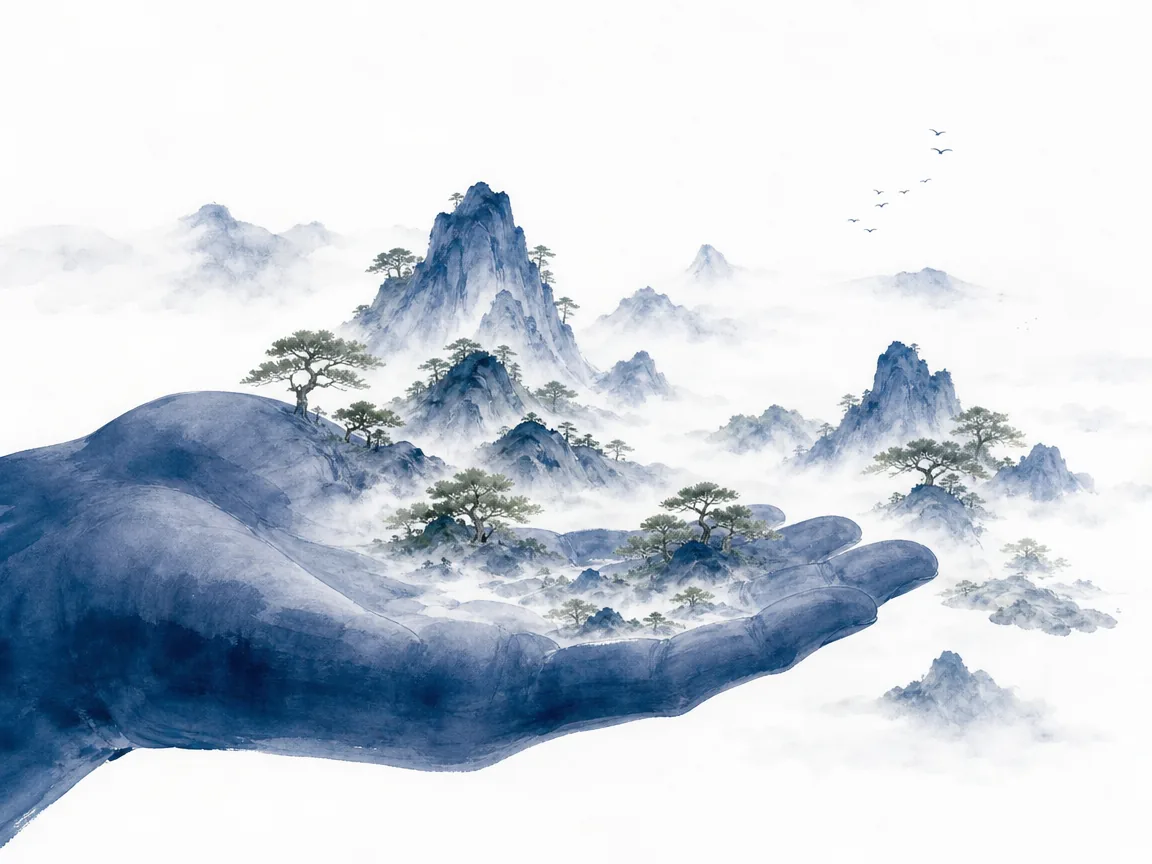
You wake up to an alarm set by an app, check your sleep score, respond to messages before breakfast, and carry a calendar so densely packed that even breathing room feels like a luxury. Somewhere along the way, you were taught that every part of your life can and should be optimized — your health, your productivity, your relationships, your inner state. The message is relentless: if you are struggling, it is because you have not managed yourself well enough. You need another system, another habit, another strategy.
But the paradox is becoming harder to ignore. The more we track, measure, and refine, the more anxious and hollow many of us feel. We treat ourselves as projects that are never quite finished, constantly auditing our thoughts and emotions for defects. This is not just a personal failing. It is a cultural condition. And it raises a question that goes deeper than self-help can usually reach: could the problem be not too little management, but too much? This principle is central to Zhuangzi Chapter 11 Meaning.
More than two thousand years ago, a thinker named Zhuangzi offered a response that cuts against the grain of every productivity cult and optimization economy. In one of his most striking chapters, he did not tell people to work harder on themselves. He told them to stop. Not out of laziness, but out of a far more radical conviction — that much of the suffering we call modern may actually be caused by the human impulse to govern, correct, and force everything into place.
Zhuangzi Chapter 11 Meaning: The Paradox of Control
There is something almost sacred about control in contemporary culture. We celebrate the person who has their life figured out, the leader who drives results, the individual who has engineered a perfectly balanced routine. Control is conflated with competence. Letting go is mistaken for weakness. But underneath this ideal lies a quiet exhaustion that few people are willing to name.
Think about what self-optimization actually asks us to do. It asks us to monitor every emotion, to catch every unproductive thought, to transform uncertainty into a problem to be solved. We buy courses on focus, download apps to regulate mood, and approach our bodies like machines that need constant tuning. When something goes wrong, the first assumption is that we did not try hard enough, plan well enough, or discipline ourselves enough.
The result is a strange form of self-torture disguised as ambition. People begin to hate the parts of themselves that resist control — the days when energy drops, the moments of confusion, the natural rhythms of rest and recovery that cannot be forced. They develop a second layer of anxiety on top of whatever difficulty they were already experiencing, judging themselves for struggling in the first place.
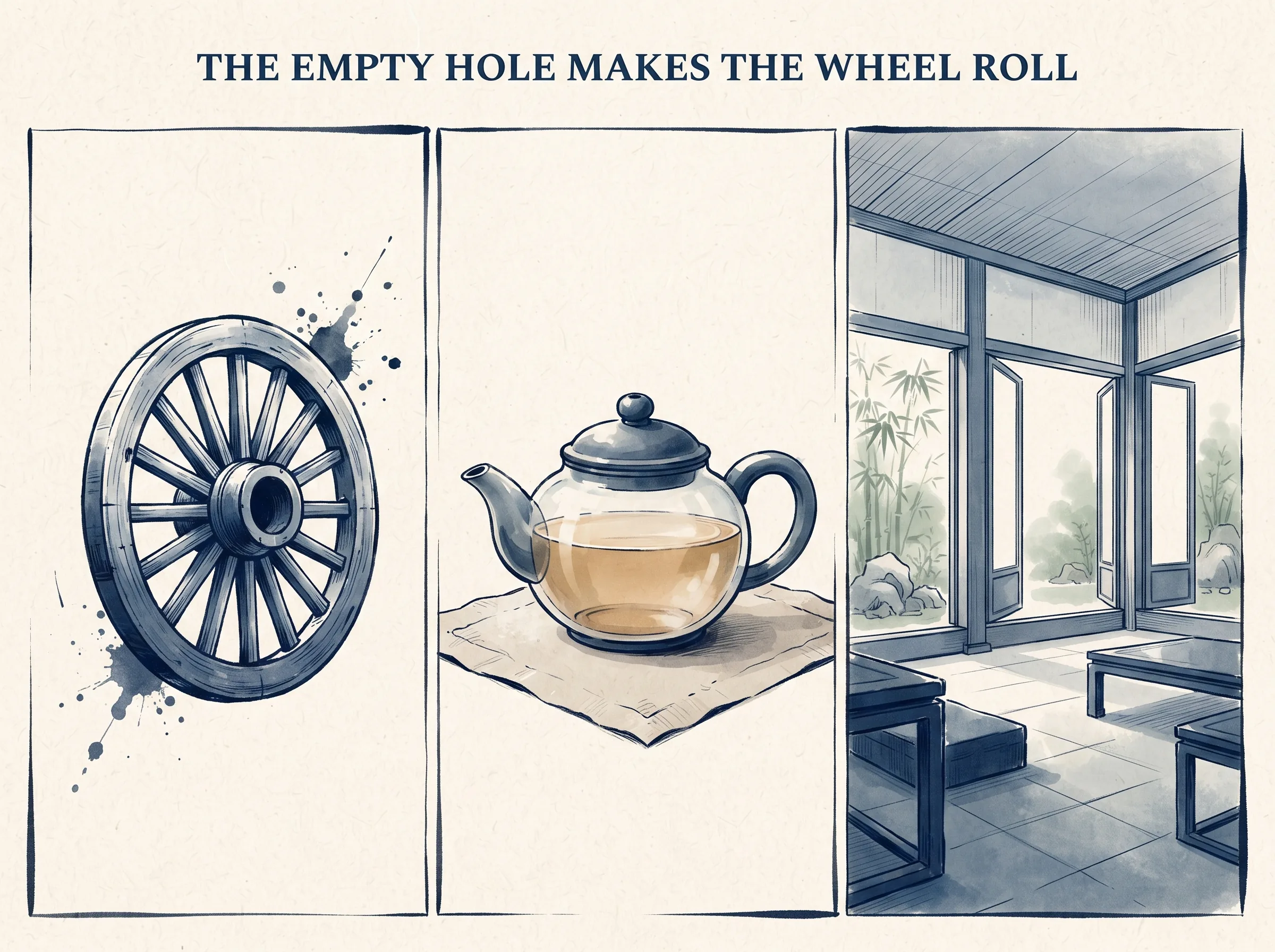
This is not simply a matter of bad habits. It is a pattern of mind that treats life as something to be dominated rather than inhabited. And it is precisely this pattern that Zhuangzi diagnoses with extraordinary sharpness.
What Zhuangzi Meant by "Zai You"
Zhuangzi lived during a period of political fragmentation and social turmoil in ancient China, though the exact dates and authorship of the texts attributed to him remain subjects of scholarly discussion [1]. The chapter most relevant to our question is known as Zai You (在宥), which appears in the so-called Outer Chapters of the Zhuangzi — a collection compiled in its standard thirty-three-chapter form by the fourth-century scholar Guo Xiang [1].
The opening of Zai You contains one of the most provocative statements in all of classical Chinese philosophy. A ruler approaches a sage seeking the secret of good governance, and the sage responds with something close to refusal. He says, in effect: I have heard of letting the world rest in ease (zài yòu tiānxià, 在宥天下) — but I have never heard of governing the world [2].
The two characters are doing important work here. Zai (在) is commonly interpreted as letting beings rest in their proper place, allowing them to be where they belong [2]. You (宥) carries the sense of spaciousness, tolerance, and non-coercion — giving room rather than applying pressure [2]. Together, the term describes a posture of restraint: not doing nothing, but doing nothing that violates the nature of what is before you.
Zhuangzi then offers an explanation that reads almost like a warning: the reason for zai is the fear that the world will lose its spontaneous character, and the reason for you is the fear that the world will be torn from its inner nature [2]. If people can simply be themselves without interference, Zhuangzi implies, there will be no need for the kind of forceful governance that defines so much of human suffering.
This is not passive resignation. The text explicitly rejects the idea that wu wei — non-action — means sitting with arms folded [2]. Rather, it means allowing each thing to follow its own pattern, to unfold according to its own rhythm, rather than being squeezed into a mold designed by someone else's anxiety.
Continue with the deeper interpretation and practical application.
ChiDestiny members get access to the full analysis, modern applications, and the growing Chinese Wisdom Library.
FAQ
Is Zhuangzi saying we should do nothing at all? No. Zhuangzi distinguishes between action that aligns with the natural order and action that forces things against their nature. Wu wei is not inaction; it is the wisdom of knowing when not to interfere, and when intervention actually causes more harm than good.
What does "Zai You" literally mean, and why is the translation tricky? The two Chinese characters roughly translate to "letting be" and "giving space." Zai (在) involves allowing things to rest in their proper place, while You (宥) involves spaciousness and non-coercion. Translating them precisely is difficult because they carry philosophical meanings that go beyond everyday usage [2].
Does this philosophy apply only to politics, or can it guide personal life too? While Zai You uses political language, its core insight is deeply personal. The same impulse to control that disrupts societies also disrupts relationships, self-esteem, and inner peace. Zhuangzi's point is that outer chaos often reflects inner unrest, making the philosophy relevant to anyone who has ever felt overwhelmed by the need to manage everything.
How is Zhuangzi's idea different from simply being passive or lazy? Passivity accepts outcomes without awareness; Zhuangzi's approach requires sharp discernment. It asks us to observe carefully, to understand the nature of a situation, and to act only when action is truly aligned with what is. The difference is between forcing and responding — between imposing your will and moving with the grain of reality, reflecting the enduring wisdom of Zhuangzi Chapter 11 Meaning.
To explore these themes from another angle, read our related reflection on Beyond Good Intentions: Zhuangzi’s Warning About Who Gets to Decide What’s Better.
Deepen your understanding of these principles in our reflection on True Freedom Is Not Having the World — It Is Not Being Owned By It.







[…] For a deeper comparative examination of these ideas, explore our related study on Letting Be: Why the Will to Control Is the Root of Modern Suffering (A Lesson from Zhuangzi’s …. […]
[…] To explore these themes from another angle, read our related reflection on Letting Be: Why the Will to Control Is the Root of Modern Suffering (A Lesson from Zhuangzi’s …. […]