
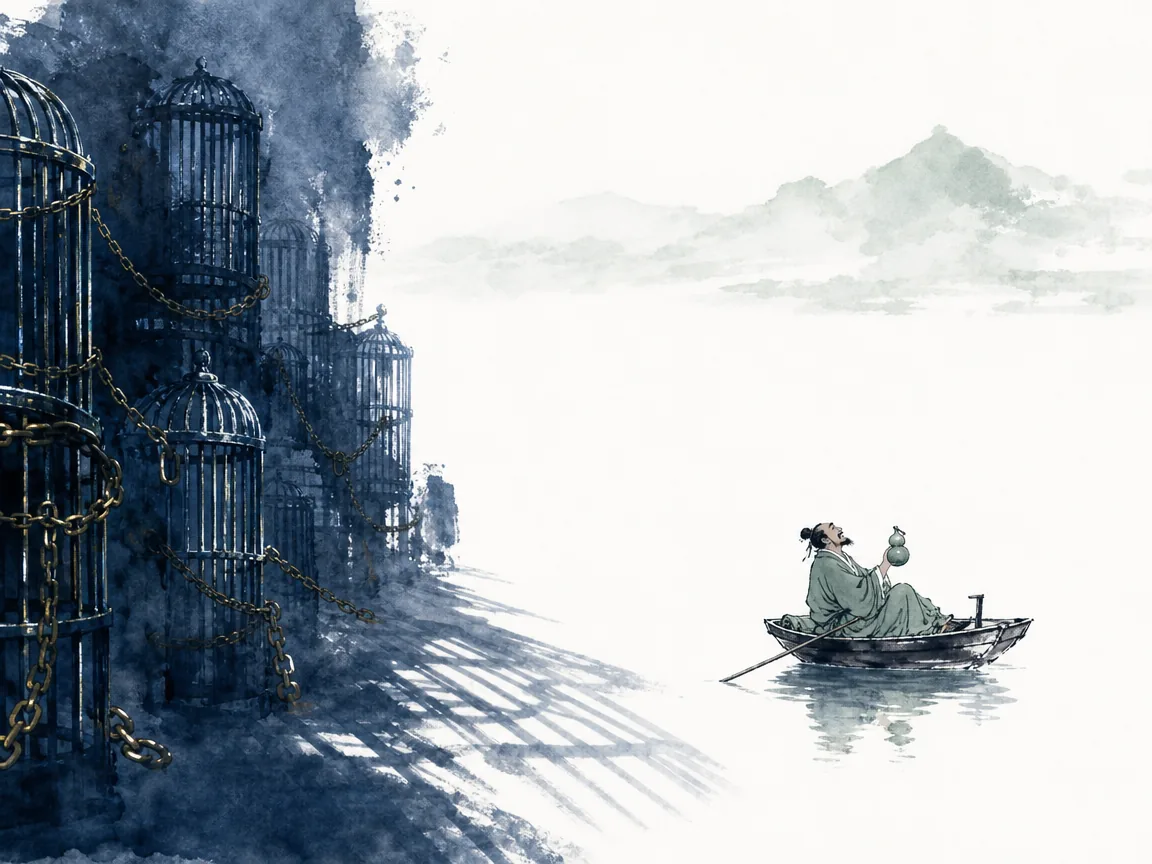
Most people enter adulthood believing that success will feel like arrival. You climb a little higher, earn a little more, gain a little recognition, and eventually the emptiness will stop. Yet so many find the opposite: the outer life grows bigger while the inner life grows thinner. Career milestones arrive, bank accounts grow, social feeds fill with markers of a "good life," and still something central feels missing. Not because anything is technically wrong, but because something important has been quietly traded away without anyone noticing the exchange.
This is precisely the dilemma that a classical Chinese text, traditionally attributed to the philosopher Zhuangzi, diagnosed more than two thousand years ago. The chapter known as Rang Wang, often translated as "Allowing the Kingdom" or "Surrendering the Throne," opens not with advice on how to win, but with a series of refusals. Sages turn down empires. Hermits reject the highest honors. People who could have ruled the world choose instead to tend their own lives. At first this reads like an odd collection of ancient anecdotes. But read carefully, the chapter seems to be asking a question that modern life keeps pressing on us: what happens when the things you are told to want begin to want you back? This principle is central to Zhuangzi Chapter 29 Meaning.
We rarely lose ourselves through dramatic collapse. More often, we lose ourselves through a sequence of reasonable decisions. A promotion that slowly fills every hour. A lifestyle that begins to require constant performance. A series of compromises that each look small enough to justify until, one day, you realize you no longer recognize the person living the life you built. The trap is not that these things are evil. The trap is that they feel like proof of progress while they are actually proof of displacement.
Zhuangzi Chapter 29 Meaning: The Dangerous Allure of "Good" Temptations
The most effective forms of self-loss do not arrive dressed as vices. They arrive dressed as virtues. There is a difference between a temptation that openly asks you to indulge and one that asks you to be responsible, ambitious, mature, or successful. The latter is harder to resist precisely because it sounds correct.
In the Rang Wang chapter, multiple figures are offered rule over the world and refuse. In one account, Yao offers the throne to Xu You, who declines. In another, Shun offers it to Shan Juan, who also refuses. These are not stories about people who failed to get ahead. They are stories about people who saw through the lure and chose to stay outside it [2]. The point is not that power is bad. The point is that even the highest social prizes can become a kind of theft if they cost you your center.
What makes this insight startlingly modern is how well it describes the machinery of contemporary life. Today, no one hands you an actual kingdom. Instead, you are handed a succession of respectable opportunities: a prestigious job, a rapid promotion, a side business that consumes your evenings, a social circle that demands constant visibility, a relationship that looks perfect on paper but drains you in private, a narrative of hustle that tells you rest is laziness and restlessness is virtue. None of these are inherently wrong. All of them can become the thing that owns you, if you let them occupy the place that belongs to your own life.
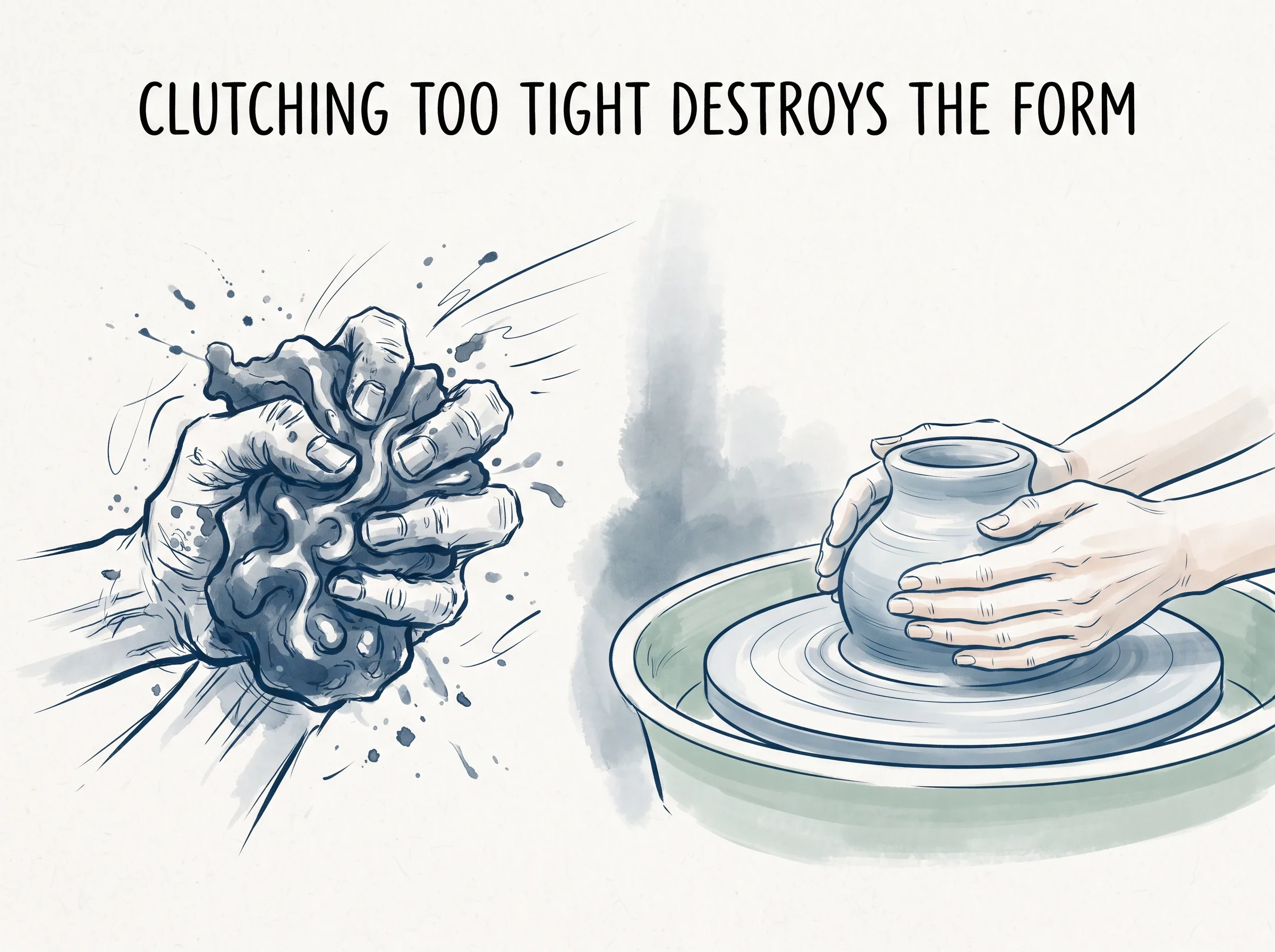
The danger is cumulative. You do not lose yourself in one decisive moment. You lose yourself in a hundred small surrenders, each one justified by a reasonable story: this is what adults do, this is what success looks like, this is what my family expects, this is what everyone else is doing. Before long, your calendar, your moods, your sense of worth, and your idea of what a good life should be have all been outsourced to external standards. You are not broken. You are occupied.
Continue with the deeper interpretation and practical application.
ChiDestiny members get access to the full analysis, modern applications, and the growing Chinese Wisdom Library.
Frequently Asked Questions
Does Zhuangzi's philosophy encourage people to quit their jobs and live in isolation? No. The Rang Wang chapter does not advocate abandoning responsibility or retreating from society. It advocates seeing clearly what you are trading and making conscious choices rather than unconscious ones. You can participate in the world without letting the world participate in your identity.
How do I know the difference between healthy ambition and losing myself to external goals? Healthy ambition aligns with your values and leaves room for rest, relationships, and reflection. Losing yourself to external goals feels like an endless treadmill: you achieve something, but the satisfaction is brief, and the pressure immediately shifts to the next achievement. Ask yourself whether you are pursuing something because it matters to you or because it matters to everyone else.
Can someone be successful and still practice the kind of inner sovereignty Zhuangzi describes? Yes. Inner sovereignty is not the absence of achievement. It is the presence of a center that success cannot shake. Many people build impressive lives while maintaining a clear sense of who they are outside their roles, titles, and accomplishments. The key is ensuring that success serves your life rather than replacing it.
What should I do if my family or culture expects me to prioritize achievement over well-being? This is one of the most difficult real-world challenges. There is no simple solution, but you can begin by clarifying your own values and finding small ways to live by them even within a demanding context. You do not need to publicly reject your culture's expectations. You need only refuse to let those expectations become the sole ruler of your inner life. Boundaries can be gentle, private, and gradual, reflecting the enduring wisdom of Zhuangzi Chapter 29 Meaning.
To explore these themes from another angle, read our related reflection on How to Tell What’s Yours and What Was Grafted Onto You — Lessons from Zhuangzi.
For a deeper comparative examination of these ideas, explore our related study on The Sign of Virtue Complete: The Whole Person Behind the Mutilated Form.
Sources & Further Reading
[1] Qin Tunes, Volume 2 (琴操卷下) — Shidian Guji
[2] Chapter 28 — Yielding the Throne — Zhuangzi — Forage
Further Reading
Zhuangzi (Stanford Encyclopedia of Philosophy) — Overview of the Zhuangzi’s composition, authorship debates, and philosophical themes including language, spontaneity, and inner sovereignty.






