
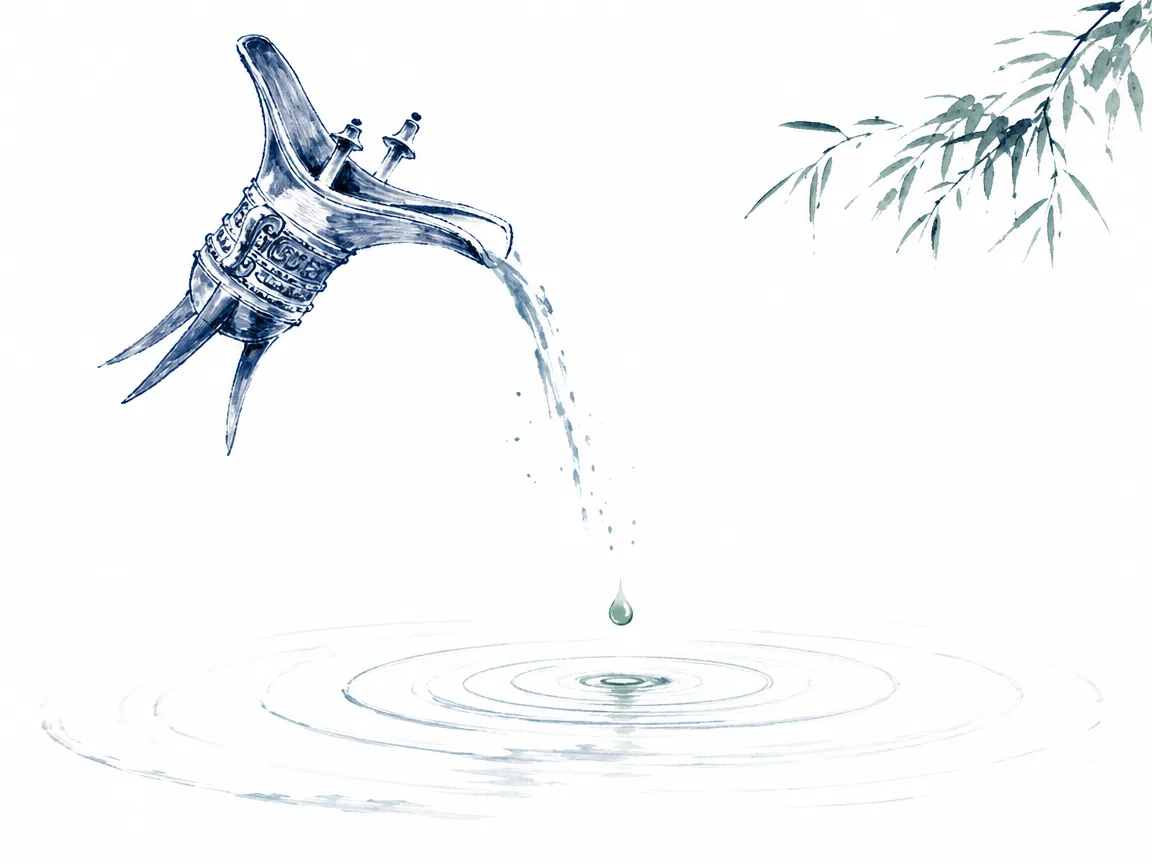
We have all experienced it: someone offers a clear, honest observation, and instead of gratitude or reflection, we meet defensiveness, silence, or argument. A parent says, “You might be pushing too hard,” and the child braces for criticism. A colleague says, “This pattern isn’t working,” and the team interprets it as a personal attack. Even well-intentioned advice can feel like judgment the moment it is delivered straight.
The question is not simply why people reject truth. It is why truth itself so often fails to land. We tend to assume the problem lives inside the listener — pride, stubbornness, ego. But there is another possibility: the problem may also live in how truth is carried. Some truths are correct and still fall flat. Other truths, wrapped differently, reach someone who has been resisting the same insight for years—a foundational perspective explored in Zhuangzi Chapter 27 Meaning.
More than two thousand years ago, the Chinese thinker Zhuangzi noticed exactly this gap between what is true and what is heard. In the essay titled “Yuyan” — often translated as “Allegories” — he did not offer a theory of manipulation. He offered something simpler and more honest: an account of how human minds actually work when confronted with ideas that challenge them. His answer was not to speak louder, clearer, or more forcefully. His answer was to change the shape of the words themselves.
Zhuangzi Chapter 27 Meaning: The Problem Nobody Names
The uncomfortable part of honest communication is that people rarely resist bad ideas. They resist being told they are wrong.
When advice arrives as a verdict, it threatens identity. Identity protection is not a moral failure. It is a psychological pattern. A person who sees themselves as caring may hear “you are controlling” as “I am a bad person.” A person who identifies as competent may hear “this approach is ineffective” as “I am inadequate.” The brain does not always separate the message from the self. It defends both at once.
This is why directness is not automatically kindness, and why bluntness is not automatically wisdom. A truth can be accurate and still trigger the very defenses it hopes to dissolve. The person on the receiving end is not failing to hear. They are responding exactly as human beings tend to respond when their sense of self feels cornered.
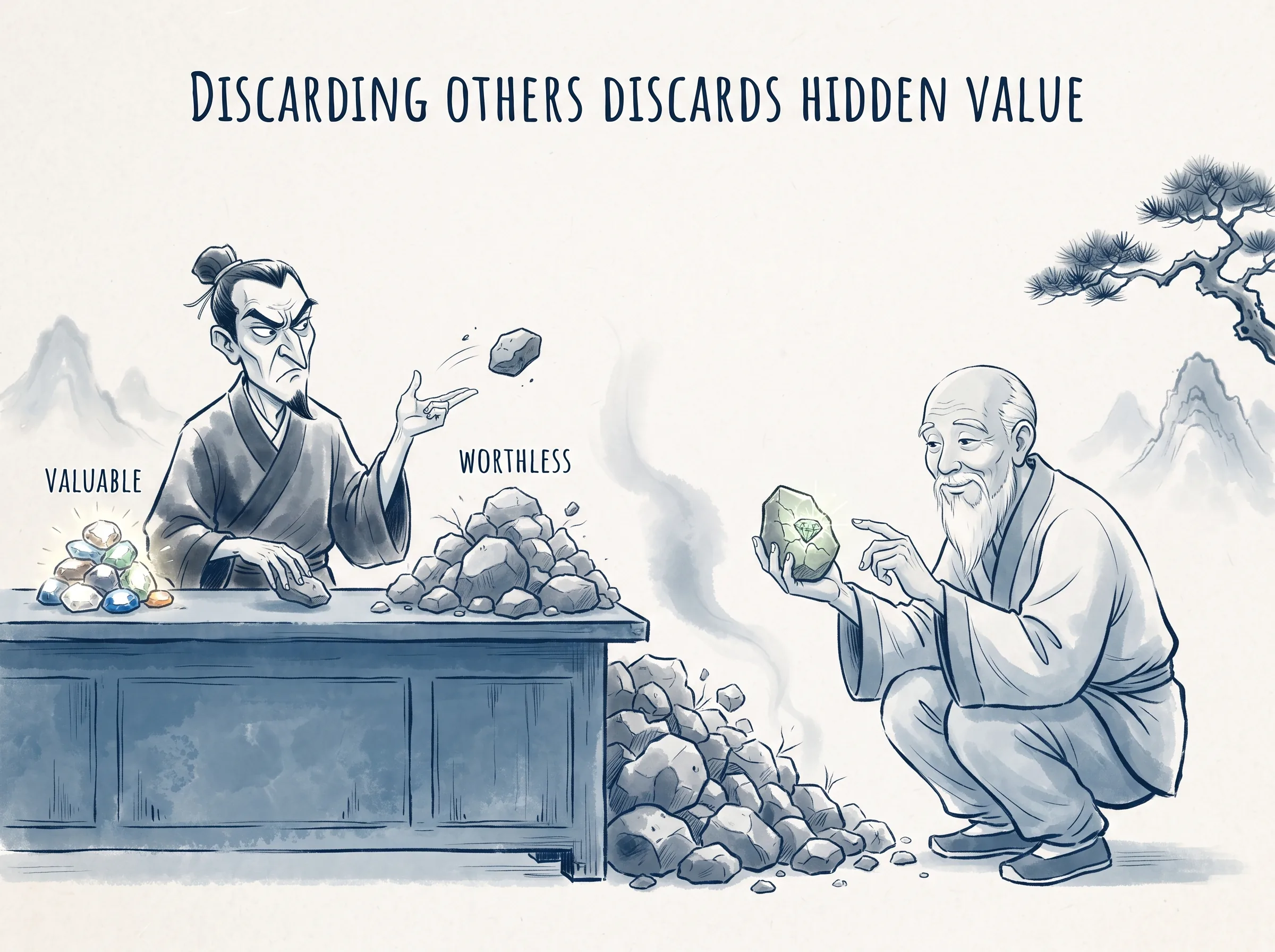
Modern life makes this harder, not easier. Parenting advice is filtered through exhaustion and shame. Career guidance is heard through the lens of financial pressure. Spiritual counsel can sound like moral superiority. Social media rewards certainty and punishes nuance. In such an environment, even well-meant words are easily mistaken for weapons.
Zhuangzi understood this landscape long before the term “defensiveness” existed in psychology. He did not argue that people are irrational. He argued that people are protected. And protection needs a gentler entry point than a blunt statement.
Continue with the deeper interpretation and practical application.
ChiDestiny members get access to the full analysis, modern applications, and the growing Chinese Wisdom Library.
FAQ
Is Zhuangzi saying we should avoid direct communication altogether?
No. Zhuangzi does not reject directness. He rejects rigidity. Some situations call for clear, straightforward language. The issue arises when direct speech is used as a blunt instrument, regardless of context or the listener’s state of mind.
Did Zhuangzi actually use Confucius as a character in his texts?
Yes. The received Zhuangzi text includes passages where Confucius appears as a speaker, sometimes expressing views that align closely with Zhuangzi’s own perspective [2]. This literary choice is widely noted in scholarly discussions of the text.
Can these communication ideas be applied in professional or workplace settings?
They can. Leaders, managers, and colleagues often face the same dynamics: a correct observation meets defensiveness because the delivery triggers identity threat. Framing feedback through examples, acknowledging prior experience before offering a new perspective, and adapting language to the specific situation are all practices consistent with Zhuangzi’s approach.
Does modern research support the idea that stories are more effective than direct statements?
The evidence is nuanced. Meta-analyses of narrative persuasion suggest stories may reduce counter-argumentation and lower psychological resistance [3]. However, direct comparisons between narrative and non-narrative treatments have not always shown statistically significant differences across all outcome categories. Stories are not universally superior, but they offer a reliable way to reduce defensiveness in contexts where that barrier is active.
A Few Closing Thoughts
The hardest truths are often the ones we struggle to receive, not because we lack intelligence, but because we possess a self worth protecting. Zhuangzi did not dismiss that protection. He worked with it. His three modes of language — allegory, borrowed authority, and adaptive speech — form a practical toolkit for anyone who wants their words to land instead of bounce off.
The path forward is not to speak less honestly. It is to speak more wisely. Start with a story if a statement will not do. Use credible voices when appropriate, but do not outsource understanding to them. Keep your principles flexible enough to fit real human situations. And remember that the measure of good communication is not whether you win the moment, but whether the other person walks away seeing more clearly than before.
If you would like to explore this further, reading the “Yuyan” chapter of the Zhuangzi alongside a reliable modern translation can be rewarding. Scholars such as Burton Watson and Victor Mair have produced English versions that preserve both the philosophical precision and the literary playfulness of the original. For readers interested in the psychological side of this question, research on narrative persuasion and motivated reasoning offers complementary insights from contemporary social science, reflecting the enduring wisdom of Zhuangzi Chapter 27 Meaning.
To explore these themes from another angle, read our related reflection on Why Knowledge Won’t Save You: What Zhuangzi Teaches About True Transformation.
For a deeper comparative examination of these ideas, explore our related study on Beyond Good Intentions: Zhuangzi’s Warning About Who Gets to Decide What’s Better.
Sources & Further Reading
[1] Zhuangzi (Stanford Encyclopedia of Philosophy/Spring 2026 Edition) — Discusses the structure of the received Zhuangzi text, including the division into Inner, Outer, and Miscellaneous Chapters, and confirms that the chapter “Yuyan” belongs to the Miscellaneous Chapters rather than the Inner Chapters.
[2] Zhuangzi / Metaphors and Parables (莊子/寓言) – Wikisource — Contains the opening passage of the “Yuyan” chapter, including the classical formulation of Zhuangzi’s three modes of language.
[3] The persuasive effects of narrative entertainment: a meta-analysis of recent experiments | Behavioural Public Policy | Cambridge Core — Summarizes research findings on how narrative engagement may reduce counter-argumentation and lower psychological resistance, while noting that narrative and non-narrative treatments do not always show statistically significant differences across all outcomes.
Further Reading
- Burton Watson, translator. Chuang Tzu: Basic Writings. Columbia University Press. A widely used English translation that balances accessibility with philosophical fidelity.
- Victor Mair, translator. The Columbia Anthology of Traditional Chinese Literature. Columbia University Press. Includes Zhuangzi selections with detailed commentary.
- Stanford Encyclopedia of Philosophy. “Zhuangzi.” Provides an academic overview of Zhuangzi’s thought, textual history, and key philosophical themes.






