
We live in an age of unprecedented choice. We have apps to optimize every hour, platforms to measure our worth through engagement metrics, social networks to perform our relationships, and endless self-help frameworks promising that one more strategy will finally make us feel in control. And yet, many people report feeling increasingly dominated — not by any single oppressive force, but by a quiet, diffuse pressure from the very things they are chasing: their career trajectory, their online presence, their partner's availability, their bank account, the next milestone on the horizon. If no one is holding a weapon to our heads, why does it feel like we are being held hostage?
Zhuangzi, the classical Chinese thinker whose chapters form part of the Zhuangzi (《庄子》), addressed this exact paradox more than two thousand years ago. In Zhuangzi Chapter 26 of the received text — traditionally titled Waiwu, or "Outer Things" — he offers one of the most psychologically precise accounts of what it means to lose ourselves to the world we are building. His answer is not that wealth, status, relationships, or achievements are inherently bad. The danger, he suggests, lies elsewhere: it lies in the subtle reversal that occurs when the tools we use to navigate life become the masters we serve. We are not trapped by our goals, our relationships, or our accomplishments. We are trapped when we hand our inner life over to them.
This is not a call to withdraw from the world. Zhuangzi was clear that a person of depth can participate fully in life — with wealth, influence, relationships, and creative output — while remaining untouched at the center. The challenge of modern life is not to accumulate fewer things but to reclaim the one thing we may have quietly surrendered: our inner sovereignty. The question is not whether we should let go of the world but whether the world is letting go of us.
Zhuangzi Chapter 26: What Are "Outer Things"?
The chapter opens with a stark assertion: "Nothing outside oneself can be counted on". This translation of the opening line — waiwu bu ke bi (外物不可必) — points to something Zhuangzi understood deeply about human vulnerability. External conditions are unpredictable. They rise and fall regardless of our preferences. And yet, the human mind has a remarkable tendency to attach its sense of safety, identity, and worth to precisely those things it cannot control.
In the Zhuangzi tradition, "outer things" (waiwu) refers broadly to anything external that can capture the mind. The text illustrates this through historical examples: the minister Guan Longfeng executed for his loyalty, Bigan who was killed for his integrity, Jizi who feigned madness to survive, and the tyrants Jie and Zhou who lost their kingdoms. These are not stories about material poverty or failure. They are stories about people whose inner lives became hostages to outcomes beyond their control — to the favor of rulers, to the judgments of history, to the fickle currents of reputation and power.
In contemporary terms, "outer things" extends well beyond material possessions. Career success can become an outer thing when self-worth depends entirely on professional achievement. Social media metrics can become an outer thing when daily mood rises and falls with engagement numbers. A relationship can become an outer thing when personal value feels contingent on another person's attention or approval. Even future plans — the imagined stable life, the perfect body, the completed project — can function as outer things when they become the sole justification for enduring an unbearable present.
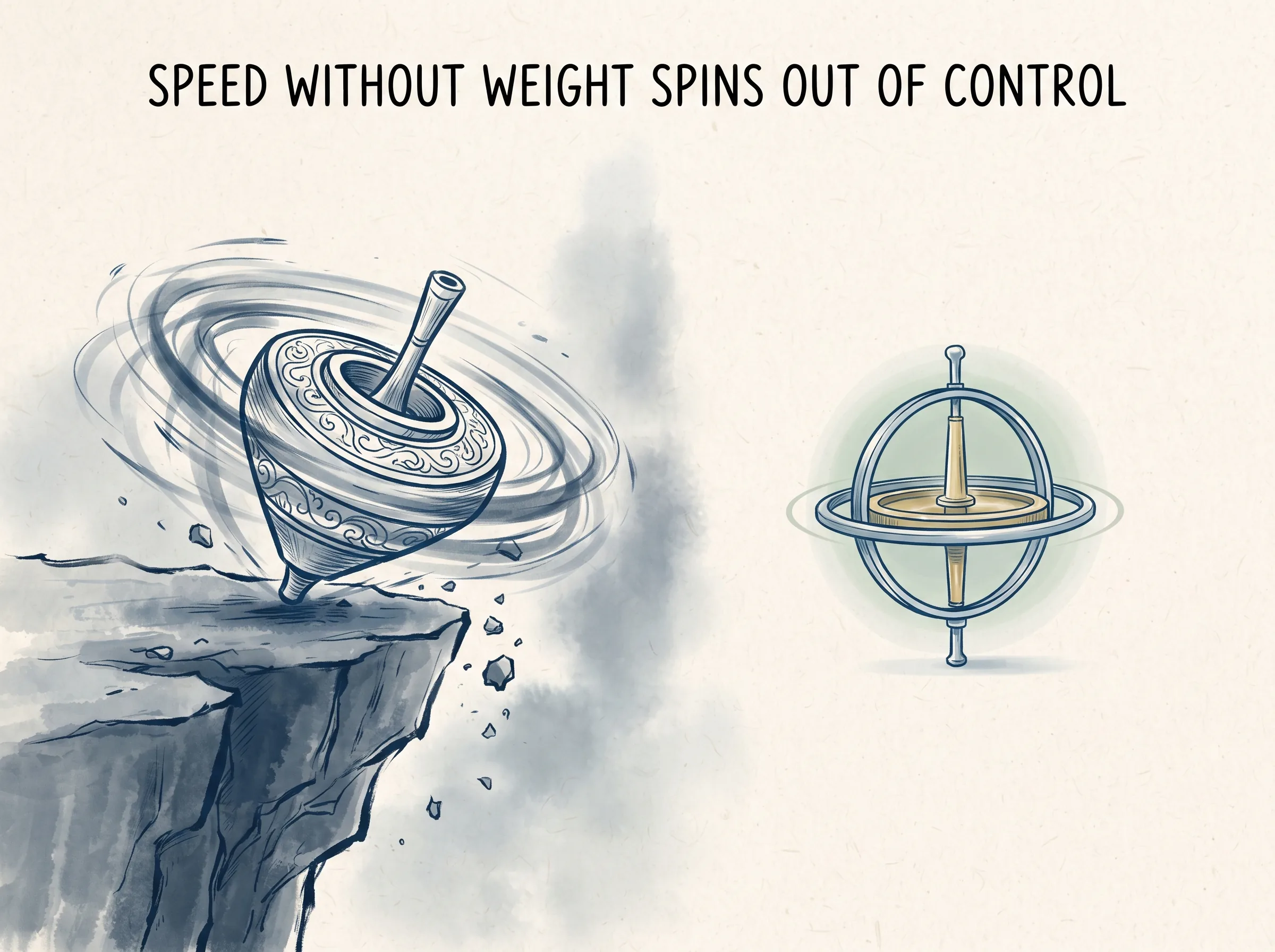
The distinction Zhuangzi invites us to notice is not between inner and outer as moral categories. Outer things are not evil. Money, relationships, reputation, and achievement are neutral instruments — or they can be. They become dangerous only when the relationship reverses: from tools we use to masters we serve. A person who uses money to live well but feels terrified at the thought of losing it has already crossed a threshold. A person who engages with social media to share meaning but finds their sense of value dissolving when the numbers drop has already surrendered something essential.
The modern trap is particularly insidious because it often feels like ambition, responsibility, or love. But Zhuangzi would ask: who is living here? Is the person using the achievement, or is the achievement using the person?
Continue with the deeper interpretation and practical application.
ChiDestiny members get access to the full analysis, modern applications, and the growing Chinese Wisdom Library.
FAQ
Is "outer things" just about material wealth? No. In the Zhuangzi tradition, "outer things" encompasses anything external that can capture the mind — including reputation, relationships, results, identity labels, social media data, and even future plans. The chapter opens by illustrating this with examples of political and social consequences rather than material ones.
Does Zhuangzi advocate abandoning society or living in isolation? No. The text explicitly describes a person who "wanders in the world" and "goes along with others" without losing themselves. The ideal is participation without surrender — engaging fully with life while maintaining inner sovereignty.
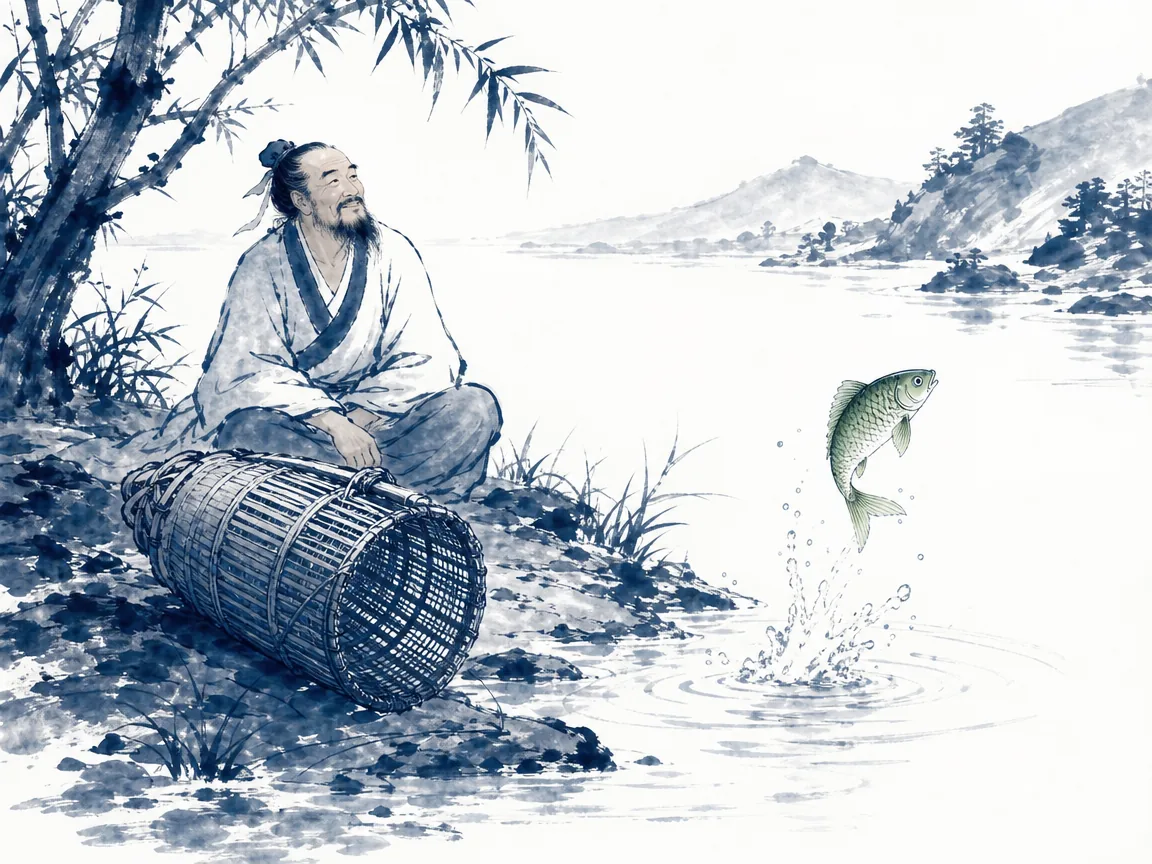
What does "get the meaning and forget the words" mean in practice? It means recognizing that language, methods, and tools are provisional instruments. They point toward understanding and enable action, but they are not the understanding or the action itself. When we confuse the map with the territory, the trap with the fish, or the label with the life, we become trapped (kùn, 困) by what was meant to free us. This concept appears in Chapter 26 of the received *Zhuangzi.
How is this different from modern self-help advice about goal-setting? Most self-help frameworks focus on achieving outer things more effectively — better habits, higher productivity, greater success. Zhuangzi's inquiry is deeper: he asks what happens to the self that is doing the achieving. The question is not how to succeed better but whether the pursuit of success is succeeding at the cost of the self.
To explore these themes from another angle, read our related reflection on From Fear to Flow: What Zhuangzi’s Da Zong Shi Teaches Us About Death, Loss, and True Freedom.
For a deeper comparative examination of these ideas, explore our related study on From the Northern Ocean to the Nine-Thousand-Li Sky: Zhuangzi’s Blueprint for Unconditional Freedom.
Sources & Further Reading
[1] Chapter 26: External Things — Zhuangzi — Zhuangzi | Forage
[2] Meaning of "Capturing Idea and Forgetting Words" (得意忘言) – Ministry of Education Encyclopedia
[3] Mind (Heart-Mind) in Chinese Philosophy (Stanford Encyclopedia of Philosophy/Winter 2023 Edition)
Further Reading (延伸阅读)
- Zhuangzi: External Things (庄子·外物, Chapter 26)— available through multiple translation projects including the Forage series
- Stanford Encyclopedia of Philosophy entry on the mind in Chinese philosophy — for broader context on classical Chinese concepts of self and interiority






