
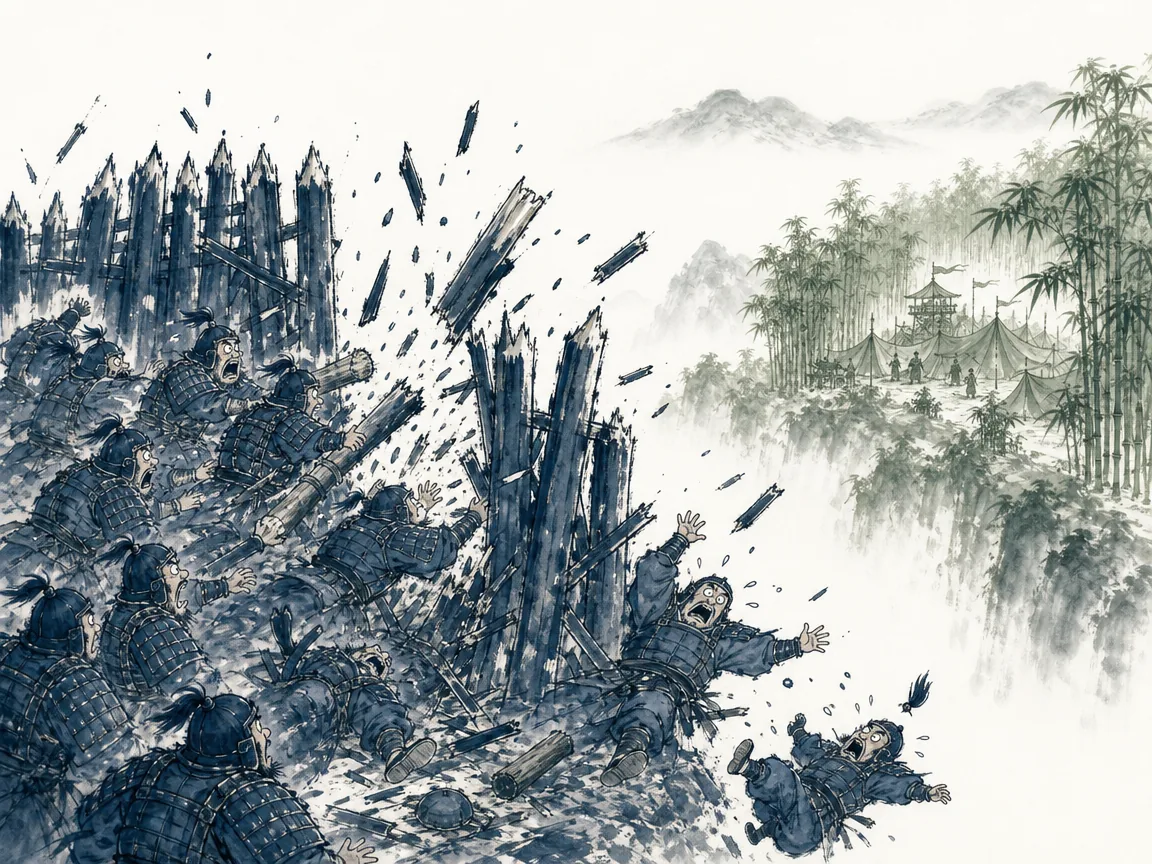
It feels obvious: if you want to win, hit the strongest point. The logic seems ironclad — where the value is, there the battle should be fought. So we chase saturated markets, compete head-on against larger rivals, and pour effort into places we assume hold the decisive edge. And yet, this instinctive move is one of the most common reasons people and organizations exhaust themselves without achieving anything meaningful.
There is a deeper strategic principle at work here — one that ancient Chinese military thinkers understood long before modern business strategy had a name for it. The mistake is not in recognizing strength. The mistake is in assuming that strength is something you defeat by meeting it directly. The real mastery lies in engineering a situation where the opponent's biggest advantages lose their power to matter, while your own actions land where they cannot respond in time—a foundational perspective explored in Sun Tzu Chapter 18 Strategy.
This distinction between raw power and usable power — between what an opponent has and what an opponent can actually deploy — is at the heart of one of the most important chapters in the Art of War, a text traditionally attributed to the ancient Chinese strategist Sun Tzu, who is generally believed to have lived during the Spring and Autumn period [1]. The chapter most associated with this idea is commonly called "Empty and Full" or "Weak Points and Strong Points," and it addresses a question that remains surprisingly relevant: where exactly should force be applied if you want to maximize impact while minimizing wasted effort?[1]
Sun Tzu Chapter 18 Strategy: Redefining Empty and Full
Most people understand "empty" and "full" as simple opposites — one side is weak, the other is strong. But the Art of War frames the distinction differently. "Full" does not merely mean having more resources. It means resources that are already positioned, organized, and ready to respond. The opponent's strength is at its peak not because of what they possess in abstract, but because of how quickly they can bring it to bear at the point of contact.
"Empty" is not simply the absence of strength. It is a condition of timing — a gap where the opponent's resources have not yet arrived, where the response chain is longer, where the window between opportunity and the opponent's ability to act is widest. The real battlefield is often measured in that gap, not in raw numbers or visible power.
The classical passage most associated with this idea states: "Military tactics are like water; for water avoids high ground and hastens downwards, so war avoids the strong and strikes at the weak." [2] The point is not to find a smaller enemy and kick them. It is to make the larger enemy's size and positioning irrelevant to the actual exchange that takes place.
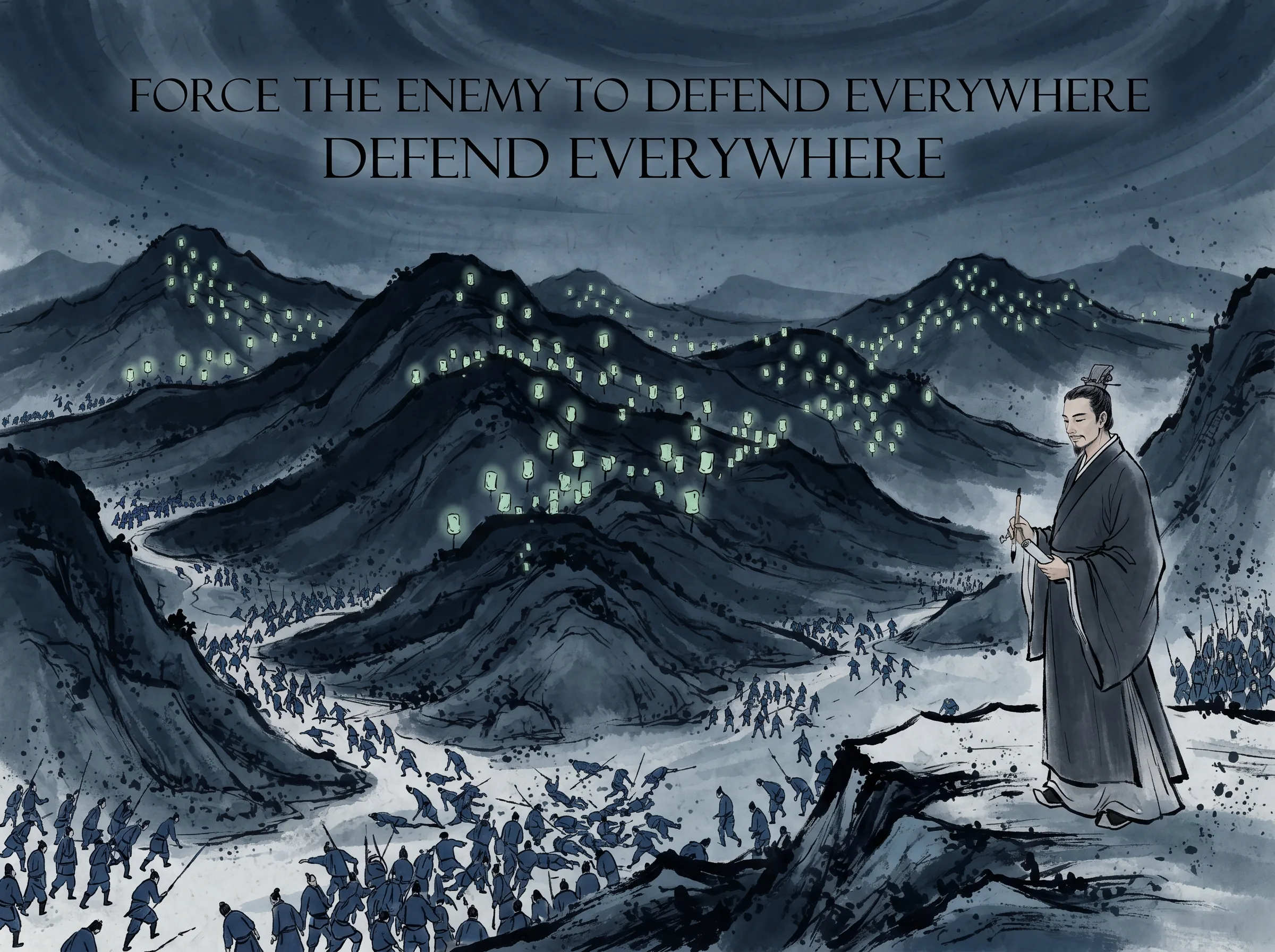
This reframing matters because it changes the entire nature of the problem. Instead of asking "where is the opponent weakest?" you start asking "where is the opponent slowest to respond?" The answer is almost never where you would guess by looking at the surface. Strength hides in plain sight, and it is precisely that visibility that makes it a trap.
Continue with the deeper interpretation and practical application.
ChiDestiny members get access to the full analysis, modern applications, and the growing Chinese Wisdom Library.
Frequently Asked Questions
Is the concept of "empty and full" only useful in military or competitive contexts? No. The principle applies wherever resources are limited and opposition exists — business strategy, negotiation, career decisions, and even personal goal-setting. Any situation in which you are competing for attention, market share, or opportunity can benefit from asking where the opponent's response is slowest rather than where their visible strength is greatest.
Does this mean you should never confront a stronger opponent directly? Not necessarily. There are situations where direct confrontation is unavoidable or strategically necessary. The principle of "empty and full" is about choosing when and where to engage rather than providing a blanket rule against all direct action. The question is whether direct engagement plays to your strengths or the opponent's.
Can this approach be manipulated to justify avoiding difficult challenges? It can, and that is a real risk. The principle should not be used as an excuse to chase only easy opportunities or to sidestep genuinely important conflicts. The point is to fight on terms where your action is most effective, not to avoid difficulty altogether. Sometimes the strongest point must be confronted — but the question is whether you can create conditions that make that confrontation less costly.
How does this relate to the broader philosophy of the Art of War? The "empty and full" chapter is one piece of a larger strategic system. Other chapters discuss the balance of direct and indirect approaches, the importance of timing and momentum, the value of knowing both yourself and your opponent, and the principle that supreme excellence consists in breaking resistance without fighting. Together, these ideas form a coherent framework in which "empty and full" serves as the connective tissue between planning and execution.
Moving Forward
The instinct to attack strength is deeply human and often counterproductive. The alternative — engineering situations where strength becomes irrelevant — requires patience, observation, and a willingness to think in terms of timing and structure rather than sheer force. Sun Tzu's teaching, however interpreted across centuries, points in this direction: the highest form of strategy is not to win a harder fight but to make the fight you need to win happen on your terms.
The next natural step is to study how this principle connects to other ideas in the Art of War, particularly the chapters on momentum and maneuver, which address how to seize initiative in situations where everyone is rushing toward the same opportunity. Understanding the full sequence — from building structural advantage to applying it at the right point — is where strategy moves from theory to practice, reflecting the enduring wisdom of Sun Tzu Chapter 18 Strategy.
To explore these themes from another angle, read our related reflection on Where the Road Ends: What Ancient Chinese Strategy Teaches Us About Knowing What We Can Actually Do.
For a deeper comparative examination of these ideas, explore our related study on Why Winning Too Hard Can Destroy You: What Sun Tzu’s Art of War Teaches About the Hidden Cost of Initiative.
Sources & Further Reading
[1] "Introduction to the Study of The Art of War," Internet Sacred Text Archive,
[2] "Chapter 6. Weak-Points and Strong," Project Gutenberg,
[3] "Of 2 Minds — How Fast and Slow Thinking Shape Perception and Choice," Scientific American,
[4] "Blockbuster — Rise and Fall," Britannica,
Further Reading
- The Art of War by Sun Tzu — available in multiple English translations, including those by Giles, Sawyer, and McClung, each offering slightly different interpretive frameworks.
- Thinking, Fast and Slow by Daniel Kahneman — for a fuller exploration of System 1 and System 2 cognition and how automatic thinking shapes decision-making.
- Studies on competitive strategy and resource allocation in business — the Netflix–Blockbuster case is frequently analyzed in management literature as an example of disruptive innovation and strategic reframing.






