
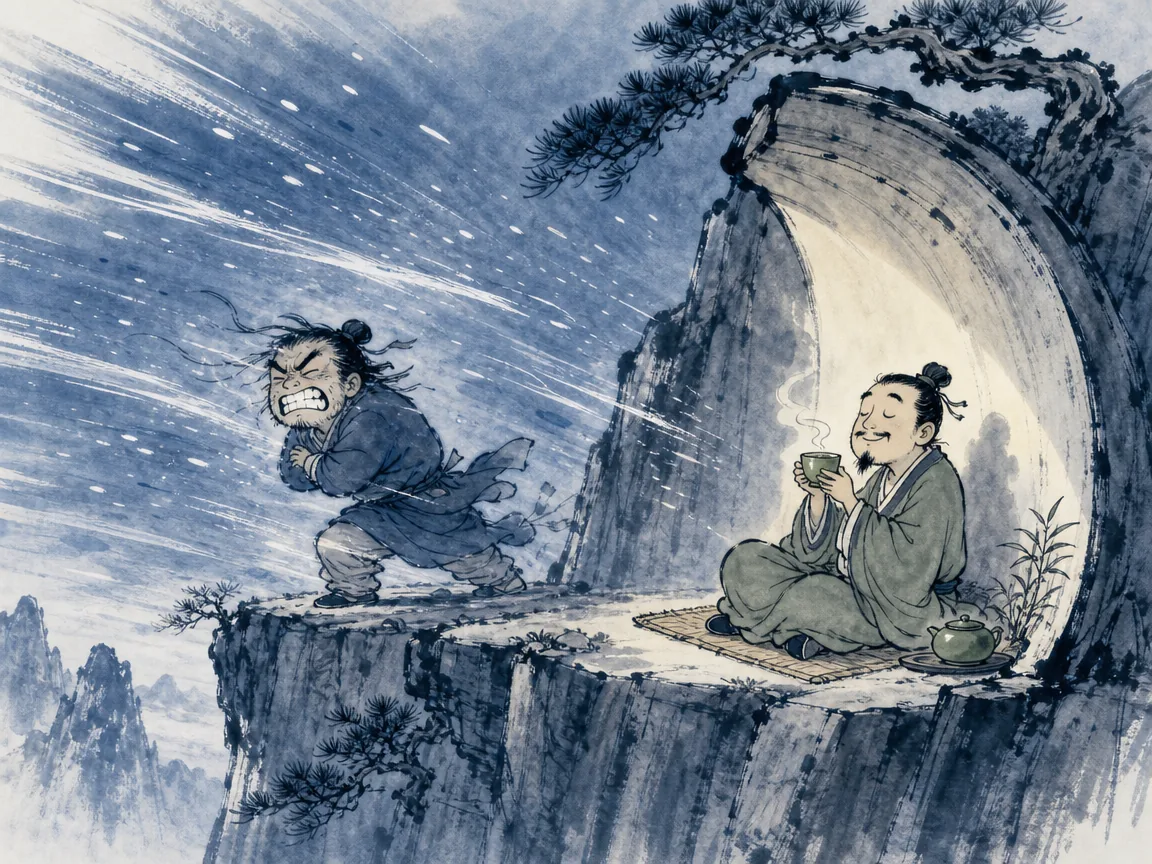
We have all experienced the familiar cycle. A powerful keynote speech sparks a wave of determination. A New Year's resolution feels like a fresh beginning. A team leader rallies everyone with inspiring words, and for a week, energy is high. Then, slowly, quietly, things return to how they were. People do not lack understanding. They do not lack good intentions. And yet, the desired behavior does not hold.
The usual response to this frustration is to try harder—to push willpower, to increase motivation, to add another layer of accountability. But there is an older and more unsettling observation hidden in an ancient Chinese text: perhaps the problem is not that people lack enough drive, but that they are standing on the wrong kind of ground—a foundational perspective explored in Sun Tzu Chapter 17 Strategy.
Over two thousand years ago, the strategist Sun Tzu wrote a chapter known as the Nine Grounds, describing how different battlefield positions produce different patterns of behavior—not because soldiers change their character, but because their structural circumstances change the options available to them. Read through a modern lens, the insight is striking. Most behavioral change interventions focus on the mind. Sun Tzu points to the position.
Sun Tzu Chapter 17 Strategy: The Decision Illusion
We tend to imagine ourselves as free agents, weighing options calmly and choosing the rational path. This model is comforting. It places responsibility squarely on individual discipline and makes the world feel fair: if you want something, you should be able to get it through enough effort. But the model does not match lived experience.
Psychologists such as Daniel Kahneman have documented that people respond far more to the way choices are framed than to the choices themselves . The same outcome described in different terms can produce dramatically different decisions. This is not a minor quirk of human psychology. It is evidence that the structure of the environment often decides for us before we are even aware of deciding.
Sun Tzu's Nine Grounds operates on a similar intuition, centuries earlier. The chapter does not treat terrain as mere background scenery. It treats position as an active force that shapes what soldiers notice, fear, prioritize, and are willing to risk. A man who feels he can retreat will behave differently from a man who feels he cannot, even if both are equally brave and equally trained. The difference is not moral. It is structural.
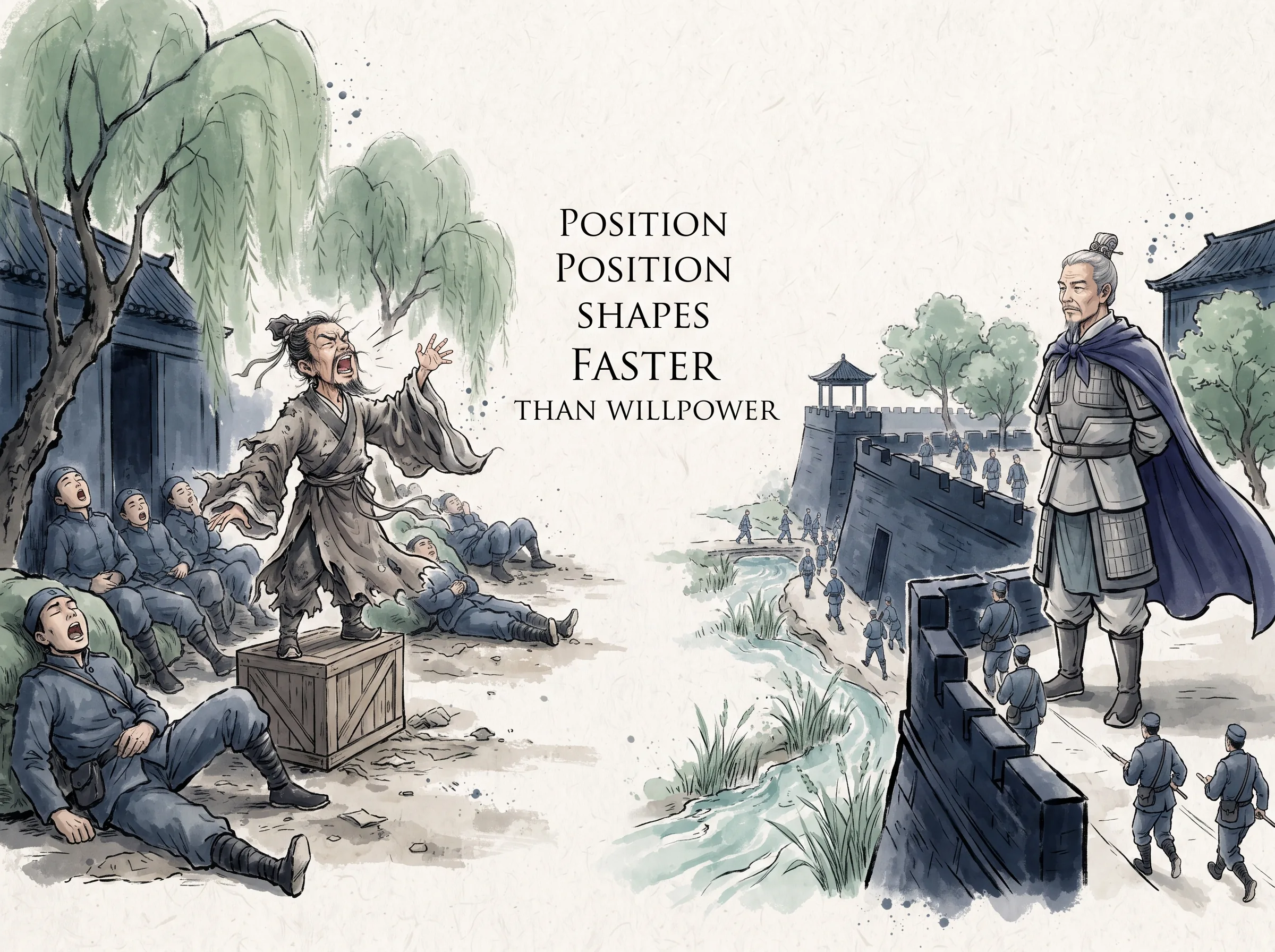
This helps explain a common frustration in organizations and personal life alike. You can give people the right advice, the best tools, and the strongest encouragement, and behavior may still not shift. Not because they are resistant or careless, but because they remain on ground that quietly rewards the very habits you want them to leave behind.
Continue with the deeper interpretation and practical application.
ChiDestiny members get access to the full analysis, modern applications, and the growing Chinese Wisdom Library.
FAQ
Is the Nine Grounds really about behavior, or only about military tactics? In its original context, the Nine Grounds is a military text. But the underlying logic—that different positions produce different behavioral patterns—is not limited to warfare. Many readers and interpreters have applied the framework to organizational management, psychology, and personal development because the mechanism it describes is structural rather than specifically martial.
Does placing yourself in "death ground" mean creating unnecessary suffering or stress? No. Death ground is not about suffering. It is about removing avoidable escape routes so that existing capability can be fully directed toward a goal. Applied carelessly, it can be harmful. Applied thoughtfully, it means designing commitments and constraints that align with what you already intend to do.
Can this approach be used without manipulating other people? Positional design becomes manipulative when it removes people's informed consent or hides the true structure of a choice. It becomes practical when it makes explicit constraints that were always there anyway—deadlines, public commitments, resource limits—and uses them intentionally rather than leaving them to chance.
What should I do if my situation is genuinely difficult and I cannot change my position? Sometimes the ground you are on is imposed by circumstances beyond your control. In those cases, the lesson is not to blame yourself for lacking willpower, but to recognize what the current position is doing to your behavior—and then look for the smallest structural shift that could move you toward ground where your existing strengths can actually matter, reflecting the enduring wisdom of Sun Tzu Chapter 17 Strategy.
To explore these themes from another angle, read our related reflection on Why “Winning Every Battle” Can Lose the War.
For a deeper comparative examination of these ideas, explore our related study on All Present Victories Were Decided Long Before Today.
Sources & Further Reading
[1] Records of the Grand Historian (Shiji, Biography of the Marquis of Huaiyin, 《史记·淮阴侯列传》) — Primary historical record of Han Xin's river-backed battle formation and tactical maxims.
[2] Records of the Three Kingdoms (Sanguozhi, Book of Shu, 《三国志·蜀志》) — Historical record of Ma Su at the Battle of Jieting.
[3] Huawei 2019 Annual Report (Corporate R&D Investment Report, 公司2019年研发投入报告) — Official financial documentation on strategic R&D expenditures.
Further Reading
- Sun Tzu, The Art of War, Nine Grounds chapter — classical strategic text
- Daniel Kahneman, Thinking, Fast and Slow — behavioral economics on framing and decision-making
- Modern commentaries on Sun Tzu's Nine Grounds — strategic and management interpretations






