
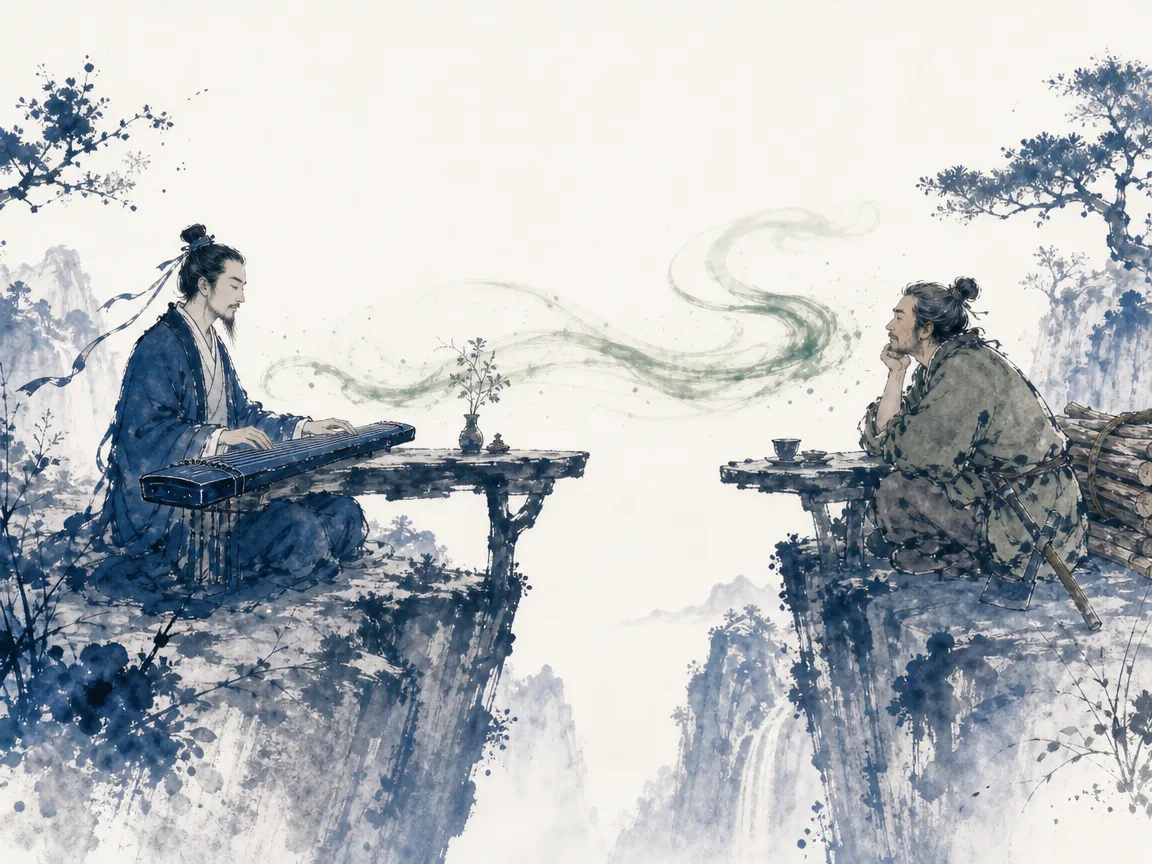
In ancient China, there existed a concept of human connection so deeply valued that it was placed above even romance and family ties: zhījǐ (知己, soul-knower / true confidant). The character zhī (知) means more than "to know" in the everyday sense — it carries the weight of penetrating insight, of seeing into something hidden. A zhījǐ (知己) is someone who perceives the part of you that even you keep concealed, someone whose understanding reaches not the surface but the structure of your inner life. This is not the same as a close friend, nor the same as a lover. It is something the Chinese tradition regarded as rare enough to be life-defining.
The Western world has its own search for profound connection — the idea of a soulmate, a kindred spirit — but these concepts are almost always anchored in romantic love. The Chinese tradition of zhījǐ (知己) is striking precisely because it is neither romantic nor gendered. It describes a bond between two people who have met at a depth that transcends utility, performance, and social role. For an international reader accustomed to framing deep connection primarily through romance or friendship, this raises an important question: what does this concept reveal about what humans actually need from one another, and how might we cultivate it in a world that rarely slows down long enough for it to form? This principle is central to Zhiji Soulmate in Chinese Philosophy.
Modern life offers unprecedented connectivity, yet loneliness has become a defining experience of our era. People are surrounded by acquaintances, contacts, and followers, but rarely encounter someone who truly knows them. The Chinese concept of zhījǐ (知己) points directly at this absence — not as a complaint, but as a map. It suggests that what we most deeply crave is not agreement, entertainment, or even affection, but the experience of being known in our entirety: our contradictions, our hidden fears, the parts of ourselves we do not present to the world.
Zhiji Soulmate in Chinese Philosophy: What Zhījǐ (知己) Actually Means
The Chinese word zhījǐ (知己) breaks down into two characters that reveal its architecture. Zhī (知) means to know, but in classical usage it carries a sense of insight that goes beyond information — it implies penetrating to the essence of something. Jǐ (己) means self. Together, zhījǐ (知己) literally means "knowing the self," but the meaning is more precisely "knowing another's self." A zhījǐ (知己) is someone who knows you — not your résumé, not your social persona, but the inner structure of your life.
This is distinct from péngyǒu (朋友), the word for ordinary friend, which etymologically suggests mutual support and shared activity. A friend (péngyǒu, 朋友) helps you; a zhījǐ (知己) sees you. It is also distinct from àirén (爱人), a romantic partner, because zhījǐ (知己) is not defined by desire, romance, or physical intimacy. It is defined by recognition.
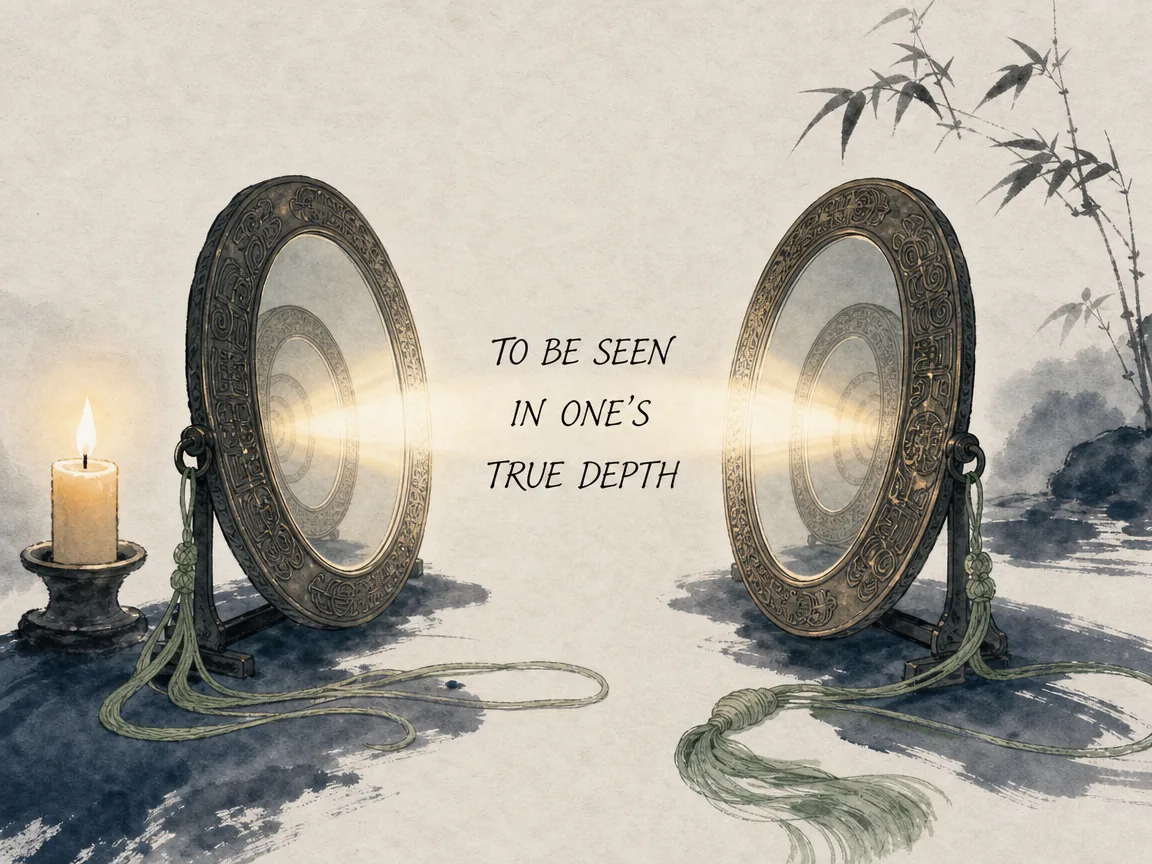
The Chinese tradition elevated zhījǐ (知己) above other forms of connection precisely because it demands something most relationships do not: both people must be real enough to be seen, and perceptive enough to see. This is why it is structurally rare. Most people spend their lives performing — at work, on social media, even in close relationships. A zhījǐ (知己) relationship requires that performance to stop, and that is terrifying for almost everyone.
The Anatomy of Human Longing
Why does this concept matter today? Because the modern condition is characterized by a particular kind of loneliness — not the loneliness of being alone, but the loneliness of being surrounded by people who do not truly know you. You can be in a room full of friends and still feel invisible. You can have hundreds of connections online and still have no one who knows what you are actually carrying.
Psychological research supports what the Chinese tradition understood intuitively. Seven studies conducted at the University of Chicago found that the sense of being known by another person — what researchers call "feeling known" — is a stronger predictor of relationship satisfaction than the sense of knowing the other person [1]. This held across family relationships, romantic partnerships, and friendships. In other words, the human need to be genuinely known is not a cultural quirk; it is a psychological fact.
The Chinese tradition identified three gifts that a zhījǐ (知己) relationship provides. First is confirmation: the experience that your inner life is real, that your feelings and perceptions are not fantasies or exaggerations. When someone truly knows you, they validate your experience without needing to agree with your conclusions. Second is the creation of a space where truth can exist without performance. In a zhījǐ (知己) relationship, you do not need to edit yourself, translate yourself, or make yourself more palatable. Third is the experience of being accepted — or at least, being held — after full exposure. This is perhaps the closest thing to what humans mean when they speak of ultimate security in connection: the knowledge that someone has seen everything and has not turned away.
Why Zhījǐ (知己) Is So Structurally Rare
If the need for being known is universal, why is zhījǐ (知己) so uncommon? The Chinese tradition identifies four structural difficulties, each of which maps onto a recognizable feature of modern life. Examine this artistic principle further through the classical aesthetic philosophy of Why the Strongest Blades Stay in Their Scabbard: The Chinese Art of Concealing Your Edge.
The first difficulty is that you must first have a self before another person can know it. This sounds obvious, but it is precisely where modern life creates the deepest obstacle. From childhood, most people are trained to perform — to be the child their parents want, the employee their boss values, the person their social circle expects. The mask becomes so familiar that the face beneath it grows indistinct. A person who does not know themselves cannot be known by another, no matter how attentive that other person may be. Shallow relationships meet at the surface because that is all either party has to offer.
The second difficulty is that being known is an act of radical exposure. Human beings carry a paradox: we desperately want to be understood, but we are terrified of what would happen if we were truly seen. The self that exists beneath performance is not always flattering — it contains vulnerability, contradiction, selfishness, fear, and shame. Most people live in a kind of tear between craving understanding and actively blocking it. A zhījǐ (知己) relationship requires dropping that blockade entirely, which demands a courage that most people never need to summon.
The third difficulty is that resonance between two people runs deeper than shared values or opinions. Two people can hold entirely different worldviews and still be zhījǐ (知己), because the connection is not at the level of ideas but at the level of how those ideas feel. The Chinese tradition has often pointed to the friendship between the poets Li Bai and Du Fu as a cultural example: one leaned toward romantic freedom, the other toward grounded observation of suffering, and yet they shared a fundamental texture of feeling about the world. Their frequency matched even though their conclusions differed. This is not something that can be engineered or negotiated — it can only be recognized when both people are present enough to meet.
The fourth difficulty is perhaps the most important for modern life: utility poisons this kind of connection. The philosopher Zhuangzi wrote in the chapter "Mountain Trees" that "the friendship of gentlemen is bland as water, while the friendship of petty men is sweet as wine" [2]. The common misunderstanding is that "bland" means cold or distant. In fact, Zhuangzi meant that water is clear, untinted, and unsweetened — it contains no agenda. When a relationship is mixed with utility, with the question of what each person can gain, the clarity is lost. You can no longer tell whether the other person sees you or sees your function. In a world that constantly asks "what's in it for me," the purest form of human connection becomes structurally endangered.
Echoes From Classical Tradition
The Chinese tradition preserved stories that illustrate what zhījǐ (知己) means in practice. The most widely known involves the musician Bo Ya and his listener Zhong Ziqi. In his letter to Ren An, the Han dynasty historian Sima Qian referenced this story, writing that after Ziqi's death, Bo Ya resolved never to play his instrument again, because there was no one left who truly heard him [3]. Sima Qian framed this with the observation that "a scholar gives themselves to one who knows them" — the idea that deep ability finds its purpose only when met with deep recognition.
These stories are not meant to suggest that zhījǐ (知己) relationships are impossible. They are meant to show that when they do occur, they are remembered with extraordinary intensity — precisely because they are so rare. The grief that Bo Ya expressed was not grief for a companion; it was grief for the loss of the one person who had made his music meaningful. Without that recognition, the music continued, but the world lost its echo.

How to Cultivate the Depth Required
The classical tradition does not leave us with only elegies for lost friendship. It also offers guidance for becoming someone capable of this kind of connection — and for recognizing it when it appears.
First, become real before you become interesting. Modern culture rewards personality, wit, and the accumulation of attractive qualities. But depth — the kind of depth that attracts a zhījǐ (知己) — begins with honesty. Practice saying "I don't know," "I was wrong," "I am afraid," and "I need help." The people who can meet you at depth are not drawn to your highlights; they are drawn to your truth. A curated self may attract admirers, but it repels those who could truly know you.
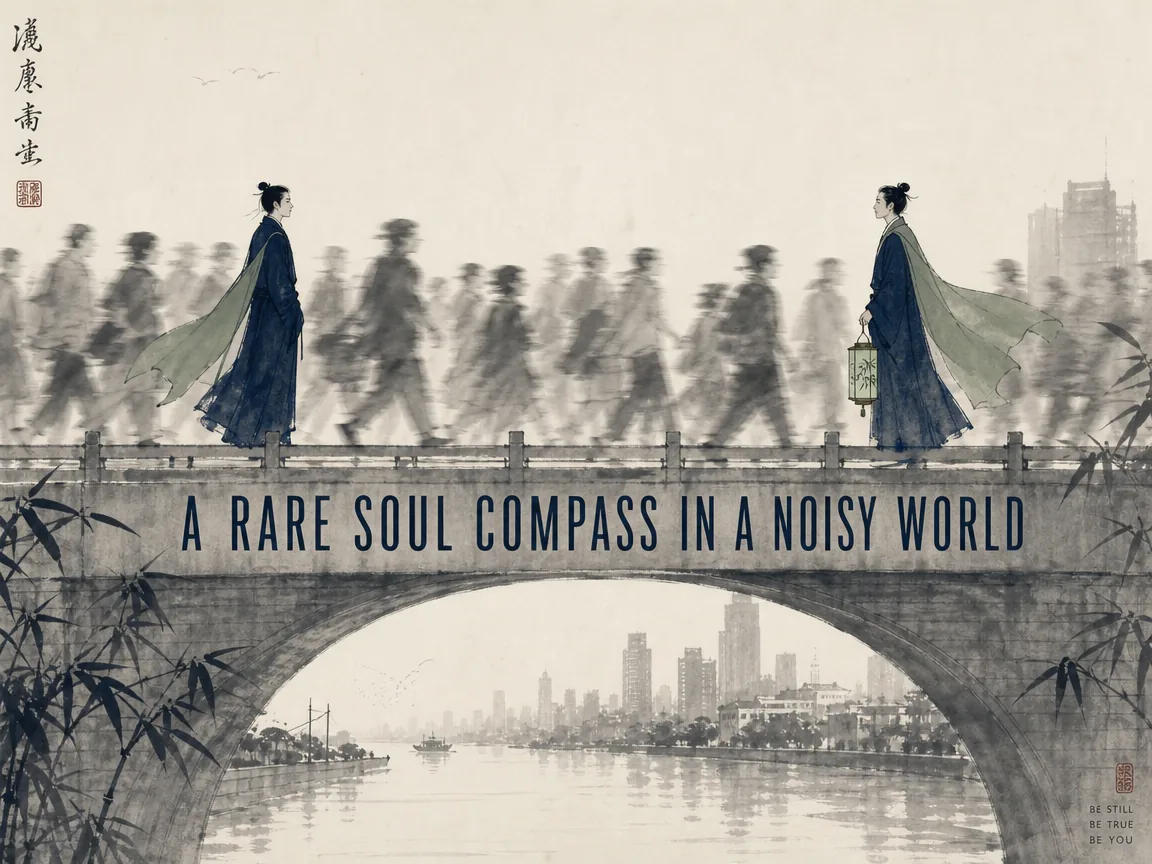
Second, practice deep listening. When Bo Ya played his zither, Ziqi did not analyze the technique; he heard the mountains and rivers in the music. This is what deep listening looks like in ordinary conversation: hearing what a person is carrying when they say something casual, sensing the question beneath the answer, noticing the silence where the real thought lives. It is a discipline that requires putting aside your own agenda long enough to enter someone else's world.
Third, allow relationships to slow down. Modern dating and networking culture optimizes for efficiency — rapid evaluation, quick decisions, constant optimization. But depth requires time, and time cannot be rushed. A zhījǐ (知己) relationship grows in the spaces between events: the long walks, the shared silences, the conversations that move from practical matters to the questions that actually matter. If you want depth, resist the pressure to accelerate. Let relationships breathe.
Fourth, accept that some connections serve their purpose and then conclude. Not every zhījǐ (知己) relationship lasts a lifetime. The briefness of Bo Ya and Ziqi's acquaintance did not diminish the reality of what they shared. A complete but brief connection is more substantial than a long relationship built on mutual misunderstanding. The measure of a zhījǐ (知己) is not duration but depth.
FAQ
Is a zhījǐ (知己) the same as having a soulmate or a best friend? No. The concept of a soulmate is typically rooted in romantic partnership. A best friend shares activities and loyalty but may not penetrate to the hidden self. A zhījǐ (知己) is specifically someone who knows your inner structure — the parts of you that others rarely see and that you may not fully see yourself.
Can a zhījǐ (知己) relationship exist between people who disagree on important issues? Yes. The Chinese tradition holds that resonance at the level of feeling and perception matters more than agreement at the level of opinion. Two people can hold opposite views and still share the same fundamental texture of experience — the same sensitivity to beauty, the same awareness of suffering, the same sense of what matters in life.
Is it possible to find a zhījǐ (知己) in the modern world, or is this concept outdated? The conditions that make zhījǐ (知己) rare — performative culture, utilitarian relationships, speed-optimized sociality — are arguably more prevalent today than ever before. But the human need it addresses has not changed. The concept remains relevant precisely because modern life makes it harder to satisfy that need.
Does becoming a zhījǐ (知己) require special training or spiritual practice? Not in any formal sense. The tradition suggests that the prerequisites are personal honesty, the courage to be seen, and the patience to let depth develop naturally. These are qualities that can be cultivated in ordinary life, though they require deliberate practice contrary to the dominant culture of speed and performance.
What Comes Next
The concept of zhījǐ (知己) does not offer a quick fix for loneliness. It offers something more honest: a description of what human connection actually requires, and a challenge to become the kind of person capable of meeting that standard. The modern world will continue to reward efficiency, performance, and utility. Choosing to value depth instead is a quiet act of resistance — and it begins not with finding the right person, but with becoming someone worth knowing.
If this exploration has resonated with you, consider reflecting on the relationships in your own life: which ones operate at the level of function, and which ones allow you to be genuinely seen? The practice of deepening your connections does not require dramatic gestures. It begins with small acts of honesty, with the willingness to listen more deeply, and with the patience to let relationships unfold at their own pace. The next step is simply to start being real — with others, and with yourself, reflecting the enduring wisdom of Zhiji Soulmate in Chinese Philosophy.
Examine this artistic principle further through the classical aesthetic philosophy of No Restraint Without Release: The Chinese Art of Inner Freedom.
Deepen your understanding of these principles in our reflection on Why Ancient Chinese Wisdom Would Hate the Revenge Stories We Love Today.
Sources & Further Reading
[1] Feeling known predicts relationship satisfaction | UChicago Knowledge — Research summary of seven studies showing that "feeling known" by another person predicts relationship satisfaction more strongly than "felt knowing" across family, romantic, and friendship relationships.
[2] Zhuangzi / Mountain Trees (莊子/山木) – Wikisource — Contains the classical passage "the friendship of gentlemen is bland as water, while the friendship of petty men is sweet as wine" (jūnzǐ zhī jiāo dàn ruò shuǐ, xiǎorén zhī jiāo gān ruò lǐ, 君子之交淡若水,小人之交甘若醴), discussing the nature of genuine versus utilitarian relationships.
[3] Sima Qian's Letter to Ren An (报任安书) – Guwen Island (古文岛) — Sima Qian's letter to Ren An, which references the story of Bo Ya and Zhong Ziqi and contains the phrase "a scholar gives their life for one who understands them" (shì wèi zhījǐ zhě yòng, 士为知己者用).
Further Reading
- The concept of zhījǐ (知己) has been explored in various forms across Chinese literary and philosophical traditions. Readers interested in the broader cultural history of Chinese friendship may wish to explore studies on classical Chinese letters, Tang dynasty poetry, and the philosophy of relational ethics in Confucian and Daoist thought.






