
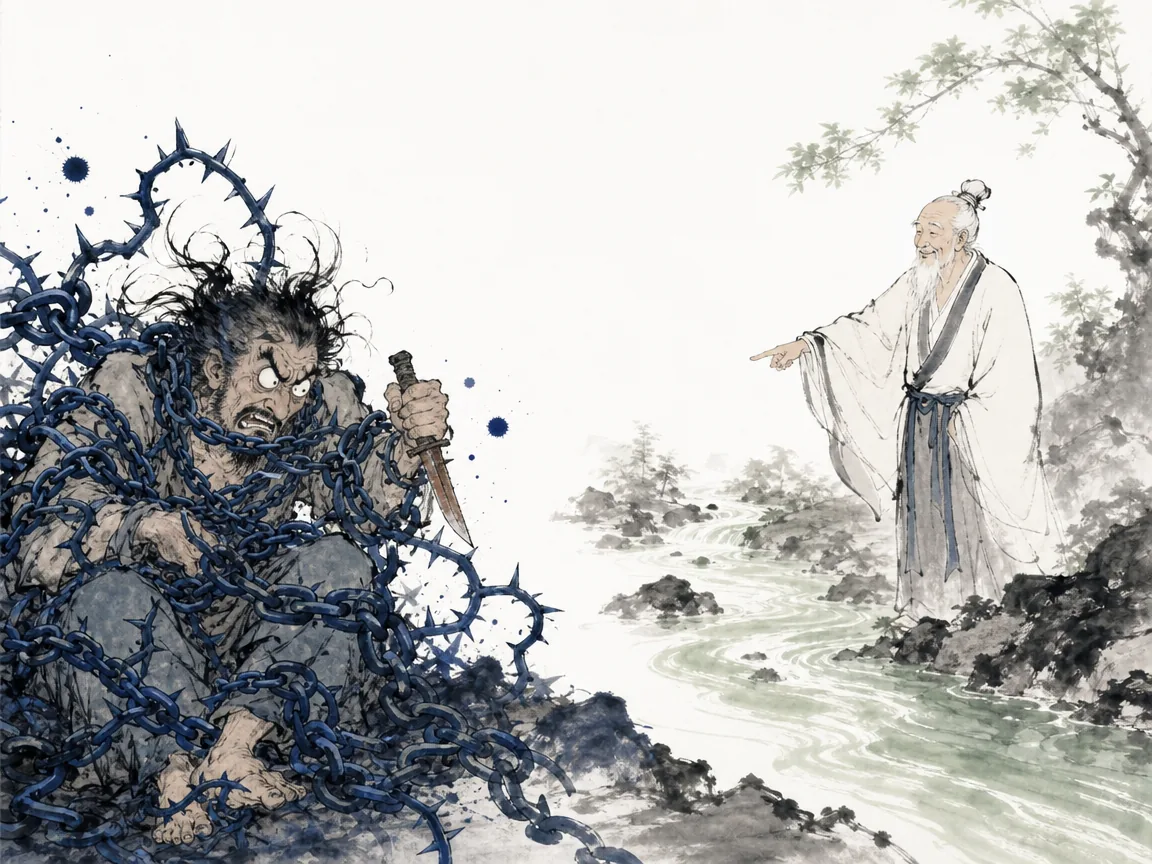
Walk through any Chinese drama marathon or scroll through a popular web novel platform, and you will encounter a familiar blueprint: a family destroyed, a protagonist reduced to silence and endurance, and eventually, a return for bloody retribution. These stories are not niche curiosities; they dominate an entire creative ecosystem. Readers frequently describe alternate endings where the hero forgives the antagonist as narrative betrayals, and audiences across the region seem to share a visceral preference for the catharsis of vengeance over the discomfort of release.
Yet when we turn to classical Chinese philosophy, the dominant message runs in the opposite direction. For centuries, thinkers associated with Confucianism and Daoism have warned that holding onto resentment primarily destroys the person who carries it. Water, in the Daoist vision, achieves its power precisely by yielding. The Confucian project centered on moral self-cultivation assumed that inward turbulence undermines outward harmony. In theory, these traditions should leave little room for the relentless revenge fantasy that saturates contemporary storytelling—a foundational perspective explored in Ancient Chinese Wisdom on Revenge.
The coexistence of both impulses — a cultural appetite for vengeance narratives and a philosophical heritage that questions their value — raises an interesting question. How do these threads relate to one another? More importantly, what can a modern reader do with this tension if it appears in their own life?
Ancient Chinese Wisdom on Revenge: The Revenge Blueprint in Modern Chinese Media
Modern Chinese fiction, film, and television increasingly center on narratives of grievance and retribution. A typical arc follows a predictable rhythm: injustice occurs, the wronged party waits, and the narrative momentum builds toward violent or decisive payoff. Variations appear across genres, from historical drama to fantasy cultivation novels, but the underlying structure often remains the same.
The emotional logic behind this popularity is understandable. Stories in which a powerless character eventually turns the tables offer psychological compensation for real or historical grievances. Rather than demanding patience or forgiveness, these narratives validate the reader's sense that wrongdoing must be answered. When a protagonist finally confronts an antagonist, the release feels earned because the story has spent hundreds of pages accumulating tension.
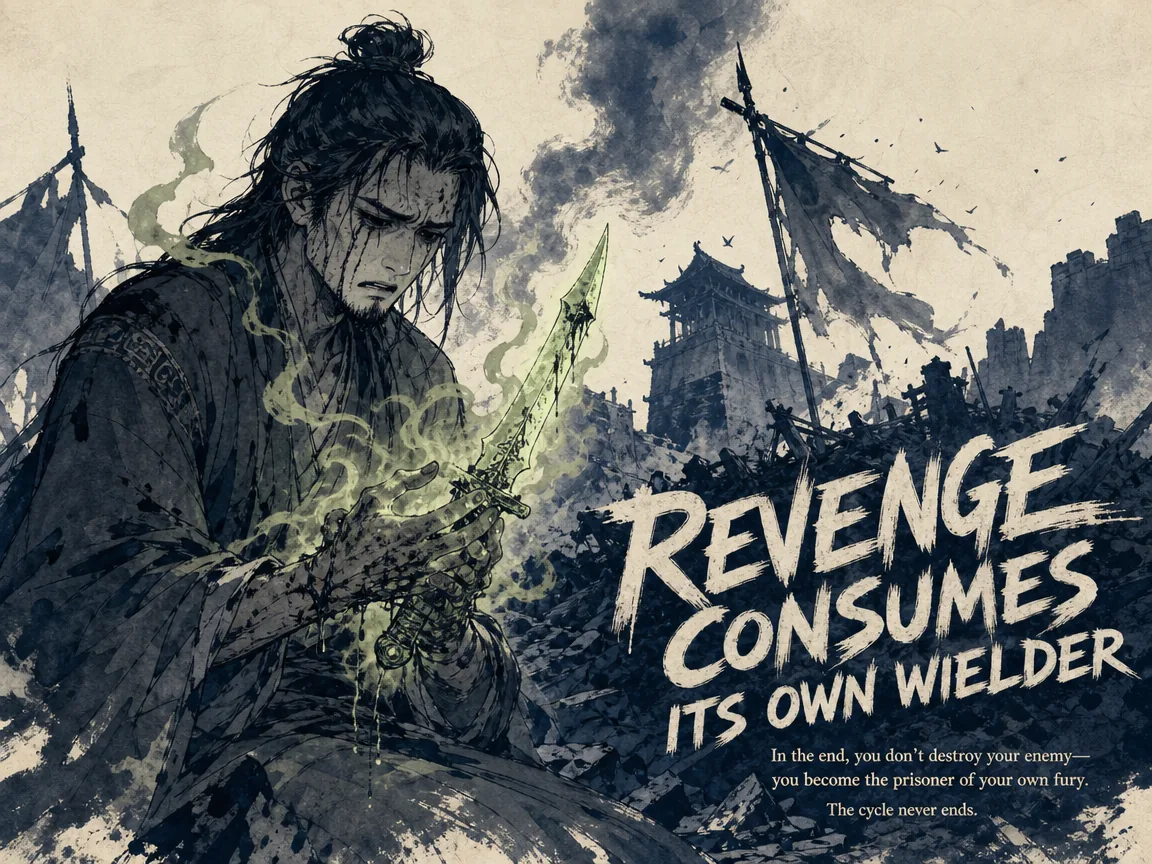
Audience reaction to alternative endings further illustrates the strength of this preference. Plotlines in which the protagonist chooses forgiveness, reconciliation, or mercy are frequently rejected by readers who view them as undermining the moral framework of the story. From this perspective, forgiving the enemy at the end does not read as moral maturity; it reads as a compromise that leaves the original injustice unresolved. This pattern is noticeable not only in Chinese fiction but also in adjacent regional traditions, where similar narratives of historical grievance and delayed payback recur.
The phenomenon becomes more meaningful when it is placed alongside the philosophical conversation it implicitly contradicts. If popular fiction treats forgiveness as a flawed ending, then classical texts that challenge the value of unending resentment occupy a surprisingly different register. The two can coexist without either erasing the other.
What the Classics Actually Say About Revenge
Classical Chinese thought rarely endorsed revenge as a virtue, though it also did not reduce ethics to simple slogans. Confucius, when asked whether one should repay injury with kindness, offered a different formulation: repay injury with justice, and repay kindness with kindness [1].
This passage is often misunderstood. Confucius was not advocating for kindness as a response to harm, nor was he advocating for ruthless retaliation. He was arguing against a certain kind of moral confusion. If kindness is given to those who cause harm, then what remains as a genuine response to those who are kind? The answer he offers — repaying injury with justice — introduces the idea of proportionality and moral clarity rather than endless escalation.
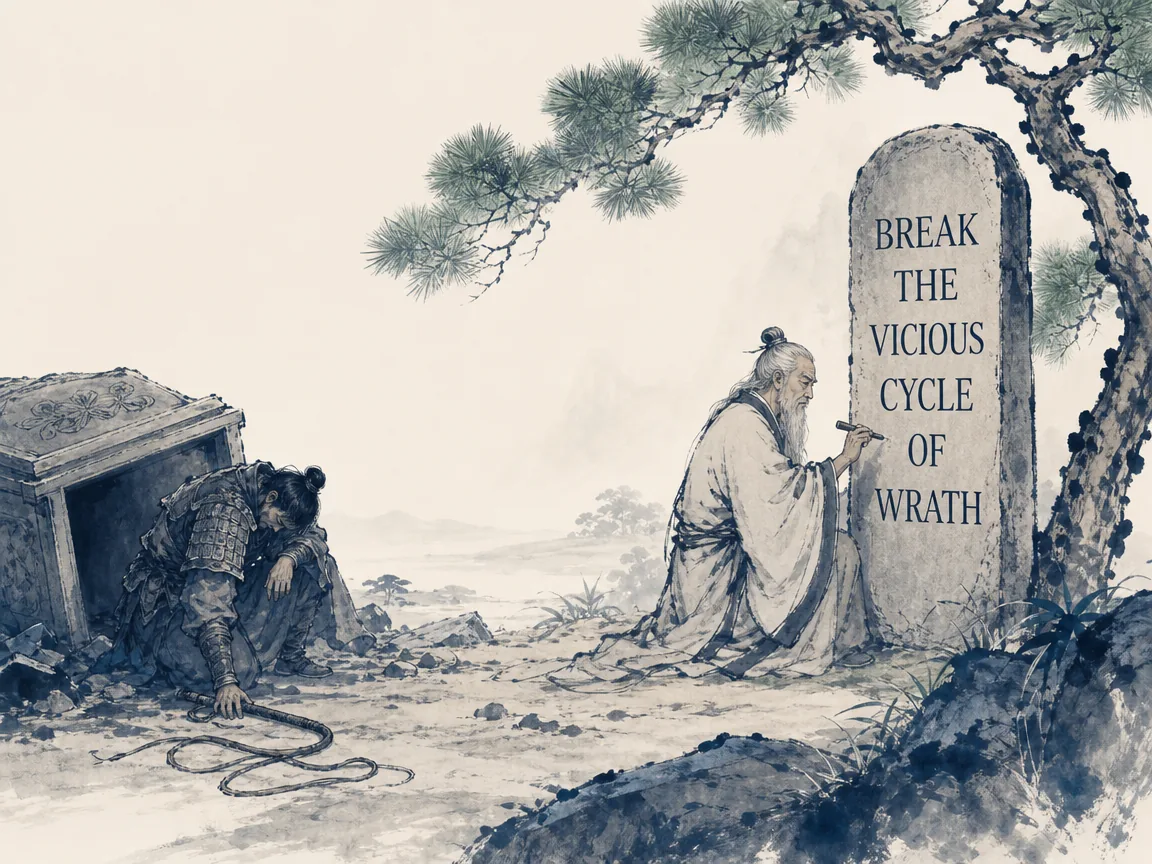
This interpretation aligns with how several scholarly translations render the passage, though the precise vocabulary carries nuances that resist simple reduction. Some translators emphasize "justice," while others highlight "uprightness" or "directness" in how one meets wrongdoing [1]. The difference matters, because treating the term strictly as legal justice risks importing a modern framework that the original context does not fully support. Still, even within that nuance, the core idea remains clear: the response to harm should be measured, appropriate, and grounded in moral direction rather than personal vendetta.
Daoist thought approaches the question from a different angle. Rather than discussing proportional response, Daoism explores the nature of resentment itself and its effects on the person who holds it. The Dao De Jing frequently uses water as a metaphor for a way of being that avoids direct confrontation yet achieves enduring results [1]. In one passage, water is described as benefiting all things without competing, settling where others dislike to settle [1]. In another, the text observes that softness and weakness overcome hardness and strength, suggesting that rigid force is not the only path to influence [1]. These images do not deny the reality of conflict; they propose that clinging to retaliation hardens the self in ways that ultimately limit it.
Zhuangzi similarly questioned the wisdom of carrying resentment, often placing human concerns against a much broader temporal and cosmic background. From that expanded perspective, grudges appear smaller, not because the harm was insignificant, but because the mind that clings to them occupies more space than the harm itself. The exact chapters and passages that develop these ideas vary among translations, and scholars continue to discuss their implications, but the general direction is consistent: carrying resentment tends to restrict the person carrying it more than it affects the source of the resentment. To explore these themes from another angle, read our related reflection on The Invisible Order: Why What You Can’t See Matters More Than What You Can.
The Hidden Link Between Catharsis and Release
One reason the tension between modern revenge fiction and classical wisdom feels so sharp is that both sides respond to the same human reality: injustice hurts, and people want it to matter.
Classical Chinese philosophy did not ask people to ignore wrongdoing or pretend it never happened. The Confucian answer — repaying injury with justice — assumes that harm requires a response. The difference lies in what follows that response. In the classical framework, once justice is served or the matter is addressed, the reasonable course is to stop carrying the wound inward. Resentment is treated not as loyalty to the wronged self but as a persistent injury that the holder inflicts on their own mind.
Modern revenge stories, by contrast, often conflate emotional release with resolution. Watching a protagonist punish an antagonist can feel satisfying in the moment, but satisfaction is not the same as peace. The narrative structure rewards the buildup and the payoff while leaving the inner life of the character relatively unexamined after the vengeance is complete. In many cases, the story ends precisely at the moment of retribution, which means the question of what comes after is never addressed.
This is not to dismiss the emotional truth behind those stories. Catharsis is real. Entertainment serves psychological functions. But when the cultural habit of consuming revenge narratives goes unexamined, it can reinforce a pattern in which people treat vindication as closure, even when their inner state remains unsettled afterward.
Classical Chinese thought would likely describe this as a confusion between two different goals. One goal is outward: addressing wrongdoing through measured action. The other is inward: preserving or restoring inner balance. Neither tradition necessarily denies the value of the first, but both warn that mistaking the second for the first can lead to prolonged suffering.
What This Means for Everyday Life
Translating these ideas into daily practice does not require adopting an ancient philosophy wholesale. It only requires noticing where resentment lives and asking what kind of answer it is actually seeking.
One useful distinction is between justice and attachment to the wound. Justice seeks an outcome: accountability, repair, boundary-setting, or proportional response. Attachment to the wound seeks something else: the certainty that the pain will be acknowledged, the hope that the other person will finally feel what was felt, or the belief that forgiveness means letting the harm disappear without consequence. Both impulses can coexist, but they often pull in different directions.
Practical boundaries are not the same as revenge fantasies. Drawing a firm line, ending a harmful relationship, confronting workplace misconduct, or choosing not to engage in online arguments are legitimate responses to wrongdoing. Classical wisdom does not oppose these actions. What it questions is the habit of rehearsing the grievance long after the practical response has been exhausted.
A simple reflective question can help separate these two patterns: when you replay a past injustice, are you trying to solve a problem, or are you trying to keep the pain alive? If the former, there are usually concrete steps that can be taken. If the latter, the grievance may have already become the primary object of attention, independent of the original harm.
A Folklore Layer Worth Noticing
Sometimes the gap between popular impulse and philosophical teaching is reflected in folk customs rather than explicit debate. The well-known saying that shaving one's hair in the first lunar month brings harm to one's maternal uncle is widely repeated in Chinese-speaking communities today. The phrase has been interpreted by some as a coded memory of anti-Qing sentiment, with "missing the old" phonetically disguised as "death of the uncle" [2].
Historical records, however, complicate that explanation. Qing-era sources that mention the taboo do not place it in the first lunar month; instead, they associate it with the fifth lunar month, particularly around the Dragon Boat Festival and the broader May customs [2]. The earliest written connection to the "missing the old" interpretation appears much later, in a county gazetteer from 1935, rather than in earlier Qing documentation [2]. Scholars therefore remain divided about whether the custom originated as political resistance, evolved from earlier folk practices, or accumulated multiple layers of meaning over time.
This uncertainty is itself instructive. Folk memories often preserve grievances long after their original context fades. A custom that may have once carried political weight can gradually become a domestic rule about haircuts and family etiquette. The form persists even when the original cause becomes obscure. In that sense, folklore can function like revenge fiction: it keeps a collective wound visible, sometimes without anyone fully understanding why.
Practical Ways to Work With This Tension
The following suggestions are not prescriptions for how to live, but optional tools for readers who want to examine their own relationship to grievance.
Notice when replay replaces resolution. If you catch yourself repeatedly recounting an injustice in situations where no action is required, pause and ask whether the replay is serving a purpose. Recalling harm to plan a response is different from recalling harm to sustain anger.
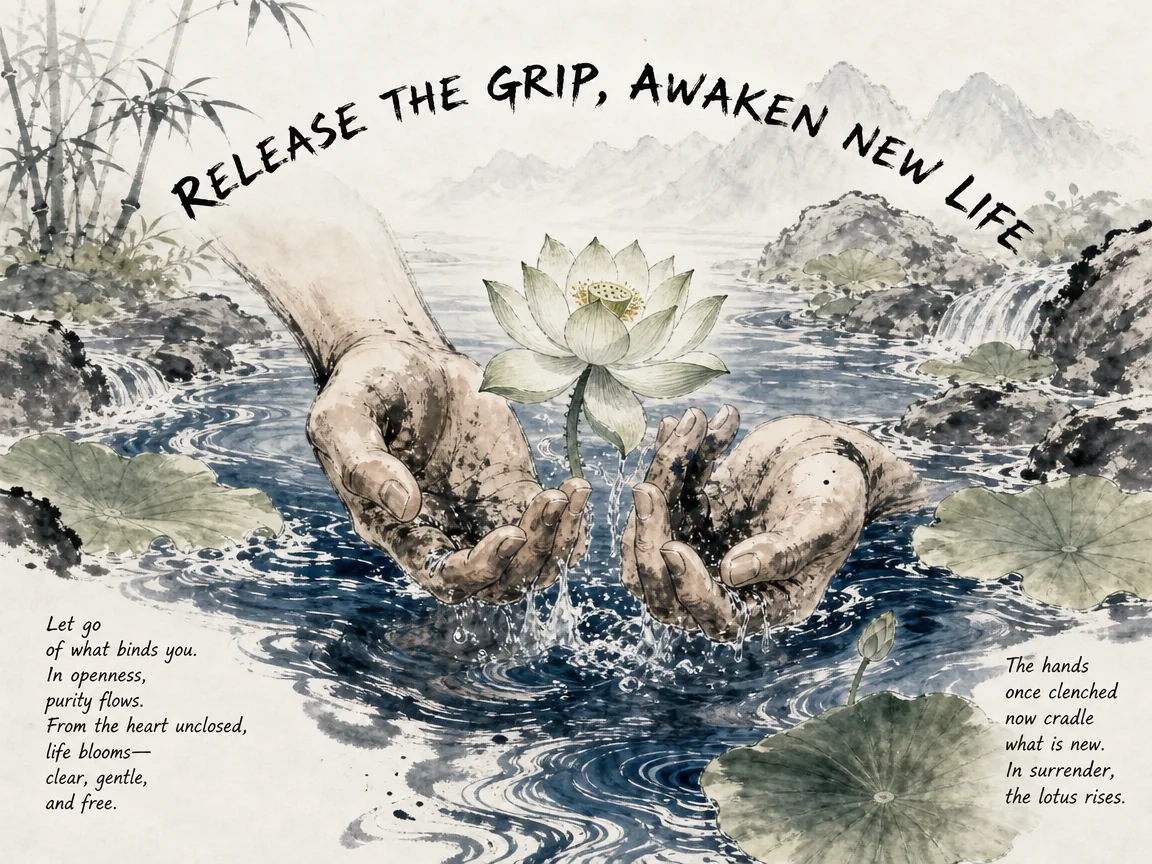
Separate accountability from attachment. You can insist on consequences without making the offender's suffering the central focus of your life. Justice and release are not mutually exclusive, but they do require different emotional work.
Test the forgiveness assumption. Forgiveness is often presented as moral superiority or emotional weakness. Neither characterization is necessarily accurate. Forgiveness, in many traditions, is a personal decision about what to stop carrying, not a requirement to erase boundaries or pretend the harm did not occur.
Allow stories to satisfy without equating them with solutions. Enjoying revenge fiction is not a moral failure. Entertainment serves psychological functions that real life does not always provide. The question is whether fictional catharsis becomes a substitute for addressing grievances in actual relationships and situations.
FAQ
Does classical Chinese philosophy say revenge is always wrong? No. Classical texts generally distinguish between proportional, measured responses to wrongdoing and unending personal vengeance. Confucius, for example, argued that injury should be met with justice rather than with blanket kindness or indiscriminate retaliation [1].
Why do modern Chinese audiences prefer revenge endings over forgiveness endings? Popular narratives often treat forgiveness as narrative betrayal because it can feel like the original harm goes unaddressed. Readers frequently want stories to validate the seriousness of wrongdoing, and a revenge payoff can feel like moral accounting, whereas forgiveness can feel like deflection.
Is holding a grudge really as damaging as the classics suggest? Different traditions describe this in different ways. Daoist thought tends to frame resentment as a burden that restricts the holder more than the source, while Confucian thought emphasizes how inner turbulence disrupts moral clarity and relationships. Whether this applies universally depends on individual circumstances and broader psychological perspectives.
Can enjoying revenge fiction coexist with valuing inner peace? Yes. Entertainment and personal ethics operate in different domains. Fiction provides catharsis and imaginative resolution that real life rarely offers. The two can coexist as long as consumption of revenge narratives does not replace practical efforts to address actual grievances.
Closing Thoughts
Modern Chinese pop culture and classical Chinese philosophy are not simply opposites. They are two responses to the same human condition: the reality of harm and the search for relief from it. Popular narratives offer emotional validation and imagined closure. Classical traditions offer a longer view of what happens when relief is sought through unending resentment.
Neither side cancels the other. Fiction can be honest about the depth of human anger. Philosophy can remind us that anger, when held indefinitely, tends to outlive its original target. The practical task is not to choose between them blindly but to notice when each applies, and when neither does.
If this topic resonates with you, a useful next step is to identify one recurring grievance in your own life and ask whether you are still working toward a resolution, or whether the grievance has become habitual. That question alone rarely produces immediate answers, but it often clarifies what kind of move is actually needed, reflecting the enduring wisdom of Ancient Chinese Wisdom on Revenge.
Examine this artistic principle further through the classical aesthetic philosophy of What Confucius Meant by *Lǐ* (礼): Appropriateness Over Hierarchy.
Sources & Further Reading
[1] Analects 14.34 — Some one said: "What do you say…






