
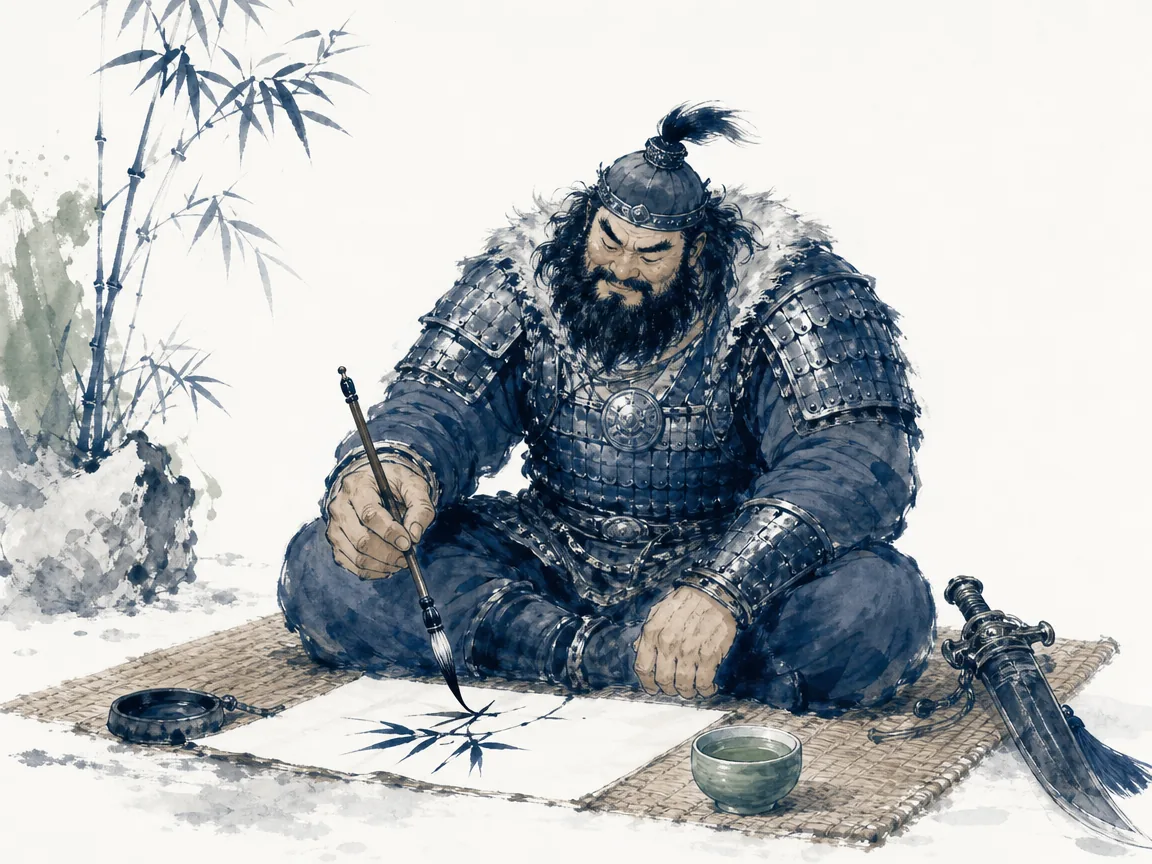
The Mongols came with swords. They left behind emperors who wrote Chinese poetry and ruled through Confucian bureaucracy. The Manchus conquered in 1644 and established a dynasty that preserved the examination system, honored Confucius, and adopted the administrative machinery that had run China for centuries. Across different eras, a remarkable pattern repeats itself: those who conquered China did not erase it. They became part of it.
This is not a story of peaceful cultural exchange. Conquest was violent. The Mongol invasions of the thirteenth century caused enormous loss of life. The Manchu queue order forced Chinese men to shave their foreheads and wear their hair in a braid, a requirement that triggered fierce resistance and brutal punishment. Yet despite coercion, war, and ethnic hierarchy, the gravitational pull of Chinese civilization proved stronger than the weapons of its conquerors—a foundational perspective explored in Chinese Cultural Gravity.
For international readers approaching Chinese history, this pattern may seem counterintuitive. We are accustomed to thinking of civilizational collapse — Rome fell and did not return; Babylon was absorbed and forgotten. China, too, was conquered, repeatedly. But it did not vanish. Understanding why requires looking past the drama of battles and dynastic turnover to the deeper structures that held Chinese civilization together.
Chinese Cultural Gravity: The Puzzle of Civilizational Rebirth
The contrast with other ancient civilizations is striking. Rome, Babylon, Assyria — each represented a towering cultural achievement that eventually fractured under external pressure and was replaced by something new. When successive waves of conquerors swept through the Mediterranean and Near East, the earlier civilizations did not reconstitute themselves. They became layers in the archaeological record.
China followed a different trajectory. Despite repeated conquest by northern nomadic groups — Xianbei, Khitan, Jurchen, Mongol, Manchu — Chinese civilization re-emerged each time, carrying forward its administrative traditions, written language, philosophical frameworks, and social practices. The conquests were real and devastating. But the civilizations that emerged after each wave of invasion shared more continuity with what came before than rupture.
Historians have offered various explanations for this pattern. Some point to the sheer scale and maturity of Chinese institutional development. Others emphasize the role of the written language and classical texts as a unifying cultural force. A third strand of analysis focuses on how Chinese identity was constructed — not primarily around bloodline or ethnicity, but around participation in a shared civilizational order.
The Qing case is especially well-documented. Manchu rulers who were outsiders to the native Han Chinese population "wished to win over their subjects in order to consolidate Manchu rule throughout the empire" [1]. The elites "were at first horrified but later were relieved to see that the Manchu emperors respected Chinese tradition and culture, which they had already largely adopted" [1]. This sequence — conquest, fear, adaptation, integration — recurs throughout Chinese history.
The Qing dynasty is particularly instructive. Manchu rulers maintained their own distinct identity and institutions while simultaneously embracing Confucian governance, the examination system, and Chinese court ritual. Their legitimacy rested not on replacing Chinese culture but on positioning themselves as its legitimate heirs and protectors.
What Held It Together — The Institutional Framework
What made Chinese civilization so absorbent was not a single idea but a complete operating system for organizing society. At its core was Confucianism — not merely as philosophy but as a practical framework for governance, social relations, education, and moral cultivation.
Confucian thought provided a comprehensive model for how society should function. It defined hierarchical relationships, prescribed proper conduct in every context, and established the examination system that recruited officials based on literary and moral competence rather than birthright. The system was so thoroughly developed over centuries that any conqueror who wished to govern the territory had to work through it.
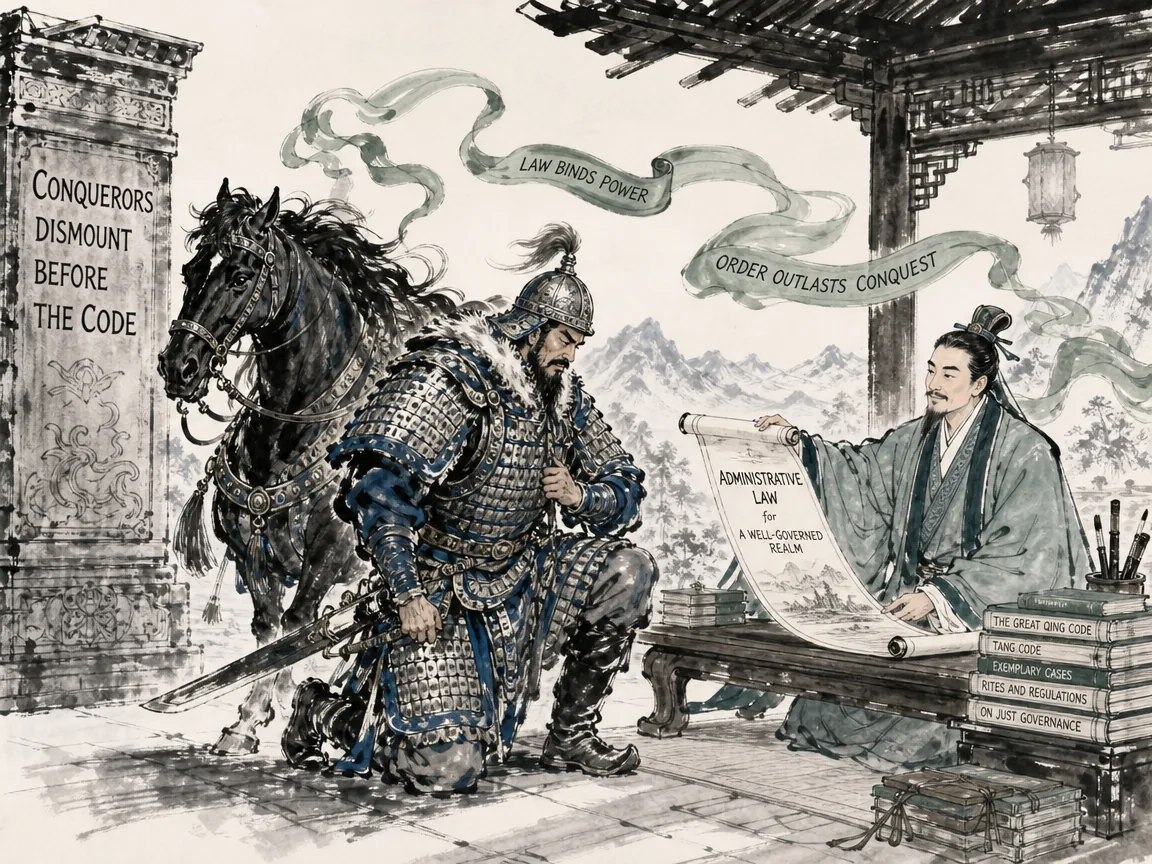
A key feature was the scholar-official class, men who had spent decades mastering the classical texts and bureaucratic procedures. No external ruler could simply install a handful of military governors and expect a vast agrarian empire to function. The machinery of taxation, justice, grain storage, flood management, and census recording required hundreds of thousands of trained administrators. These were Chinese-educated men, and they brought their cultural assumptions with them into every interaction with their new rulers.
The concept of lǐ (礼), often translated as "ritual propriety," helps explain the depth of this system. Ritual propriety (lǐ, 礼) was not simply etiquette. It was the architecture of civilization — the set of practices that structured everything from family life to statecraft, from ancestral worship to court ceremony. Confucian hierarchy was understood to order "both the natural and the human worlds" [1]. When conquerors adopted Chinese administrative practices, they were not merely borrowing tools. They were entering a complete cosmological and social framework.
This connects to the classical concept of tiānxià (天下) — often rendered as "all under heaven." Tiānxià (天下) described a political and cultural order that was theoretically open to anyone who participated in its practices. Membership in Chinese civilization was not originally defined by ethnic origin but by cultural participation. This does not mean the boundary was always easily crossed in practice, but the principle created a powerful invitation: adopt the rites, and you belong. Connect these enduring values to the broader cultural heritage explored in Why China Keeps Existing When Other Empires Fade.
The examination system reinforced this logic. Success in the exams required mastery of the classical canon — Confucian texts, history, poetry, and policy essays. A Manchu nobleman who wanted to govern effectively needed to understand the same texts as a Han scholar. Over generations, the cultural gap between conqueror and conquered narrowed, not through forced assimilation alone, but through the practical demands of running a civilization.
Three Forces of Absorption
Scholars have identified several structural factors that made absorption likely rather than accidental.
The scale of existing civilization. By the time the Mongols conquered China in the thirteenth century, Chinese bureaucratic and administrative traditions had been developing for well over a millennium. The system for managing millions of peasants, hundreds of cities, complex tax regimes, and vast water-control projects was far more sophisticated than anything the steppe nomads could replicate from scratch. A conqueror who wished to govern rather than simply plunder had no choice but to adopt the existing framework. The Mongols found themselves governing a civilization whose infrastructure predated their arrival by many centuries.
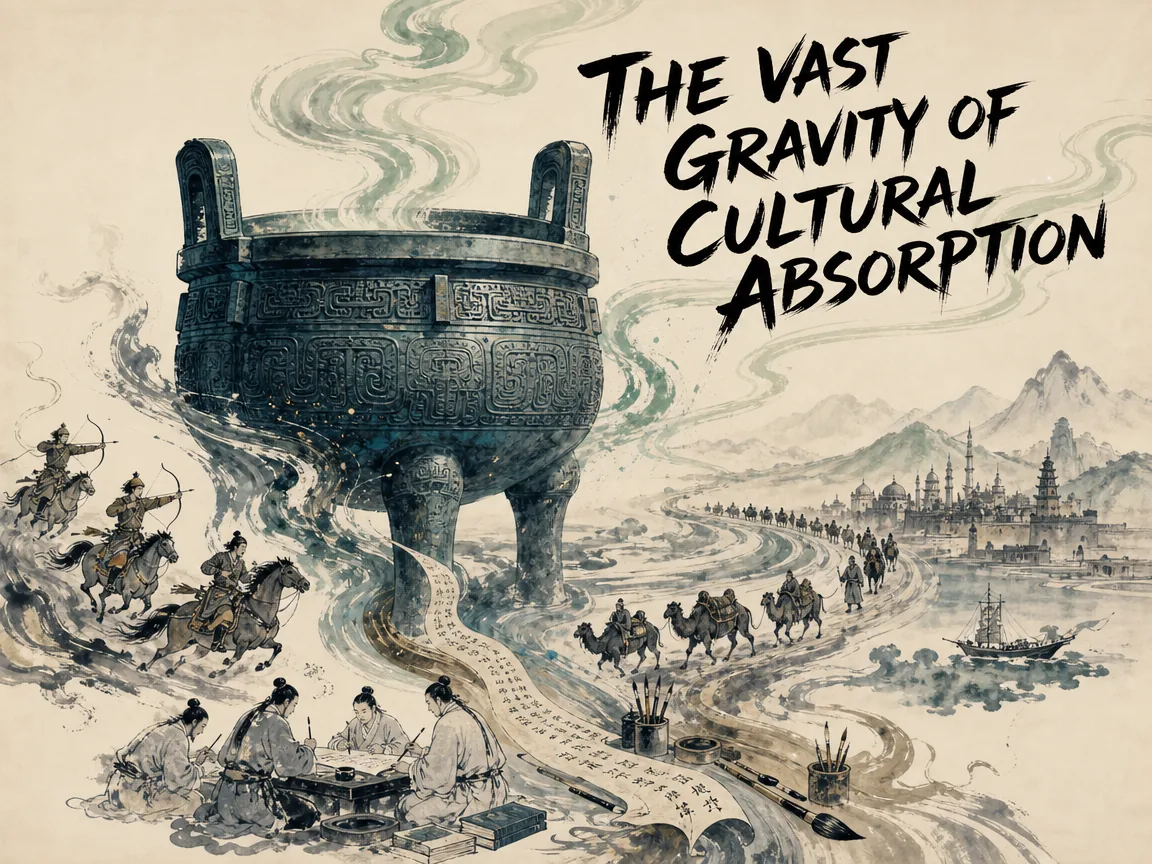
Identity based on participation rather than blood. Unlike many modern concepts of national identity, traditional Chinese civilization emphasized cultural practice over ethnic origin. The classical distinction between the civilized and the barbarian was understood in terms of cultural behavior, not genetic descent. Those who observed the rites were inside; those who did not were outside. This meant the door was, in principle, always open to anyone willing to learn the customs and submit to the same social order.
Demographic gravity. The numbers were overwhelmingly on the side of the settled population. The Mongol military apparatus that conquered China, however formidable, represented a tiny fraction of the total population. The Manchu entry into China proper involved perhaps a few hundred thousand people confronting a population vastly larger. Survival and prosperity in this environment required adaptation. The conquerors needed the conquered to farm, trade, administer, and sustain the economy. In adopting Chinese institutions to do so, they also absorbed Chinese culture.
These three forces operated together like a river current. An individual or group might swim upstream for a generation or two, maintaining distinct identity and resisting change. But sustained contact with the civilizational mainstream gradually shifted direction. The image of water shaping stone, of softness overcoming hardness, resonates with Daoist thought.
Honesty About the Process — Not a Gentle Fairy Tale
It is important not to romanticize this process. Absorption was not always gentle, voluntary, or symmetrical.
The Mongol conquest of the thirteenth century involved massive destruction. Northern China suffered devastating campaigns, and the population decline during the transition has been described by historians as catastrophic. The Yuan dynasty implemented administrative classifications that treated different groups unequally — Mongols, Semu, Han, and Southerners — though modern scholarship debates whether this constituted a rigid four-tier hierarchy or a more fluid set of administrative categories [7].
The Qing dynasty's queue order was one of the most coercive assimilation policies in Chinese history. All Chinese men were required to adopt the Manchu hairstyle, shaving the front of their heads and wearing the long braid, with monks as the only explicit exception [8]. Resistance was met with execution. The order was not a cultural invitation; it was a test of loyalty enforced by violence.
Ethnic hierarchies persisted throughout both periods. The Yuan and Qing both maintained separate legal and administrative provisions for different groups. Conquerors did not simply dissolve into the population; they reshaped Chinese civilization even as they were shaped by it. The Manchu emperors, for instance, preserved distinct institutions alongside Chinese bureaucratic structures [1].
What makes the pattern historically notable is not that it was painless or fair, but that the gravitational pull of a mature civilizational framework operated even against resistance. Coercion went both ways. The Manchus forced their hairstyle on the Han, but the Han Confucian system, in turn, forced the Manchus to govern through its categories, recruit through its exams, and legitimize themselves through its rituals. Neither side emerged unchanged.
What This Means Today — Lessons Beyond History
The story of Chinese civilization absorbing its conquerors is not merely a historical curiosity. It offers a lens for understanding how culture operates as a form of power — one that does not rely on force but on the gravity of a way of life so comprehensive, so deeply embedded, and so practically indispensable that participation in it becomes the path of least resistance.
For readers interested in Chinese philosophy and practical wisdom, this historical pattern connects to several enduring themes. The Daoist insight that softness overcomes hardness — that water shapes stone not through confrontation but through persistence — finds a parallel in civilizational dynamics. A culture that is flexible enough to incorporate its adversaries, that defines belonging through practice rather than exclusion, may prove more durable than one that relies on walls and weapons.
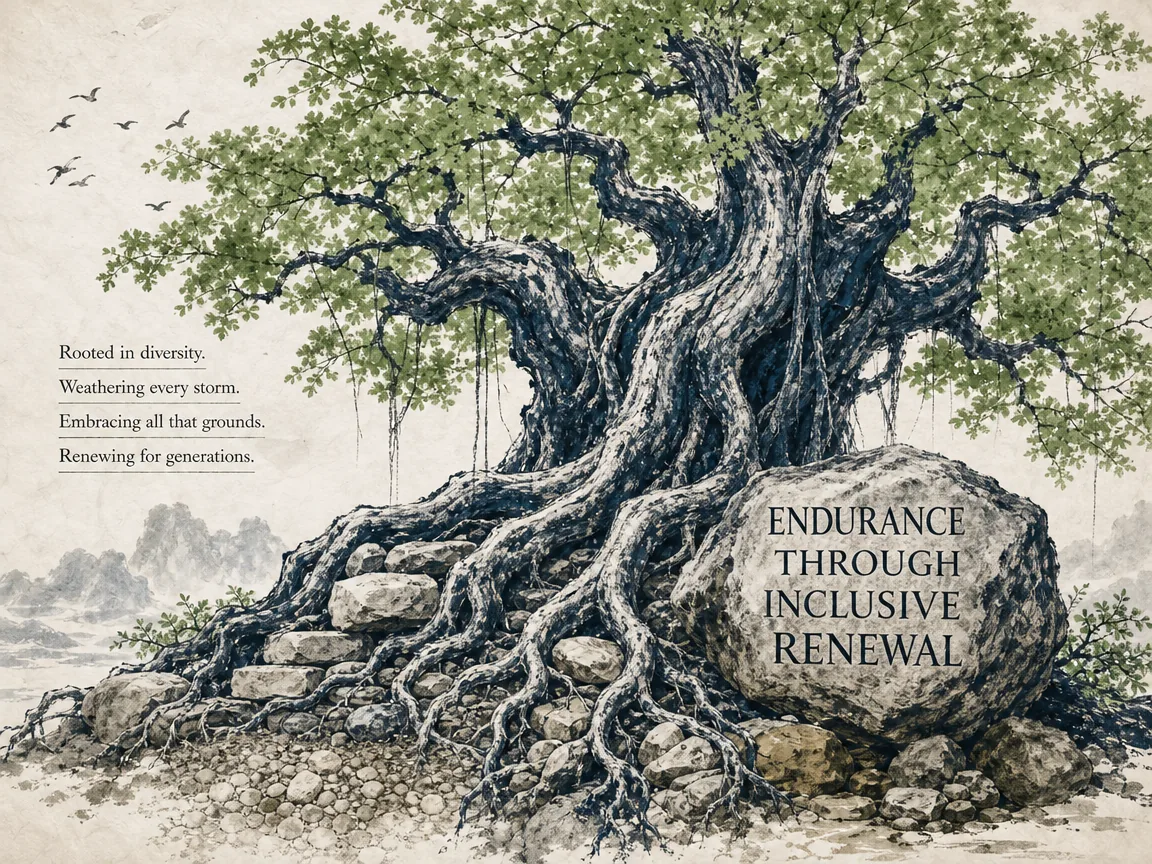
On a personal level, the phenomenon invites reflection on the cultural gravitational fields we inhabit. Every person grows up within a web of practices, languages, and norms that were not chosen but received. These invisible structures shape how we think, what we value, and how we relate to others. Recognizing this is not an exercise in cultural determinism; it is an opportunity to understand the forces that have shaped us and to think more deliberately about what we carry forward.
In an age marked by civilizational anxiety, identity politics, and debates over belonging, the Chinese historical model presents an alternative vision. It suggests that identity need not be a zero-sum game — that participation in a cultural tradition does not require the erasure of everything that came before, and that the most enduring forms of strength may be those that absorb rather than repel.
A Practical Reflection
If you want to explore how this historical pattern relates to your own life, consider this exercise: identify one cultural practice in your daily routine that you inherited rather than chose — a way of greeting, a manner of resolving conflict, a rhythm of work and rest. Trace where it came from. Ask whether it serves you well. This kind of reflective practice aligns with the Confucian emphasis on self-examination and the Daoist sensitivity to the forces that shape us from behind the scenes.
Frequently Asked Questions
Was Chinese cultural absorption always peaceful? No. The historical record shows that conquest was often violent and that assimilation was sometimes forced. The Manchu queue order, for example, was enforced through execution [8]. The Mongol campaigns caused enormous loss of life. The absorption of conquerors into Chinese civilization was a structural outcome of demographic and institutional realities, not a deliberate policy of multicultural harmony. Both coercion and adaptation played roles.
Does this mean ethnic identity did not matter in imperial China? Ethnic identity mattered significantly, but it operated alongside cultural identity. The Yuan and Qing dynasties both maintained distinct institutions and legal provisions for different ethnic groups. At the same time, the classical Chinese tradition contained a powerful cultural dimension — the idea that participation in shared practices could transcend ethnic origins. These two currents coexisted, sometimes in tension, throughout imperial history.
How does this compare to other empires in world history? Unlike the Roman Empire, which fragmented into successor kingdoms that replaced its cultural framework, or the various empires of Mesopotamia that vanished after conquest, Chinese civilization demonstrated remarkable continuity across dynastic transitions. Historians note that the Chinese approach to incorporating diversity differed from European imperial models, tending to standardize and absorb rather than maintain rigid center-periphery distinctions. Each empire handled diversity differently, and the Chinese case is distinctive in its longevity and depth of institutional continuity.
What can modern readers take from this pattern? The pattern suggests that cultural frameworks which are comprehensive, practical, and open to participation tend to endure. It also reminds us that no cultural identity is static — every living tradition is shaped by contact with others. For individuals, it raises the question of how consciously we engage with the cultural currents we inherit, and how we choose to participate in the civilizations around us.
Moving Forward
The story of Chinese civilization absorbing its conquerors is ultimately a story about the durability of ideas, institutions, and practices. Walls can be breached. Armies can be defeated. But a civilization that has built a world complete enough — a world of language, ritual, governance, and meaning — can outlast the very forces that seek to destroy it, not by resisting change, but by making room for it.
For readers drawn to this intersection of history and philosophy, the next step is to explore the classical sources that shaped this civilizational framework. The Confucian classics — particularly selections from the Analects and the Mencius — reveal the philosophical foundations of the social order that proved so absorbent. Daoist texts like the Zhuangzi offer complementary reflections on flexibility, naturalness, and the strength of the yielding. Together, they provide the intellectual toolkit that Chinese civilization carried through every cycle of conquest and rebirth.
If this exploration resonates with you, consider subscribing to the Chidestiny newsletter for deeper readings from the classical sources and ongoing reflections on how ancient wisdom speaks to contemporary questions.
Examine this artistic principle further through the classical aesthetic philosophy of When You Can’t Escape: Ancient China’s Answer to Life’s Tracks.
Sources & Further Reading
[1] The Grandeur of the Qing: Statecraft and Imperial Legitimacy | Columbia University — Documentation of Manchu rulers' adoption of Chinese political culture and Confucian traditions to consolidate rule across the empire. The Grandeur of the Qing – Scroll Comparison — Primary documentation of the Manchu queue order and its enforcement across Chinese male populations, with monks as the sole exception. New Evidence Overturning the Four-Class System Theory of the Yuan Dynasty | Hiroshima University — Scholarly reevaluation of Yuan dynasty social classification, challenging the traditional four-tier hierarchy model and arguing that categories such as Semu were administrative rather than purely discriminatory.
[2] Further Reading (not cited in this article):
[3] Thomas Barfield, The Dangerous Frontier: Nomads and the Chinese State — Analysis of the complex relationship between steppe nomads and Chinese civilizations.
[4] Jan Burbank and Francis Cooper, Empires in World History — Comparative analysis of imperial approaches to diversity and incorporation.
[5] Jonathan Spence, The Search for Modern China — Comprehensive history covering the dynastic transitions discussed in this article.
[6] Edward L. Dreyer, The Early Ming: China's Oriental Expansion — Scholarly overview of Mongol and Manchu rule in China.
[7] New Evidence Overturning the Four-Class System Theory of the Yuan Dynasty | Hiroshima University
[8] The Grandeur of the Qing – Scroll Comparison







[…] Deepen your understanding of these principles in our reflection on How Could a Civilization Win by Absorbing Its Conquerors? The Surprising Power of Chinese Cultural G…. […]