
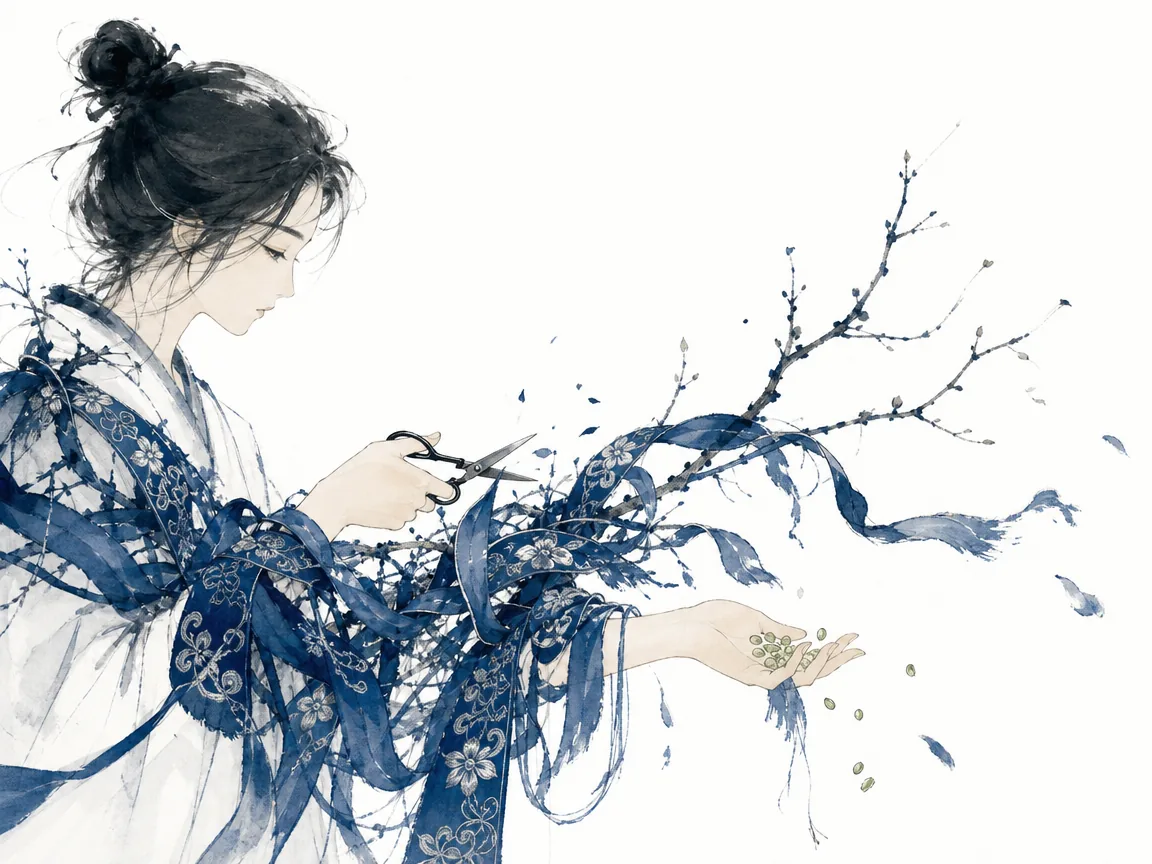
You know that moment — late at night, after the emails have stopped coming, after the scrolling has slowed — when you catch yourself wanting something and wonder: does this actually belong to me, or did I absorb it from somewhere else? The ambition. The anxiety about not being enough. The carefully curated sense of what a life should look like. None of it feels invented. That's precisely the problem.
Most of what we call our own desires, fears, and life directions are not original to us. They arrived quietly, through family expectations, cultural scripts, professional norms, and the invisible machinery of social comparison. We internalize them so gradually that they pass undetected for years — sometimes decades — before we realize we may have been living someone else's architecture. Zhuangzi, one of the great thinkers of the Chinese philosophical tradition, identified this phenomenon over two millennia ago and offered one of the most piercing diagnoses of spiritual foreign occupation ever written—a foundational perspective explored in Zhuangzi Chapter 8 Meaning.
His approach is neither nihilistic nor escapist. It is an exercise in discrimination — a method for learning to tell the difference between what grows from your own nature and what has been grafted onto you by forces outside yourself. The question he leaves us with is not whether you are succeeding by external standards, but whether you are still recognizably yourself.
Zhuangzi Chapter 8 Meaning: The Extra Toe That Grows Inside You
The chapter commonly known as Pian Mu (骈拇), often translated as "Webbed Toes" or "Connate Digital Lobes," is one of the earliest texts in the Zhuangzi — a collection that traditional scholarship places within the Outer Chapters of the received text. The Zhuangzi is conventionally organized into Inner Chapters (1–7), Outer Chapters (8–22), and Miscellaneous Chapters (23–33), a structure established by the third-century commentator Guo Xiang [1]. While the Outer Chapters are broadly associated with Zhuangzi's school of thought, modern scholarship generally does not attribute any specific chapter to Zhuangzi himself with full certainty, and authorship of even the Inner Chapters remains debated [1].
Within this context, Pian Mu opens with a striking image. It describes people born with webbed or extra toes and fingers — congenital formations that appear to belong to the body but distort its natural shape. Zhuangzi uses this physical anomaly as a metaphor for something far more pervasive: the desires, ambitions, moral performances, and social standards that accumulate within a person over time and come to feel inseparable from who they are. The key insight is that something can grow inside you without originating from you. It can feel deeply personal while actually being implanted by an environment you never chose.
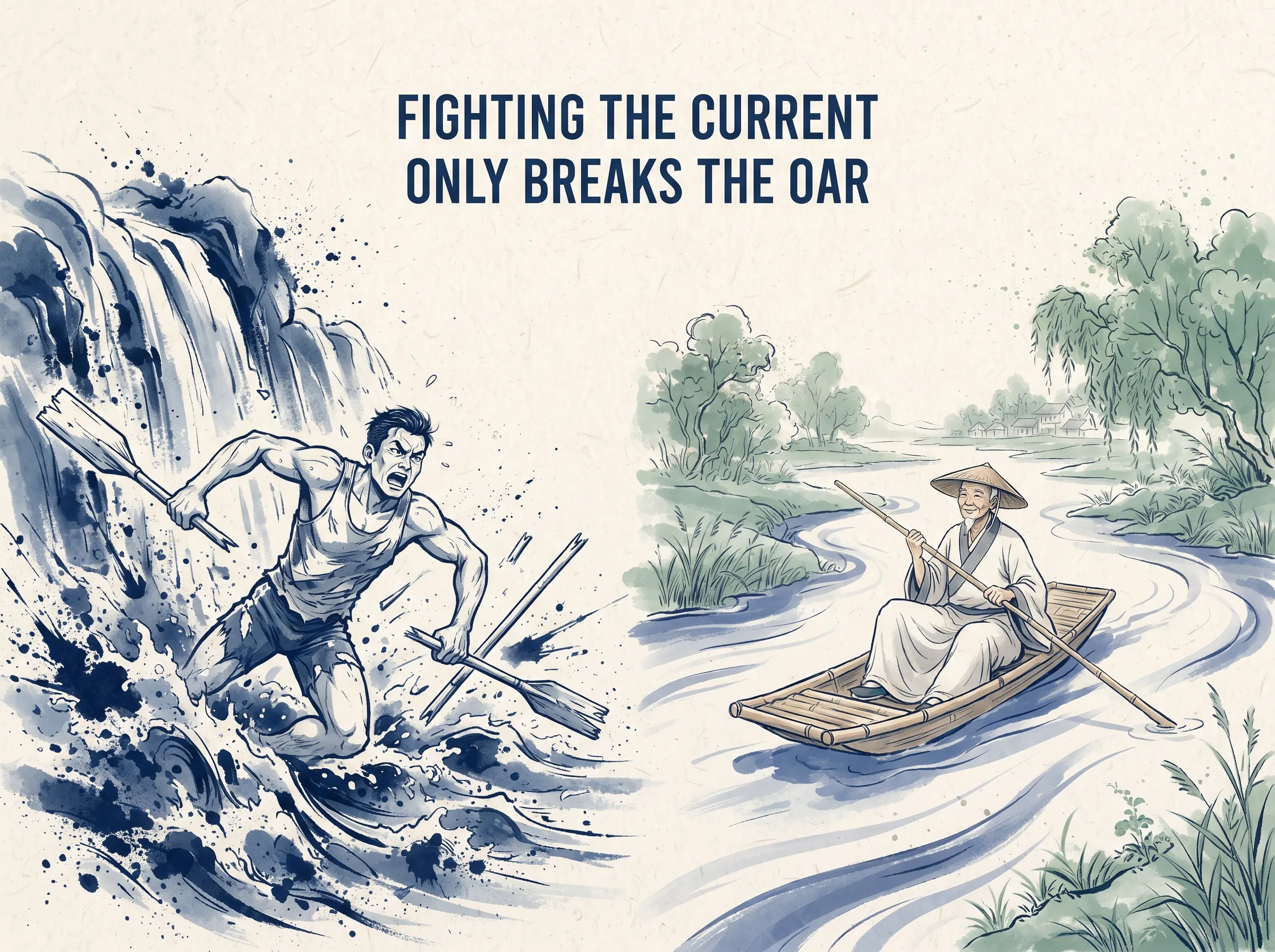
The chapter turns to a phrase that scholars often translate as the "genuine feeling of life and nature" or "the true disposition of innate nature (xìngmìng, 性命)" — xìng mìng zhī qíng (性命之情). This concept lies at the heart of Zhuangzi's critique. He is asking: what does a life look like when it unfolds without artificial pressure, without being forced into shapes prescribed from the outside? The answer he points toward is not a life stripped of all structure, but one in which form follows function, and function follows nature rather than convention.
How Standards Become Your Own Voice
Zhuangzi traces a mechanism that should feel unmistakable to anyone who has lived in a competitive, achievement-oriented culture. It begins with an external standard — something society tells you success looks like, or what a good person values, or how ambition should behave. Over time, you begin to measure yourself against that standard. When you fall short, the resulting anxiety feels personal; you call it motivation or drive. When you perform correctly, you feel relief or pride, which you interpret as genuine satisfaction. But neither feeling has a clear origin point that you can trace back to your own unmediated response. It was always already shaped by something external.
This process is what Zhuangzi warns against throughout the Zhuangzi: the slow substitution of outer templates for inner direction. He does not argue that education, relationships, or social roles have no place in a meaningful life. Rather, he identifies the danger that arises when these external frameworks cease to serve life and instead become the standard by which life is judged. A student who once loved learning because it felt alive may find that learning has been redefined as credentials, rankings, and career leverage — until the activity itself produces exhaustion rather than aliveness. The original impulse has been replaced by an installed program.
The chapter also introduces the image of growths or tumors — terms that scholars sometimes render as useless growths (zhuì yóu, 赘疣) — that attach themselves to the body. They exist in form but not in function. They belong to the body's surface but not to its healthy structure. A person can carry them for years and mistake them for essential parts of themselves. Modern anxiety, chronic self-doubt, the compulsion to prove one's worth, the fear of being perceived as inadequate — these are the kinds of growths Zhuangzi invites us to examine. They feel like us because they have been with us for so long. But proximity does not guarantee authenticity.
Four Ways the Grafting Shows Up Today
The distortions Zhuangzi describes do not disappear when we leave ancient texts behind. They take new shapes that match the structures of our time. Four patterns are especially visible: To study the primary classical text and commentary, explore the original Chinese text and deep philosophical translation in Webbed Toes: Natural Integrity vs. Artificial Moral Additions.
"I am my achievements." Zhuangzi warns against yi wu yi xing — trading one's true nature for external things such as fame, wealth, and status. When the self is reduced to a portfolio of accomplishments, it becomes a collection of data points rather than a living presence. The person who defines themselves entirely by professional trajectory is not unique; they are the logical endpoint of a culture that rewards external measurement above all else.
"I am my responsibilities." When duty replaces discretion and obligation becomes a form of self-erasure, the role consumes the person. A life organized entirely around what one "should" do leaves little room for what one naturally wants or needs. The boundary between healthy commitment and self-abandonment is thin, and it is easy to cross it without noticing.
"I am my moral image." There is a difference between genuine kindness and the performance of goodness. The latter arises not from an unforced response to another person's suffering but from a fear of being judged as insufficiently virtuous. When morality becomes a social currency rather than a natural expression of human feeling, it turns into armor — useful for defending status, destructive for nurturing connection.
"I am my anxiety." The chronic sense of not-enoughness that characterizes much of modern life is not a personal failing; it is a manufactured condition. Systems of comparison, productivity optimization, and constant evaluation produce this anxiety systematically. Yet we internalize it as character — as if we were simply born deficient rather than trained to feel perpetually inadequate.
The Practice of Subtraction
Zhuangzi is often misunderstood as advocating withdrawal, laziness, or blanket rejection of social norms. This reading misses the nuance of his position. His point is not that all structure is harmful, but that structure which overrides nature becomes distortion. The remedy is not chaos but discernment — a disciplined practice of separating what serves life from what displaces it.
The process can be approached in four steps, each oriented toward clarity rather than renunciation:
First, see what is extra. Name the desire, the fear, the ambition, the image. Do not immediately judge it as good or bad. Simply identify it as something that may have been grafted rather than grown. This act of attention alone is already a form of cultivation.
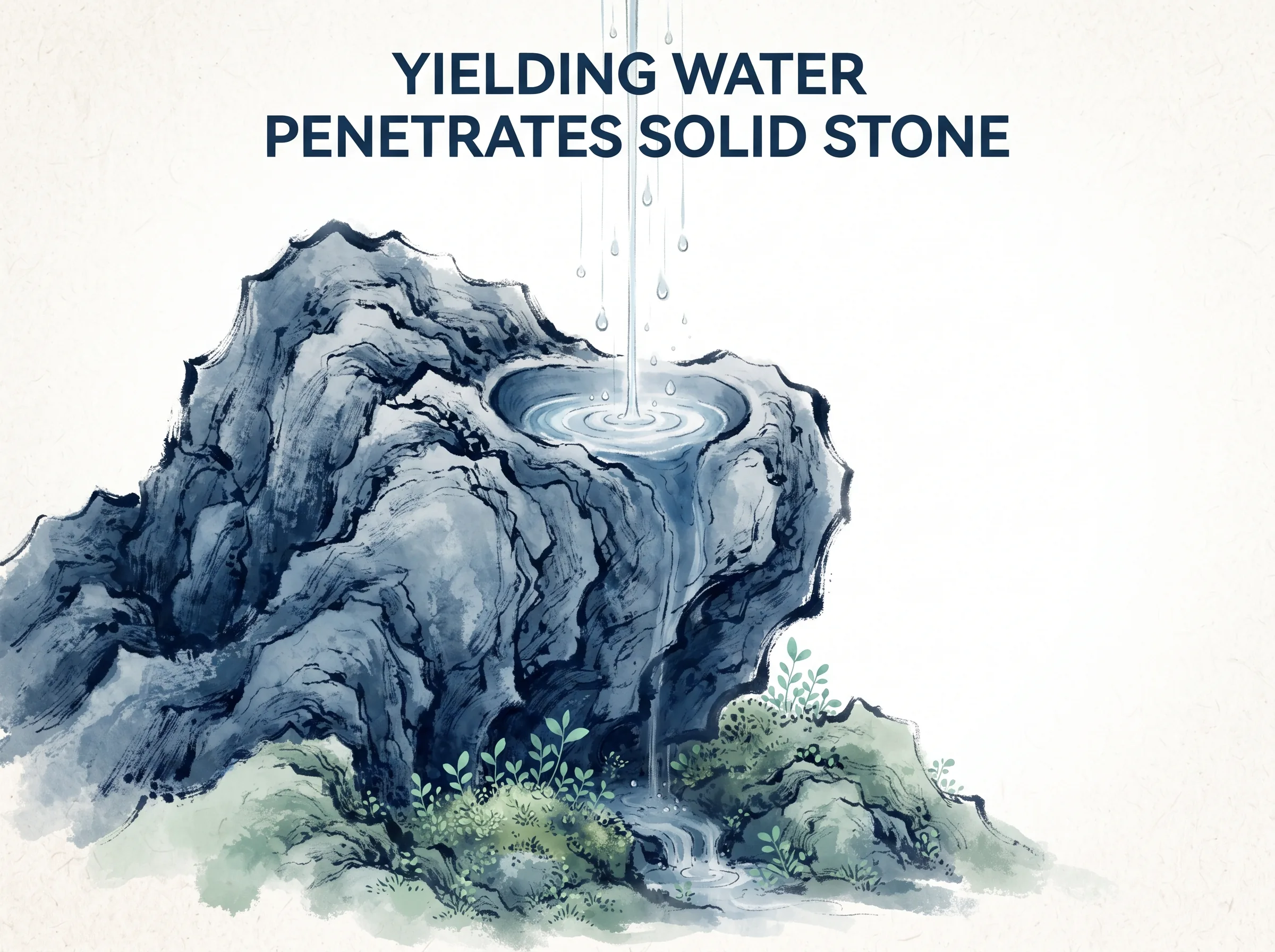
Second, trace its origin. Ask who taught you to want this. Which system benefits from your pursuit of it? When did it first appear in your life? Where is the earliest traceable moment when this desire or fear entered your consciousness? Tracing is not about assigning blame; it is about understanding provenance.
Third, test it against your nature. Does this desire feel expansive and light when pursued, or contracted and anxious even when achieved? Does the pursuit of this goal make your life feel more alive, or does it steadily narrow your range of possible responses? Zhuangzi's standard is not moral perfection but vitality — whether a particular drive enlarges or constricts the capacity to live fully.
Fourth, release what does not belong. This release is not loss. It is recognition. Removing a graft does not wound the body; it reveals its original shape. The practice is ongoing rather than complete — Zhuangzi's point is that the process of discrimination itself is the cultivation. Each time you distinguish between an implanted standard and a genuine desire, you strengthen the capacity to see more clearly.
What Remains When the Noise Is Stripped Away
What does a life look like once the grafted layers are removed? Zhuangzi does not describe a blank or empty existence. He points toward a life that moves from its own center rather than reacting to external templates. This is distinct from the Western notion of "finding yourself" as if the self were a fixed object waiting to be discovered. Zhuangzi's self is not a static identity; it is a living capacity to respond authentically to each situation as it arises.
This connects to the Daoist principle of ziran — often translated as spontaneity, naturalness, or self-so. In Zhuangzi's usage, ziran does not mean doing nothing. It means acting in accordance with the actual nature of a situation rather than imposing an external script upon it. As scholars note, Zhuangzi's vision involves living things choosing and realizing possibilities within their particular environments, interacting with the world in ways that emerge from their own nature rather than from prescribed programs [1]. A person guided by ziran does not reject rules outright; they allow rules to serve life rather than demanding that life serve rules.
One might object that this approach seems too simple — that stripping away layers of ambition, moral performance, and social calibration would leave a person unprepared for the complexity of the real world. Zhuangzi does not deny complexity. He asks only that complexity serve life rather than replace it. A sophisticated mind is not the enemy; a mind that has been trained to confuse external measures with internal worth is. The distinction matters.
The Question Zhuangzi Leaves You With
The original question — how do you tell the difference between your true nature and what has been grafted onto you? — is reframed by Zhuangzi's analysis. The deeper question is not whether you are successful enough by any given standard, but whether you are still yourself. The danger Zhuangzi identifies is not failure by anyone else's measure; it is succeeding so completely within someone else's design that you become unfamiliar to yourself.
Tonight, choose one desire, one fear, or one ambition you are carrying. Ask only: Did this grow from me, or was it planted in me? The question itself is not an answer. It is an invitation to attend more carefully to your own inner landscape. Asked honestly, even once, it begins the practice.
FAQ
Is Zhuangzi saying we should reject all social norms and moral values? No. Zhuangzi's critique is not a blanket rejection of civilization, morality, or social roles. He objects to norms and values that have become external instruments of control — tools that override natural life rather than serve it. The distinction he draws is between what arises organically from human nature and what is imposed from outside and then mistaken for inner conviction.
Can someone practice this kind of self-discernment without becoming selfish or indifferent? Yes. Zhuangzi's project is not about isolating the self from the world but about clearing away distortions so that genuine human responses — compassion, creativity, responsibility — can operate without being hijacked by social performance. A life stripped of grafted ambitions is not necessarily a life stripped of connection. In fact, Zhuangzi suggests that clarity about one's own nature makes authentic engagement with others more possible, not less.
How do I know whether something is truly my nature or just a deeply internalized social expectation? There is no single test that guarantees certainty. Zhuangzi's approach is gradual and iterative. He invites you to trace origins, observe the quality of your responses, and notice whether a particular drive enlarges or contracts your sense of being alive. Over time, patterns emerge. The practice itself — persistent, honest attention — is what develops the capacity to discriminate.
Does Zhuangzi's philosophy apply to people in highly structured or demanding professions? Yes. Zhuangzi's concern is not with any particular lifestyle but with the relationship between a person and the standards they inhabit. A surgeon, a teacher, a musician, or an entrepreneur can all benefit from distinguishing between commitments that arise from their own nature and those that have been absorbed from external pressures. The question is not whether you participate in society but whether society participates in you without your awareness, reflecting the enduring wisdom of Zhuangzi Chapter 8 Meaning.
To explore these themes from another angle, read our related reflection on The Deepest Incompleteness Is Not Physical: What Zhuangzi’s *De Chong Fu* Teaches About Inner Wholeness.
For a deeper comparative examination of these ideas, explore our related study on Why Do We Get More Confident the Less We Know?.
Sources & Further Reading
[1] Stanford Encyclopedia of Philosophy — Zhuangzi — Authoritative scholarly overview of Zhuangzi's philosophy, the structure of the received text, and debates about chapter attribution.
[2] Zhuangzi: Basic Writings, translated by Burton Watson (Columbia University Press) — Widely used English translation of the Zhuangzi, including the Outer Chapters.
[3] Zhuangzi: Webbed Toes (庄子·骈拇) — Primary source text, available in various scholarly editions and translations.






