
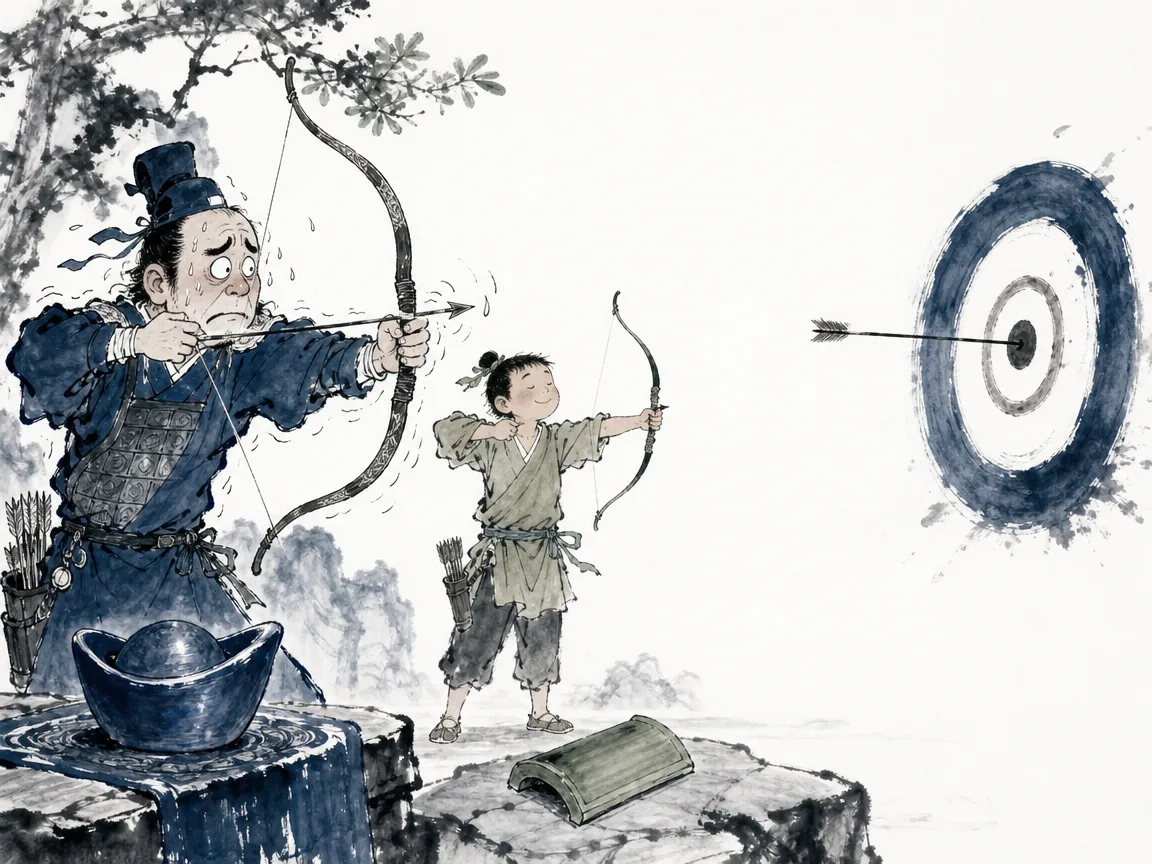
We have all been there. The job interview that feels like it will define your future. The presentation where your mind goes blank. The creative project that stalls the moment you think about an audience. The relationship where the more you care, the more you fumble. In these moments, something strange happens: the skills we have practiced for years, the instincts that normally serve us well, seem to abandon us. We try harder. We grip tighter. And the worse things get.
This is not a personal failing. It is a pattern so familiar that it has its own name — choking under pressure. Modern psychology has studied it extensively, describing how anxiety and worry compete for working memory and how explicit monitoring of automated skills can undermine performance [3]. But the insight that over-investment in outcomes can damage the very thing we most want to protect is far older than any laboratory study. It appears in one of the most remarkable chapters of the Zhuangzi, a foundational text of Chinese thought. That chapter, known as Da Sheng (达生), translates roughly as "Understanding Life" or "Navigating the Texture of Existence," and it offers a way of thinking about performance, creativity, and the self that still feels startlingly fresh—a foundational perspective explored in Zhuangzi Chapter 19 Meaning.
The Zhuangzi is a classical Chinese text whose composition is the work of multiple authors across generations, and scholars continue to debate which passages reflect the earliest layers of the tradition [2]. Its voice is paradoxical, literary, and deeply concerned with how a person lives freely in a world full of constraints. The Da Sheng chapter is especially striking because it does not offer abstract philosophy alone — it tells stories. And in those stories, we find a mirror held up to our own habits of self-sabotage.
Zhuangzi Chapter 19 Meaning: The Craftsman Who Made Ghostly Work
One of the most widely recognized stories from the Zhuangzi involves a craftsman named Zhi Qing (梓庆). He carved wooden frames for hanging bells, and when his work was complete, people who saw it were astonished — they could not tell whether it was made by human hands or by spirits [1]. When the ruler asked him what technique allowed such work, Zhi Qing did not describe a sophisticated method or rare materials. Instead, he described a process of inner clearing.
Before he began, he fasted. After three days, he no longer entertained thoughts of reward, promotion, or salary. After five days, he let go of concern for praise or criticism, for cleverness or clumsiness. After seven days, he forgot the existence of his own body — his limbs, his physical presence — until there was simply no "self" left to worry about. Only then did he enter the forest to observe the natural character of the timber. When he found a piece whose form seemed already complete, he worked it. If nothing matched, he stopped. He explained his success as "meeting heaven with heaven" — aligning his work with the inherent nature of the material rather than imposing his will upon it [1].
This story is not about mystical inspiration. It is about attention. Zhi Qing's secret was not a technique for carving better wood; it was a discipline for removing the noise that usually drowns out perception. He cleared away the hunger for recognition, the fear of judgment, and finally the sense of himself as someone who needed to prove anything. What remained was a mind capable of seeing what was actually there.
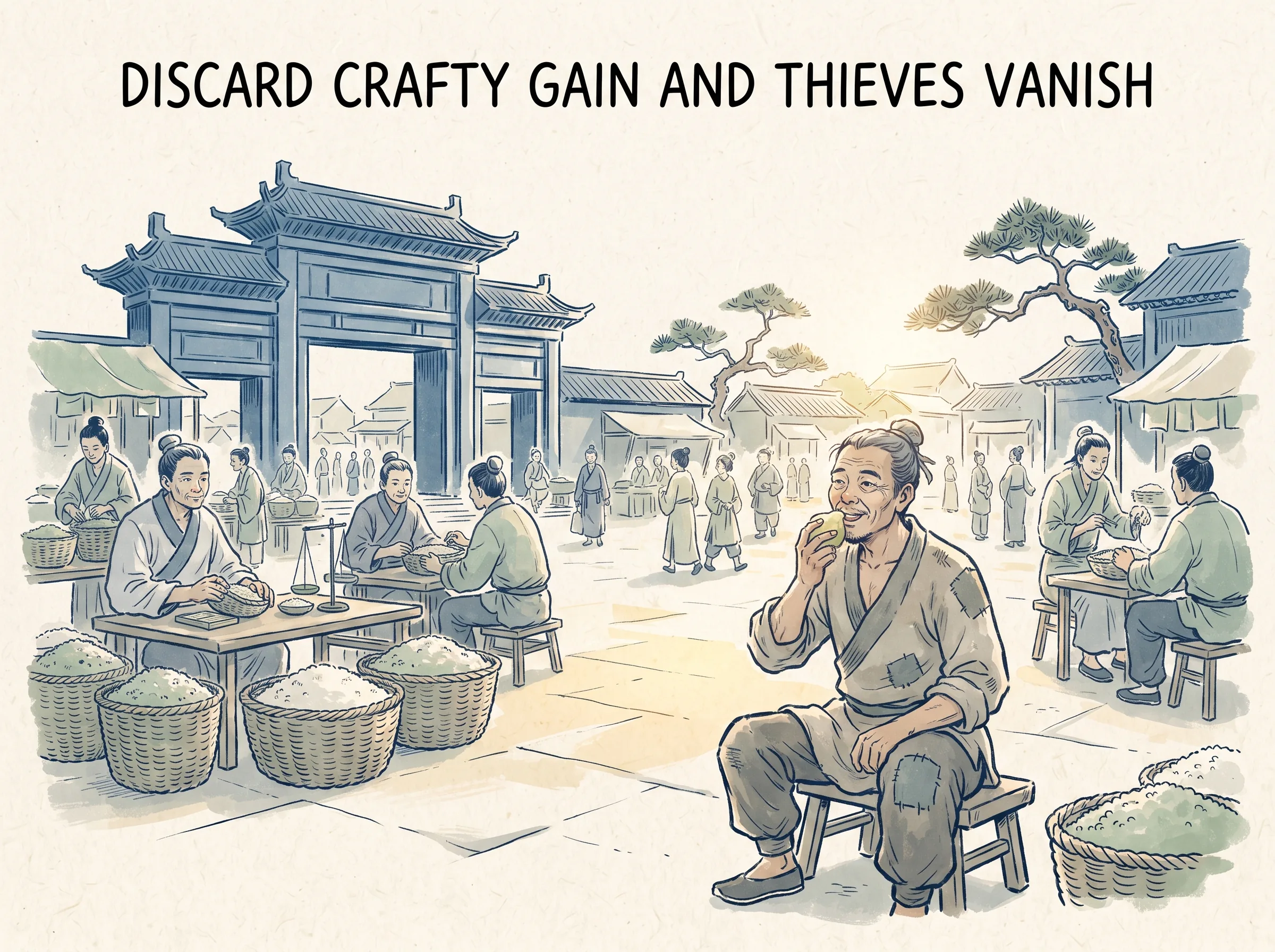
Most creative work today begins in the opposite direction. We open a document, launch a project, or step onto a stage already carrying the weight of metrics, deadlines, and the imagined opinions of others. We bring our anxiety into the room before the work has even started. Zhi Qing offers a different sequence: clear the mind first, then engage with the task. The result is not less skill but more — because the skill that remains is uncluttered.
Continue with the deeper interpretation and practical application.
ChiDestiny members get access to the full analysis, modern applications, and the growing Chinese Wisdom Library.
Frequently Asked Questions
Is the Zhuangzi a single book written by one author?
No. Scholars generally agree that the Zhuangzi is a composite text assembled over time by multiple authors and compilers, and it is difficult to attribute specific passages to any one individual [2]. The chapter known as Da Sheng belongs to what scholars call the "Outer Chapters," which reflect the broader Zhuangzi tradition rather than a single biographical figure.
Does Zhuangzi recommend that we stop caring about our work?
Not exactly. The Zhuangzi distinguishes between caring with clarity and caring with obsession. The former frees attention for the task at hand; the latter consumes attention with worry about outcomes. The difference is not whether you care but where your care is directed.
Can ancient Chinese philosophy really help with modern performance anxiety?
The stories in the Zhuangzi describe psychological patterns — the way excessive concern for outcomes impairs performance — that align with findings from modern psychology on choking under pressure [3]. Whether one approaches these ideas through philosophy or through science, the practical insight is the same: what we carry into a moment shapes what we are able to do in it.
How should I understand the phrase "understanding life" (达生)?
The phrase is rich and somewhat debated among scholars. It is not simply about health, longevity, or self-improvement in the modern sense. It points toward a capacity to move through life without being blocked or constricted by fear, desire, or rigid self-conception — a kind of fluency in living itself.
Moving Forward
The Zhuangzi does not promise that life will become easier if we stop clinging to outcomes. Difficulties will still arise. Stakes will still matter. But it offers something perhaps more valuable: a way of meeting those stakes without losing ourselves in the process.
The craftsman who fasts from reward, the gambler who learns to release his grip on gold, the swimmer who does not fear the water — these are not fantasies. They are invitations to examine how we carry ourselves into the moments that matter most. The next time you face a high-stakes situation, ask yourself a simple question: what weight am I bringing that I do not need to carry?
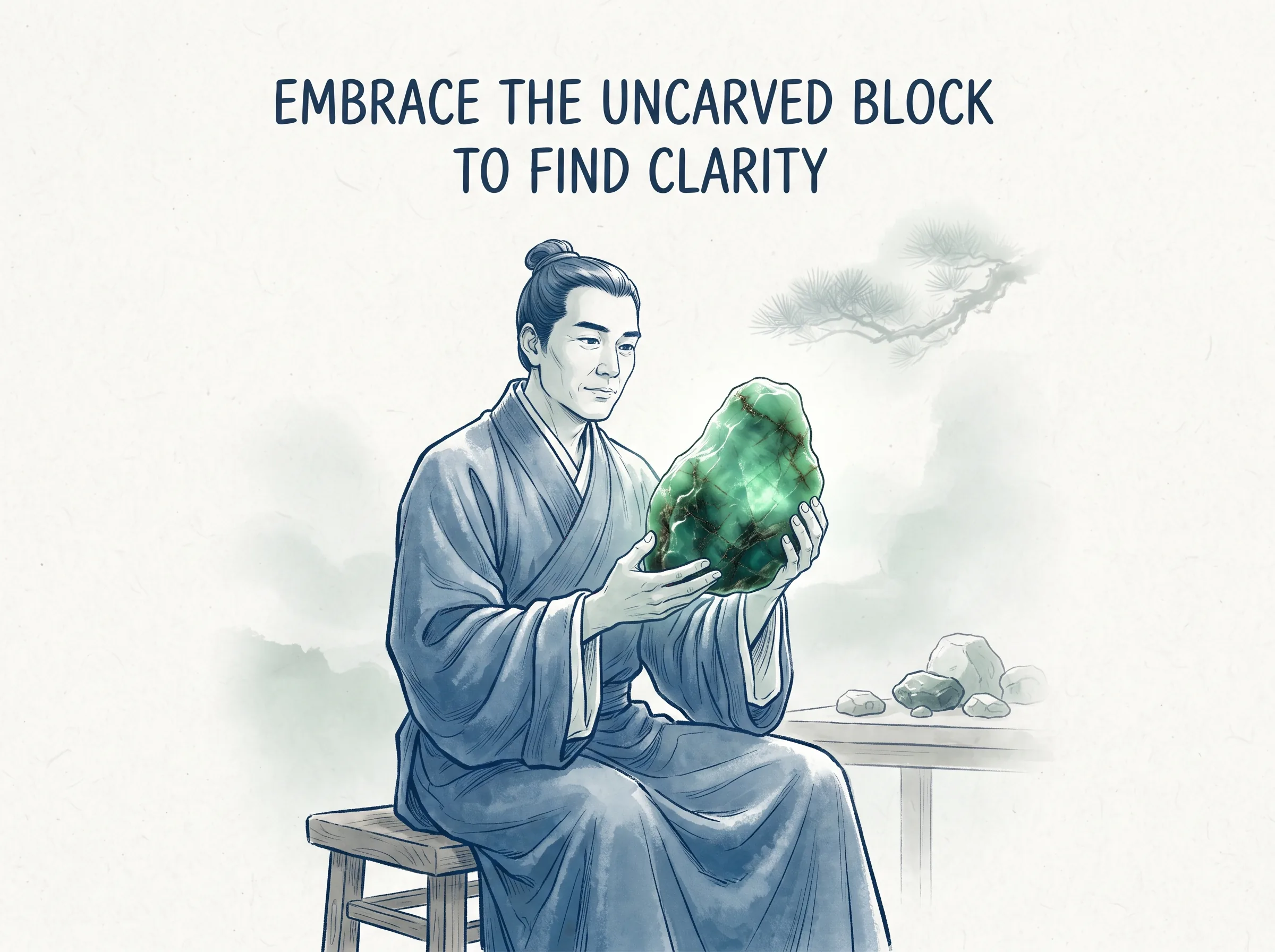
You do not have to solve this forever. You only have to notice it in the next moment, and then notice it again. That is the practice, reflecting the enduring wisdom of Zhuangzi Chapter 19 Meaning.
To explore these themes from another angle, read our related reflection on Why You Feel Empty Despite Success: Zhuangzi on Taming vs. Growth.
For a deeper comparative examination of these ideas, explore our related study on From Noise to Light: Why Studying Wisdom Doesn’t Stop Inner Turmoil.
Sources & Further Reading
[1] Zhuangzi (Stanford Encyclopedia of Philosophy)
[3] Woodworker Qing Carving Bellstand (梓庆削木为鐻) – Shidian Guji
Further Reading
- Burton Watson, Chuang TzU: Inner Chapters — includes translation and commentary on the Zhuangzi
- Isabelle Robinet, Zhuangzi: Text, Thoughts, and Practice — scholarly examination of the text and its philosophical context
- Standard Chinese editions of the Zhuangzi (e.g., 郭庆藩《庄子集释》) — comprehensive textual commentary






