
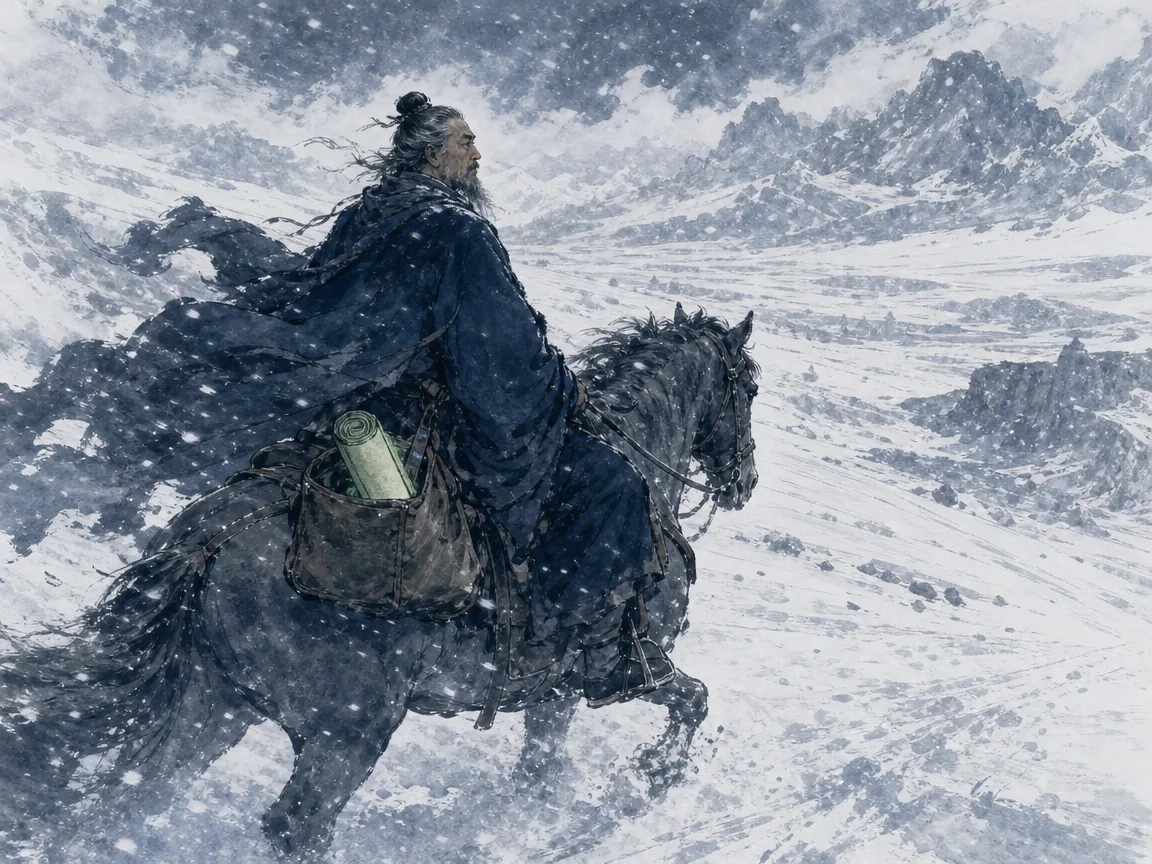
You've probably felt it at some point—that quiet, gnawing sense that everyone around you is moving ahead while you're still standing in the same place. A former classmate posts about their promotion. Someone you haven't spoken to in years announces they've started a company. Social feeds fill with milestones: engagements, book deals, career pivots that look effortless in hindsight. Meanwhile, your own path feels stubbornly unclear, and the gap between where you are and where you think you should be starts to ache.
This feeling is more than personal—it is cultural. Modern life has packaged achievement into a strict timeline, and when we miss those expected markers, we often interpret it as failure rather than simply a different rhythm. What if the anxiety you feel is not evidence that you are behind, but a signal that you are measuring your life against a script that was never yours? Ancient Chinese thinkers understood something about timing that feels remarkably relevant today. Their frameworks do not promise quick fixes, but they do offer something steadier: permission to trust your own pace—a foundational perspective explored in Gao Shi Timing and Patience.
Gao Shi Timing and Patience: The Pressure of Living on Someone Else's Clock
We live in an era that rewards visibility. The careers we celebrate, the successes we share, the lives we compare ourselves to are often the ones that reach the surface first. What reaches the surface, however, is rarely the whole story. Research on social media use and anxiety has found that upward social comparison—measuring yourself against people who appear to be doing better—is linked with higher levels of social anxiety and lower self-esteem, even though such studies cannot prove that social media causes those feelings directly [4]. The pattern is real enough to notice: when you spend time scrolling through curated highlight reels, your own ordinary days can start to feel inadequate.
Chinese philosophy does not dismiss this feeling. It reframes it. The classical idea of timing (时, shí) suggests that events unfold according to conditions, not according to our impatience. Here, shí means more than clock time: it is the right moment created by circumstances. Success is not a straight line; it is cyclical, situational, and deeply personal. The pressure you feel to rush is not a moral failing—it is a cultural condition. Recognizing that difference is the first step toward taking your own timeline seriously.
Gao Shi: The Poet Who Refused to Be Late
The Tang dynasty poet Gao Shi lived a life that defies the modern obsession with early achievement. According to the Old Book of Tang, he was born into the declining Bohai Gao clan—his father eventually held the modest post of Administrator of Shaozhou [1]. By the time Gao Shi was a young man, the family's former prestige had faded, and he grew up in extreme poverty. Historical records say he struggled to survive, occasionally relying on begging to get by while traveling between the regions of Liang and Song [1].
When he went to the capital at around twenty, hoping to enter government service through the examination system, he failed. He tried again and failed again. By his late twenties, he had settled into farming near Songcheng—a stark reversal for someone who had once dreamed of Chang'an. He did not stop there. In his thirties, he traveled to the frontier and wrote some of the most powerful border poems of the Tang period, including works that captured the brutality and nobility of military life [3]. Yet even these poems did not bring him official recognition.
It was not until he was past fifty that his fortune changed. General Ge Shuhan recognized his ability and recommended him for a military posting [1]****[2]. During the devastating Anshi Rebellion, Gao Shi proved himself not only as a writer but as a capable administrator and advisor [1]****[2]. Years later, in 764 CE, he was ennobled as Marquis of Bohai County—a rare honor for a poet, and one that the New Book of Tang records alongside his official titles as Vice Minister of Justice and Permanent Advisor [2].
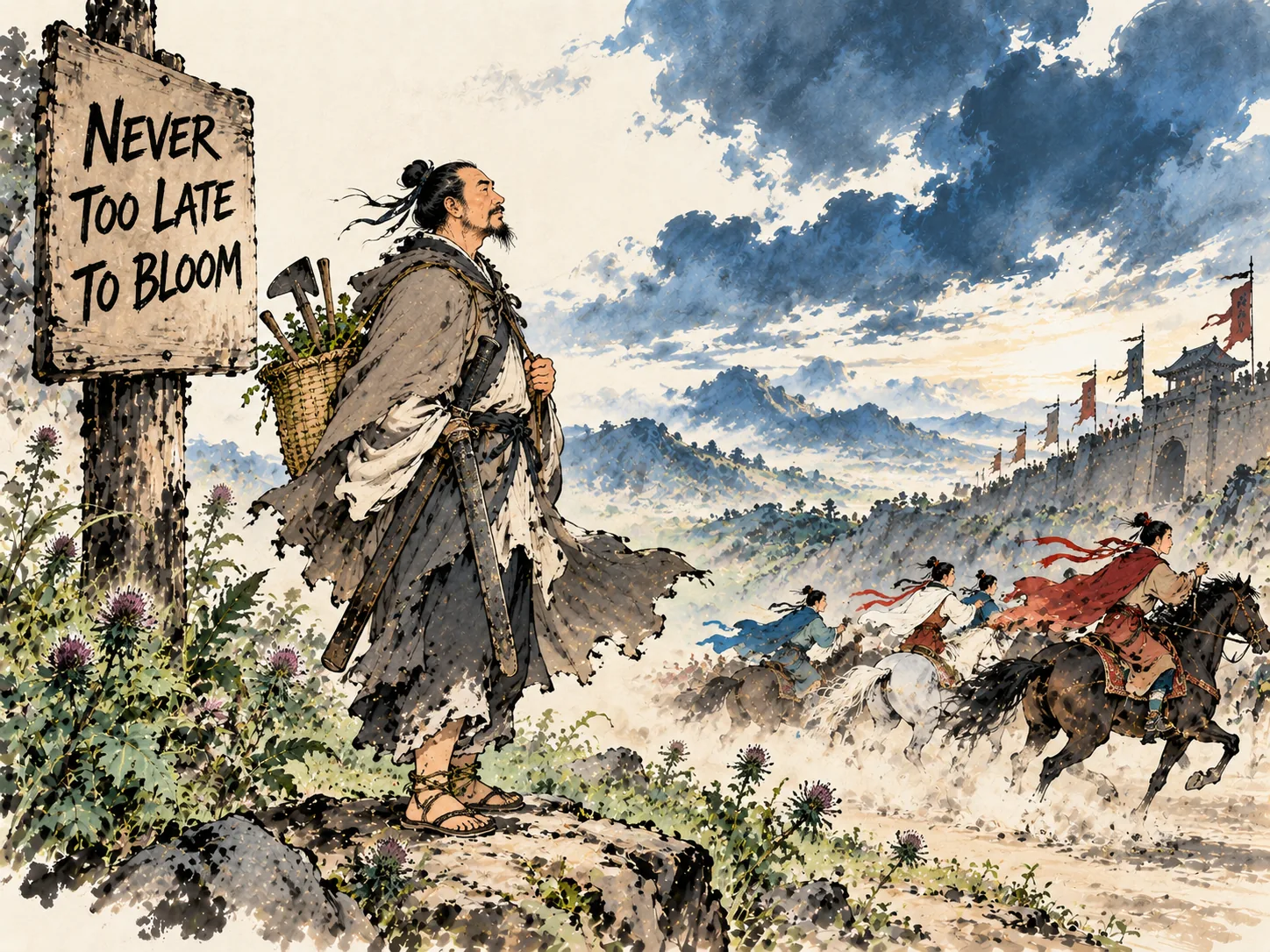
Gao Shi died in 765 CE [2]. His story is not about sudden breakthrough. It is about decades of persistence in the face of repeated setbacks. The Old Book of Tang itself noted that among poets of the Tang, Gao Shi was the one who achieved the greatest worldly success [1]. But that success arrived late—and it arrived because he never stopped showing up.
Laozi's Framework: Why Great Vessels Take Time
One of the most cited phrases from the Dao De Jing (Gao Shi Timing and Patience) is “great vessels are completed late” (大器晚成, dà qì wǎn chéng). In everyday English, the idea is that great achievements—or mature people—often take a long time to develop. The image is simple but profound. A large, important vessel cannot be rushed into existence. It requires the right materials, the right conditions, and the right amount of time. Rush it, and it cracks. Respect its nature, and it endures.
In the context of personal achievement, this principle offers a quiet challenge to the cult of speed. It suggests that depth cannot be manufactured quickly, and that the qualities worth having—wisdom, resilience, judgment, creativity—often come through accumulated experience rather than early display. This does not mean that all success is late, nor that everyone should expect hardship. It means that when things feel slow, they may simply be developing in ways that cannot be seen from the outside. To explore these themes from another angle, read our related reflection on When You Feel Strongest, You May Be Weakest: Ancient Wisdom for Seeing Change Early.
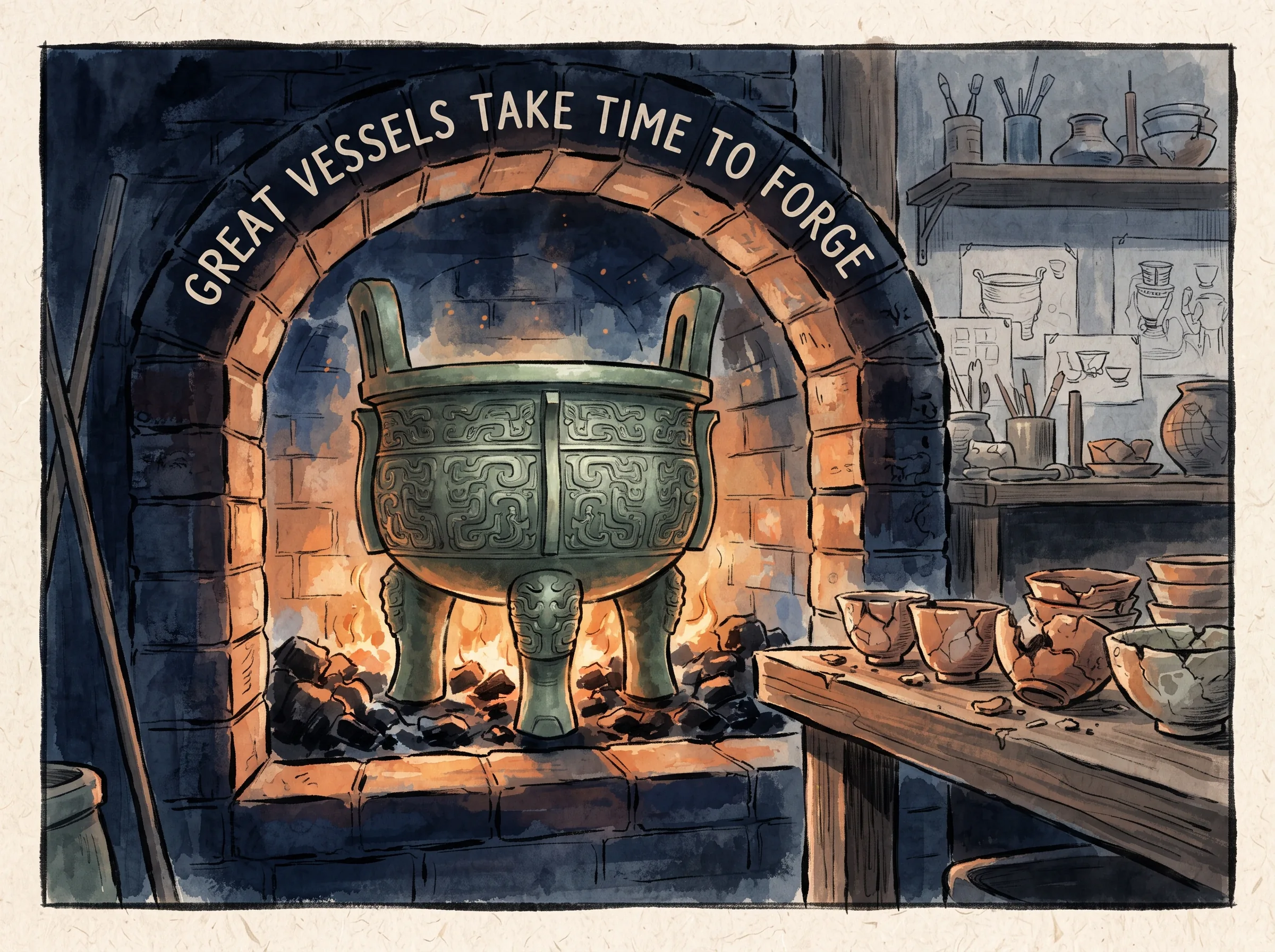
Laozi's broader philosophy emphasizes working with the momentum of circumstances (顺势, shùn shì) rather than forcing outcomes. The point is not passivity. It is the difference between pushing against a river and learning how to navigate it. For someone who feels stuck, this is not an excuse to do nothing. It is an invitation to ask a different question: What am I preparing for, even if I cannot yet see it?
The Confucian Discipline: Perseverance as Its Own Reward
If Laozi offers the metaphor of the vessel, Confucianism offers the practice of daily cultivation. The Analects contains a well-known line: “If one sets one's heart on humaneness, one will not act wrongly” (苟志于仁矣,无恶也, gǒu zhì yú rén yǐ, wú è yě). Here, “humaneness” means a sustained moral orientation, not a guarantee of external success. The line is about committing to an inner direction.
Gao Shi's decades of struggle can be read through this lens. His years of poverty, failed examinations, farming, and frontier hardship were not wasted time. They were the training ground. Each setback taught him something about endurance, about the lives of ordinary people, about the gap between aspiration and reality. When opportunity finally came, he was ready—not because he had been waiting passively, but because he had been living fully, even when full recognition was absent.
Confucius taught that the exemplary person (君子, jūnzǐ) cultivates virtue regardless of whether the world notices. Junzi originally referred to a person of high status, but in Confucian thought it came to mean someone distinguished by moral character. External acknowledgment may come later—or it may never come. But the cultivation itself has value. This is perhaps the most quietly radical idea in all of Chinese philosophy: your worth is not determined by your timeline, but by your consistency.
The Danger of Stopping Before the Turning Point
History is filled with people who came close—close enough to feel the frustration, close enough to believe that giving up was rational. Gao Shi's contemporaries include many brilliant poets whose names are remembered less because of external failure and more because they stopped while the story was still being written.
A phrase often associated with this tradition says, “When circumstances are difficult, become even more resolute; never abandon your lofty aspirations” (穷且益坚,不坠青云之志, qióng qiě yì jiān, bù zhuì qīng yún zhī zhì). The “blue clouds” in the original Chinese are a literary image for high ambition. The line comes from Wang Bo's Preface to the Pavilion of Prince Teng and captures a spirit that runs through Gao Shi's life and through the broader tradition of Chinese perseverance.
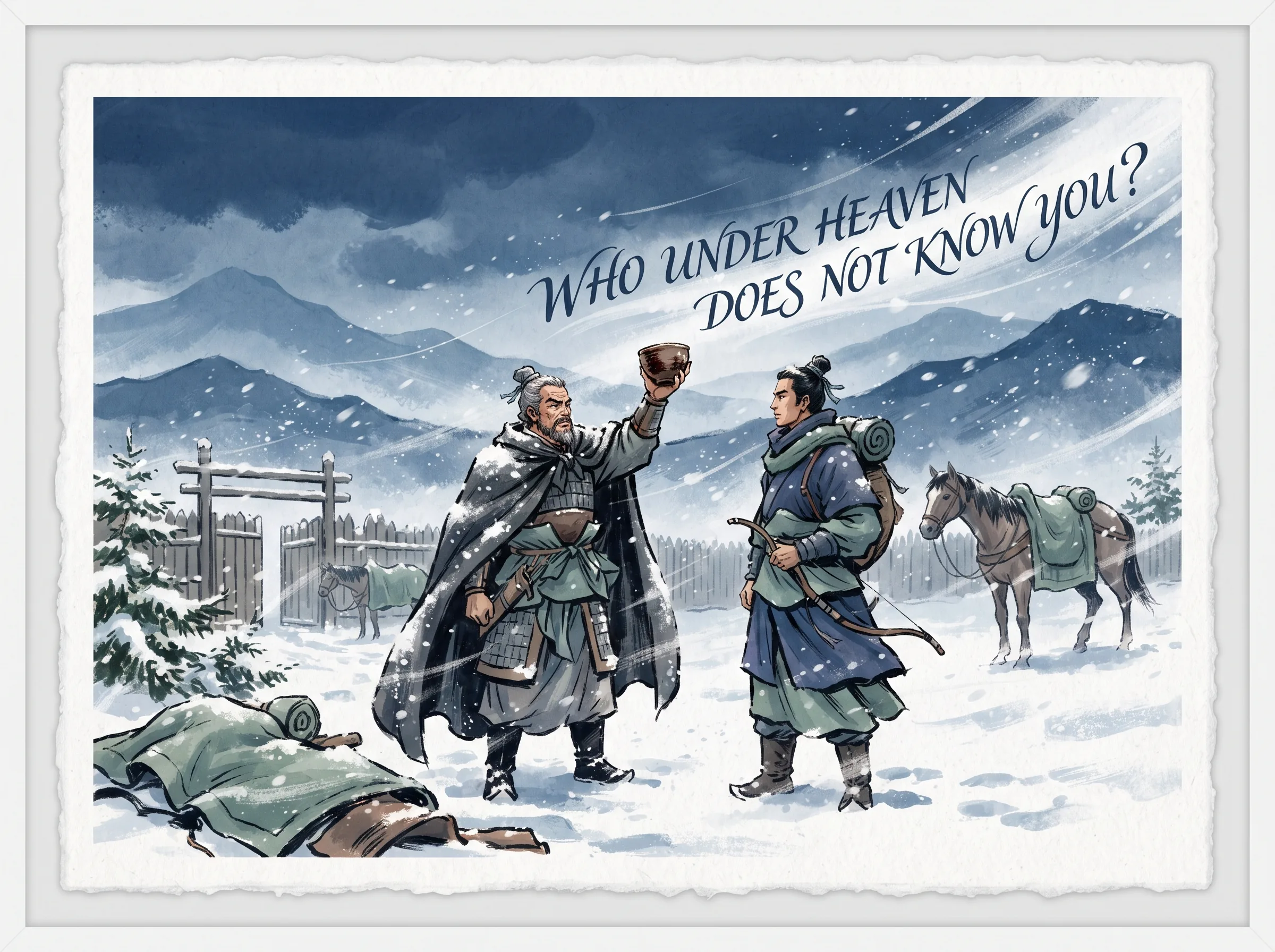
The opposite pattern is equally instructive. Too many people quit not because they lacked ability, but because they misread the distance between their current reality and their eventual turning point. Gao Shi did not know at age thirty-five that he would find his path at fifty. He only knew that stopping would mean accepting defeat before the story was finished.
Practical Wisdom for Today
How do you carry this forward? Here are a few questions and practices drawn from the Chinese philosophical tradition that may help reframe the way you think about your own timing.
1. Separate your timeline from everyone else's. Social comparison distorts perception. You are comparing your behind-the-scenes to someone else's highlight reel [4]. This does not mean comparison is impossible to avoid—it means it requires awareness. When you catch yourself measuring your progress against someone else's visible achievements, pause and remind yourself: you are seeing only one chapter, not the whole book.
2. Practice steady accumulation (积累, jīlěi) without demanding immediate results. Every skill you develop, every book you read, every difficult conversation you survive adds to your capacity—even when that capacity is invisible. Think of it as compound interest for character. Laozi's "great vessel" is built one layer at a time.
3. Ask yourself: What am I being prepared for? This is not a question with a neat answer. But it shifts the frame from "Why is this taking so long?" to "What is this teaching me?" Gao Shi's years of hardship taught him about poverty, about ambition, about the gap between dream and reality. Those lessons made him a better poet and a more grounded leader when his moment arrived.
4. Redefine what "late" means. "Late" is a label imposed by external timelines. Your life does not operate on a corporate calendar or a social media feed. If Gao Shi could become a marquis in his sixties after decades of obscurity, then your own path—whatever its pace—deserves respect, not shame.
The feeling that everyone else is succeeding early is real, but it is not the whole truth. Gao Shi's life—from poverty and repeated failure to late recognition and lasting literary legacy—shows that persistence is its own form of wisdom [1]****[2]. Laozi's principle that great vessels are completed late (大器晚成, dà qì wǎn chéng) reminds us that depth cannot be hurried. Confucian discipline teaches us that the practice itself has value, even before the reward arrives.
Your timing is not wrong. It is simply yours.
FAQ
Does Chinese philosophy say everyone who works hard will eventually succeed? No. Neither Daoist nor Confucian thought guarantees external success. What they offer is a framework for finding meaning in the process itself—to cultivate virtue, to endure difficulty with dignity, and to trust that sustained effort has value even when results are slow or uncertain.
Is Gao Shi really the only poet in Chinese history to receive a noble title? The Old Book of Tang states that among Tang dynasty poets, Gao Shi was the one who achieved the greatest worldly recognition [1]. He was indeed ennobled as Marquis of Bohai County after his military and administrative service [2]. Claims that he is the only poet in all of Chinese history to achieve this are harder to verify from the available sources.
How do I know whether I should keep going or change direction? Neither Gao Shi's story nor Chinese philosophy offers a simple decision rule. What they do suggest is that giving up out of shame or comparison is different from making a thoughtful pivot based on new information. The key question is not "Am I late?" but "Am I learning, growing, and staying true to what matters to me?"
Can ancient wisdom really help with modern career anxiety? Ancient texts do not provide career advice in the modern sense. But they offer mental tools—perspectives on timing, persistence, and self-worth—that can complement practical strategies. When used together, timeless reflection and contemporary action can be a powerful combination.
To explore these themes from another angle, read our related reflection on Should We Question What a Society Preaches Most?.
Deepen your understanding of these principles in our reflection on Why Do We Keep Asking If Something Is Useful?.
Sources & Further Reading
[1] Chinese Wikisource, Volume 111 — Old Book of Tang, “Biography of Gao Shi” (《旧唐书·高适传》)
[2] Chinese Wikisource, Volume 143 — New Book of Tang, “Biography of Gao Shi” (《新唐书·高适传》)
[3] Guwendao (Chinese-language source) — “Two Poems on Parting with Dong Da” (《别董大二首》) — Creative background and dating information at
[4] PMC: Whether and how will using social media induce social anxiety? — Research on social media use and social anxiety (questionnaire survey findings on upward comparison)
Further Reading
- Old Book of Tang (《旧唐书》) — Chinese Wikisource edition
- New Book of Tang (《新唐书》) — Chinese Wikisource edition
- Dao De Jing (《道德经》), Chapter 41 — standard received text references may be consulted in academic editions
- Analects (《论语》) — relevant passages on self-cultivation and commitment to the path
- Tang frontier poetry (边塞诗, biānsài shī) — for further exploration of Gao Shi's literary contributions







[…] Deepen your understanding of these principles in our reflection on Why Your Time Isn’t Late: What Gao Shi and Ancient Chinese Wisdom Know About Timing. […]