
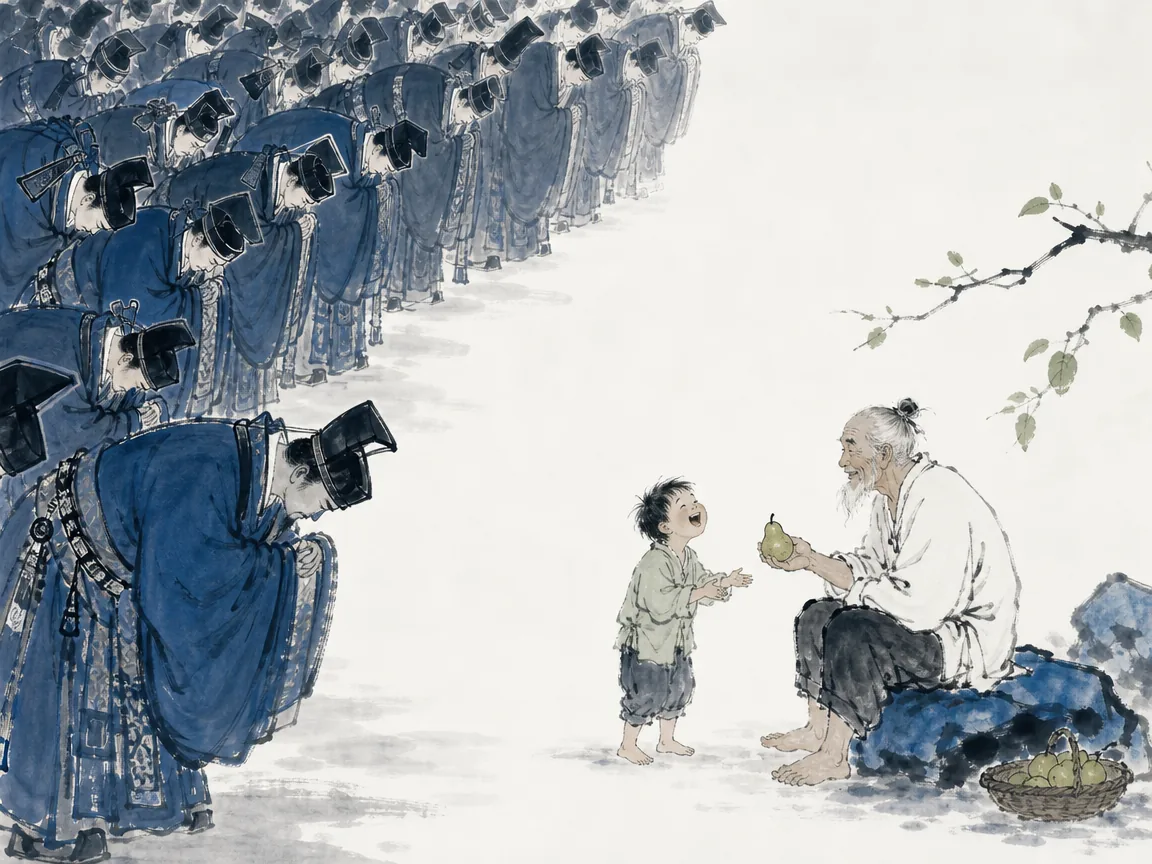
論德章第三十八
Key Takeaway: "The highest virtue is not virtuous, and therefore has virtue. The lowest virtue never loses sight of virtue, and therefore has no virtue." — Laozi, Daodejing Chapter 38
Highest virtue is unaware of its virtue, and therefore possesses true power. When the Tao is lost, virtue appears; when virtue is lost, righteousness; when righteousness is lost, rigid ceremonial etiquette begins—a foundational perspective explored in Daodejing Chapter 38 Translation.
Daodejing Chapter 38 Translation: From Tao to Virtue, to Benevolence, Righteousness, and Ritual
The wisdom of Daodejing Chapter 38 Translation addresses a fundamental human dynamic: how we navigate ambition, quietude, and the natural flow of existence. In the classical tradition, this passage serves as both a metaphysical mirror and a practical compass for daily living and leadership. Explore how this principle translates into contemporary daily life in our guide to Why the Most Virtuous People Stop Talking About Virtue.
By shifting our focus from outer coercion to internal stillness, we uncover a more resilient way of relating to ourselves and the world around us.
Complete Chapter Translation: Modern Western Reading
The man of highest “power” does not reveal himself as a possessor of “power”; Therefore he keeps his “power”. The man of inferior “power” cannot rid it of the appearance of “power”;
Therefore he is in truth without “power”. The man of highest “power” neither acts nor is there any who so regards him; The man of inferior “power” both acts and is so regarded. The man of highest humanity, though he acts, is not regarded; Whereas a man of even the highest morality both acts and is so regarded; While even he who is best versed in ritual not merely acts, but if people fail to respond Then he will pull up his sleeves and advance upon them. That is why it is said: “After Tao was lost, then came the 'power'; After the 'power' was lost, then came human kindness.” After human kindness was lost, then came morality, After morality was lost, then came ritual.
Now ritual is the mere husk of loyalty and promise-keeping And is indeed the first step towards brawling.” Foreknowledge may be the “flower of doctrine”, But it is the beginning of folly.
Therefore the full-grown man takes his stand upon the solid substance and not upon the mere husk, Upon the fruit and not upon the flower. Truly, “he reject that and takes this”.
道德经中文原文与对照
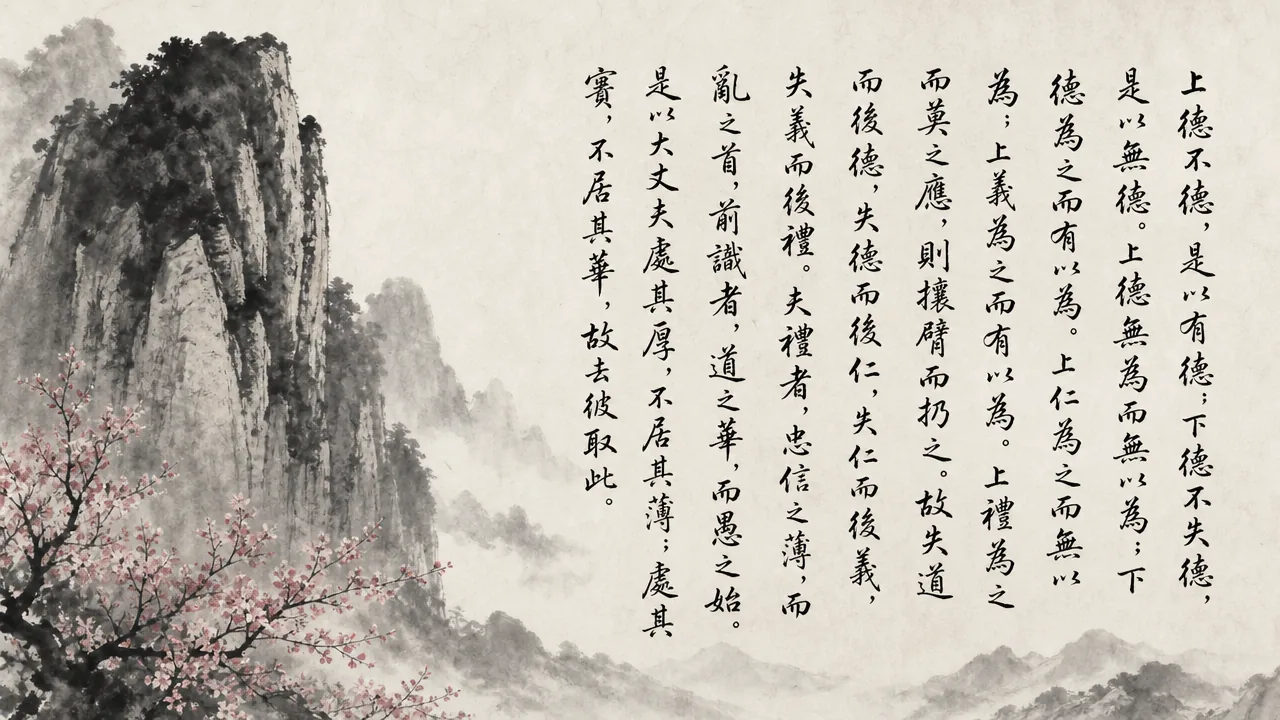
【原文】 上德不德,是以有德;下德不失德,是以無德。上德無爲而無以為;下德爲之而有以為。上仁爲之而無以為;上義爲之而有以為。上禮爲之而莫之應,則攘臂而扔之。故失道而後德,失德而後仁,失仁而後義,失義而後禮。夫禮者,忠信之薄,而亂之首。前識者,道之華,而愚之始。是以大丈夫處其厚,不居其薄;處其實,不居其華。故去彼取此。
核心要义解析 (Philosophical Insights)
- 道义发微:本章通过“論德章第三十八”阐发了《道德经》的核心精髓。从“有”与“无”、“动”与“静”的辩证转化中,提醒我们在日用常行中摒弃过度的功利执念,回归纯粹本真的生命状态。
- 现代启示:当外界喧嚣与评判标准不断施加压力时,保持内心的虚静与不争,反而是最强大的定力与智慧。
Follow the sequential development of the text in Laozi’s next philosophical movement in The Root of Order: Attaining the One to Sustain Clarity and Life.
Deepen your understanding of these principles in our reflection on Why Your Time Isn’t Late: What Gao Shi and Ancient Chinese Wisdom Know About Timing.






