
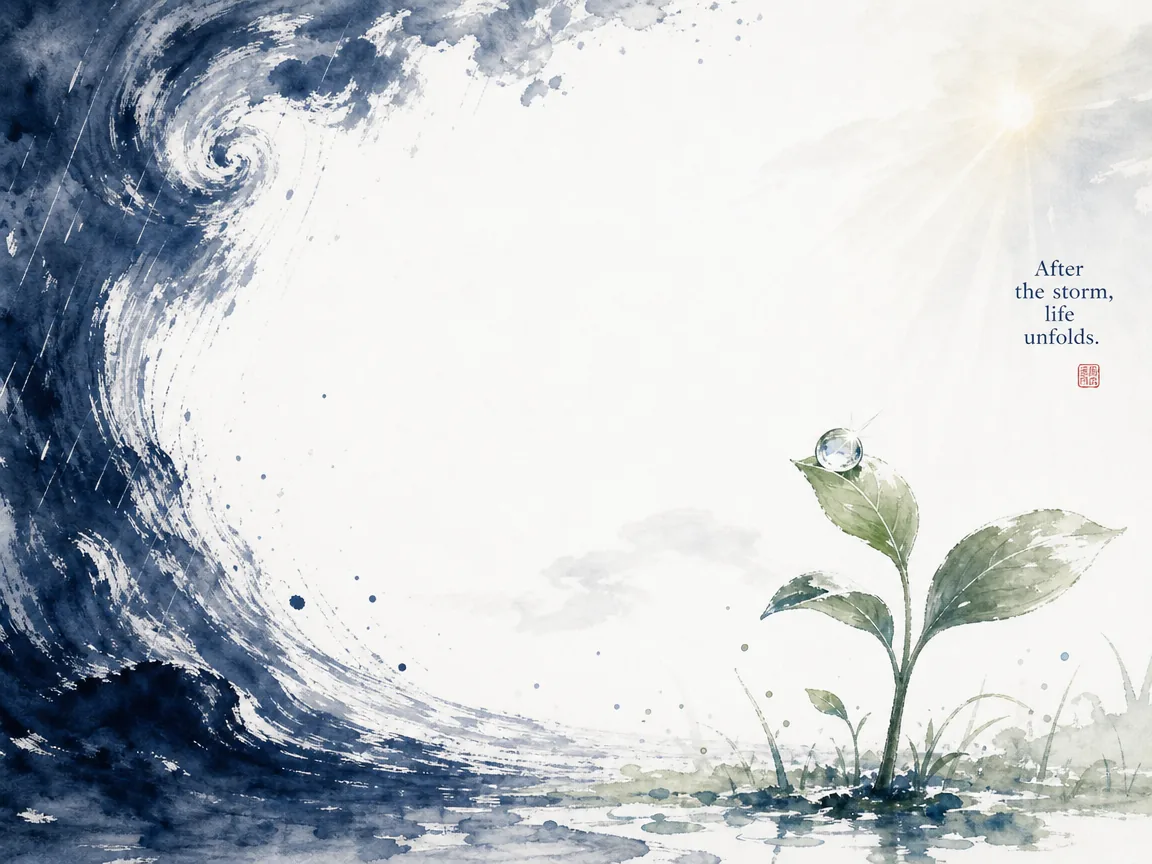
Burnout is rarely caused by a single failure. It is the predictable outcome of a pattern of living that mistakes intensity for strength. Across modern workplaces, relationships, and personal goals, the same structure repeats itself: someone relies on crisis, anxiety, self-attack, or relentless control to generate momentum. It works in the short term. And because it works in the short term, it is reinforced. The person pushes harder the next time. The manager tightens supervision further. The relationship demanding for constant reassurance. Eventually the structure exhausts itself, not because the person lacked discipline, but because the design of their effort was itself unsustainable.
Modern culture routinely admires the person who operates through sheer force of will — the early riser who forces focus, the leader who drives through intimidation, the person who maintains a relationship through constant checking and emotional negotiation. These forms of effort produce visible results in the moment. They are also exhausting to maintain, and they collapse under their own weight. Laozi addressed this pattern more than two millennia ago. In the twenty-third chapter of the Daodejing, he offers a different measurement of strength — one based not on how impressive a system looks at its peak, but on whether it can sustain itself without constant maintenance [2]—a foundational perspective explored in Daodejing Chapter 23.
The question this article explores is not how to push harder or manage fatigue more efficiently. It is how to build a life, a relationship, or an organization that runs steadily without burning the person holding it together. Laozi's answer begins with a simple observation about weather and extends toward a structural claim about how any system operated through force ultimately fails.
Daodejing Chapter 23: The Storm Is Not a Model for Strength
The twenty-third chapter opens with a line that has often been simplified into advice about speaking less: "Sparing of speech accords with nature" (Xī yán zìrán, 希言自然). In context, however, the phrase describes how the Dao itself operates — without constant command, without forcing outcomes, allowing conditions to unfold according to their own nature. It is not primarily about speech etiquette. It is about a mode of ordering that does not depend on repeated intervention.
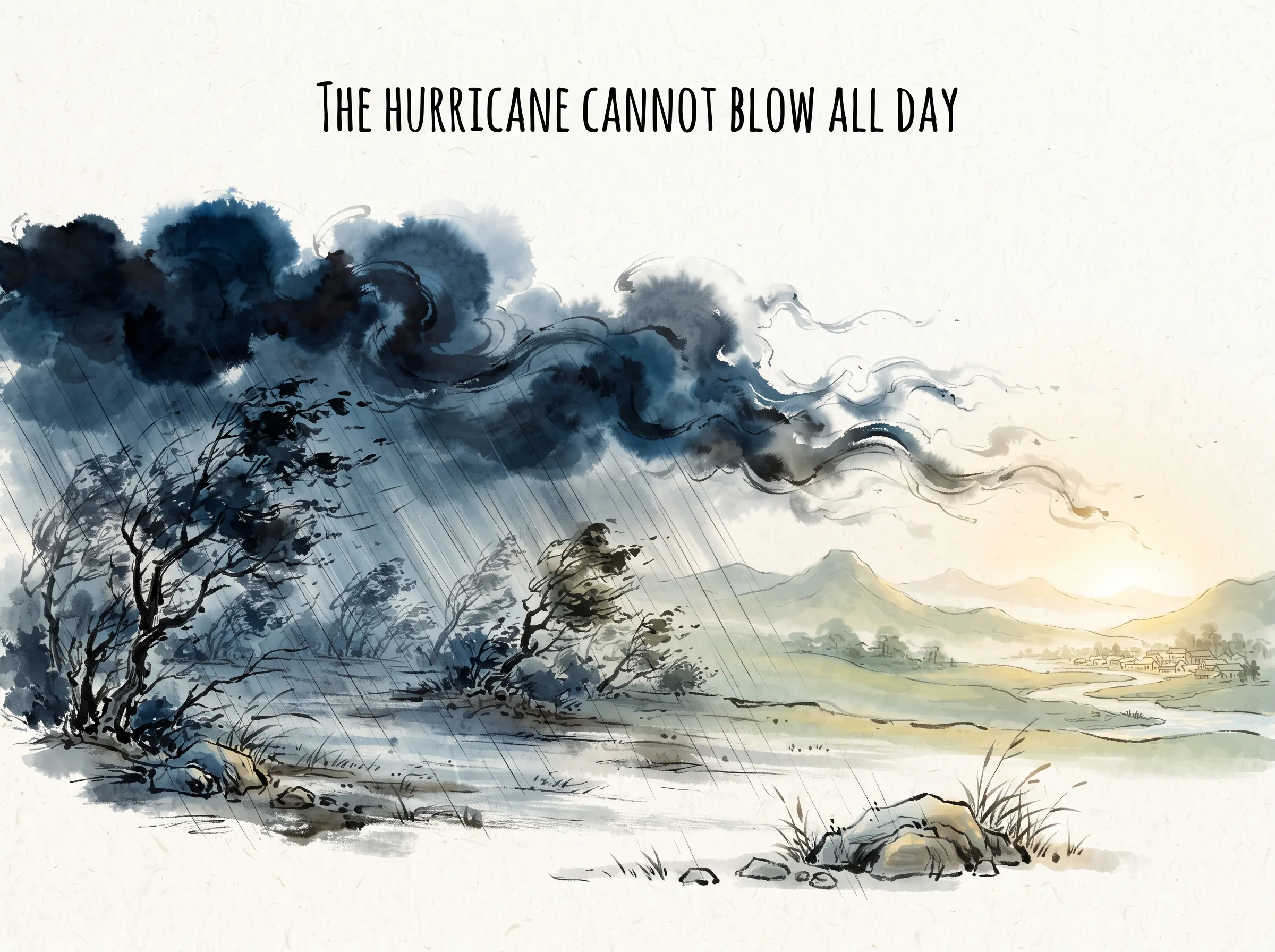
Laozi then illustrates this with imagery that is both observational and structural: "A whirlwind does not last a whole morning, nor does a sudden downpour last a whole day" (Piāofēng bù zhōng zhāo, zhòuyǔ bù zhōng rì, 飘风不终朝,骤雨不终日) [2]. He asks who produces such phenomena. The answer is heaven and earth. Even the greatest natural forces cannot sustain intensity indefinitely. "If heaven and earth cannot sustain violence for long, how much less can human beings?" (Tiāndì shàng bù néng jiǔ, ér kuàng yú rén hū, 天地尚不能久,而况于人乎) [2].
The point is not that nature is weak. It is that intensity carries a built-in limit. The more concentrated the release, the shorter its duration. A storm is impressive. It is also temporary. A river is unremarkable. It is enduring.
Modern culture frequently mistakes the storm for the model of strength. People who run on crisis drive themselves to completion through adrenaline and fear. Leaders who run on constant command create teams that freeze the moment the leader steps away. Individuals who run on self-criticism achieve short bursts of productivity while eroding their capacity to act without threat. The pattern is recognizable because it is repetitive: intensity generates results, results justify intensity, intensity eventually collapses, and the person blamed for the collapse is said to have lacked discipline rather than having chosen an unsustainable structure.
Continue with the deeper interpretation and practical application.
ChiDestiny members get access to the full analysis, modern applications, and the growing Chinese Wisdom Library.
FAQ
Does Laozi's teaching mean I should stop working hard altogether?
No. The chapter acknowledges that concentrated effort has its place — emergencies, critical tasks, and situations requiring immediate action all demand intensity. The warning is against treating sustained force as the default mode of operation. A system that only functions through constant self-attack or anxiety-driven push is not demonstrating discipline. It is operating in a state of chronic overload. The goal is not less effort. It is effort that does not require self-depletion to sustain itself.
If trust cannot be declared into existence, how do I actually build it in a relationship or organization?
Trust develops through repeated behavior that matches stated commitment over time. Consistency matters more than intensity. Small promises kept reliably build more trust than large promises made dramatically. In organizations, trust emerges from clear expectations, fair consequences, and the freedom to speak honestly without fear of reprisal. In relationships, it emerges from predictability, respect for boundaries, and the willingness to address problems directly rather than covering them with reassurance. Neither can be accelerated through declaration alone.
How do I know whether my exhaustion is a personal problem or a structural one?
A useful distinction is whether the exhaustion persists even when you reduce intensity. If you take a genuine break and feel relief, your system may be responsive to recovery. If you reduce effort and feel guilt, anxiety, or a sense that everything will collapse, the problem may be structural — the system depends on your constant pressure to function. Another signal is whether the same pattern repeats across different situations. Personal fatigue tends to fluctuate. Structural exhaustion tends to recur whenever you attempt to operate without force.
Is burnout the same as regular tiredness or stress?
No. The World Health Organization defines burnout specifically as a phenomenon resulting from chronic workplace stress that has not been successfully managed [6]. It is characterized by three dimensions: feelings of energy depletion or exhaustion, increased mental distance from one's job or feelings of negativism related to one's job, and reduced professional efficacy. Regular tiredness or acute stress may resolve with rest. Burnout develops when the underlying conditions producing stress remain unchanged over time. Importantly, the WHO also specifies that burnout refers specifically to occupational contexts and should not be applied to describe experiences in other areas of life [6].
To explore these themes from another angle, read our related reflection on Why Holding On Too Tightly Is Losing: Laozi’s Chapter 9 on Knowing When to Stop.
For a deeper comparative examination of these ideas, explore our related study on Discerning True Virtue: Knowing Others Is Wisdom; Knowing Oneself Is Enlightenment.
Sources & Further Reading
[1] Daodejing Chapter 23 (Wang Bi Edition, 道德经/王弼本) — The received text of Chapter 23, containing key classical maxims. )
[2] Laozi — Stanford Encyclopedia of Philosophy entry covering the textual history of the Daodejing, the concept of ziran (自然), scholarly debates about authorship, and interpretations of wuwei.
[3] Burn-out an occupational phenomenon — World Health Organization definition of burnout as an occupational phenomenon characterized by exhaustion, mental distance, and reduced efficacy, distinct from medical conditions.
[4] A Meta-Analysis on Antecedents and Outcomes of Detachment from Work — Research on work recovery, showing that sustained effort depletes resources and that impaired recovery leads to accumulating negative consequences over time.
[5] Laozi Daodejing Heshang Gong Commentary (老子道德經河上公章句) — Heshanggong commentary tradition preserving Chapter 23 text with explanatory notes.
Further Reading
- Daodejing — Chapter 17, on governance through non-interference and the principle that the best leaders are scarcely known by the people they serve.
- Daodejing — Chapter 22, on achieving through non-contention and finding fulfillment through non-attachment.
- Zhuangzi — Stories and parables exploring natural spontaneity and the limitations of forced action.






