
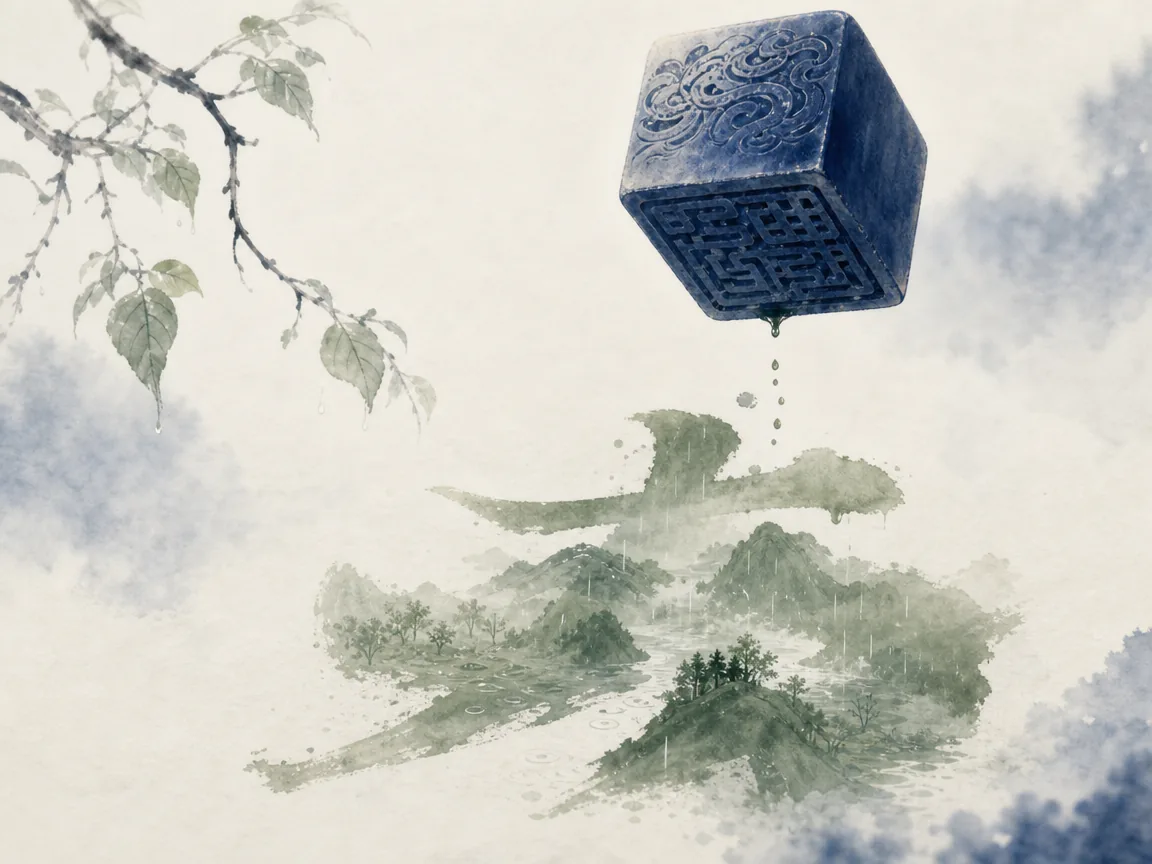
The products we reach for each morning carry more meaning than their labels suggest. Consider the moment you open your laptop to search for something, settle into a flat-pack chair at home, sip a cold drink on a summer afternoon, or pause before choosing words for a new project. Each of these ordinary decisions touches a thread of classical Chinese wisdom that has traveled through centuries of poetry, philosophy, and aesthetic practice — not as distant relic, but as living resource.
Chinese tradition has long understood naming as an act of creation, not mere labeling. The word ming (名) carries weight; to name something was historically to invoke its essence, align speech with reality, and summon cultural memory into the present. Classical poets shaped images so precise that a single color could evoke temperature, a single sound could dissolve the boundary between sight and hearing. Today, that same sensibility quietly informs the brands we trust and the choices we make, offering a practical philosophy for finding meaning in the everyday.
This article explores how classical Chinese naming wisdom — rooted in poetry, sensory imagery, and aesthetic tradition — can illuminate the way we approach ordinary modern decisions. We will look at specific brand names that draw from classical sources, examine the philosophical principles behind Chinese naming, and consider how these ideas translate into practical guidance for contemporary life.
Chinese Naming Wisdom: Finding What You Seek
The Chinese internet giant Baidu draws its name from a famous line in Xin Qiji's (辛弃疾) Song-dynasty ci poem "Qing Yu An · Yuanxi" ("Jade Pailan — Lantern Festival") [1]. The poem describes a seeker moving through a crowded festival, searching relentlessly until, in a sudden unexpected moment of clarity, finding what was sought all along.
When Xin Qiji wrote "searching for her in the crowd a thousand times, then turning suddenly to see her there, amid the fading lantern light," he captured something essential about the human experience of seeking [1]. The frustration of endless searching. The anxiety of missing what you need. And then — the moment when everything shifts, and the answer reveals itself almost accidentally.
This mirrors the experience of anyone who has ever searched for information online. We scroll through pages of results. We refine our queries. We feel the familiar impatience of not finding what we want. And then — one result appears that feels exactly right. The moment of clarity that follows has something in common with what Daoist tradition calls ziran (自然), often translated as "natural spontaneity." The good answer was always there; it simply needed the right conditions to emerge. The seeker's job is not to force discovery but to prepare the ground for it [1].

For modern readers, the lesson is practical. When facing a difficult search — whether for information, direction, or meaning — the impulse is often to try harder, to control more, to push through obstacles. Classical Chinese wisdom suggests a different approach: cultivate patience, create the right conditions, and remain open to unexpected moments of recognition. The answer may reveal itself not through force but through the quiet accumulation of attention and readiness.
Harmony at Home — Building a Well-Lived Household
The Swedish furniture brand IKEA chose its Chinese name IKEA (Yíjiā, 宜家) (Yíjiā) from a line in the Classic of Poetry (Shijing 诗经), one of the oldest literary collections in Chinese civilization. The poem "Tao Yao" ("Peach Trees") describes a bride going to her new home, bringing harmony and balance to the household
The original line reads: "This daughter goes to her home; she will bring harmony to her household". In the Confucian tradition, the domestic sphere was never considered secondary. Family harmony was regarded as the foundation of social order and personal cultivation. The Classic of Poetry presents the well-ordered home not as a private matter but as a moral achievement — a space where relationships are balanced, responsibilities are shared, and beauty arises naturally from daily practice.
What makes this naming choice significant is how it reframes the purpose of household goods. IKEA does not sell only furniture; it sells the possibility of a well-lived home. The Chinese name IKEA (Yíjiā, 宜家) connects that possibility to a deep cultural vision: the good life begins where relationships are nurtured and balance is cultivated. A table is not merely a surface; it is a place where family gathers. A chair is not merely seating; it is an invitation to presence.
For modern readers, this offers a reframing of everyday domestic choices. When selecting items for your home — whether furniture, décor, or objects for daily use — consider not only function or aesthetics but the relational atmosphere you wish to create. What kind of harmony do you want your space to invite? How do the objects you choose affect the quality of life within them? The classical Chinese tradition reminds us that the domestic world is a legitimate site of meaning, not merely a background to "real" life.
Sensory Poetry — Beauty as Embodied Experience
Revlon's Chinese brand name Revlon (Lùhuánóng, 露华浓) (Lùhuánóng) draws directly from a celebrated poem by Li Bai (李白), the most famous poet of the Tang dynasty. The line "Clouds think of her garments, flowers think of her face; the spring breeze brushes the railing, dew glistens rich and thick" comes from Li Bai's "Qing Ping Diao" (清平调), composed at court for the renowned beauty Yang Guifei [2].
The poem does not describe beauty as an abstract concept or a set of measurable features. It presents beauty as something sensory, embodied, and atmospheric. The dew on petals, the play of light, the texture of clothing against skin — these are not decorative details but the very substance of beauty itself. Classical Chinese aesthetics consistently treats beauty as experienced through the body, not contemplated by the mind alone. Examine this artistic principle further through the classical aesthetic philosophy of Why “Heaven and Humanity as One” Still Matters: What Ancient Chinese Aesthetics Can Teach Modern Life.
This matters for how we understand beauty in our own lives. Western consumer culture often frames beauty as something to acquire, to achieve, to perform. The classical Chinese approach invites a different orientation: beauty is encountered in moments, in sensory richness, in the way light falls on a surface, in the feeling of freshness against warm skin. A product name that evokes this tradition does not merely market an item; it invokes an entire way of experiencing the world.

The practical question for modern readers is simple: where in your daily routine do you allow yourself to encounter beauty as an embodied experience rather than an abstract ideal? How might you bring more sensory awareness into ordinary moments — the warmth of a cup, the scent of rain, the texture of fabric against your hands? Classical Chinese wisdom suggests that the ordinary, attended to fully, becomes extraordinary.
Synesthesia in Language — The Poetry of Snow and Green
The Chinese name for Sprite (Xuěbì, 雪碧), is a remarkable example of how classical Chinese aesthetic principles operate in contemporary branding. The name combines two characters that seem, at first glance, to contradict each other: xuě (雪, snow) paired with bì (碧, jade-green/blue), a color associated with coolness and clarity. The result is a name that conveys refreshing coldness through imagery that operates across sensory boundaries.
This works through a principle classical Chinese poetics calls tonggan (synesthesia (tōnggǎn, 通感)), or synesthesia — the blending of senses in language. A visual description evokes touch. A color suggests temperature. Sound merges with sight. The philosopher Wang Guowei (王国维) observed this effect in the famous line "Among the red apricot branches, spring feels so lively" by Song Qi (宋祁), noting that the single character for "lively" or "bustling" transforms a purely visual scene into something that moves through multiple senses simultaneously [3].
Wang Guowei's commentary explains why this line resonates so powerfully: the word that normally belongs to sound and movement is applied to a visual scene, creating a bridge between seeing and hearing that makes the image come alive [3]. The reader does not merely see apricot blossoms; they hear the energy of spring, feel its vitality, and experience it as a total sensory event.

The principle at work here has been recognized in Chinese aesthetic thought for centuries. Imagery that seems "illogical" on the surface — snow in summer, color suggesting temperature — often communicates something deeper than literal accuracy allows. The brain recognizes the emotional truth even when the literal statement appears to contradictcommon sense (chángshí, 常识). This is not poor reasoning; it is a different mode of understanding, one that values resonance over literal correspondence.
For modern readers, the lesson extends beyond brand naming. The Chinese tradition teaches us that language can do more than describe; it can evoke, transform, and create new modes of perception. When we choose words — whether for a business, a creative project, or a personal intention — we are not merely selecting labels. We are shaping how people experience what we describe.
The Philosophy of Naming — Why Words Matter
Chinese tradition has consistently treated naming as a profound act, not a casual one. The concept of ming shi xiang fu (name matching reality (míng shí xiāng fú, 名实相符)) — the alignment of name and reality — holds that a true name should carry meaning, resonance, and cultural memory When a name aligns with reality, it does more than identify; it reveals.
This stands in contrast to a purely functional view of naming, in which words are arbitrary labels chosen for convenience or marketability. The Chinese tradition argues that good names are created, not discovered, but they are created with deep attention to meaning, history, and aesthetic resonance. This is what Chinese thinkers call chuangzaoxing zhuanhua (creative transformation (chuàngzàoxìng zhuǎnhuà, 创造性转化)) — creative transformation. A name drawn from classical sources is not a copy; it is a reimagining, a bridging of ancient wisdom and contemporary need.
BMW provides an interesting parallel. Its English name, derived from Bavarian Engine Manufacturing Works, carries no aesthetic or emotional content for Chinese speakers. The translation into BMW (Bǎomǎ, 宝马) — "precious steed" or "treasured horse" — draws on a tradition of classical poetry in which fine horses symbolize nobility, speed, and elegant power. The brand did not merely translate its name; it transformed it, finding in Chinese literary tradition a vessel strong enough to carry the brand's identity into a new cultural context.
The deeper question this raises is not about branding but about life. How do we approach our own names, the names we give to our projects, the words we use to describe our intentions? Classical Chinese wisdom suggests that naming is an act of cultural creativity — a chance to infuse the ordinary with meaning and to connect the present to something larger than itself.
Practical Applications for Modern Life
Classical Chinese naming wisdom offers several practical approaches for everyday decision-making.
Choose words that evoke, not merely describe. When naming a project, a pet, a garden path, or a personal intention, consider the sensory and emotional resonance of the words you choose. Consider the Chinese name for Sprite, Xuebi (Sprite (Xuěbì, 雪碧)). Rather than describing the beverage itself, the characters evoke coolness, clarity, and refreshment. Effective naming works in the same way: it conveys not only what something is, but also how it should feel. What feeling do you want your name to create?
Connect the personal to the cultural. The Chinese tradition values continuity with the past not as nostalgia but as resource. When making choices about naming, search for connections to poetry, philosophy, or aesthetic traditions that deepen the meaning. You need not be an expert; even a simple reference to a classical image can transform an ordinary name into something meaningful.
Attend to the sensory world. The Chinese aesthetic principle of tonggan (synesthesia (tōnggǎn, 通感)), or synesthesia, describes how one sense can evoke another—for example, how a name can suggest color, texture, temperature, or sound.When selecting objects, words, or environments for your life, consider how they engage multiple senses. A green surface feels cool. A warm color feels inviting. Language can blend these experiences deliberately to create richer, more resonant effects.
Align name and reality. The principle of mingshi xiangfu (name matching reality (míng shí xiāng fú, 名实相符))—the alignment of name and reality—reminds us that a good name should accurately reflect the qualities of what it represents. A name that promises more than it delivers creates dissonance. A name that aligns with reality creates trust and resonance. Before adopting a name for any purpose, ask: does this name correspond to what I intend it to represent?
Practice creative transformation. When drawing on tradition, avoid mere repetition. The goal is not to copy classical forms but to transform them for contemporary use. A classical image, recontextualized for modern life, can speak with fresh power.
Frequently Asked Questions
Q: Are these brand names intentionally based on classical Chinese literature?
Some modern brand names draw inspiration from classical Chinese literature. Revlon’s Chinese name, Luhu nong (Revlon (Lùhuánóng, 露华浓)), echoes a line by the Tang poet Li Bai, while the name Baidu (百度) is commonly associated with a celebrated line by the Song poet Xin Qiji. [2] [4] The Chinese names of brands such as IKEA (Yijia, IKEA (Yíjiā, 宜家)) and Sprite (Xuebi, Sprite (Xuěbì, 雪碧)) are often praised for their cultural resonance, although some popular accounts of how these names were created are difficult to verify. Whatever their precise origins, the names draw on familiar Chinese associations: Yijia suggests a home well suited to living, while Xuebi evokes coolness, clarity, and refreshment.
Q: Do I need to know classical Chinese to apply this wisdom to my own choices?
No. The principles behind these naming choices — sensory evocation, alignment of word and meaning, creative transformation — can be understood and applied without fluency in classical Chinese. What matters is attention to meaning and a willingness to look beyond literal description.
Q: How does this connect to Daoist or Confucian philosophy?
The principle of natural emergence in Baidu's naming reflects Daoist ideas about spontaneous discovery and the limits of forced effort. The emphasis on household harmony in IKEA's naming connects to Confucian values regarding the moral significance of domestic life. Both traditions offer resources for contemporary decision-making without requiring religious commitment.
Q: Can this approach be applied to non-Chinese contexts?
Yes. The underlying principles — sensory resonance, alignment of name and meaning, creative use of imagery — are universal. Any culture with a rich literary tradition can draw on its own sources for naming and meaning-making. The specific classical references may differ, but the practice of intentional naming transcends any single cultural tradition.
Summary and Next Steps
Ancient Chinese naming wisdom offers a practical philosophy for finding meaning in everyday choices. Through the examples of brands that draw from classical poetry, we have seen how names can evoke sensory experience, connect the personal to the cultural, and align word with reality. The principles of synesthesia (tōnggǎn, 通感), name matching reality (míng shí xiāng fú, 名实相符), and creative transformation (chuàngzàoxìng zhuǎnhuà, 创造性转化) are not abstract theories; they are tools for living more intentionally.
The next step is simple: pay attention to the names and words you encounter and create. Ask what they evoke. Consider whether they align with the reality they describe. Look for opportunities to connect your daily choices to deeper traditions of meaning. The classical Chinese tradition teaches us that wisdom is not locked away in ancient texts; it is waiting to be activated in the present.
Sources & Further Reading
- [1] — Wang Guowei's commentary on synesthetic poetic technique, including the analysis of "red apricot blossoms stir a bustling spring on branches" (hóngxìng zhītóu chūnyì nào, 红杏枝头春意闹)
- [2] — Li Bai's "Qing Ping Diao," including the line referenced in Revlon's Chinese brand name
- [3] — Xin Qiji's ci poem containing the line associated with Baidu's name
- [4] — Reference to Revlon's Chinese brand name Revlon (Lùhuánóng, 露华浓) and its origin in Li Bai's poetry
- [5]) — Alternative edition of Wang Guowei's Renjian Cihua, providing additional context on classical poetic analysis
Further Reading (延伸阅读) / Further Reading:
- The Classic of Poetry (Shijing 诗经), particularly the "Tao Yao" chapter, for classical Chinese poetic sources on household harmony and relational balance
- Wang Bi's philosophical writings on the relationship between name and reality in early Chinese thought
- The concept of creative transformation (chuàngzàoxìng zhuǎnhuà, 创造性转化) (creative transformation) in contemporary Chinese aesthetic theory and cultural practice
Examine this artistic principle further through the classical aesthetic philosophy of What Can Ancient Chinese Aesthetics Teach Us About Living a Calmer, More Intentional Life Today?.
For a deeper comparative examination of these ideas, explore our related study on A Cup of Tea Holds a World: Six Chinese Philosophies for Modern Living.
Sources & Further Reading
[1] Classical Source (人间词话 – 维基文库,自由的图书馆)
[2] Li Bai: Qing Ping Diao (清平调) – Wikisource
[3] Xin Qiji: Qing Yu An (青玉案) – Wikisource
[5] Classical Source (Poetic Remarks in the Human World (人間詞話, 1926) – Wikisource (维基文库))






