
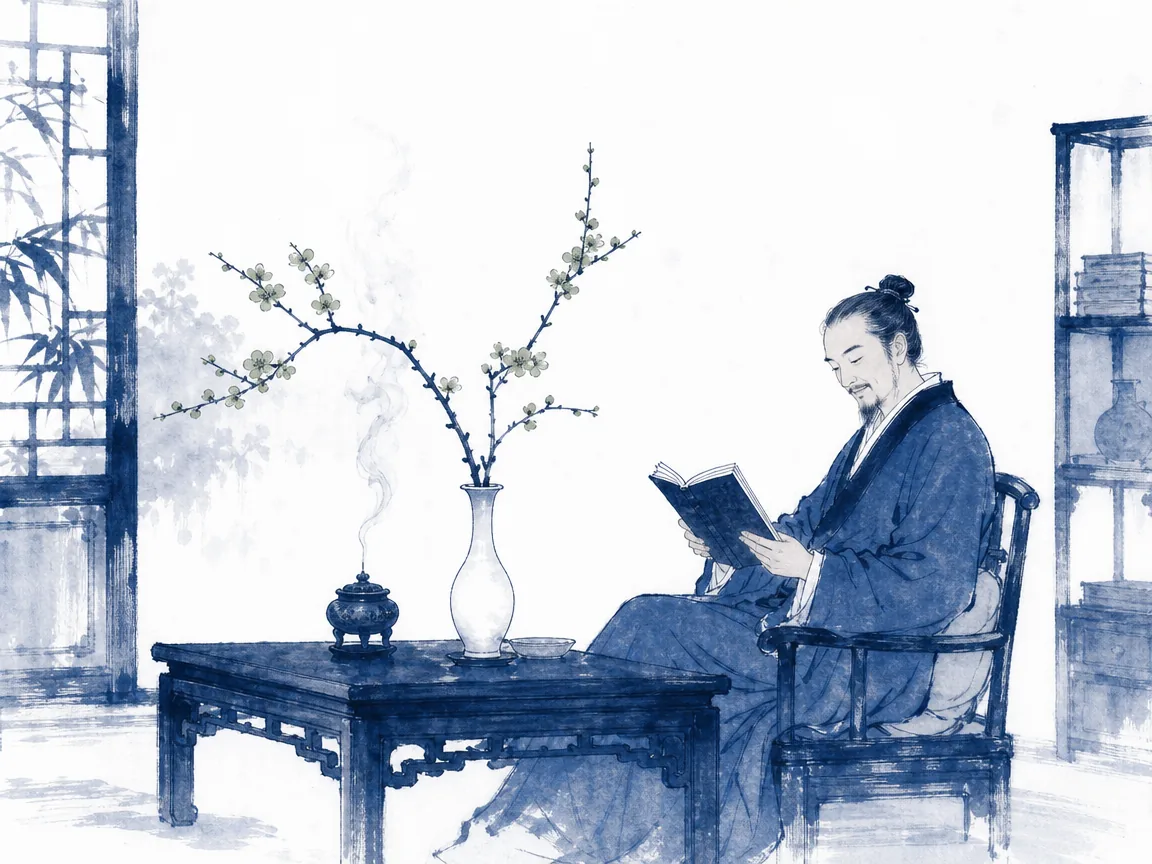
We live in an age of curated beauty. Social media feeds overflow with images of perfectly arranged desks, minimalist interiors, matching skincare routines, and effortlessly elegant lifestyles. The message is clear: if you just acquire the right things, follow the right habits, and optimize your environment, you will live beautifully. And yet, despite having access to more aesthetic resources than any generation in history, many of us feel increasingly exhausted, scattered, and empty. We chase beauty as if it were a product we can purchase, when perhaps we have misunderstood what beauty actually requires.
What if the answer to living beautifully has nothing to do with acquiring more, and everything to do with paying closer attention? What if a thinker from seventeenth-century China, writing about interior design, cooking, and the art of finding joy, offers something far more useful than another wellness trend — a way of seeing that begins not with positivity, but with honest acknowledgment of how difficult and brief life truly is? This principle is central to Chinese Life Aesthetics.
This is the strange and urgently relevant wisdom offered by Li Yu (李渔), a writer, dramatist, and aesthetic philosopher whose most famous work, Xian Qing Ou Ji (Idle Talk of Leisure Interests), covers everything from garden design and furniture arrangement to diet, makeup, and the philosophy of happiness. Li Yu did not write as a luxury lifestyle consultant. He wrote as someone who believed that living beautifully is possible precisely because life is fragile, uncertain, and short — not in spite of those facts. His approach is neither escapist nor consumerist. It is, in a remarkable way, deeply practical.
Chinese Life Aesthetics: Facing Life Brutally Honestly
Li Yu's discussion of happiness opens not with optimism, but with grief. In the section on finding joy ("seeking joy", xínglè, 行乐) within his broader treatise on sustaining life (Yíyǎng Bù, 颐养部), he begins with the word "Alas!" (shāng zāi, 伤哉) — and immediately states that human life, however long, does not exceed a hundred years [1]. He goes further, noting that within those potentially long decades, countless troubles arise: sorrow and hardship, illness and hardship, the chains of fame and profit, the storms and waves of fortune that disturb our peace of mind [1]. These obstacles prevent people from truly enjoying their lives, leaving them with the empty title of a hundred years but rarely the actual experience of living well within any single year or two.
This is not negative thinking. It is the opposite — a clarity that refuses to lie about what life contains. Li Yu's starting point aligns with a much older tradition in Chinese poetry. The Nineteen Old Poems (古诗十九首), composed during the Han dynasty, contain the lines: "Our lives span less than a hundred years, yet we carry a thousand years of worry" [2]. The poet urges: "Days are short, nights are long — why not light a candle and wander?" The recommendation is not reckless hedonism but a sober decision to engage with life while it lasts.
Li Yu illustrates this attitude through a story he admired. During the Ming dynasty, the scholar-official Kang Duishan (康对山) built a garden at the foot of Beimang Hill, a mountain in present-day Henan province that had served as a burial ground for centuries. When visitors asked him how he could find joy surrounded by tombs, he replied that it was precisely this view that made him feel he could not afford not to enjoy life [1]. This is what some contemporary thinkers might call "forward-looking acceptance" — not ignoring suffering or death, but letting the awareness of finitude sharpen one's commitment to living well now.
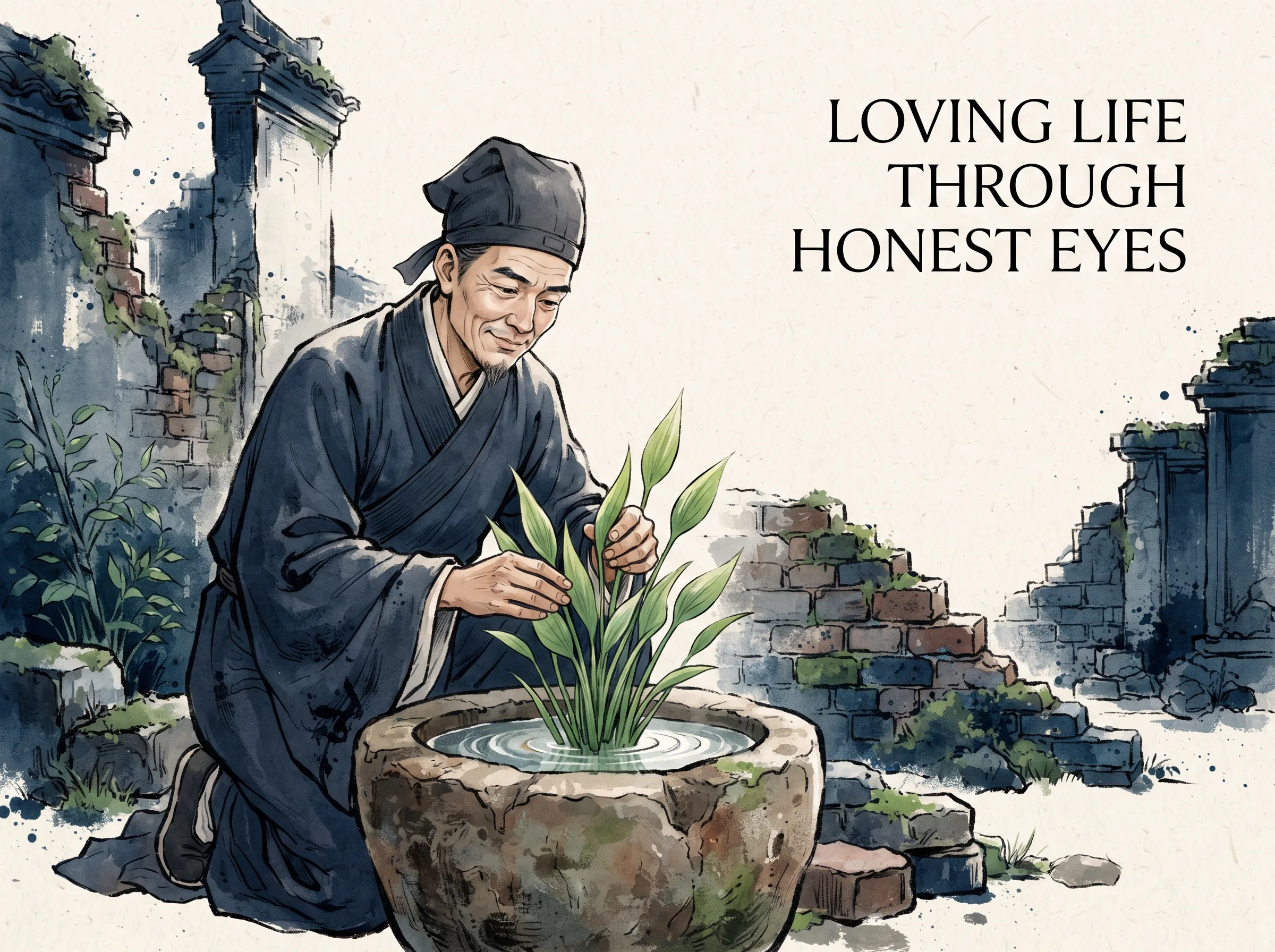
The relevance for modern readers is immediate. Our culture often asks us to distract ourselves from mortality through consumption, productivity, or curated optimism. Li Yu suggests the reverse path: look honestly at the difficulty of existence, and let that honesty become the foundation for a more committed, more tender engagement with ordinary moments.
Two Pillars of a Beautiful Life
If Li Yu's philosophy rests on any central structure, it can be understood through two requirements he repeatedly emphasizes: a spirit of leisure (一段闲情) and a perceptive eye (一双慧眼). Neither of these depends on wealth, status, or exceptional circumstances. Both depend on a shift in attention.
The Spirit of Leisure Within Busyness
Li Yu does not advocate abandoning responsibility or retreating to a country estate. He wrote during a period when many scholar-officials held demanding administrative duties, and he himself managed publishing enterprises, theatrical productions, and numerous creative projects. His concept of leisure is not the absence of activity but the presence of awareness within activity — what the Chinese idiom stealing leisure from bustle (máng lǐ tōu xián, 忙里偷闲) (stealing leisure from busyness) describes.
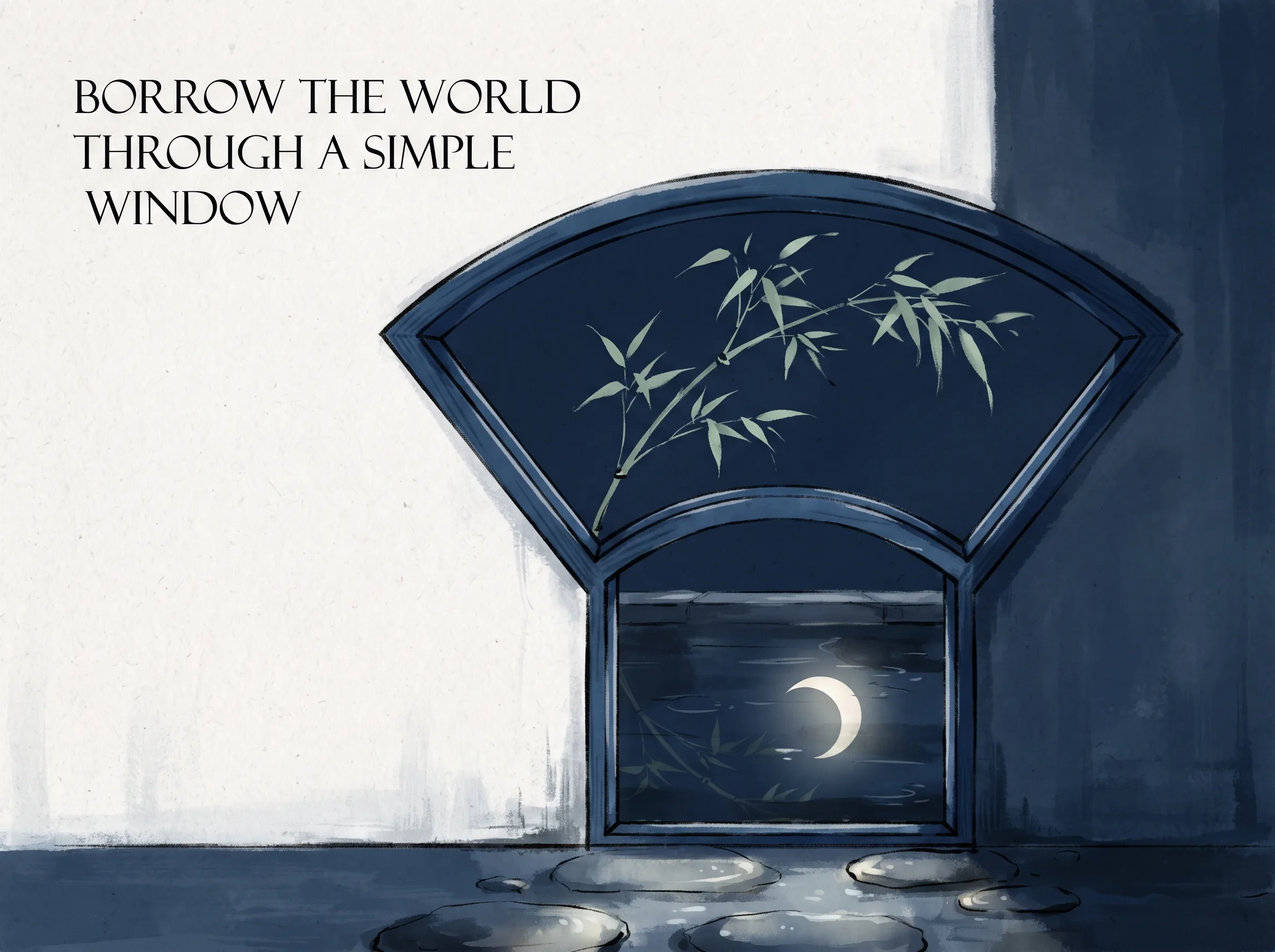
The key is learning to notice. A fifteen-minute walk at noon, a moment of stillness before sleeping, the observation of light moving across a wall — these are not luxuries in Li Yu's framework. They are practices of reclamation. When the pace of modern life makes extended periods of quiet feel impossible, the principle remains the same: find the cracks and crevices (fèngxì, 缝隙) in the day, and widen them into windows.
The Perceptive Eye: Love, Creativity, and Choice
Li Yu's second pillar, the perceptive eye, involves three interrelated capacities.
First, love for life itself. He writes that in a well-designed home, every object is placed with intention, and every detail carries genuine feeling. This idea extends beyond interior decoration to a general stance toward the world: beauty begins with caring. An object that is chosen with attention and used with presence becomes different from an object acquired simply for status or convenience. A wooden chair passed down through a family carries the accumulated warmth of daily use in a way that a newly purchased equivalent cannot replicate. Cultivate quiet mindfulness in everyday living through the meditative tea ritual in Why Do Machines Need Efficiency, But Humans Need “Uselessness”?.
Second, creativity and invention. Li Yu celebrated small-scale designs that achieved elegance through resourcefulness rather than expense. One example often discussed is his innovation of fan-shaped windows on boats cruising West Lake, which framed the shifting scenery as the vessel moved — turning an ordinary boat ride into a sequence of composed visual moments. The aesthetic principle here is accessible to anyone: beauty does not require abundance. It requires the willingness to rearrange what you already have and to notice possibilities others overlook.
Third, the art of choice and simplification. Across his writings, Li Yu consistently advocates coordination over accumulation. Whether discussing food, adornment, or household objects, his guidance favors selecting the right approach for each particular situation rather than applying a single formula everywhere. A simple guideline he offers is that a lifetime of grace in adornment requires only one hairpin and one pair of earrings — a suggestion that anticipates, by centuries, contemporary conversations about minimalism and intentional living.
The Practical Wisdom of Choice
Li Yu's most concrete advice often appears in sections where he discusses daily matters — cooking, dressing, arranging space. What makes these sections valuable for modern readers is not their specific prescriptions but the underlying principle: aesthetic living is the practice of making thoughtful choices according to the nature of things.
Consider his guidance on preparing fish. He distinguishes between fish valued for their freshness (鲜) and fish valued for their richness (肥). A fresh fish like crucian carp is best simply boiled, so its natural flavor can emerge without competition. A fattier fish is better braised, allowing its texture to transform into something deeply satisfying. The principle is not a recipe but a method: match your technique to the nature of your materials. This same logic applies to clothing, to interior design, to the way we structure our time. The question is never "What is the most popular option?" but "What suits this particular situation?"
His advice on adornment follows the same pattern. He recommends that when choosing jewelry or makeup, one should consider the overall harmony of appearance rather than layering on multiple accessories. If the complexion is already radiant, heavy ornamentation competes with natural beauty rather than enhancing it. If colors and textures are already prominent in clothing, simpler accessories create balance. The underlying habit is one of regular self-observation — noticing what is actually present before deciding what to add.
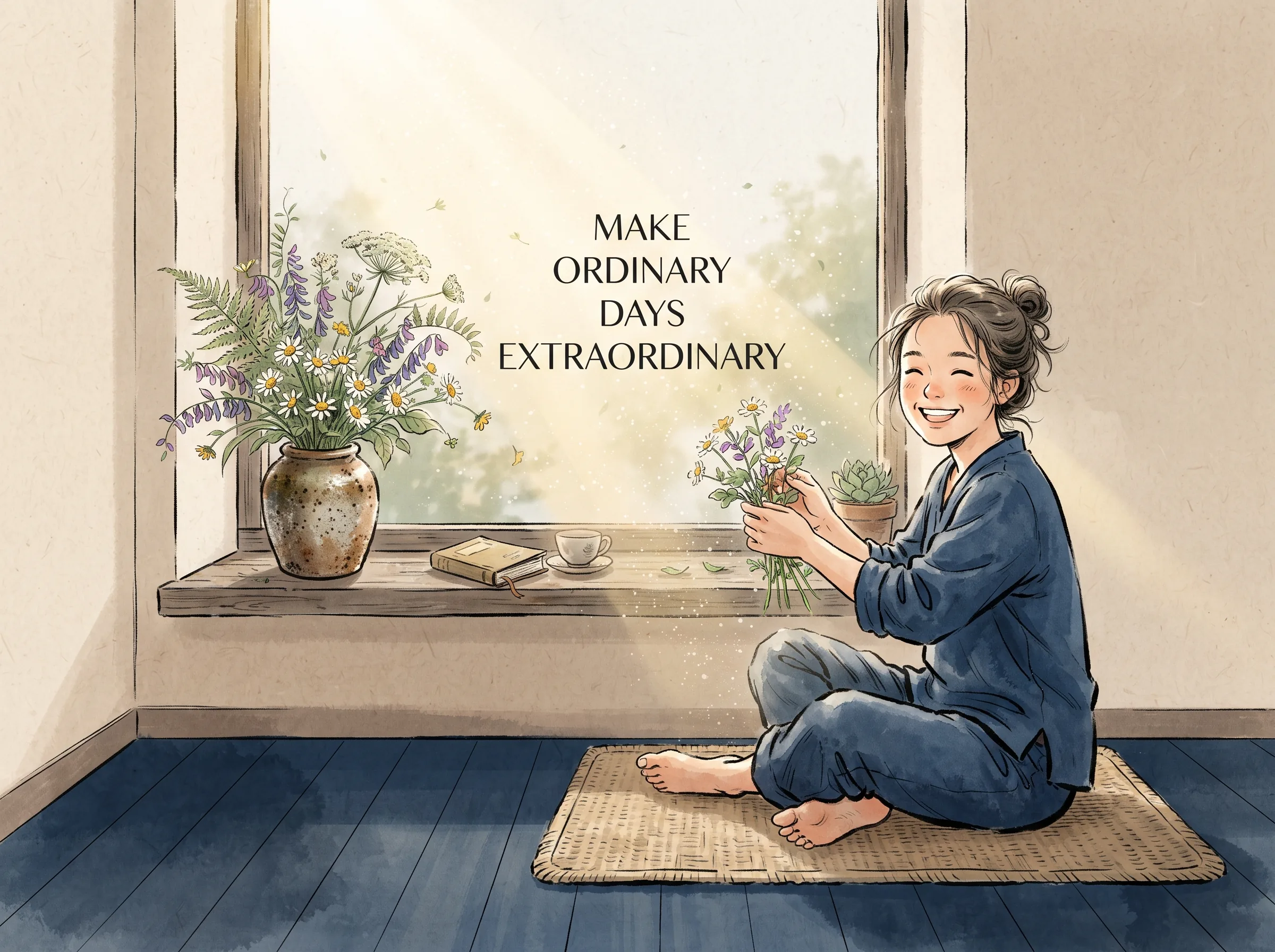
These practices share a common thread with Daoist reflections on simplicity. The tradition associated with Laozi describes the path of cultivation as a process of subtraction — removing excess rather than accumulating more. Li Yu's aesthetics operate similarly. The goal is not to fill every gap in life with decoration, activity, or consumption, but to create space where attention can move freely.
Reading Li Yu with Honesty
Any engagement with a seventeenth-century Chinese writer must acknowledge the limitations of that historical moment. Li Yu's aesthetic standards reflect the assumptions of his era, including preferences for certain physical features and a framework for evaluating women that modern readers reasonably find problematic. His work Xian Qing Ou Ji contains passages that reflect a male perspective on feminine beauty that would not meet contemporary standards of equality and respect.
This does not invalidate his insights, but it does require readers to engage critically. The task is not to excuse past assumptions through nostalgia, nor to dismiss an entire tradition because of its blind spots. It is to identify the principles that remain useful — mindfulness, simplicity, creative attention, honest engagement with life's difficulty — while setting aside the period-bound judgments that belong to another time.
Li Yu himself might approve of this approach. His work is full of practical observations about how to live well under given conditions, and those conditions always include limitations. He wrote about making the most of what was available rather than complaining about what was not. The same spirit can guide how we read him today.
Why This Matters Now
The modern wellness and lifestyle industries sell transformation as a series of purchases: this supplement, this course, this product, this routine. Li Yu offers something different — not a catalog of acquisitions but a posture toward existence. His philosophy requires no special equipment, no expensive subscription, no particular level of income. It requires only attention, care, and the willingness to look honestly at life as it is.
This may feel insufficient to a culture trained to expect quick fixes. But the slowness of Li Yu's approach is precisely its strength. Aesthetic living, as he understands it, is not an event to attend or a destination to reach. It is a continuous practice of noticing what is already here and responding to it with creativity and tenderness.
The closing question for today's reader is straightforward: what would it look like to practice aesthetics not as consumption but as attention — to treat the ordinary moments of an ordinary day as materials worthy of care?
FAQ
Who was Li Yu, and what is Xian Qing Ou Ji? Li Yu (李渔) was a seventeenth-century Chinese writer and aesthetic thinker whose work Xian Qing Ou Ji (Idle Talk of Leisure Interests) covers a wide range of topics related to daily living, including interior design, cooking, gardening, and the philosophy of happiness. The section most relevant to this article, "Finding Joy" (行乐第一), appears within the broader "Nurturing Life" (颐养部) division of the work [1].
What does Li Yu mean by "leisure" (闲) if he was not a wealthy man with free time? Li Yu's concept of leisure is not the same as idleness or vacation. He describes leisure (xián, 闲) as a quality of attention that can exist alongside busy activity — what the Chinese expression "stealing leisure from bustle" (máng lǐ tōu xián, stealing leisure from bustle (máng lǐ tōu xián, 忙里偷闲)) captures: finding moments of awareness and presence within the demands of daily life. His recommendation is to cultivate the ability to notice beauty and meaning even during periods of intense occupation.
Does Li Yu's advice require any special skills or resources? No. A central claim of his philosophy is that aesthetic living depends on perception and choice rather than wealth or luxury. His examples — selecting the right cooking method for a particular fish, arranging familiar objects with care, wearing one meaningful piece of jewelry instead of several fashionable ones — are all designed to be accessible regardless of economic means.
How should modern readers approach Li Yu's views on beauty and gender? Readers can appreciate Li Yu's practical insights about attention, simplicity, and creative engagement while recognizing that some of his specific judgments reflect the assumptions of his era. The useful approach is to separate enduring principles — such as the value of coordination over accumulation and the importance of caring attention — from historical limitations that do not serve contemporary understanding.
Next Steps
If Li Yu's approach resonates, the most direct way to engage with it is not to read more about it but to practice it. Choose one ordinary activity — preparing a meal, arranging a workspace, taking a short walk — and approach it with the intention of noticing something you normally overlook. This is not a productivity exercise; it is an invitation to slow your attention long enough to see what is already there.
For readers interested in exploring Li Yu's work directly, Xian Qing Ou Ji remains available in annotated editions and digital formats. The section on finding joy offers the most accessible entry point for those new to his thought, as it addresses universal concerns about how to live well rather than specialized techniques.
Cultivate quiet mindfulness in everyday living through the meditative tea ritual in Stop Solving. Just Drink Tea..
Deepen your understanding of these principles in our reflection on Why Can’t You Buy That X Factor? The Chinese Art of Cultivating Spirit Resonance (*Qì Yùn*, spirit resonance (*qì yùn*, 气韵)).
Sources & Further Reading
[1] Xian Qing Ou Ji, Section on Nurturing Life, Chapter on Finding Joy (Idle Talk of Leisure Interests) — Wikisource. Contains the original opening passage of the Xing Le section and the anecdote about Kang Duishan.
[2] Sheng Nian Bu Man Bai (Our Lives Span Less Than a Hundred Years) — Poem XV of the Nineteen Old Poems (Gushi Shijiu Shou), as preserved in the Wen Xuan anthology.
Further Reading
- The collected works of Li Yu — various annotated editions and translations are available in academic and public-domain formats.
- Nineteen Old Poems (Gushi Shijiu Shou) — foundational texts of early Chinese poetry, available in multiple English translations.
- Daoist teachings — reflections on simplicity and subtraction, particularly associated with the tradition surrounding the Daodejing.
Note on sources: Some details referenced in planning materials — including specific chapter attributions for the Daodejing, character etymology claims about the Chinese word for "busy," and attributions of other works to Li Yu — were marked as needing verification and have not been included in this article. The facts presented above are drawn only from the sources explicitly verified in the research materials.







[…] If you want to develop this quality, the path is not faster. It is deeper. Start by feeding your eye with work of genuine quality. Introduce spaces — reading, walking, solitude — where your inner energy can move without obstruction. And over time, let your character catch up with your ambitions. The rest will follow, reflecting the enduring wisdom of Spirit Resonance in Chinese Painting. To see how these principles extend beyond painting into daily objects and mindful living, explore Can Ancient Chinese Life Aesthetics Teach Us How to Live Beautifully Today?. […]