
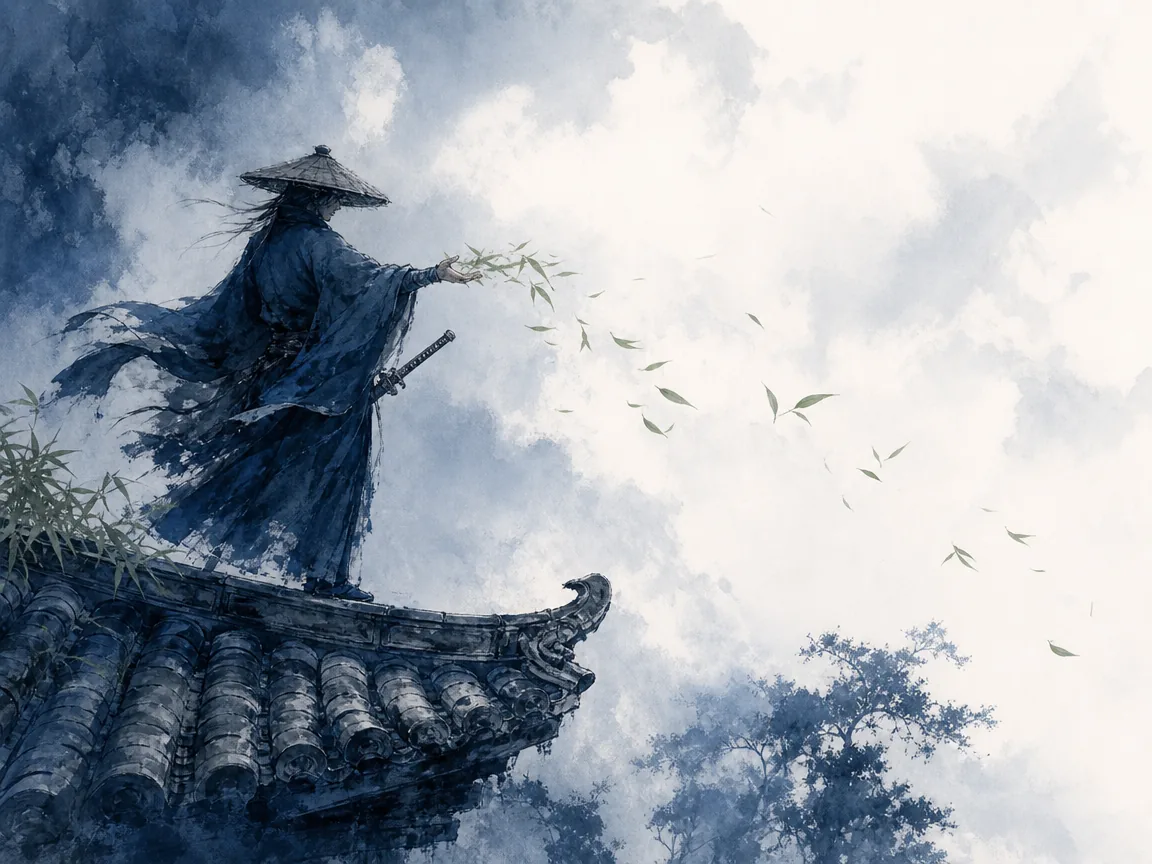
There is a scene in several Hong Kong martial arts films where the hero stands alone on a rooftop at dusk, sword drawn, surrounded by enemies. It is easy to watch it as spectacle. But those who stay for the ending often realize something else: the fight was never really about winning. It was about choosing, in a world that offers no guarantees, which side of yourself you are willing to stand on.
Hong Kong wuxia cinema has always been more than entertainment. Beneath the flying bodies and clashing blades, these films ask the same question that has occupied Confucians and Daoists for millennia — when justice fails, when fate seems rigged, when the world gives you nothing to hold onto — what holds you upright? The answer, these films quietly suggest, is not force. It is moral clarity—a foundational perspective explored in Hong Kong Wuxia Cinema Philosophy.
This is not a new idea in Chinese thought. But wuxia cinema does something rare: it translates ancient philosophical concerns into visceral, emotionally immediate stories that reach people who would never pick up a copy of the Analects or the Zhuangzi. The genre became especially powerful in 1960s-1990s Hong Kong, a city itself defined by rootlessness, migration, and the search for identity in a world of shifting loyalties. That historical moment shaped every sword stroke on screen.
Hong Kong Wuxia Cinema Philosophy: It Is a Condition of Being
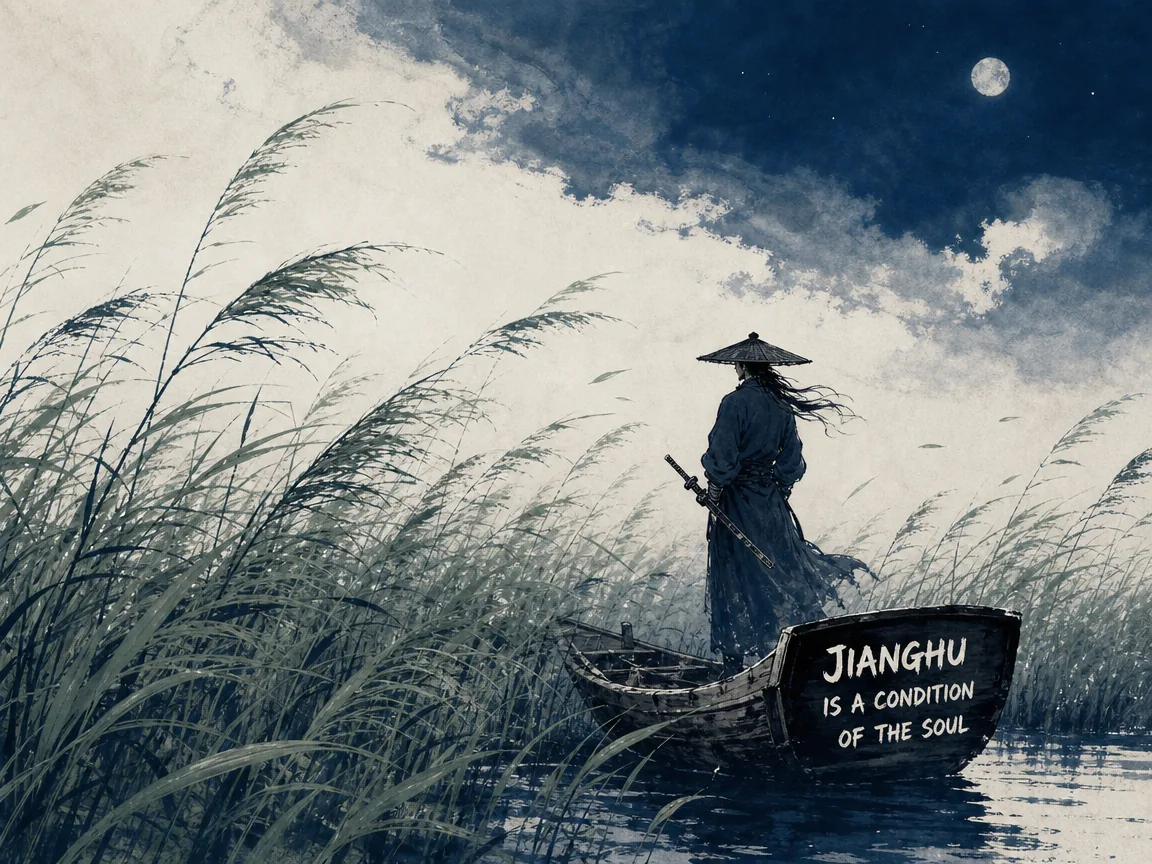
The word jianghu, often translated as "the martial world" or "the rivers and lakes," appears in nearly every wuxia story. On the surface, it seems to name a secret society of warriors, a shadow economy of innkeepers and assassins, a territory outside the reach of ordinary law. But the Hong Kong wuxia filmmakers understood something deeper: jianghu is not geography. It is a lived condition.
In the most honest of these films, jianghu is the experience of wandering drift (piāobó, 漂泊) — rootlessness — of navigating a world where the rules are written by those with the sharpest blades and the deepest pockets. It is the feeling of being thrust into situations you did not choose, bound by codes you did not write, carrying consequences that outlast your lifespan. This is not a medieval fantasy. It is a mirror held up to anyone who has ever felt powerless against forces larger than themselves.
Some readers may recognize here a resonance with the Zhuangzi, which often explores freedom not as escape from the world but as a way of moving through it with clear awareness of one's place within it. The Zhuangzi's wandering figure does not conquer the world; he learns to flow with it while never losing his inner center. Whether or not the filmmakers consciously drew on this text, the parallel is striking — and it is precisely this parallel that makes wuxia cinema a doorway into Chinese philosophical thinking for international audiences.
The condition of jianghu, then, is the human condition stripped of its comforts. It is the world as it truly feels when the safety nets are gone. And in that stripped-down space, the fundamental question of purpose comes into sharp relief: if nothing guarantees your success, if the system is rigged, if virtue is not rewarded — what do you fight for?
Why Do We Draw the Sword? Four Directors, Four Answers
Hong Kong wuxia cinema is not a single voice. It is a conversation across generations, and different directors answered the question of purpose differently. Four names stand out.
Zhang Che and the sword as dignity. In his 1967 film The One-Armed Swordsman, Zhang Che told the story of a handicapped hero who grows stronger after going through traumatic experiences and risks his life to save fellow disciples who once rejected him [1]. The film became a major box-office hit and marked Zhang Che as a leading director, helping to launch a wave of new-style wuxia films [1]. But the deeper meaning lies beneath the plot. Zhang Che's men do not fight to become heroes. They fight because they need to prove they still exist. In a world that has taken everything — an arm, a reputation, a place in the family — the sword becomes the last proof that they are still someone. The philosophical question here is ancient: when society strips you of your status, what remains of your dignity? Zhang Che's answer, repeated across his filmography, is that dignity is not given. It is taken back, blade by blade.
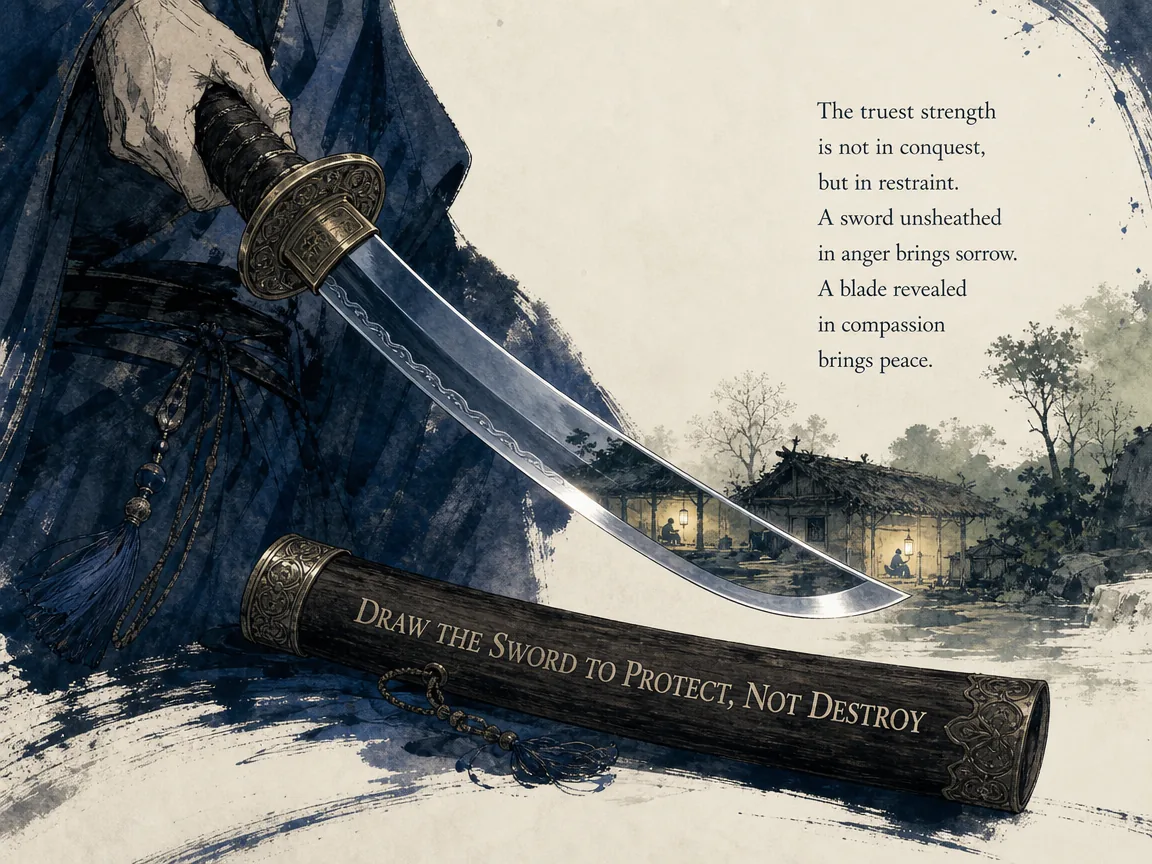
Chu Yuan and the sword as fate. By the mid-1970s, Chu Yuan (also spelled Chor Yuen) had begun adapting the novels of Gu Long into a series of swordplay films, including Killer Clans [2]. His characters move through worlds where choice is an illusion. They are born into roles they did not select, bound by debts they did not incur, chasing enemies who are mirrors of themselves. In Chu Yuan's universe, fate (mìng, 命) — or what the world has already written — is the invisible script. The characters draw their swords not because they believe in justice, but because they have no alternative. To refuse the fight is to be erased. This reading of fate carries echoes of a particular Chinese philosophical concern, though the films themselves do not explicitly cite classical texts. What Chu Yuan shows, visually and emotionally, is what it feels like to live under the weight of circumstances beyond your control — and why people still act anyway.
John Woo and the sword as loyalty. John Woo's signature shift came when he moved from pure wuxia into crime thrillers, but his core concern remained unchanged: what binds people together when the world tries to pull them apart? His answer is ren — often translated as righteousness or righteous loyalty — the commitment to another person that transcends self-interest. In Woo's world, the brotherhood bond is the highest social value, and the sword is wielded to protect it. This connects to a recognizable thread in Confucian thought, which places moral obligation to others at the center of ethical life. Whether or not Woo consciously invoked Confucius, his films ask the same question: in a corrupt world, is loyalty to a few better than compliance with a broken system? Examine this artistic principle further through the classical aesthetic philosophy of What Are the Five Levels of Chinese Aesthetics — and Where Do You Stand?.
Wong Kar-wai and the sword as surrender. In Ashes of Time (1994), Wong Kar-wai constructed a wuxia world in which the central mechanism is not a martial technique but a bottle of memory-erasing wine — a "magic wine that erases your memory" that the characters seek as the only resolution to their emotional torment [3]. His men do not fight for glory, for justice, or even for each other. They fight because fighting is all they know, and in the aftermath, they drink to forget. The greatest skill, in Wong's vision, is not mastery of a technique but the courage to let go. This is perhaps the most Daoist of all the approaches — not because Wong quotes the Dao De Jing, but because his films embody the Daoist intuition that the deepest suffering comes not from the world but from our inability to release our attachments to it.
Each director offers a different map of the same terrain. Zhang Che says: fight to remain yourself. Chu Yuan says: fight because there is no other path. Woo says: fight for the people you love. Wong says: the bravest thing may be to stop fighting altogether. None of these answers is wrong. Together, they form a philosophical spectrum that any reader, regardless of background, can recognize as a honest confrontation with the problem of purpose.
The Woman Who Sees Clearly — And Pays the Price
A pattern emerges upon closer looking at Hong Kong wuxia cinema: the women in these films often understand the situation more clearly than the men.
Male protagonists are consumed by questions of honor, revenge, brotherhood, and legacy. They chase these obsessions with a intensity that borders on the delusional. The women around them — sisters, lovers, wives, rival warriors — frequently see the full cost of these pursuits with startling clarity. They understand that the jianghu men build is, at bottom, a trap.
This observation should not be generalized as a claim about every wuxia film ever made. But across several important works, a consistent picture appears. In films such as The Seven Swords (based on the novel by Liang Yusheng and directed by Tsui Hark), female characters navigate the same violent world as their male counterparts but are often granted a perspective that men lack — sometimes through suffering, sometimes through exclusion, sometimes through sheer moral perception. In the older tradition of the genre, women were frequently positioned as casualties of male honor codes, their bodies the terrain on which men's battles were fought. As the genre matured, writers and directors began giving these female characters more interiority, more agency, and more truth.
The philosophical significance is worth noting. Daoist thought, particularly in the Zhuangzi, has a long tradition of valuing the clear-eyed witness who speaks uncomfortable truths. Confucian thought, for its part, has sometimes been criticized — fairly or unfairly — for creating systems in which performative righteousness outweighs genuine moral perception. The women of wuxia cinema often occupy the role of the disillusioned observer, the one who sees through the fantasy and bears the cost of seeing clearly.
For modern readers, this dynamic offers a practical mirror. How often do we, like the male protagonists of these films, pursue a version of honor or success that those closest to us see clearly as self-destructive? The wuxia woman's gift is not her combat skill but her vision. And the lesson for anyone navigating a world without guarantees is this: surround yourself with people who will tell you the truth, even when it costs them.
Xu Ke's Wuxia as National Self-Reflection
If Wong Kar-wai turned wuxia inward, toward psychology, Xu Ke turned it outward, toward history. His Huang Fei Hung series, beginning with Once Upon a Time in China (1991), reimagined the legendary martial artist not as a figure of pure fantasy but as a man caught between a collapsing order and an uncertain future
The HKFA describes Jet Li's portrayal as highlighting "both his traditional Confucian virtues and kind-heartedness, and also his bewilderment at Western culture and advancements in technology" [4]. This description captures something essential: Xu Ke's Huang Fei Hung is a scholar-knight (shì, 士) in the Confucian tradition — placed in a historical moment where the Confucian world he embodies is no longer viable.
The Huang Fei Hung films repeatedly ask: what does it mean to be a person of conscience in an era of radical transformation? Huang Fei Hung knows the old ways will not save China from foreign powers. He knows that spiritual discipline alone cannot stop bullets. Yet he also knows that abandoning his moral framework entirely would mean becoming something worse than defeated — it would mean becoming complicit.
This is the Confucian dilemma rendered in cinematic form. The Analects contains passages in which Confucius describes the noble person (君子) who persists in virtue even when the world does not reward it. Xu Ke's films dramatize this persistence without romanticizing it. Huang Fei Hung wins some battles and loses others. He adapts where he must — learning Western medicine, questioning blind tradition — but he never abandons his core sense of what is right. His struggle is not to conquer the world but to remain himself within a world that is changing beyond recognition.
For contemporary readers, the Huang Fei Hung figure may feel strangely familiar. We live in eras of our own — technological disruption, political instability, cultural anxiety — where the old frameworks feel insufficient and the new ones are not yet settled. What does a person of conscience do in such times? Xu Ke's answer, delivered through a martial arts spectacle, is both simple and difficult: hold to what is true, adapt where you must, and accept that victory may look different than you imagined.
The Last Martial Art — Remembering Who You Are
What, then, does Hong Kong wuxia cinema teach us about living with purpose when the world gives you no guarantees?
It teaches that purpose is not found in the guarantee of success. It is found in the clarity of your commitment. The sword in these films is never just a weapon — it is a question made physical. Every time a character draws it, they are answering, however imperfectly, the question: who am I, and what do I stand for?
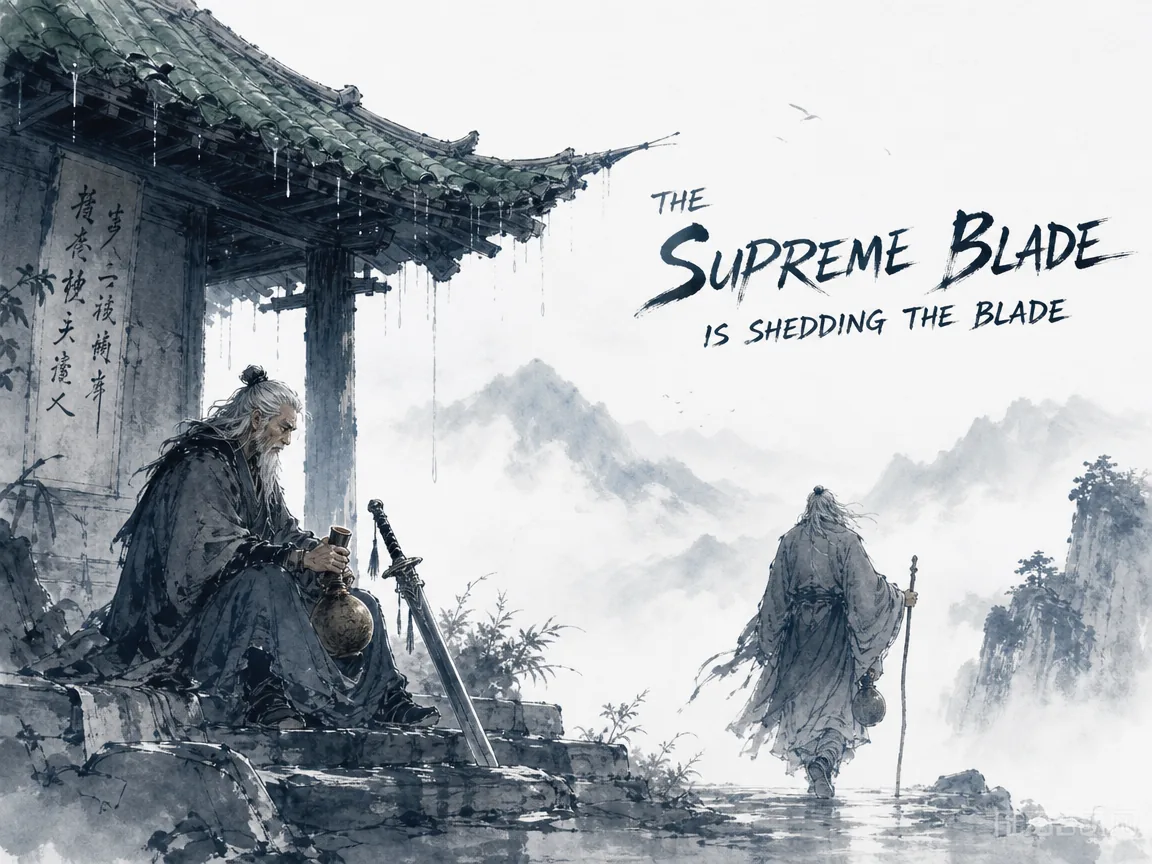
The genre's deepest wisdom may be this: the greatest battle is not against your enemies. It is against your own confusion, your own temptation to compromise, your own urge to pretend that the fight does not matter. The wuxia hero who loses this inner battle dies long before his body falls. The hero who keeps it — even while wounded, even while surrounded, even while certain of defeat — remains, in some essential sense, undefeated.
This is not a lesson exclusive to Chinese philosophy. But the Chinese tradition offers particular resources for it. The Confucian emphasis on righteousness (yì, 义) — moral obligation and honor — gives purpose a social dimension: you act rightly because others depend on it. The Daoist emphasis on aligning with the natural flow of things gives purpose a psychological dimension: you act with clarity because resistance to reality is the root of suffering. Together, they form a framework that is both demanding and deeply humane.
For the modern reader, the practical takeaway is straightforward. When facing a situation where nothing is guaranteed — a career setback, a relationship fracture, a personal crisis — ask the wuxia question: what would it mean to draw my sword honestly? Not the sword of aggression, but the sword of clarity. What is the truest action available to me right now? Not the most spectacular. Not the most rewarding. The truest.
That question, asked honestly and returned to again and again, may be the most useful practice any of us can adopt. It is ancient. It is Chinese. And it is available to anyone, anywhere, at any time.
FAQ
Q: Do I need to know Chinese philosophy to appreciate Hong Kong wuxia films? A: No. The films work on their own terms as stories of action, emotion, and moral choice. But knowing a little about Confucian and Daoist ideas can deepen your viewing, revealing layers of meaning that are present even when the filmmakers did not set out to make philosophy lessons.
Q: What is the difference between jianghu and the "martial arts world"? A: Translating jianghu simply as "martial arts world" misses much of its meaning. Jianghu refers to an alternative social order — one that exists alongside, beneath, and sometimes in opposition to official society. It is a space of unofficial codes, self-made laws, and constant movement. Some scholars describe it as a lived condition of rootlessness and autonomy rather than a physical place.
Q: Are Hong Kong wuxia films reliable sources for understanding Chinese philosophy? A: No. They are artistic interpretations that draw on philosophical ideas, sometimes explicitly and sometimes implicitly. The films are best read as creative engagements with ancient questions, not as textbooks. They can open doors to philosophical thinking, but they should not replace direct engagement with the sources themselves.
Q: Which Hong Kong wuxia film is the best starting point for a new viewer? A: This depends on what you are looking for. For a film that combines action, historical context, and philosophical depth, Once Upon a Time in China (1991) is an accessible entry point. For a more psychologically complex and visually poetic experience, Ashes of Time (1994) offers a different kind of richness. Both reveal, in their own ways, what the genre can teach about purpose and moral clarity.
Further reflection: If this topic resonates with you, the next step is not necessarily to watch more films — though that is worthwhile — but to sit with the question these films keep returning to: when nothing guarantees your success, what do you choose to stand for? The wuxia tradition offers no easy answer. But it offers something perhaps more valuable: the company of people who have asked the question honestly, across centuries, on screen and on the page, reflecting the enduring wisdom of Hong Kong Wuxia Cinema Philosophy.
Examine this artistic principle further through the classical aesthetic philosophy of Why the Strongest Blades Stay in Their Scabbard: The Chinese Art of Concealing Your Edge.
Sources & Further Reading
[1] One-armed Swordsman – Hong Kong Film Archive — Details on Zhang Che's 1967 film, its plot themes, and its impact on Hong Kong cinema.
[2] Biography of Chor Yuen – Hong Kong Film Archive — Information on Chu Yuan's adaptation of Gu Long's novels, including Killer Clans.
[3] Ashes of Time (Redux) (Wong Kar-wai, 1994) — Discussion of the memory-erasing wine motif and its thematic role in the film.
[4] Once Upon a Time in China – Hong Kong Film Archive — Context on Tsui Hark's 1991 film, Jet Li's portrayal, and the late Qing historical setting. Note: Some interpretations in this article, including the analysis of women characters as clear-sighted figures and the framing of wuxia as "eulogy for utopia," are the author's analytical readings and are not presented as established scholarly consensus. References to Confucian and Daoist concepts are offered as interpretive lenses, not as claims about the filmmakers' explicit intentions.






