
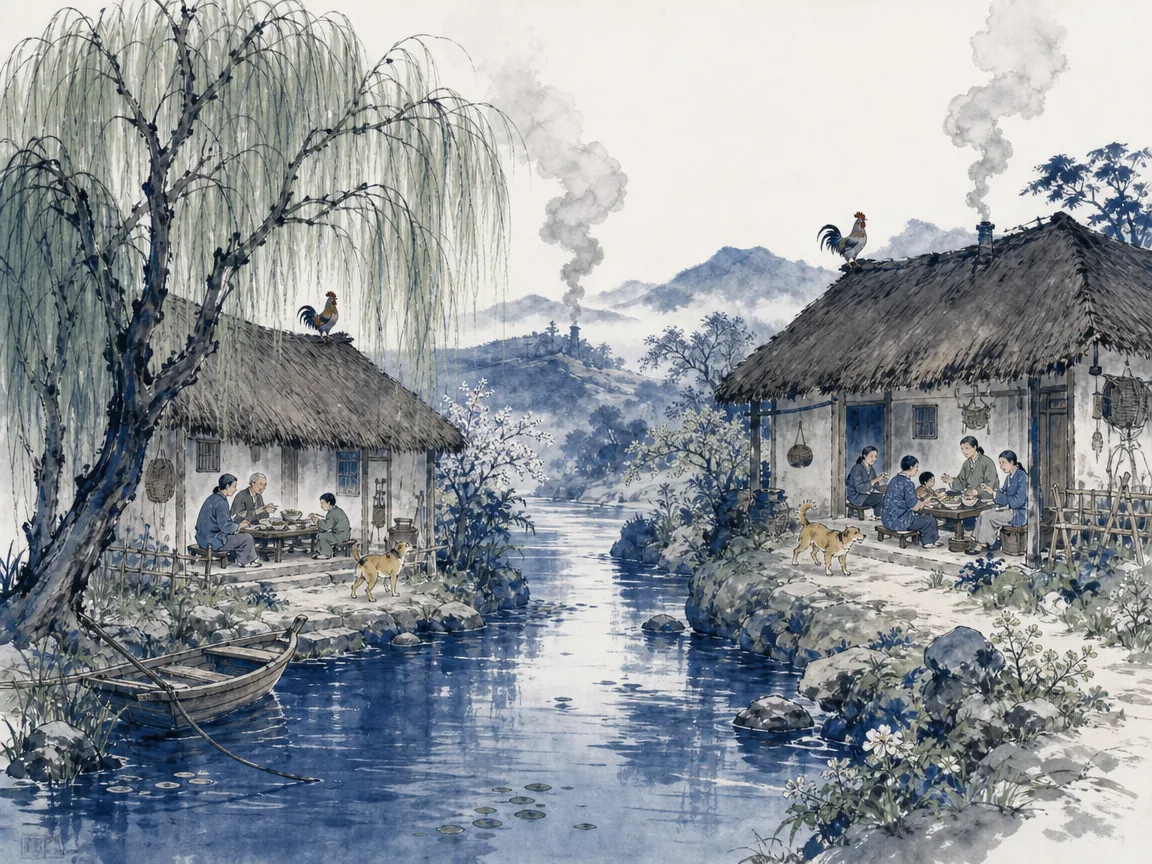
獨立章第八十
Key Takeaway: "Let there be a small country with few people… Sweeten their food, beautify their clothing, pacify their homes, and delight in their rustic ways." — Laozi, Daodejing Chapter 80
Imagine a small country with few inhabitants. Even if labor-saving machines exist, people do not depend on them. They relish their food, admire their simple clothing, rest peacefully in their dwellings, hearing neighbors' roosters in content harmony—a foundational perspective explored in Daodejing Chapter 80.
Daodejing Chapter 80: The Harmonious Village
The wisdom of Chapter 80 addresses a fundamental human dynamic: how we navigate ambition, quietude, and the natural flow of existence. In the classical tradition, this passage serves as both a metaphysical mirror and a practical compass for daily living and leadership. Follow the sequential development of the text in Laozi’s next philosophical movement in Manifesting True Substance: Sincere Words Are Not Fine-Sounding.
By shifting our focus from outer coercion to internal stillness, we uncover a more resilient way of relating to ourselves and the world around us.
Complete Chapter Translation: Modern Western Reading
Given a small country with few inhabitants, he could bring it about that through there should be among the people contrivances requiring ten times, a hundred times less labour, they would not use them. He could bring it about that the people would be ready to lay down their lives and lay them down again in defence of their homes, rather than emigrate. There might still be boats and carriage, but no one would go in them; there might still be weapons of war but no one would drill with them. He could bring it about that “the people should have no use for any from of writing save knotted ropes, should be contented with their food, pleased with their clothing, satisfied with their homes, should take pleasure in their rustic tasks. The next place might be so near at hand that one could one could hear the cocks crowing in it, the dogs barking; but the people would grow old and die without ever having been there”.
道德经中文原文与对照
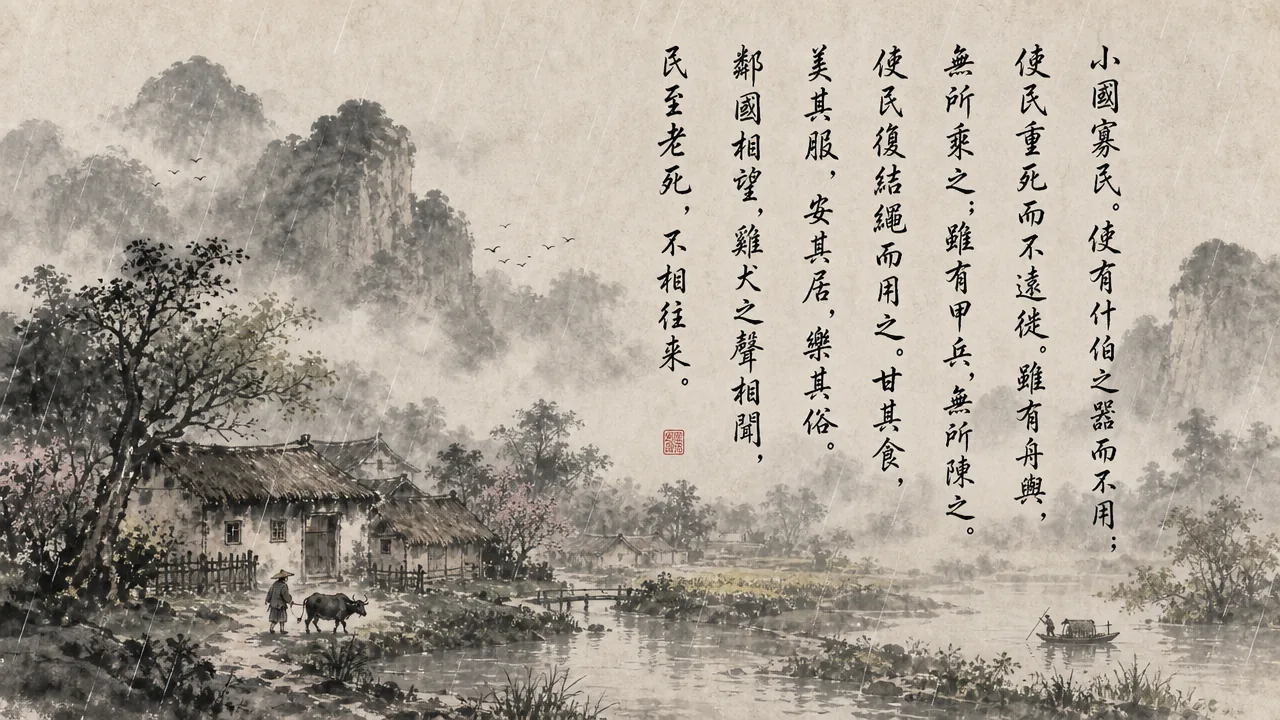
【原文】 小國寡民。使有什伯之器而不用;使民重死而不遠徙。雖有舟輿,無所乘之;雖有甲兵,無所陳之。使民復結繩而用之。甘其食,美其服,安其居,樂其俗。鄰國相望,雞犬之聲相聞,民至老死,不相往來。
核心要义解析 (Philosophical Insights)
- 道义发微:本章通过“獨立章第八十”阐发了《道德经》的核心精髓。从“有”与“无”、“动”与“静”的辩证转化中,提醒我们在日用常行中摒弃过度的功利执念,回归纯粹本真的生命状态。
- 现代启示:当外界喧嚣与评判标准不断施加压力时,保持内心的虚静与不争,反而是最强大的定力与智慧。
Discover the historical and philosophical roots in the classical foundation in The Virtue of Humility: The Great Nation as the Low Reaches of a River.
For a deeper comparative examination of these ideas, explore our related study on The Bounty of Humility: Yielding to Remain Whole, Bending to Stand Upright.






