

謙德章第六十一
Key Takeaway: "A large kingdom must be like the low ground toward which all streams flow down." — Laozi, Daodejing Chapter 61
A great nation should be like the lower reaches of a river—the haven where all waters gather, the feminine receptive center of the world. The female always conquers the male through quiet stillness—a foundational perspective explored in Daodejing Chapter 61.
Daodejing Chapter 61: Winning Through Gentle Receptivity
The wisdom of Chapter 61 addresses a fundamental human dynamic: how we navigate ambition, quietude, and the natural flow of existence. In the classical tradition, this passage serves as both a metaphysical mirror and a practical compass for daily living and leadership. Follow the sequential development of the text in Laozi’s next philosophical movement in The Treasure of Existence: The Tao as the Sanctuary of All Creation.
By shifting our focus from outer coercion to internal stillness, we uncover a more resilient way of relating to ourselves and the world around us.
Complete Chapter Translation: Modern Western Reading
A large kingdom must be like the low ground towards which all streams flows down. It must be a point towards which all things under heaven converge. Its part must be that of the female in its dealings with all things under heaven. The female by quiescence conquers the male; by quiescence gets underneath. If a large kingdom can in the same way succeed in getting underneath a small kingdom then it will win the adherence of the small kingdom; and it is because small kingdoms are by nature in this way underneath large kingdoms that they win the adherence of large kingdoms. The one must get underneath in order to do it; the other is underneath and therefore does it. (What large countries really need is more inhabitants; and what small countries need is some place where their surplus inhabitants can go and get employment.) Thus each gets what it needs. That is why I say the large kingdom must “get underneath”.
道德经中文原文与对照
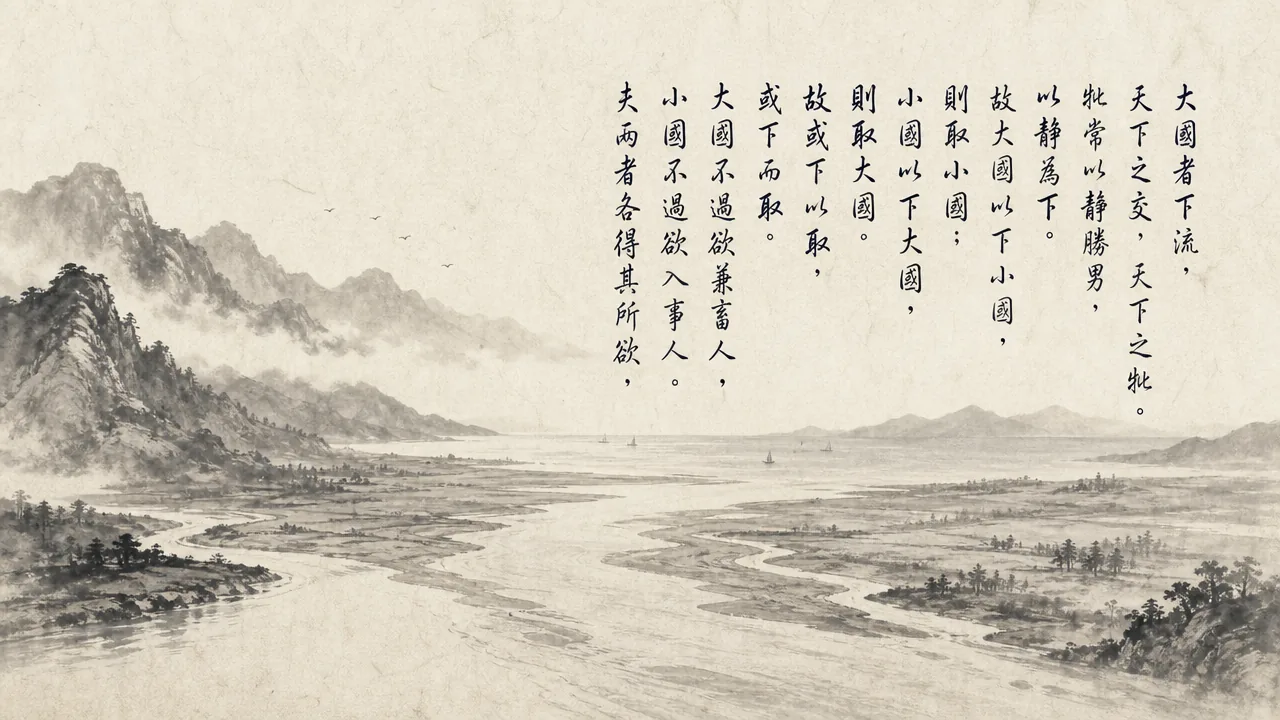
【原文】 大國者下流,天下之交,天下之牝。牝常以靜勝男,以靜爲下。故大國以下小國,則取小國;小國以下大國,則取大國。故或下以取,或下而取。大國不過欲兼畜人,小國不過欲入事人。夫兩者各得其所欲,大者宜爲下。
核心要义解析 (Philosophical Insights)
- 道义发微:本章通过“謙德章第六十一”阐发了《道德经》的核心精髓。从“有”与“无”、“动”与“静”的辩证转化中,提醒我们在日用常行中摒弃过度的功利执念,回归纯粹本真的生命状态。
- 现代启示:当外界喧嚣与评判标准不断施加压力时,保持内心的虚静与不争,反而是最强大的定力与智慧。
Discover the historical and philosophical roots in the classical foundation in The Three Treasures: Compassion, Frugality, and Not Daring to Be First.
For a deeper comparative examination of these ideas, explore our related study on Recognizing the Difficulty: My Words Are Easy to Grasp, Yet Few Understand.






