
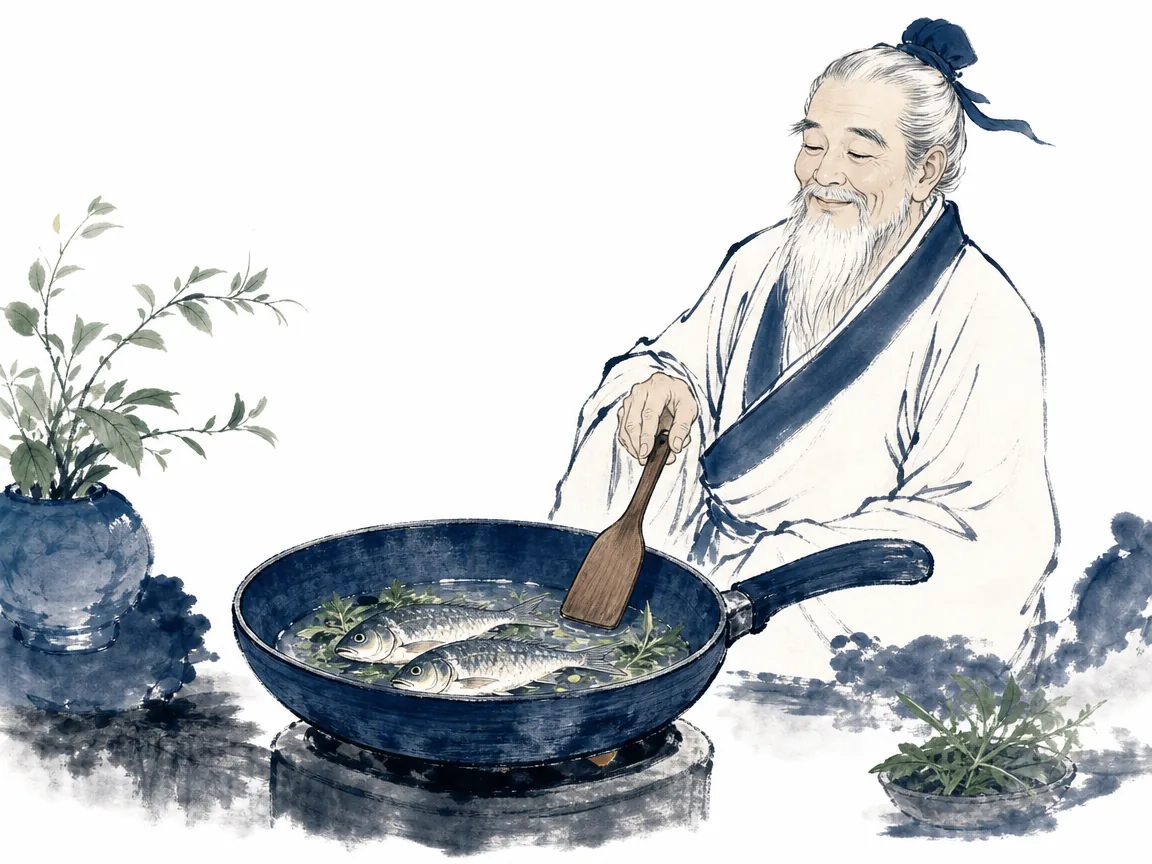
居位章第六十
Key Takeaway: "Ruling a large kingdom is indeed like cooking small fish." — Laozi, Daodejing Chapter 60
Governing a large country is like frying delicate small fish—stir too much and you break them to pieces. Approach the world with the Tao, and conflicting spirits will refrain from exercising harmful power—a foundational perspective explored in Daodejing Chapter 60.
Daodejing Chapter 60: Harmonizing Spirits and Humans Without Harm
The wisdom of Chapter 60 addresses a fundamental human dynamic: how we navigate ambition, quietude, and the natural flow of existence. In the classical tradition, this passage serves as both a metaphysical mirror and a practical compass for daily living and leadership. Follow the sequential development of the text in Laozi’s next philosophical movement in The Virtue of Humility: The Great Nation as the Low Reaches of a River.
By shifting our focus from outer coercion to internal stillness, we uncover a more resilient way of relating to ourselves and the world around us.
Complete Chapter Translation: Modern Western Reading
Ruling a large kingdom is indeed like cooking small fish. They who by Tao all that is under heaven did not let an evil spirit within them display its powers. Nay, it was not only that the evil spirit did not display its powers; neither was the Sage's good spirit used to the hurt of other men. Nor was it only that his good spirit was not used to harm other men, the Sage himself was thus saved from harm. And so, each being saved from harm, their “powers” could converge towards a common end.
道德经中文原文与对照
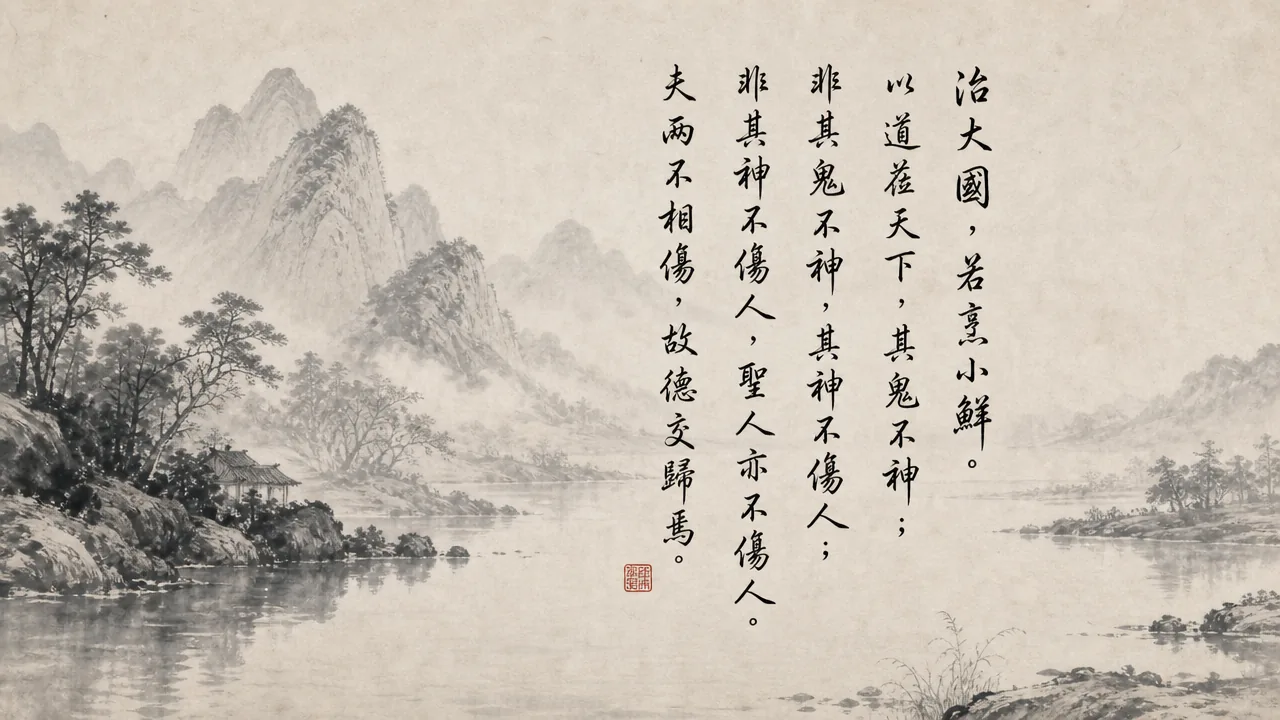
【原文】 治大國,若烹小鮮。以道莅天下,其鬼不神;非其鬼不神,其神不傷人;非其神不傷人,聖人亦不傷人。夫兩不相傷,故德交歸焉。
核心要义解析 (Philosophical Insights)
- 道义发微:本章通过“居位章第六十”阐发了《道德经》的核心精髓。从“有”与“无”、“动”与“静”的辩证转化中,提醒我们在日用常行中摒弃过度的功利执念,回归纯粹本真的生命状态。
- 现代启示:当外界喧嚣与评判标准不断施加压力时,保持内心的虚静与不争,反而是最强大的定力与智慧。
Discover the historical and philosophical roots in the classical foundation in Placing Oneself Behind: How Rivers and Seas Become Kings of the Valleys.
For a deeper comparative examination of these ideas, explore our related study on Mysterious Strategy: Advancing Without Advancing and Grieving for Conflict.






