
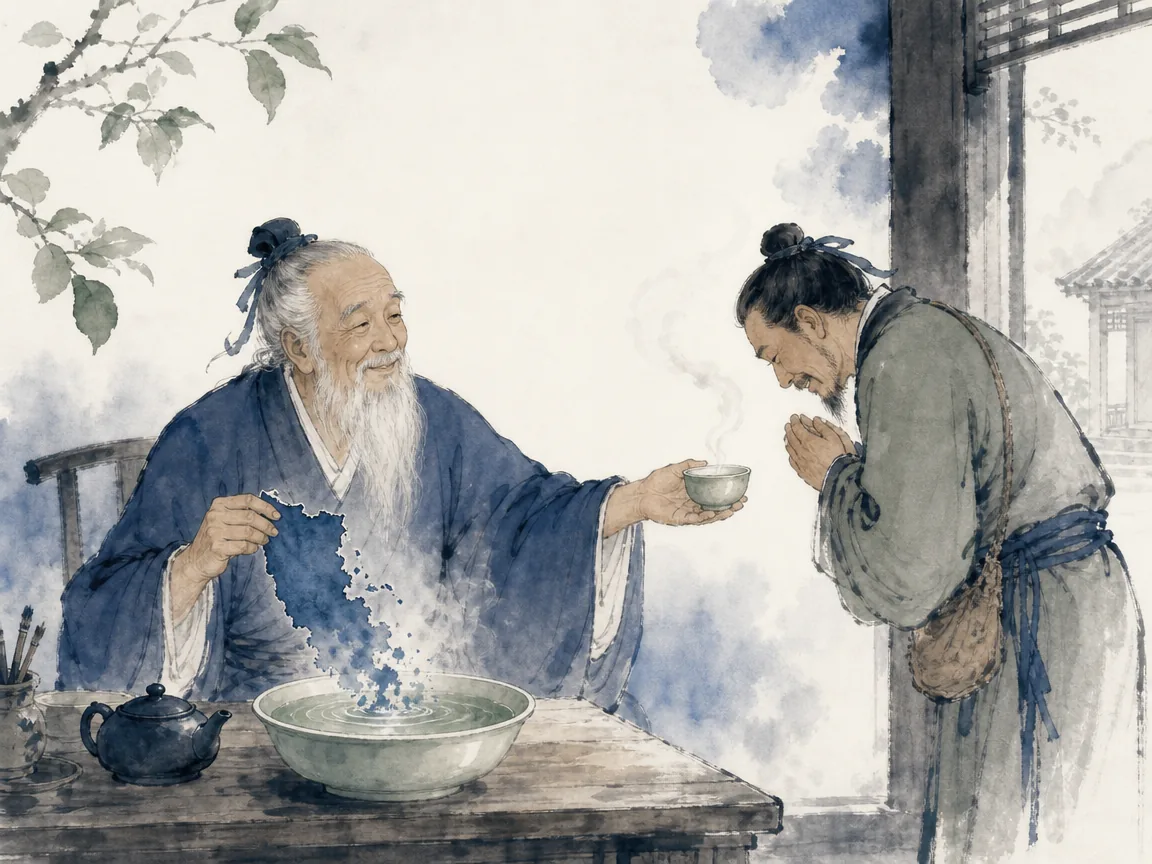
任契章第七十九
Key Takeaway: "The Way of Heaven has no favorites; it always aligns with the good." — Laozi, Daodejing Chapter 79
When a deep resentment is patched up, some bitterness inevitably remains; how can this be considered ideal? The sage holds the left half of the debtor's tally, yet never presses others to pay. Heaven has no favorites; it aids the virtuous—a foundational perspective explored in Daodejing Chapter 79.
Daodejing Chapter 79: Heaven Has No Favorites
The wisdom of Chapter 79 addresses a fundamental human dynamic: how we navigate ambition, quietude, and the natural flow of existence. In the classical tradition, this passage serves as both a metaphysical mirror and a practical compass for daily living and leadership. Follow the sequential development of the text in Laozi’s next philosophical movement in Independent Simplicity: A Small Country with Few Inhabitants.
By shifting our focus from outer coercion to internal stillness, we uncover a more resilient way of relating to ourselves and the world around us.
Complete Chapter Translation: Modern Western Reading
(To requite injuries with good deeds.) To allay the main discontent, but only in a manner that will certainly produce further discontents can hardly be called successful. Therefore the Sage behaves like the holder of the left-hand tally, who stays where he is and does not go round making claims on people.
For he who has the “power” of Tao is the Grand Almoner; he who has not the “power” is the Grand Perquisitor. “It is Heaven's way, without distinction of persons, to keep the good perpetually supplied.”
道德经中文原文与对照
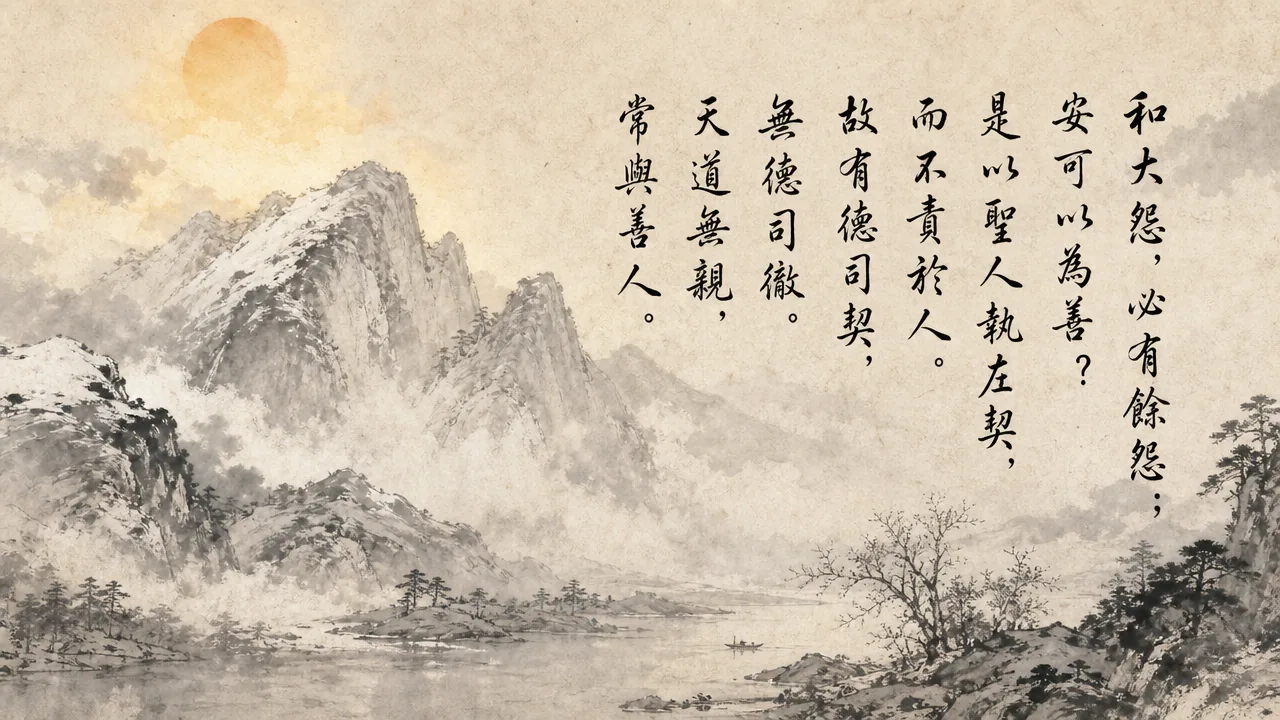
【原文】 和大怨,必有餘怨;安可以爲善?是以聖人執左契,而不責於人。故有德司契,無德司徹。天道無親,常與善人。
核心要义解析 (Philosophical Insights)
- 道义发微:本章通过“任契章第七十九”阐发了《道德经》的核心精髓。从“有”与“无”、“动”与“静”的辩证转化中,提醒我们在日用常行中摒弃过度的功利执念,回归纯粹本真的生命状态。
- 现代启示:当外界喧嚣与评判标准不断施加压力时,保持内心的虚静与不争,反而是最强大的定力与智慧。
Discover the historical and philosophical roots in the classical foundation in Ruling from the Center: Governing a Great Nation Like Cooking Small Fish.
For a deeper comparative examination of these ideas, explore our related study on The Empty Mind: The Elusive Essence of the Cosmic Blueprint.






