
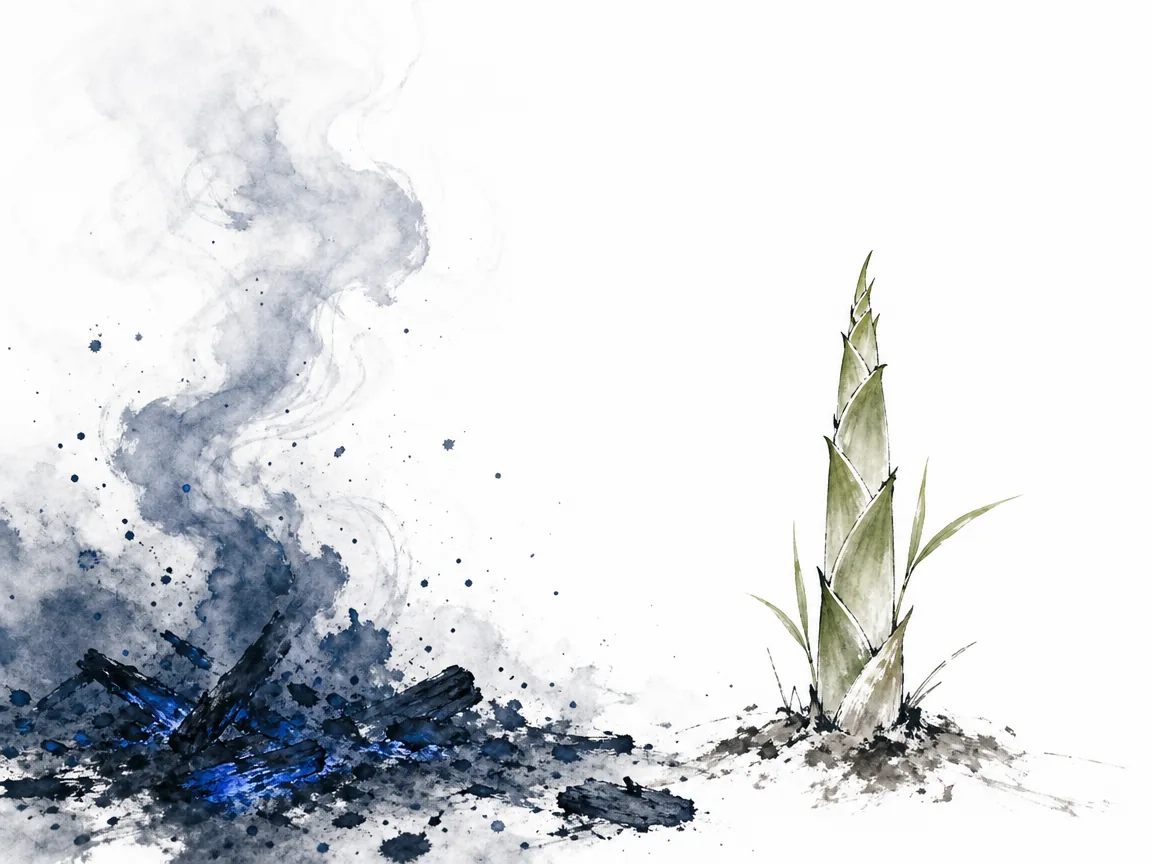
You've been told to push harder. Meet faster. Optimize every hour. In a culture that equates busyness with worth and exhaustion with dedication, it is easy to mistake burnout for strength. People run on adrenaline, anxiety, and the need for external validation, building lives that look impressive from the outside while slowly draining from within. The visible symptom is constant motion; the hidden cost is internal collapse. When energy depletion, cynicism, and a sense of professional ineffectiveness accumulate, they match what the World Health Organization classifies as burnout — a syndrome arising from chronic workplace stress that has not been successfully managed [1]. But burnout is not only a workplace issue. It is a signal that something deeper in the way we live has become unbalanced.
Over two thousand years ago, an ancient Chinese text known as the Daodejing (道德经) offered a different understanding of strength — one that does not come from force, hustle, or relentless self-optimization, but from a spacious, receptive, rooted inner order that generates from emptiness rather than depletion. In Daodejing Chapter 6 is remarkably short, composed of only a few dozen characters, yet it addresses a question many modern readers are asking today: why does the fiercest fire burn out fastest, and how can we cultivate a kind of vitality that endures? The answer, as the text suggests, lies in returning to what gives life its root, rather than adding more strategies to keep branches growing.
Daodejing Chapter 6: Mistaking Burnout for Strength
Modern life rewards output. Productivity is measured, performance is tracked, and self-worth is increasingly tied to external markers — likes, reactions, titles, and continuous availability. Under this pressure, people learn to equate busyness with meaning and exhaustion with virtue. A person may appear strong because they are always available, always responding, always performing. But beneath that performance lies a quiet depletion.
What the Daodejing calls reckless action (wàng dòng, 妄动) — forced or reckless action — describes this pattern well. It is not action itself that is problematic, but action driven by desperate grasping, ego, or a chronic sense of lack. A leader who micromanages every detail. A parent who fills every moment with structured activity. An individual who cannot rest without guilt. In each case, the energy comes from outside pressure rather than from an inner center. The result is not sustainability but a pattern of peaks and crashes, intensity followed by collapse.
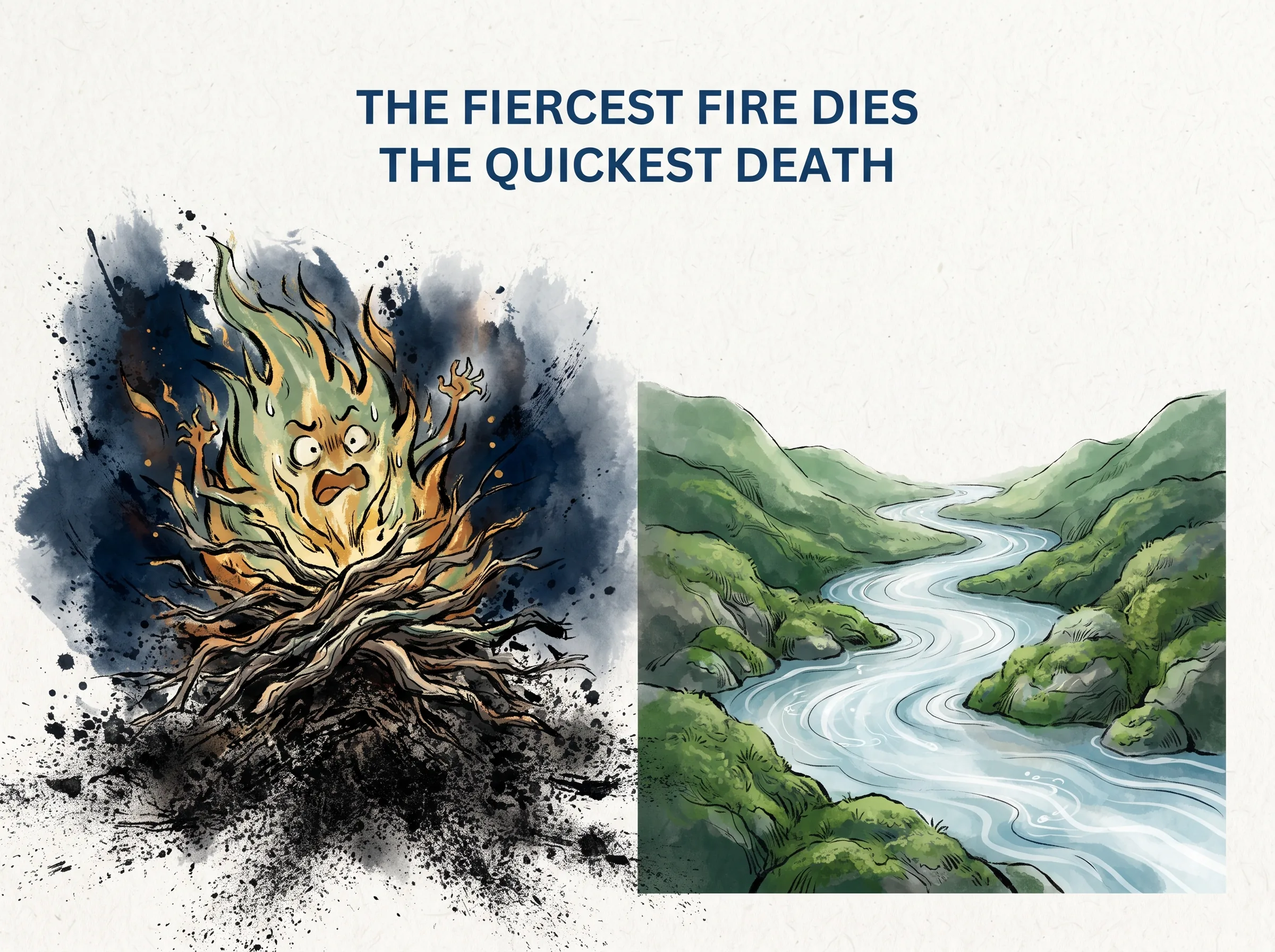
The danger is not that people work hard. The danger is that they mistake the visible signs of strain for the substance of strength. True strength, as the ancient text suggests, is not loud. It does not announce itself. It is the quiet capacity to remain rooted while circumstances shift around you.
Laozi's Chapter 6 in Plain Language
Daodejing Chapter 6 of the Daodejing opens with the line The Valley Spirit Never Dies (Gǔshén Bù Sǐ, 谷神不死) [2]. The valley here is not merely a geographical feature. It is a metaphor for emptiness that is generative rather than empty in the sense of absence. A valley is low, open, and receptive. It does not compete with the mountains around it. It receives water, wind, and seed. It produces nothing by forcing, yet everything passes through it.
The chapter continues with The Gate of the Mysterious Feminine (Xuánpìn Zhī Mén, 玄牝之门) — a phrase that has sometimes been misunderstood [2]. In the context of the text, the mysterious feminine (xuánpìn, 玄牝) is not a literal gender doctrine but a metaphor for generative receptivity, the capacity to receive, nurture, and bring forth without dominating. It is the principle of creation through openness rather than control.
The final lines read "Continuous as if enduring, draw upon it and it is never exhausted" (Miánmián ruò cún, yòng zhī bù qín, 绵绵若存,用之不勤) [2]. There is scholarly discussion about the exact reading of diligence/exhaustion (qín, 勤) in this phrase, with some interpreters understanding it as "exhausted" (不穷) and others as "overused" (劳乏), but both readings point toward the same insight: lasting vitality comes not from relentless application of force but from a capacity that is preserved rather than spent.
What Laozi describes is not personality advice. It is an observation about the fundamental mechanism of enduring life. The valley does not die because it is open. The gate does not close because it is receptive. The root does not wither because it draws from a source that is continuously renewed.
The Root vs. the Branches: A Metaphor for Modern Life
A tree with exhaustive foliage but shallow roots will fall in the first strong wind. Many modern lives resemble this pattern. Information flows constantly. Goals multiply. Every moment is optimized for output. But the inner ground — the sense of steadiness, of having a place to return to — is neglected.
Symptoms of this rootlessness are widespread. Self-worth becomes contingent on external validation. A good day depends on whether notifications arrived, whether responses were received, whether the metrics moved upward. Without an internal center, people become reactive, oscillating between overextension and collapse.
What a rooted life looks like is harder to describe because it does not perform visibly. It is steadiness beneath turbulence. It is the ability to receive before responding. It is knowing, as the text implies, when to act and when to stop — what later tradition would call knowing when to stop (zhī zhǐ, 知止), knowing the edge beyond which action becomes self-harm. The pivot from rootlessness to rootedness is not about adding more strategies. It is about asking what you are standing on. For the word-for-word source text and commentary, consult the complete classical translation and commentary of The Formation of Form: The Valley Spirit and the Primal Mother.
Wuwei, Ziran, and Zhi-zhi in Everyday Practice
The Daodejing is often summarized through three key concepts: wuwei, ziran, and zhi-zhi. Each has been misunderstood in popular usage, and each offers a practical lens for modern life.
Wuwei (无为) is frequently translated as "nonaction," but that translation can be misleading. According to scholarly analysis, wuwei does not mean total inaction; rather, it refers to non-coercive or non-assertive action — acting without desperate grasping or ego-driven force [3]. In practice, this might look like a manager who creates space for a team to find its own rhythm rather than controlling every decision, or an individual who acts from clarity instead of anxiety.
Ziran (自然) is often rendered as "nature," but it literally means "self-so" — the way things unfold according to their own inner rhythm [3]. Problems arise, the text suggests, when desire overrides this natural order, imposing urgency where none exists [3]. A parent trusting a child's pace, a creative worker protecting uninterrupted time, a person learning to rest without guilt — these are small expressions of ziran.
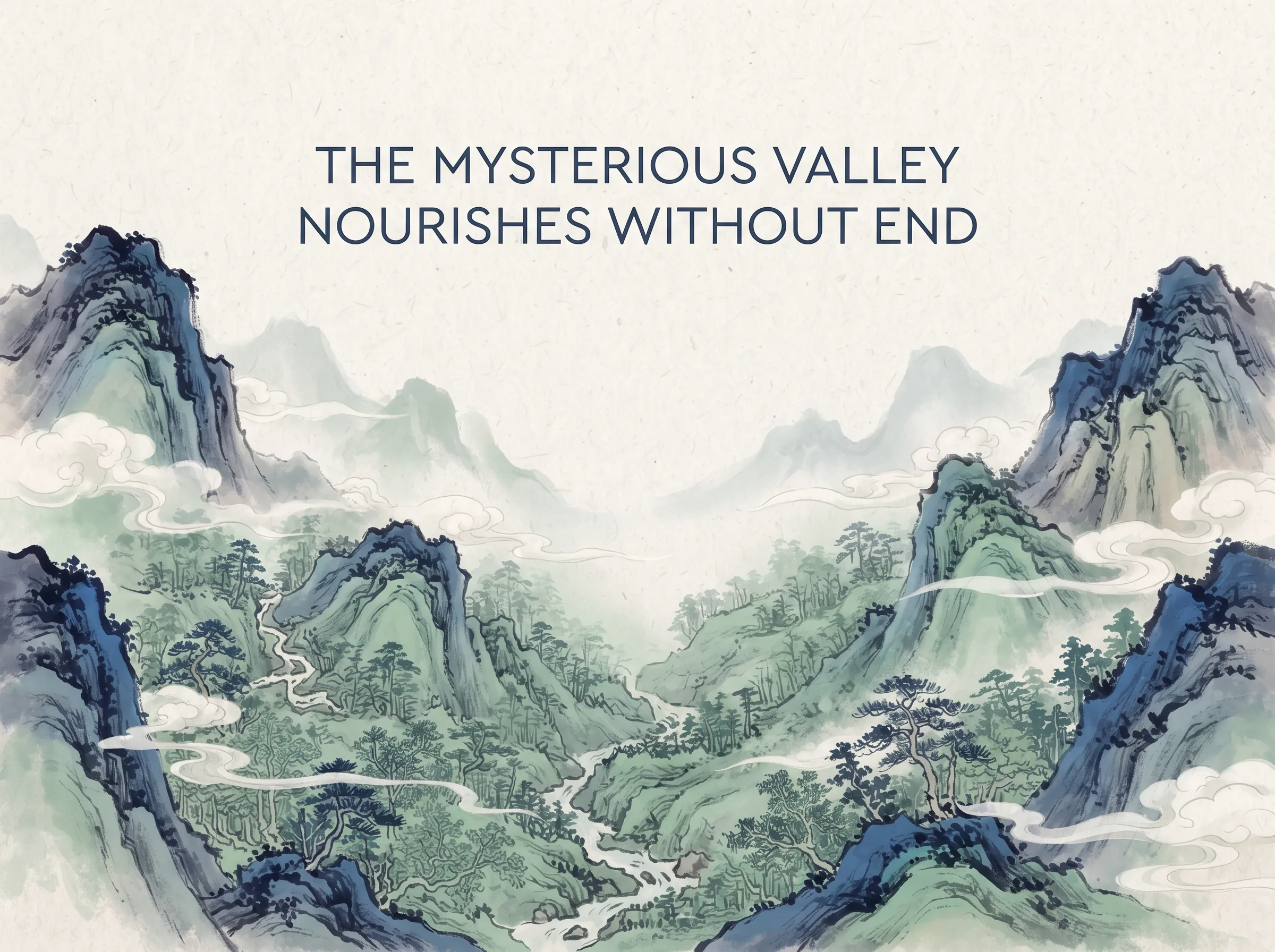
Zhi-zhi (知止) is the practice of knowing when to stop. It is not cowardice or withdrawal. It is the recognition that overextension is itself a form of harm. Every discipline, relationship, and pursuit has an edge beyond which continued effort damages the very thing it seeks to achieve. Recognizing that edge is a skill, not a weakness.
What Laozi Is Actually Against
It is important to understand what the Daodejing opposes, because misunderstanding this leads to a common misreading: that Laozi advocates passivity, withdrawal, or nihilism. He does not.
Laozi is not against action. He is against forced action — action driven by a sense of lack rather than by genuine need. He is not against strength. He is against self-consumptive strength, the kind that burns the holder faster than the task requires. He is not against ambition. He is against ambition that drains the root to feed the branches.
The text contains repeated warnings about excess. One chapter observes that holding a bowl too full risks spilling it, and sharpening a blade too much risks breaking it [2]. Another notes that wealth and status accumulated beyond what can be sustained are rarely kept [2]. These are not general moral rules. They are observations about the mechanics of decline: what is pulled too tight snaps, what is filled too full overflows.
The modern parallel is clear. A schedule packed to capacity leaves no room for recovery. A mindset obsessed with optimization leaves no room for rest. A life built on constant doing leaves no room for being. The danger is not action itself. The danger is action that consumes its source.
Returning to the Valley: A Practice, Not a Philosophy
Chapter 6 ends not with a theory but with an image: a valley that never exhausts itself because it is open. The practice this suggests is not complicated, but it is countercultural. It asks for things that the modern world does not reward.
Cultivating inner spaciousness. Silence, solitude, and unoptimized time are not luxuries. They are the conditions under which generative emptiness can exist. Without space, there is no valley — only a filled container that can receive nothing new.
Building roots. Rituals of return matter more than rituals of achievement. A daily walk without a podcast. A morning before checking messages. A weekly period of reduced input. These are not indulgences. They are the practices that keep the root alive.
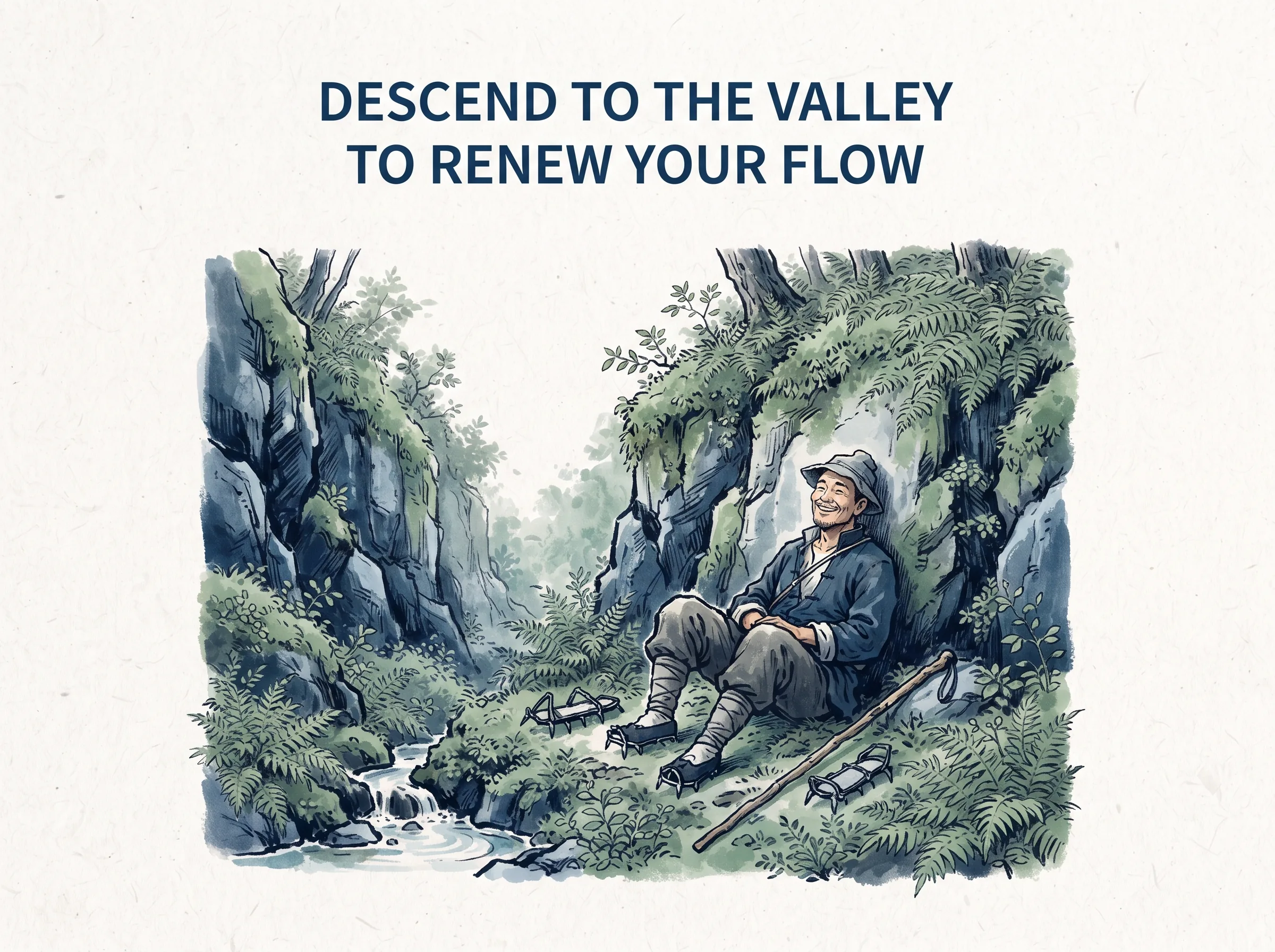
Recognizing the quiet sign of real vitality. Intensity is not the same as continuity. A person who can maintain steady rhythm across seasons — who can keep going without burning out — demonstrates a deeper strength than someone who achieves brief peaks through self-consumption.
The closing image of Chapter 6 is simple and enduring. A valley does not prove its value by shouting. It proves it by receiving. It does not hoard. It does not compete. It simply remains open, and in that openness, life flows.
FAQ
Is the Daodejing a religious text or a philosophical one? The Daodejing is primarily studied as a philosophical text, though it has also been adopted within religious Daoist traditions. Its origins and authorship remain subjects of scholarly discussion, and most contemporary scholars approach it as a collection of reflective observations rather than doctrinal statements [3].
Does "valley spirit" refer to a deity or spiritual entity? In the context of the Daodejing, the valley spirit (gǔshén, 谷神) is widely understood by interpreters as a metaphor for generative emptiness — the capacity that arises from openness and receptivity — rather than a personal deity. Traditional commentators such as Wang Bi interpreted it in terms of void and stillness as conditions for generation [4].
Can wuwei be practiced without becoming passive or unmotivated? Wuwei is not the same as inaction. Scholarly accounts emphasize that it refers to non-coercive or non-assertive action — acting without forceful grasping or ego-driven urgency [3]. Practicing it means aligning action with natural rhythm rather than suppressing it.
How does Laozi's view of burnout relate to modern psychology? The WHO defines burnout as a syndrome of energy depletion, mental distance from one's activities, and reduced professional efficacy resulting from unmanaged chronic stress [1]. Laozi's observation that self-consumptive effort leads to collapse aligns with this pattern, offering a philosophical framework for understanding why overextension is unsustainable.
The question at the start of this article is simple: why does pushing harder often lead to burnout? The answer, as the Daodejing suggests, is that strength drawn from force is finite. Strength drawn from receptivity is renewable. A valley does not run dry because it is open. A life does not collapse when it has a root.
The practical next step is not to adopt a new productivity system. It is to ask a quieter question: where is my valley? What space do I protect from constant input? What rhythm do I honor instead of override? The answers will not appear in a checklist. They will appear in the spaces between activities, in the moments of stillness, in the practice of knowing when to stop.
Sustainability is not achieved by adding more effort. It is achieved by returning to the source that makes effort possible without destroying it.
To explore these themes from another angle, read our related reflection on Why Lasting Power Never Needs Constant Force — Laozi’s Lesson for Modern Exhaustion.
Deepen your understanding of these principles in our reflection on Are You Mistaking Your Achievements for Your Foundation?.
Sources & Further Reading
[1] Burn-out an "occupational phenomenon": International Classification of Diseases
[3] Laozi (Stanford Encyclopedia of Philosophy/Summer 2021 Edition)
Further Reading
Chinese Text Project — Additional annotated edition of the Daodejing with variant commentaries.






