
異俗章第二十
Key Takeaway: "I alone am drifting, not knowing where I am… I alone am different from other men, for I seek nourishment from the Mother." — Laozi, Daodejing Chapter 20
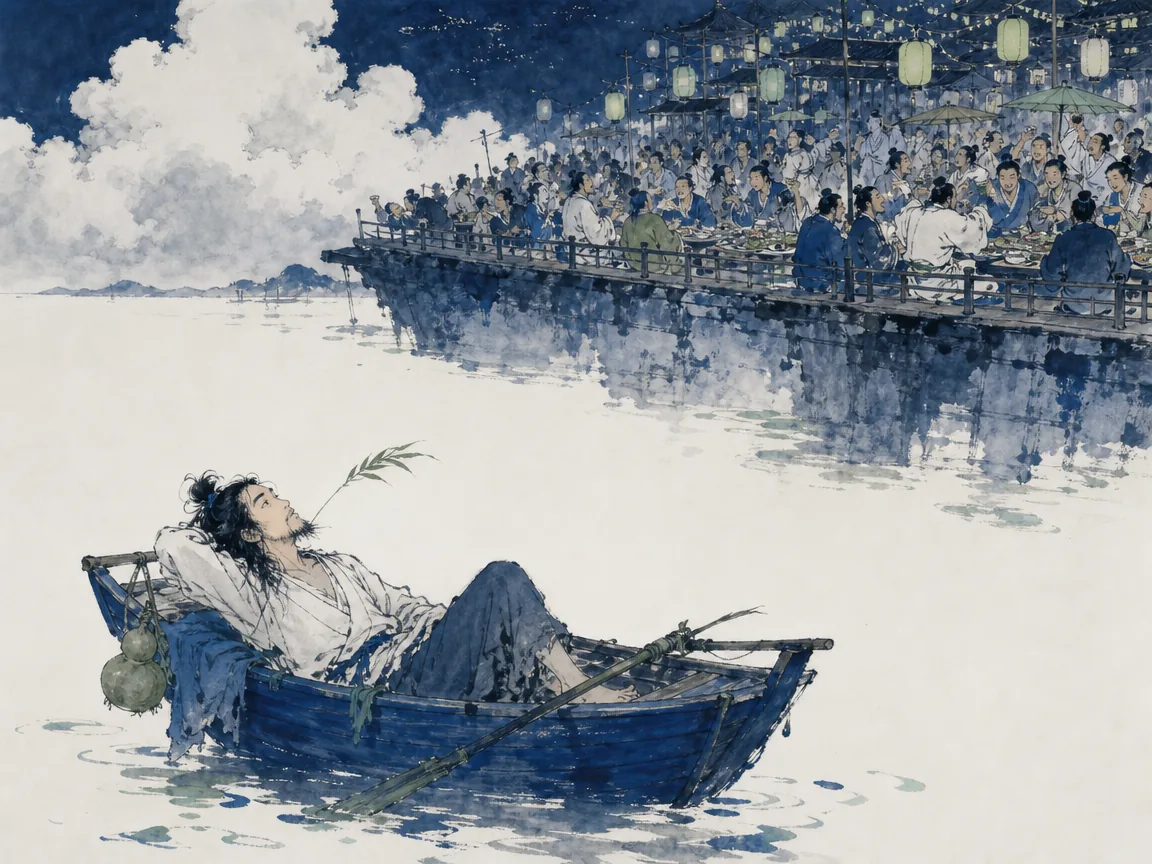
The crowd rejoices as if attending a lavish banquet or ascending a spring terrace, while I alone remain quiet and unmoving, like an infant that has not yet learned to smile, nourished by the Mother—a foundational perspective explored in Daodejing Chapter 20 Translation.
Daodejing Chapter 20 Translation: Solitude and Rootedness in the Unseen
The wisdom of Daodejing Chapter 20 Translation addresses a fundamental human dynamic: how we navigate ambition, quietude, and the natural flow of existence. In the classical tradition, this passage serves as both a metaphysical mirror and a practical compass for daily living and leadership. Explore how this principle translates into contemporary daily life in our guide to When Society Gets Smarter, People Grow Farther From Themselves.
By shifting our focus from outer coercion to internal stillness, we uncover a more resilient way of relating to ourselves and the world around us.
Complete Chapter Translation: Modern Western Reading
Between wei and o What after all is the difference? Can it be compared to the difference between good and bad? The saying “what others avoid I too must avoid” How false and superficial it is?
All men, indeed, are wreathed in smiles, As though feasting after the Great Sacrifice, As though going up to the Spring Carnival. I alone am inert, like a child that has not yet given sign; Like an infant that has not yet smiled.
I droop and drift, as though I belonged nowhere. All men have enough and to spare; I alone seem to have lost everything. Mine is indeed the mind of a very idiot, So dull am I.
The world is full of people that shine; I alone am dark. They look lively and self-assured; I alone depressed.
(I seem unsettled as the ocean; Blown adrift, never brought to a stop.) All men can be put to some use; I alone am intractable and boorish.
But wherein I most am different from men Is that I prize no sustenance that comes not from the Mother's breast.
道德经中文原文与对照
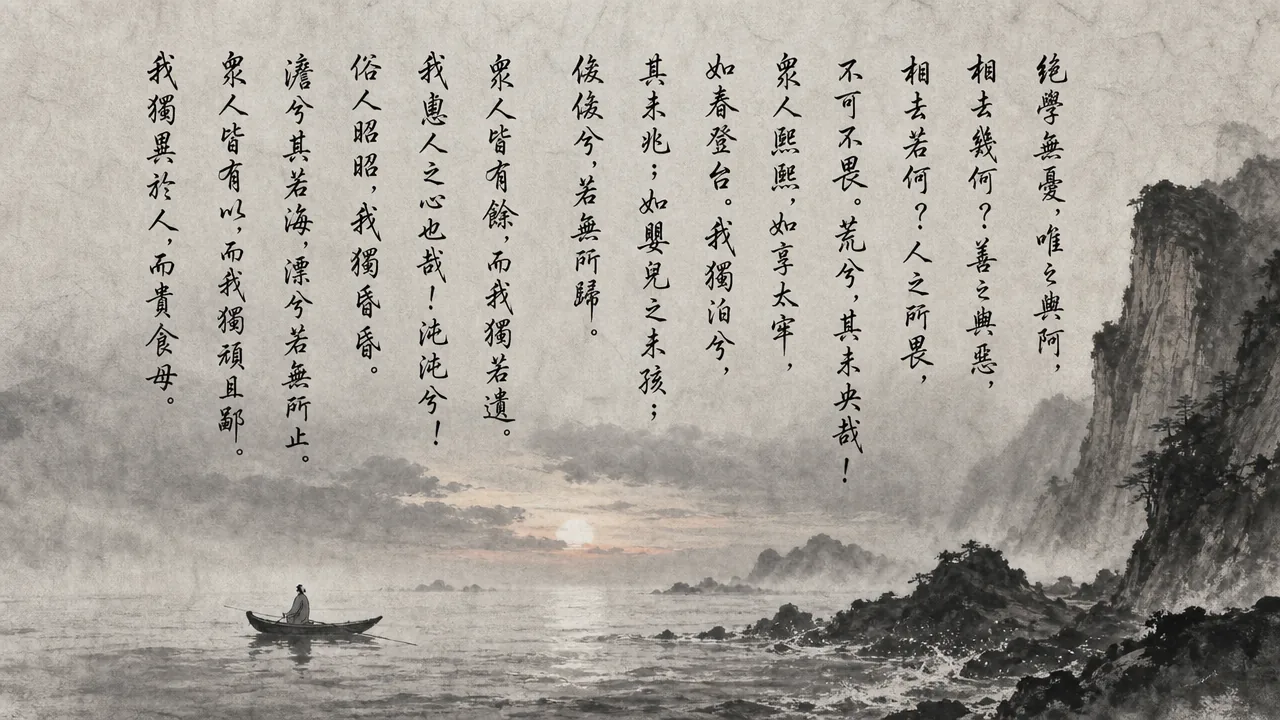
【原文】 絕學無憂,唯之與阿,相去幾何?善之與惡,相去若何?人之所畏,不可不畏。荒兮,其未央哉!眾人熙熙,如享太牢,如春登台。我獨泊兮,其未兆;如嬰兒之未孩;倲倲兮,若無所歸。眾人皆有餘,而我獨若遺。我愚人之心也哉!沌沌兮!俗人昭昭,我獨昏昏。俗人察察,我獨悶悶。澹兮其若海,漂兮若無所止。眾人皆有以,而我獨頑且鄙。我獨異於人,而貴食母。
核心要义解析 (Philosophical Insights)
- 道义发微:本章通过“異俗章第二十”阐发了《道德经》的核心精髓。从“有”与“无”、“动”与“静”的辩证转化中,提醒我们在日用常行中摒弃过度的功利执念,回归纯粹本真的生命状态。
- 现代启示:当外界喧嚣与评判标准不断施加压力时,保持内心的虚静与不争,反而是最强大的定力与智慧。
Follow the sequential development of the text in Laozi’s next philosophical movement in The Empty Mind: The Elusive Essence of the Cosmic Blueprint.
For a deeper comparative examination of these ideas, explore our related study on Moderating Desire: When War Horses Breed in the Countryside.






