
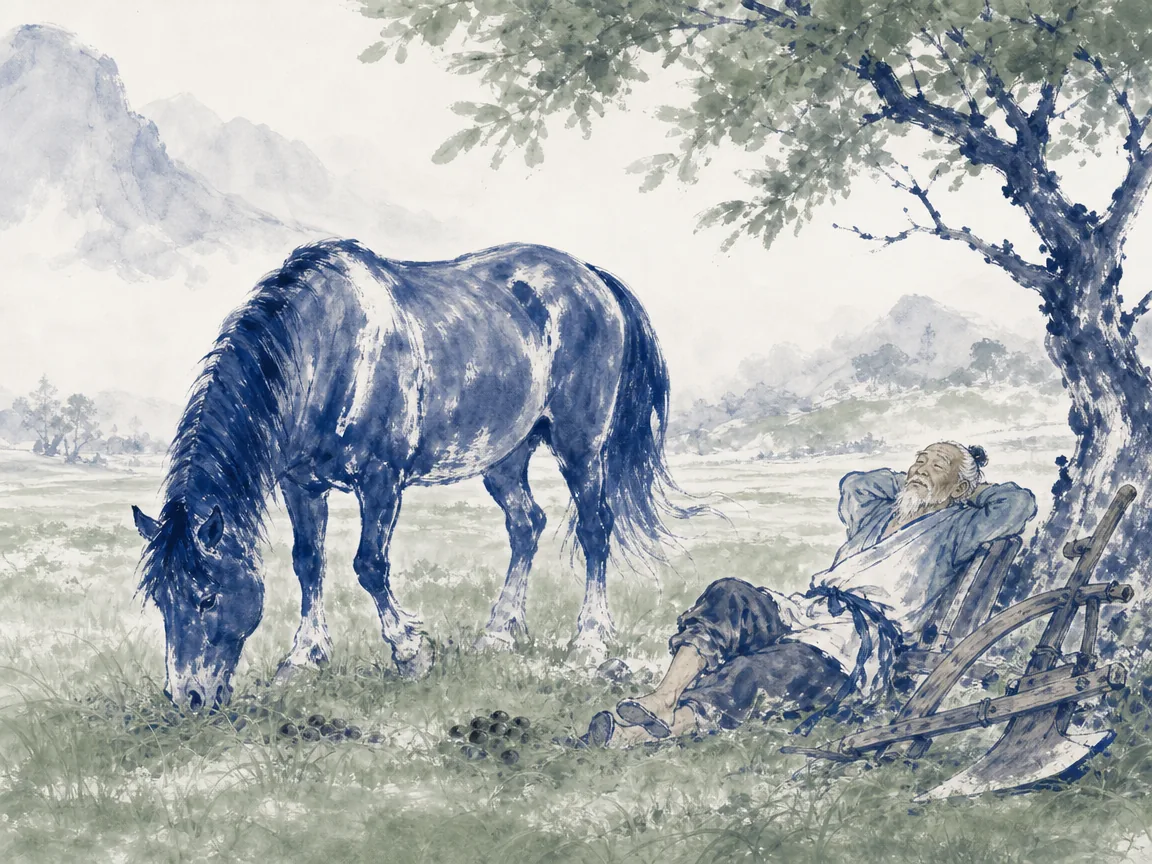
儉欲章第四十六
Key Takeaway: "There is no greater calamity than not knowing contentment; there is no greater fault than the desire for gain." — Laozi, Daodejing Chapter 46
When the Tao prevails under heaven, swift horses are retired to cultivate dung in farm fields; when the Tao is lost, war steeds breed upon the frontiers. There is no greater crime than giving rein to unquenchable desire—a foundational perspective explored in Daodejing Chapter 46 Translation.
Daodejing Chapter 46 Translation: The Constant Wealth of Being Content
The wisdom of Daodejing Chapter 46 Translation addresses a fundamental human dynamic: how we navigate ambition, quietude, and the natural flow of existence. In the classical tradition, this passage serves as both a metaphysical mirror and a practical compass for daily living and leadership. Explore how this principle translates into contemporary daily life in our guide to Why Wars Begin When No One Can Say “Enough”.
By shifting our focus from outer coercion to internal stillness, we uncover a more resilient way of relating to ourselves and the world around us.
Complete Chapter Translation: Modern Western Reading
When there is Tao in the empire The galloping steeds are turned back to fertilize the ground by their droppings. When there is not Tao in the empire War horses will be reared even on the sacred mounds below the city walls.
(No lure is greater than to possess what others want,) No disaster greater than not to be content with what one has, No presage of evil greater than men should be wanting to get more.
Truly: “He who has once known the contentment that comes simply through being content, will never again be otherwise than contented”.
道德经中文原文与对照
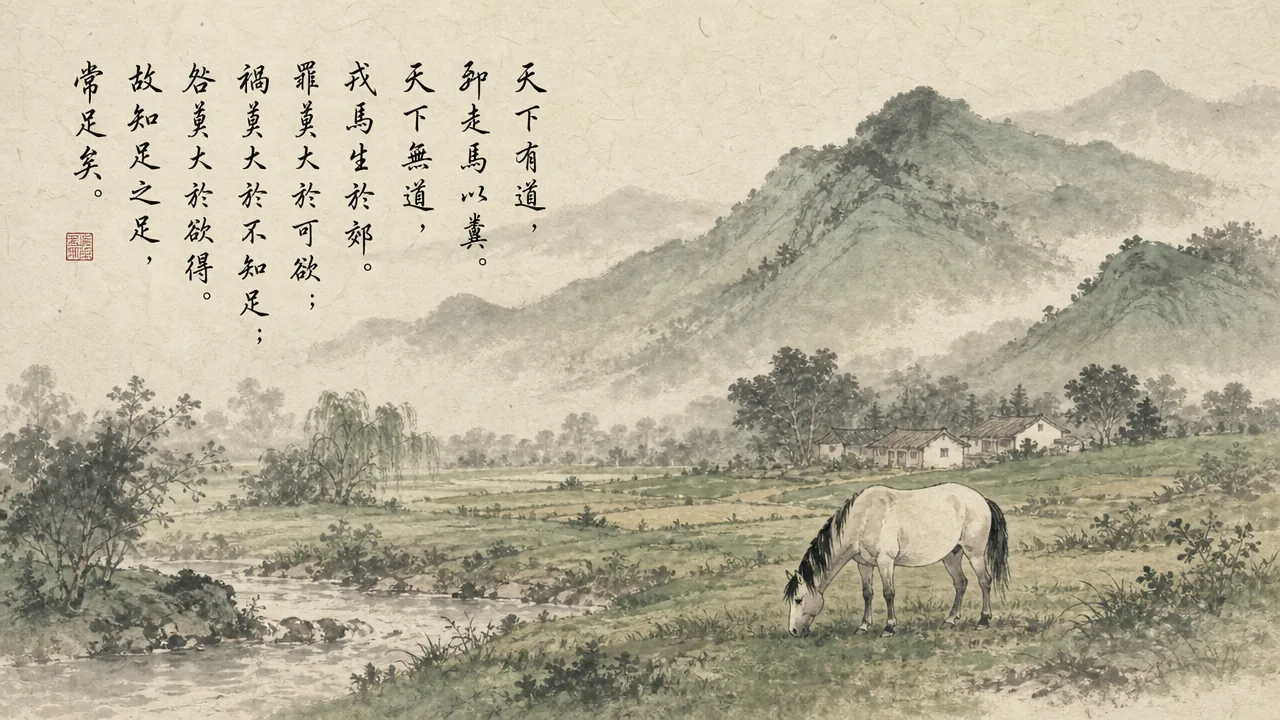
【原文】 天下有道,卻走馬以糞。天下無道,戎馬生於郊。罪莫大於可欲;禍莫大於不知足;咎莫大於欲得。故知足之足,常足矣。
核心要义解析 (Philosophical Insights)
- 道义发微:本章通过“儉欲章第四十六”阐发了《道德经》的核心精髓。从“有”与“无”、“动”与“静”的辩证转化中,提醒我们在日用常行中摒弃过度的功利执念,回归纯粹本真的生命状态。
- 现代启示:当外界喧嚣与评判标准不断施加压力时,保持内心的虚静与不争,反而是最强大的定力与智慧。
Follow the sequential development of the text in Laozi’s next philosophical movement in Discerning from Afar: Knowing the World Without Stepping Outside the Door.
For a deeper comparative examination of these ideas, explore our related study on Why Holding On Too Tightly Is Losing: Laozi’s Chapter 9 on Knowing When to Stop.






