
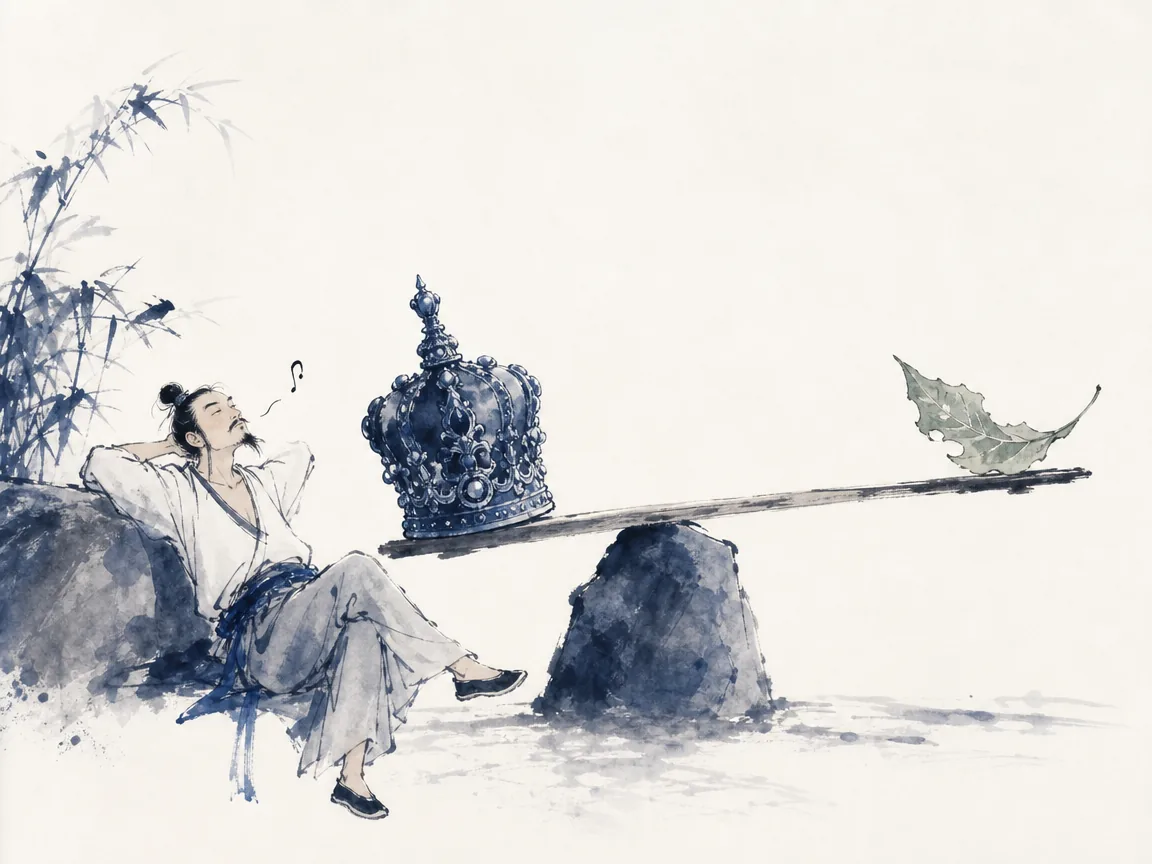
養身章第二
Key Takeaway: "Being and Not-being grow out of one another; Difficult and easy complete one another." — Laozi, Daodejing Chapter 2
Beauty and ugliness, good and evil, being and non-being give birth to one another. The wise leader practices effortless action (Wu-wei) and wordless teaching, creating without possessing and accomplishing without claiming credit—a foundational perspective explored in Daodejing Chapter 2 Translation.
Daodejing Chapter 2 Translation: Embracing Co-arising and Effortless Action
The wisdom of Daodejing Chapter 2 Translation addresses a fundamental human dynamic: how we navigate ambition, quietude, and the natural flow of existence. In the classical tradition, this passage serves as both a metaphysical mirror and a practical compass for daily living and leadership. Explore how this principle translates into contemporary daily life in our guide to The Trap of Defined Beauty: How External Standards Steal Our Peace — A Reading of Laozi Chapter 2.
By shifting our focus from outer coercion to internal stillness, we uncover a more resilient way of relating to ourselves and the world around us.
Complete Chapter Translation: Modern Western Reading
It is because every one under Heaven recognizes beauty as beauty, that the idea of ugliness exists. And equally if every one recognized virtue as virtue, this would merely create fresh conceptions of wickedness.
For truly, Being and Not-being grow out of one another; Difficult and easy complete one another.
Long and short test one another; High and low determine one another. Pitch and mode give harmony to one another. Front and back give sequence to one another.
Therefore the Sage relies on actionless activity, Carries on wordless teaching, But the myriad creatures are worked upon by him; he does not disown them. He rears them, but does not lay claim to them, Controls them, but does not lean upon them, Achieves his aim, but does not call attention to what he does;
And for the very reason that he does not call attention to what he does He is not ejected from fruition of what he has done.
道德经中文原文与对照
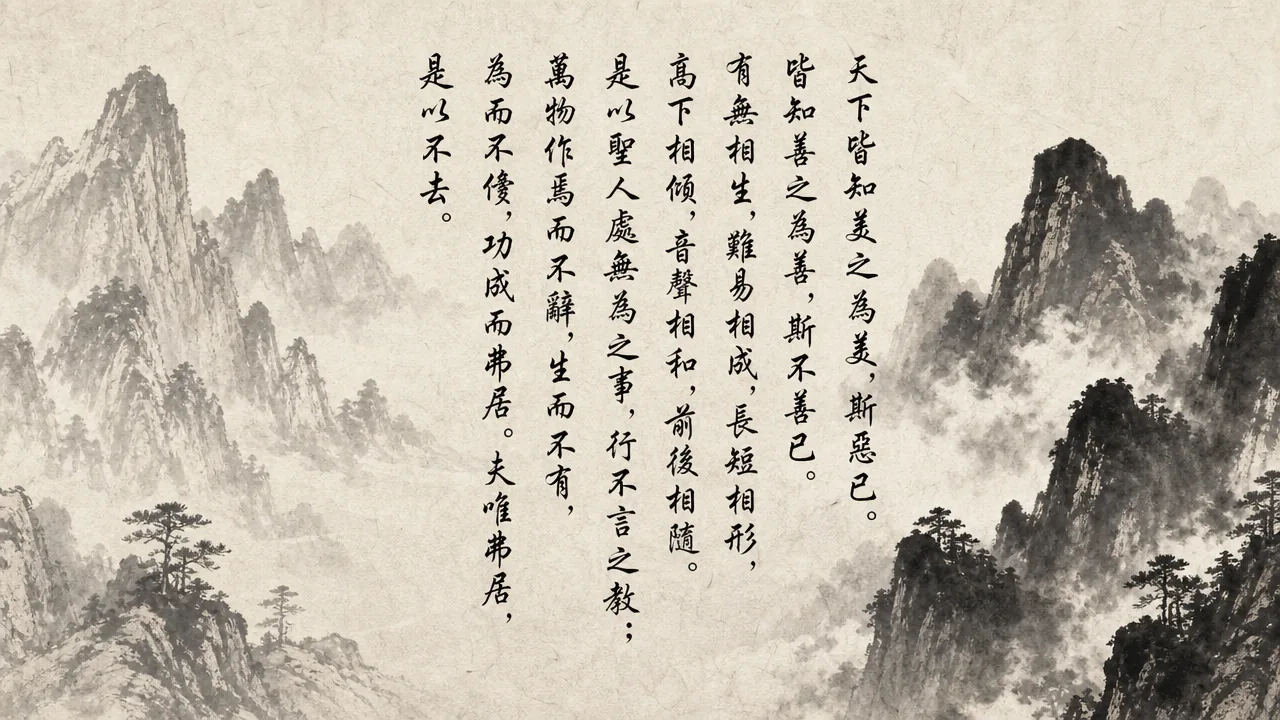
【原文】 天下皆知美之爲美,斯惡已。皆知善之爲善,斯不善已。有無相生,難易相成,長短相形,高下相傾,音聲相和,前後相隨。是以聖人處無爲之事,行不言之教;萬物作焉而不辭,生而不有,爲而不恃,功成而弗居。夫唯弗居,是以不去。
核心要义解析 (Philosophical Insights)
- 道义发微:本章通过“養身章第二”阐发了《道德经》的核心精髓。从“有”与“无”、“动”与“静”的辩证转化中,提醒我们在日用常行中摒弃过度的功利执念,回归纯粹本真的生命状态。
- 现代启示:当外界喧嚣与评判标准不断施加压力时,保持内心的虚静与不争,反而是最强大的定力与智慧。
Follow the sequential development of the text in Laozi’s next philosophical movement in Pacifying the People: Quieting Ambition and Emptying the Mind.
Deepen your understanding of these principles in our reflection on The Art of Effortless Mastery: What Ancient Chinese Philosophy Teaches Us About Letting Go.







[…] For a deeper comparative examination of these ideas, explore our related study on Cultivating the Self: The Harmony of Opposites and Wordless Teaching. […]