
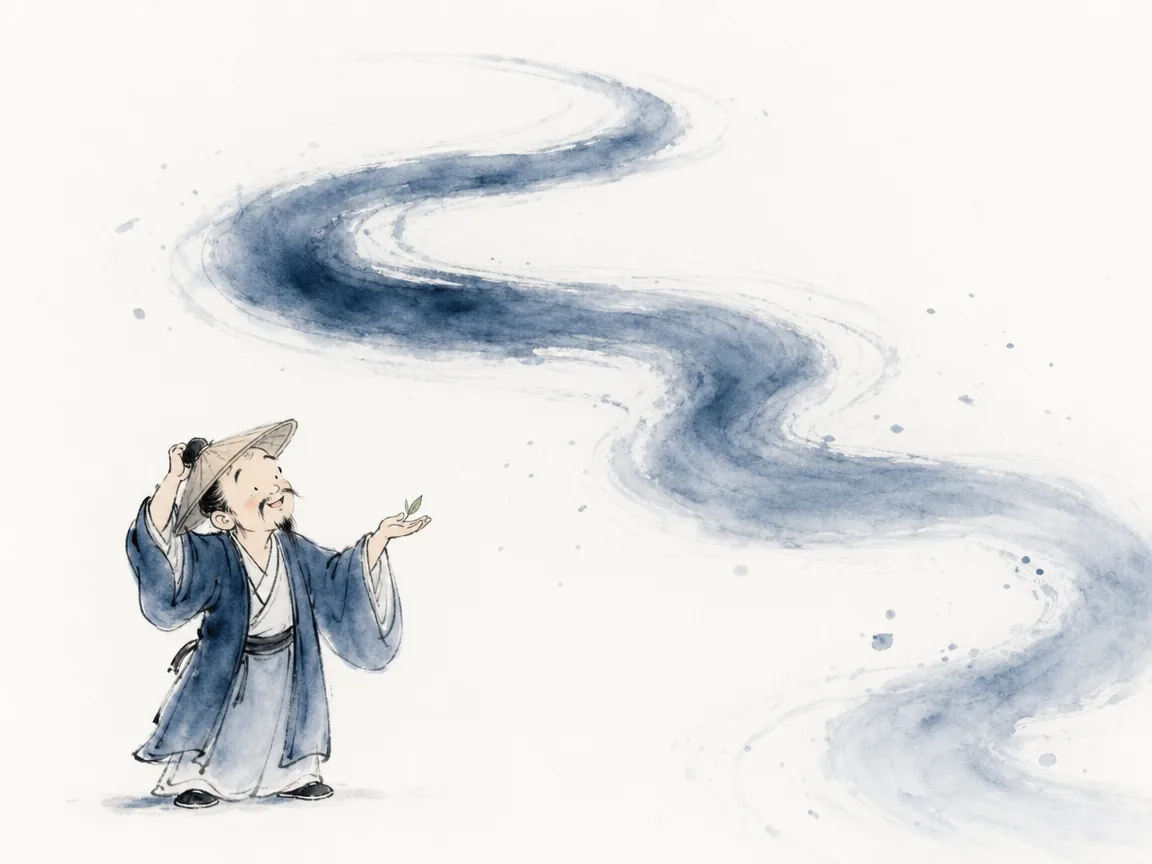
讚玄章第十四
Key Takeaway: "Shape that has no shape, image that has no image. That is why it is called the Elusive." — Laozi, Daodejing Chapter 14
Looked at but not seen, it is called the invisible; listened to but not heard, it is called the inaudible. It returns endlessly to the formless, guiding those who hold fast to the ancient thread—a foundational perspective explored in Daodejing Chapter 14.
Daodejing Chapter 14: Grasping the Ancient Thread of the Tao
The wisdom of Chapter 14 addresses a fundamental human dynamic: how we navigate ambition, quietude, and the natural flow of existence. In the classical tradition, this passage serves as both a metaphysical mirror and a practical compass for daily living and leadership. Explore how this principle translates into contemporary daily life in our guide to The Invisible Order: Why What You Can’t See Matters More Than What You Can.
By shifting our focus from outer coercion to internal stillness, we uncover a more resilient way of relating to ourselves and the world around us.
Complete Chapter Translation: Modern Western Reading
Because the eye gazes but can catch no glimpse of it, It is called elusive. Because the ear listens but cannot hear it, It is called the rarefied.
Because the hand feels for it but cannot find it, It is called the infinitesimal. These three, because they cannot be further scrutinized, Blend into one, Its rising brings no light; Its sinking, no darkness.
Endless the series of things without name On the way back to where there is nothing. They are called shapeless shapes; Forms without form; Are called vague semblance.
Go towards them, and you can see no front; Go after them, and you see no rear. Yet by seizing on the Way that was You can ride the things that are now.
For to know what once there was, in the Beginning, This is called the essence of the Way.
道德经中文原文与对照
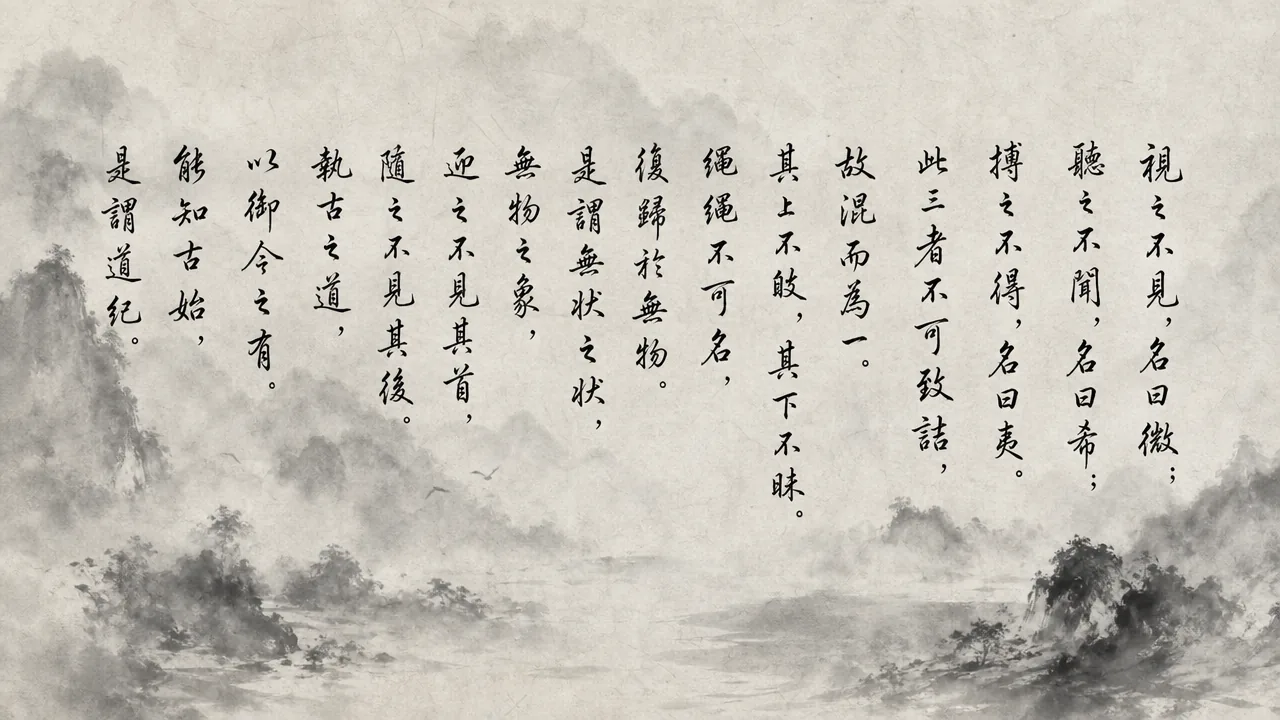
【原文】 視之不見,名曰微;聽之不聞,名曰希;搏之不得,名曰夷。此三者不可致詰,故混而爲一。其上不皦,其下不昧。繩繩不可名,復歸於無物。是謂無狀之狀,無物之象,是謂惚恍。迎之不見其首,隨之不見其後。執古之道,以御今之有。能知古始,是謂道紀。
核心要义解析 (Philosophical Insights)
- 道义发微:本章通过“讚玄章第十四”阐发了《道德经》的核心精髓。从“有”与“无”、“动”与“静”的辩证转化中,提醒我们在日用常行中摒弃过度的功利执念,回归纯粹本真的生命状态。
- 现代启示:当外界喧嚣与评判标准不断施加压力时,保持内心的虚静与不争,反而是最强大的定力与智慧。
Follow the sequential development of the text in Laozi’s next philosophical movement in Manifesting Ancient Mastery: Wading Winter Streams and Melting Like Ice.
For a deeper comparative examination of these ideas, explore our related study on Placing Oneself Behind: How Rivers and Seas Become Kings of the Valleys.






