
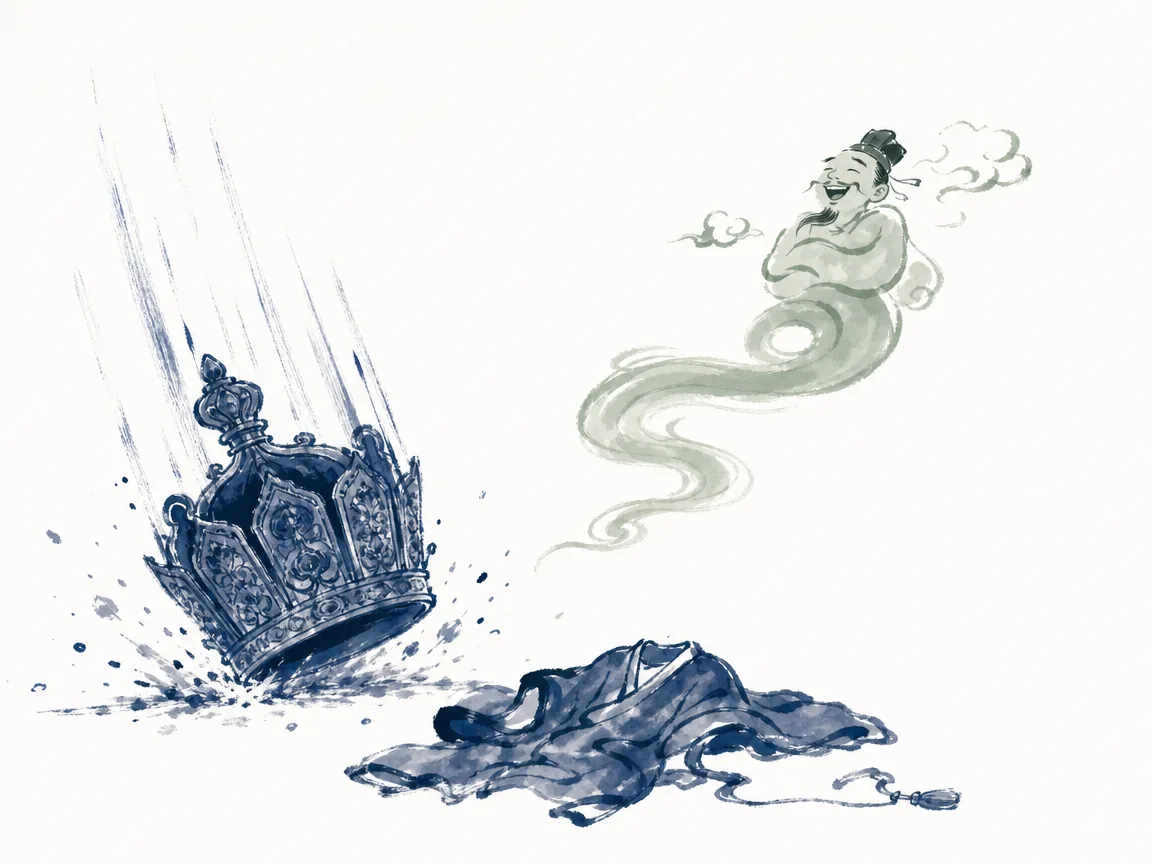
厭恥章第十三
Key Takeaway: "Favour and disgrace goad as it were to madness; high rank hurts like great injury to one's own person." — Laozi, Daodejing Chapter 13
Favor and disgrace both stir agitation in the human heart. We fear calamity only because we identify so tightly with an isolated, fragile ego. Only one who values the world as their own being can be safely entrusted with it—a foundational perspective explored in Daodejing Chapter 13 Translation.
Daodejing Chapter 13 Translation: Entrusting the World to the Detached
The wisdom of Daodejing Chapter 13 Translation addresses a fundamental human dynamic: how we navigate ambition, quietude, and the natural flow of existence. In the classical tradition, this passage serves as both a metaphysical mirror and a practical compass for daily living and leadership. Explore how this principle translates into contemporary daily life in our guide to Why Everything You Gain Can Become Your Greatest Fear — Laozi’s Warning from 2,500 Years Ago.
By shifting our focus from outer coercion to internal stillness, we uncover a more resilient way of relating to ourselves and the world around us.
Complete Chapter Translation: Modern Western Reading
Favour and disgrace goad as it were to madness; high rank hurts keenly as our bodies hurt.” What does it mean to say that favour and disgrace goad as it were to madness? It means that when a rule's subjects get it they turn distraught, when they lose it they turn distraught. That is what is meant to by saying favour and disgrace goad as it were to madness. What does it mean to say that high rank hurts keenly as our bodies hurt? The only reason that we suffer hurt is that we have bodies; if we had no bodies, how could we suffer? Therefore we may accept the saying: “He who in dealing with the empire regards his high rank as through it were his body is the best person to be entrusted with rules; he who in dealing with the empire loves his subjects as one should love one's body is the best person to whom one commit the empire.”
道德经中文原文与对照
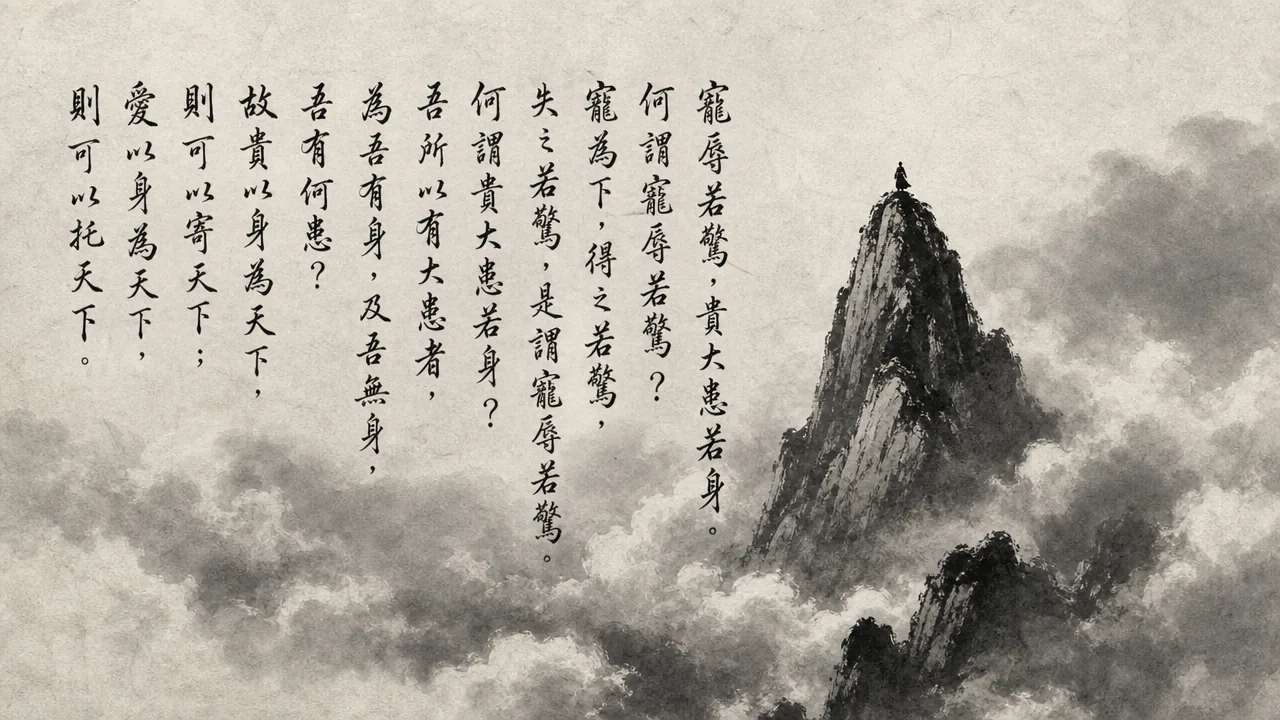
【原文】 寵辱若驚,貴大患若身。何謂寵辱若驚?寵爲下,得之若驚,失之若驚,是謂寵辱若驚。何謂貴大患若身?吾所以有大患者,爲吾有身,及吾無身,吾有何患?故貴以身爲天下,則可以寄天下;愛以身爲天下,則可以托天下。
核心要义解析 (Philosophical Insights)
- 道义发微:本章通过“厭恥章第十三”阐发了《道德经》的核心精髓。从“有”与“无”、“动”与“静”的辩证转化中,提醒我们在日用常行中摒弃过度的功利执念,回归纯粹本真的生命状态。
- 现代启示:当外界喧嚣与评判标准不断施加压力时,保持内心的虚静与不争,反而是最强大的定力与智慧。
Follow the sequential development of the text in Laozi’s next philosophical movement in Praising the Mysterious: The Formless Form and the Invisible Continuum.
For a deeper comparative examination of these ideas, explore our related study on The Root of Order: Attaining the One to Sustain Clarity and Life.






