
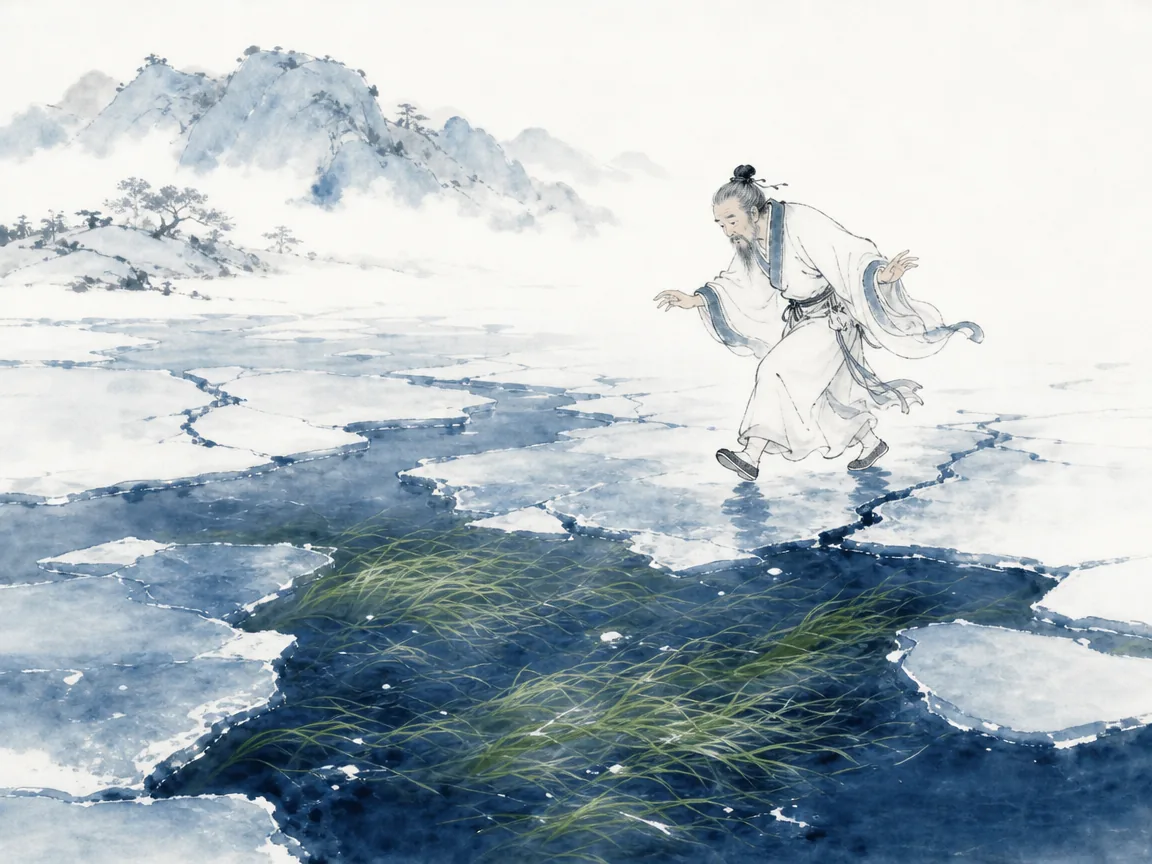
顯德章第十五
Key Takeaway: "Who can make muddy water clear? Let it be still, and it will gradually become clear." — Laozi, Daodejing Chapter 15
The ancient masters were cautious like someone crossing a frozen winter stream, courteous as a guest, and yielding like thawing ice. Who can settle turbulent muddy waters except by stillness? This principle is central to Daodejing Chapter 15 Translation.
Daodejing Chapter 15 Translation: Who Can Make Muddy Water Clear?
The wisdom of Daodejing Chapter 15 Translation addresses a fundamental human dynamic: how we navigate ambition, quietude, and the natural flow of existence. In the classical tradition, this passage serves as both a metaphysical mirror and a practical compass for daily living and leadership. Explore how this principle translates into contemporary daily life in our guide to The Art of Not Proving: What Laozi Can Teach Us About Silence in the Age of Performance.
By shifting our focus from outer coercion to internal stillness, we uncover a more resilient way of relating to ourselves and the world around us.
Complete Chapter Translation: Modern Western Reading
Of old those that were the best officers of Court Had inner natures subtle, abstruse, mysterious, penetrating, Too deep to be understood.
And because such men could not be understood I can but tell of them as they appeared to the world: Circumspect they seemed, like one who in winter crosses a stream, Watchful, as one who must meet danger on every side.
Ceremonious, as one who pays a visit; Yet yielding, as ice when it begins to melt. Blank, as a piece of uncarved wood; Yet receptive as a hollow in the hills.
Murky, as a troubled stream —– (Tranquil, as the vast reaches of the sea, Drifting as the wind with no stop.) Which of you an assume such murkiness, to become in the end still and clear?
Which of you can make yourself insert, to become in the end full of life and stir? Those who possess this Tao do not try to fill themselves to the brim, And because they do not try to fill themselves to the brim, They are like a garment that endures all wear and need never be renewed.
道德经中文原文与对照
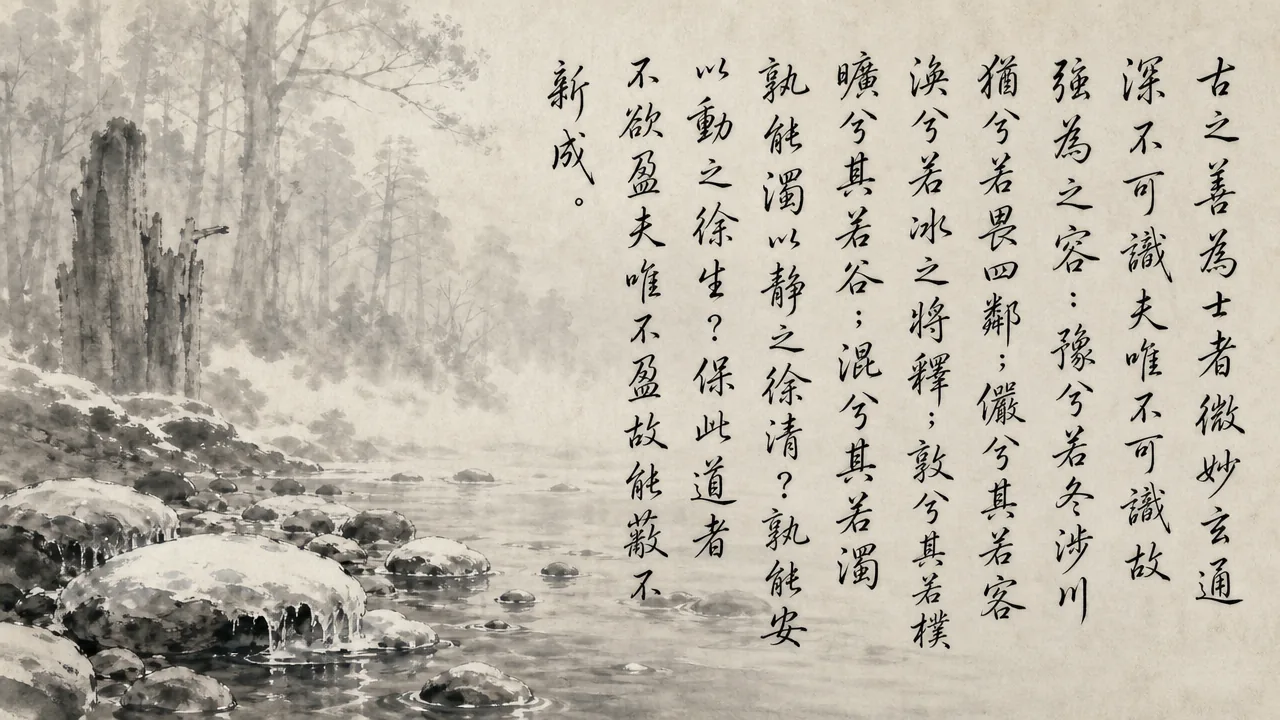
【原文】 古之善爲士者,微妙玄通,深不可識。夫唯不可識,故強爲之容:豫兮若冬涉川;猶兮若畏四鄰;儼兮其若客;渙兮若冰之將釋;敦兮其若樸;曠兮其若谷;混兮其若濁。孰能濁以靜之徐清?孰能安以動之徐生?保此道者,不欲盈。夫唯不盈,故能蔽不新成。
核心要义解析 (Philosophical Insights)
- 道义发微:本章通过“顯德章第十五”阐发了《道德经》的核心精髓。从“有”与“无”、“动”与“静”的辩证转化中,提醒我们在日用常行中摒弃过度的功利执念,回归纯粹本真的生命状态。
- 现代启示:当外界喧嚣与评判标准不断施加压力时,保持内心的虚静与不争,反而是最强大的定力与智慧。
Follow the sequential development of the text in Laozi’s next philosophical movement in Returning to the Root: Attaining Utmost Emptiness and Observing the Cycle.
For a deeper comparative examination of these ideas, explore our related study on Relinquishing Function: The Reversal Movement and the Yielding Power.






