
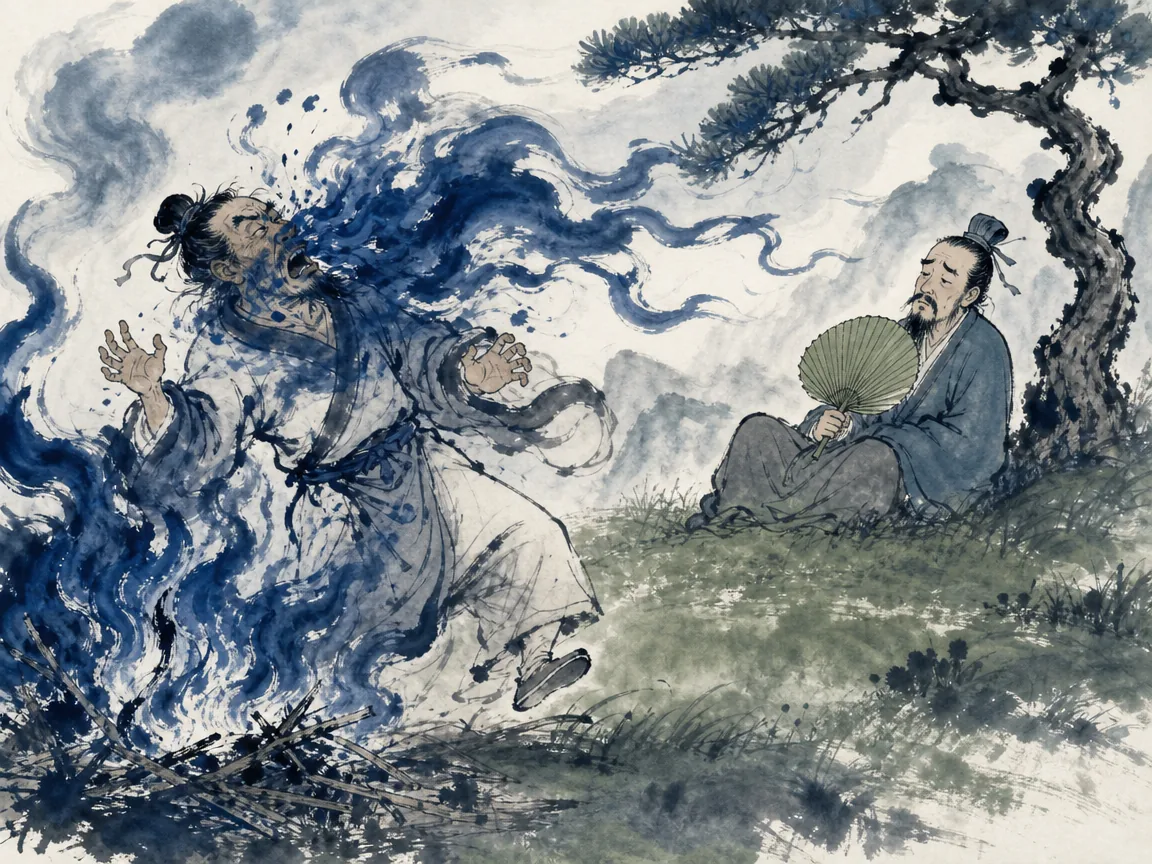
There is a particular kind of temptation that arrives not as weakness but as insight. You spot the leverage point—the place where a small push creates a large effect—and you feel the surge of clarity that comes with understanding how systems actually work. In careers, a single bold move seems to open doors that years of steady effort never could. In relationships, a decisive conversation shifts everything. In business, one well-timed bet compounds into something that looks like genius. This is what people mean when they talk about borrowing momentum, about finding the hidden switch that amplifies a small effort into outsized results. It feels like the smartest move because, in the moment, it often is.
But ancient Chinese strategic thought carries a warning that runs counter to this instinct. The chapter on fire attack in The Art of War teaches readers how to harness external forces to destroy an opponent's advantage—but it closes with a brake. The master borrower, Sun Tzu suggests, is also the one most vulnerable to being consumed by what he has set in motion. Fire, once lit, does not distinguish between target and firefighter. The same mechanism that amplifies your strike can amplify your ruin. This is not a paradox so much as a structural truth about systems that behave non-linearly: when you trade linear control for exponential leverage, you also trade predictability for exposure—a foundational perspective explored in Sun Tzu Chapter 29 Strategy.
For modern readers navigating decisions that feel urgent, the relevant question is rarely how to win bigger. It is how to recognize the point where winning becomes self-destruction—and how to tell, before you act, whether the fire you are about to light will reach your target or reach you first.
Sun Tzu Chapter 29 Strategy: The Allure of the Shortcut
Human beings are drawn to leverage because it promises efficiency. A small input, a well-placed pressure, and a system does the heavy lifting for you. This is not a modern discovery. Strategists throughout history have sought the opening where minimal effort produces maximal effect. What changes in our era is the speed at which such openings appear and disappear. Social media rewards content that catches a wave already moving. Markets reward positions that amplify small mispricings. Careers often reward the single decision that reorders everything else.
The temptation is real because it is frequently justified. There are moments when direct, linear action is the wrong tool—when patience and steady effort would achieve less than a single precisely timed intervention. The problem is not that leverage is bad. The problem is that leverage is amoral: it amplifies direction, not wisdom. A position designed to profit from one kind of volatility can become devastating when the volatility changes shape. A strategy that works because the system behaves as expected can fail catastrophically when the system behaves differently.
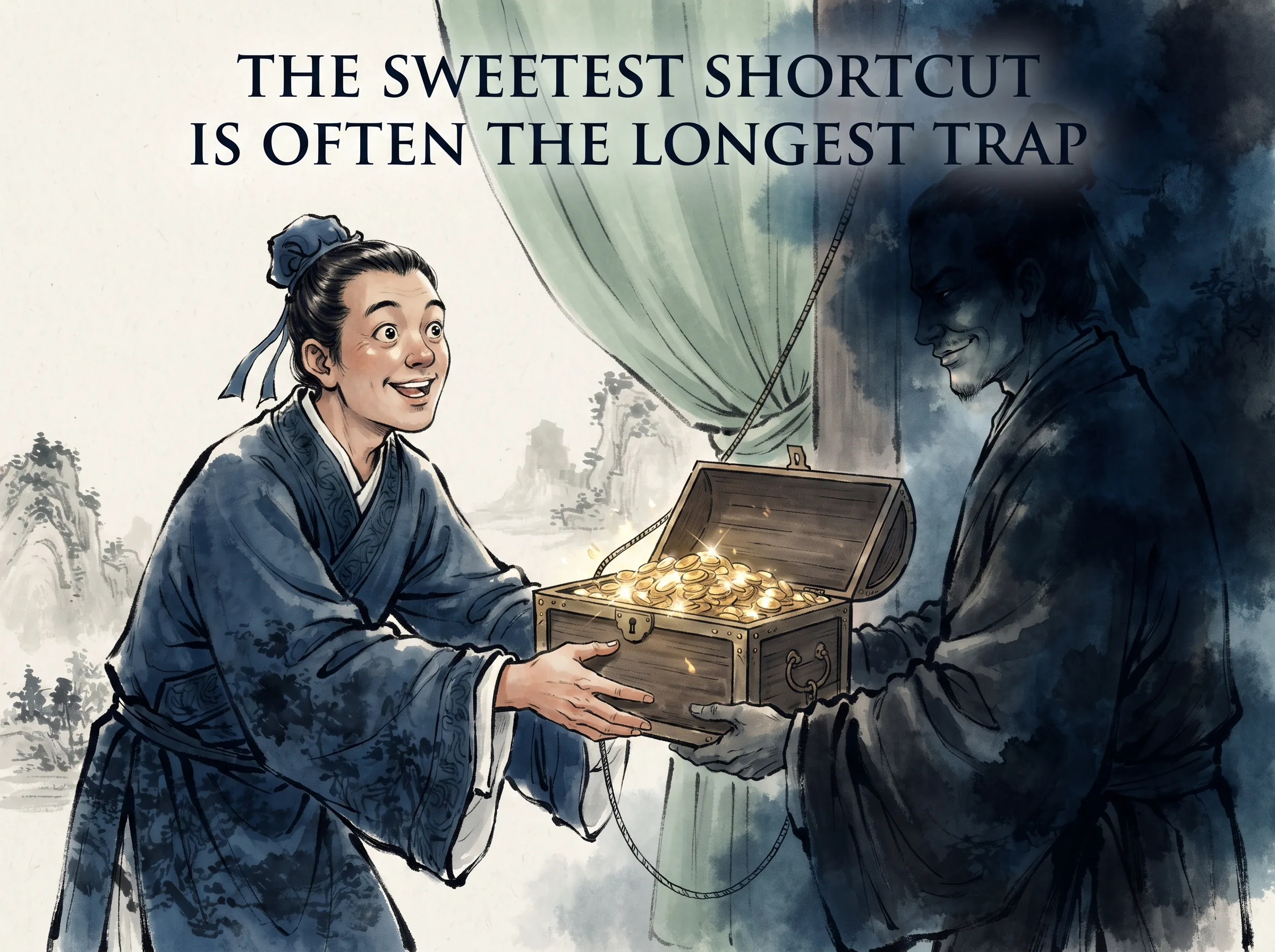
This is why Sun Tzu's treatment of fire attack is structured the way it is. He does not begin with caution. He spends considerable space explaining how fire works, what conditions make it effective, and how to read the signs that an attack will succeed. He is teaching a real skill. Only after that instruction does he introduce the restrictions. The caution comes after the capability, not before it. This ordering matters. It signals that the danger is not ignorance of the technique but overconfidence in its permanence.
Continue with the deeper interpretation and practical application.
ChiDestiny members get access to the full analysis, modern applications, and the growing Chinese Wisdom Library.
FAQ
Is the Fire Attack chapter the last chapter of The Art of War? No. The Fire Attack chapter (火攻篇) is the twelfth chapter. It is followed by the thirteenth chapter, Using Spies (用间篇) [1]****[2].
What exactly do the three gates—"Do not move without gain, do not deploy without results, do not fight without peril" (非利不动,非得不用,非危不战)—mean? They translate roughly to: do not act unless there is a real benefit, do not use the strategy unless victory is achievable, and do not engage unless the situation is truly critical. Traditional commentaries, including those by Cao Cao and Mei Yaochen, interpret the third gate as meaning that military action should be reserved for cases of necessity, not for opportunities that merely involve risk [1].
Does Sun Tzu say the person who starts the fire must stand where the flames cannot reach them? The exact phrase does not appear in the chapter. What the text does say is that you should start fire from the windward side and not attack from the leeward side, and that after fire breaks out you should assess whether to follow up or hold position [2]. The principle that the firefighter must protect themselves is inferred from these instructions, not stated as a standalone maxim.
Can the lessons of the Fire Attack chapter be applied outside of military strategy? Yes, though the application requires care. The chapter's core insight—that leverage amplifies both gain and loss, and that the decision to act should be governed by downside risk rather than upside potential—can be relevant in business, personal decisions, and other domains where leverage is available. However, these applications are analogies, not direct citations, and the original text is focused on military context.
Summary
Sun Tzu's Fire Attack chapter is often remembered for its practical advice on how to harness external forces. But its closing instructions are equally important: before you light the fire, ask whether the benefit justifies the cost, whether victory is truly achievable, and whether the situation demands extraordinary action. Leverage is not inherently dangerous. Misreading the conditions under which it works is. The wisest users of momentum are not those who find it most readily but those who recognize, before they act, when the fire they intend to point outward may instead reach back.
If this topic resonates with you, the next step might be to examine one decision you are currently considering—not through the lens of what you could gain, but through the lens of what you could absorb if the system changes. That shift in question often reveals more than the pursuit of advantage ever could, reflecting the enduring wisdom of Sun Tzu Chapter 29 Strategy.
To explore these themes from another angle, read our related reflection on The Game You’re Playing Isn’t What You Think.
For a deeper comparative examination of these ideas, explore our related study on Why You Keep Feeling Certain About Decisions (While Walking Into Mistakes).
Sources & Further Reading
[1] Primary Source
[2] Fire Attack Chapter: The Art of War with Commentaries (《孙子兵法·火攻篇》) – Shidian Guji — Original Chinese text of the Fire Attack chapter with classical commentaries
[3] Sun Tzu's Art of War in Side-by-Side Translation: Chapter 12: The Attack by Fire — English translation of Chapter 12 with Chinese parallel text
[4] Historical Reference
[5] The key Issues 1998/99 — HKSAR — Official Hong Kong government overview of the 1998 market intervention
[6] FS's statement at press stand-up session — Statement by the Hong Kong Financial Secretary describing the Exchange Fund intervention in August 1998
[7] Federal Reserve Bank of New York — Long-Term Capital Management — Account of LTCM's 1998 crisis and the private-sector rescue
Further Reading
- The Art of War by Sun Tzu — Complete text including all thirteen chapters
- Classical commentaries on The Art of War by Cao Cao (曹操), Li Quan (李筌), and Mei Yaochen (梅尧臣)
- Materials on Daoist concepts of restraint and non-action (wu wei)
- Scholarly materials on Confucian emphasis on timely and appropriate action (shí zhōng, 时中)






