
You believe you see the world clearly. Your quarterly reports are thorough, your dashboards glow with real-time data, and your team meetings are full of people reporting what they observe. And yet, when crisis arrives — a market shift, a competitor's move, a leadership failure — the inevitable reaction is not "we didn't see it coming." It is "we knew all along."
This paradox is not a failure of intelligence. It is a failure of perception—a foundational perspective explored in Sun Tzu Chapter 26 Strategy.
Across every domain — war, business, governance — the warning signs are rarely absent. They are present in falling engagement metrics, in the tone of hallway conversations, in the quiet resignation of good employees, in intelligence reports that arrive with increasing regularity. The threat is not scarcity of information. The threat is the human mind's remarkable ability to look directly at evidence and explain it away.
What if the answer to this persistent blind spot lies not in better data, but in an ancient discipline of observation?
Sun Tzu Chapter 26 Strategy: You Are Seeing Its Shadow
Every decision made by a leader, a commander, or an organization rests not on raw facts, but on proxies — indirect signals that point toward a reality too complex or too concealed to be observed directly. You cannot read your competitor's intent. You can only observe their behavior. You cannot measure your company's true health. You can only track attrition rates, meeting dynamics, and the quality of decisions being made at the front line.
In classical Chinese strategic thought, this gap between appearance and truth was understood with remarkable clarity. The Art of War contains one of the most systematic treatments of this problem in any premodern tradition. In the chapter known as Manning the March, Sun Tzu describes how an experienced commander interprets the battlefield not by waiting for direct confrontation, but by reading the environment itself:
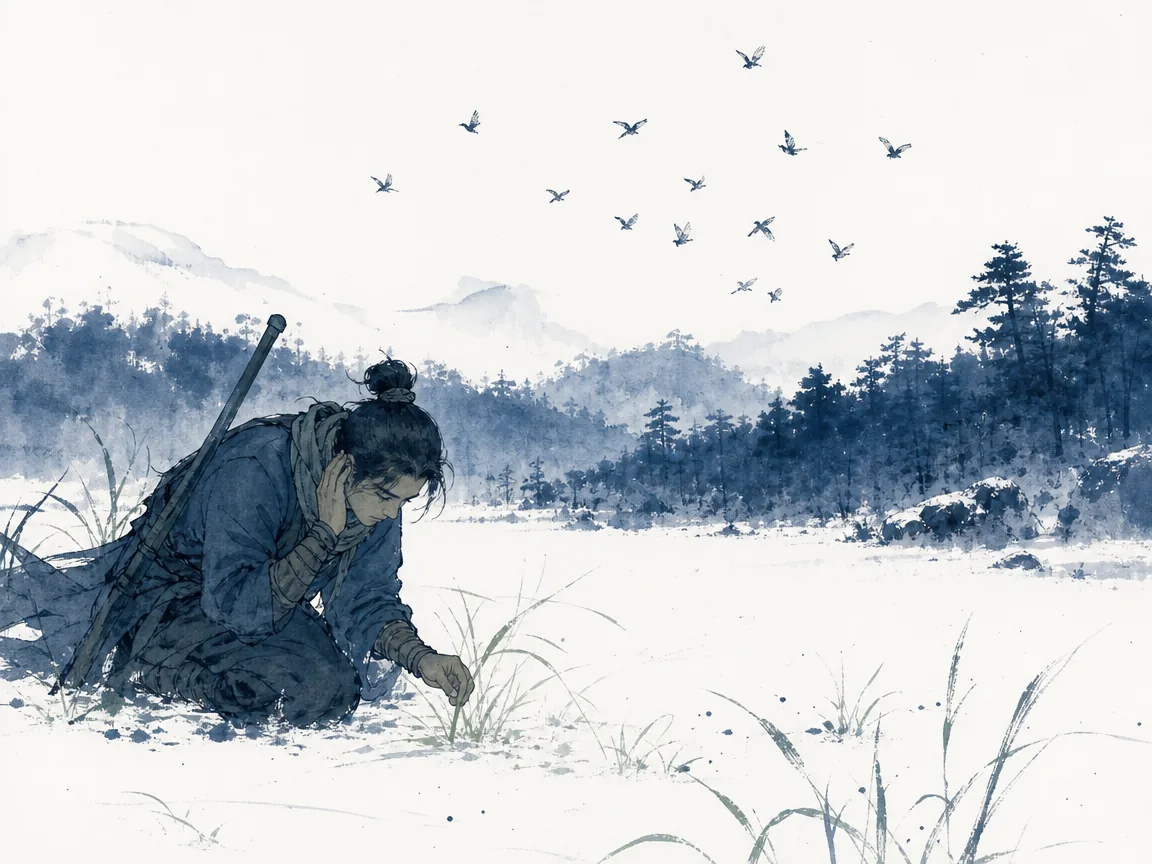
When trees move, the enemy is advancing. When grass is thick with hidden obstacles, it is a sign of suspicion and feint. When birds rise suddenly, ambush lies below. When beasts are startled, a massive attack is imminent [1].
These are not mystical omens. They are proxy observations — visible effects caused by invisible intentions. The birds do not tell you the enemy is there. They tell you something has disturbed the ground beneath them, and the most economical explanation is a hidden formation. The moving trees tell you that force is approaching, even before soldiers come into sight.
The same logic applies far beyond the battlefield. A spike in customer complaints is not the crisis itself — it is a proxy for deteriorating product quality. A sudden change in a key executive's communication style is not merely a personality shift — it may be a proxy for strategic uncertainty. A competitor's unexpectedly aggressive pricing is not an isolated tactic — it may signal a fundamental restructuring of their cost model.
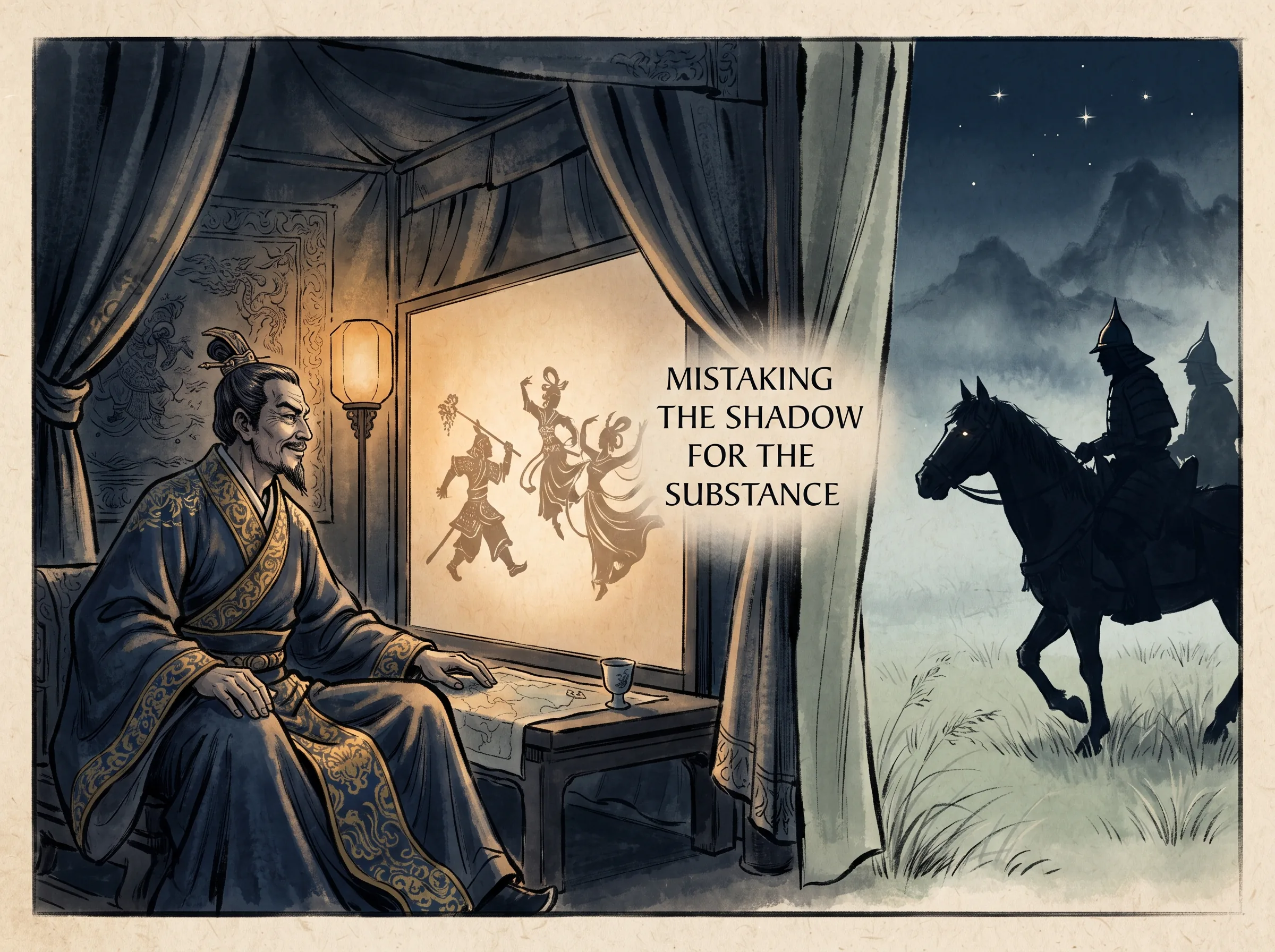
Data overload has not solved this problem. It has amplified it. We now have more signals than ever before, and far greater capacity to interpret them through biased frameworks. The ancient challenge — reading the shadow rather than the object — remains unchanged.
Continue with the deeper interpretation and practical application.
ChiDestiny members get access to the full analysis, modern applications, and the growing Chinese Wisdom Library.
FAQ
Is the three-layer system of physical, psychological, and organizational signals directly from Sun Tzu's text? No. Sun Tzu's Art of War describes specific observable signs — moving trees, rising dust, startled animals — but does not explicitly name them as a three-tier framework. The categorization into physical, psychological, and organizational layers is a modern interpretation that organizes the material Sun Tzu presents into a useful analytical structure.
Did Sun Tzu use the specific term "diagnostic omens" (zhēng hòu, 征候) to describe these signals? The specific term zhēng hòu (diagnostic sign or symptom, 征候) does not appear in the surviving text of the Art of War as transmitted through the standard commentaries. Sun Tzu describes the phenomenon of reading battlefield signs without naming it with a single technical term. The Chinese term zhēng hòu (征候) is a later scholarly classification applied to the concept.
How reliable are the historical examples about Stalin and Kodak? The general pattern described — that both cases involved abundant warning signals that were dismissed due to conflicting with existing beliefs — is consistent with widely discussed historical analysis. However, specific details about Soviet intelligence channels and Kodak's internal decision-making carry nuances that historians continue to debate. The core insight — that perception, not information, was the limiting factor — is the point worth attending to.
Can this framework be applied to personal relationships, not just leadership? Yes. The same perceptual errors — mistaking noise for signal, filtering out uncomfortable evidence, accepting the easiest narrative — occur in interpersonal contexts. Recognizing a partner's withdrawn behavior as a signal rather than dismissing it as stress, for example, follows the same logical structure as organizational perception.
To explore these themes from another angle, read our related reflection on When Chaos Works for You: The Chinese Strategy for Thriving in Uncertainty.
For a deeper comparative examination of these ideas, explore our related study on How to Stay Calm When Everything Around You Is Chaotic — Sun Tzu’s Forgotten Lesson on Inner Antifragility.
Sources & Further Reading
[1] Eleven Commentaries on Sun Tzu: Marching (《十一家注孙子·行军篇》) – Wikisource
[2] Kodak Milestones
[3] Of 2 Minds — How Fast and Slow Thinking Shape Perception and Choice | Scientific American
Further Reading
- Sun Tzu, The Art of War, translated by Samuel B. Griffith — widely regarded as the standard English translation, with extensive annotations on chapters relating to terrain and observation.
- Daniel Kahneman, Thinking, Fast and Slow — explores the cognitive mechanisms behind intuitive judgment and the systematic errors it produces.
- The Art of War commentary tradition, particularly the readings of Cao Cao and Du Mu, offer detailed interpretations of the observational passages in the Manning the March chapter.







[…] To explore these themes from another angle, read our related reflection on Why You Miss the Warning Signs — And How Sun Tzu Predicted It 2,500 Years Ago. […]