
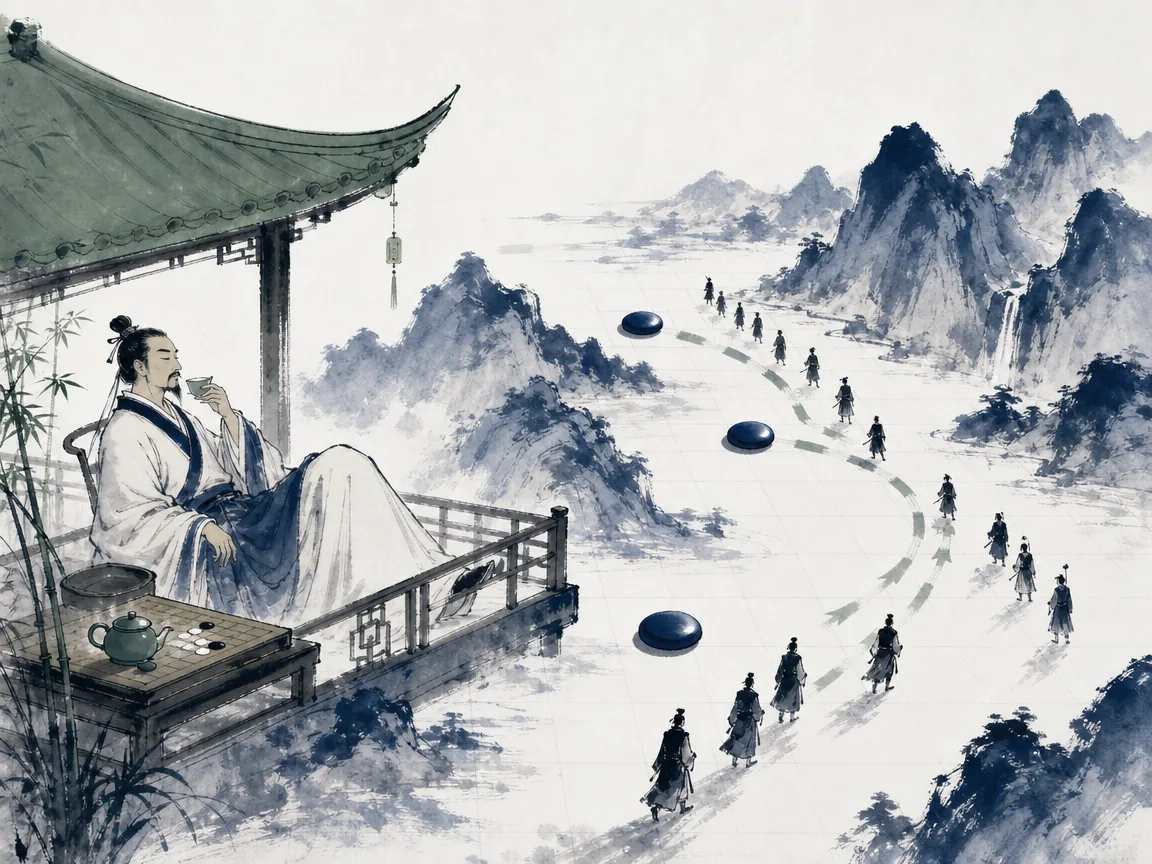
Sun Tzu Chapter 11 Strategy: The Target Is Moving
Most of us approach competition the way we approach a shooting range: if the target keeps dodging, we simply buy a better rifle, train longer, and aim more precisely. We assume that winning comes from becoming stronger, faster, or more efficient within the existing rules of the game. But what if the real question isn't how well you can shoot—but whether you can change where the target stands before you even raise your weapon?
Ancient Chinese strategic thought offers a different answer to this question. Rather than asking how to outperform an opponent on their own terms, the tradition asks how to design the conditions under which the opponent makes their move. The strategic advantage, in this view, doesn't come from brute force at all. It comes from understanding the shape of the situation itself—the terrain, the information landscape, the psychological inclinations of those involved—and positioning yourself so that the opponent's most natural choice also happens to be the one that benefits you.
This isn't a metaphor for manipulation. It's a description of how strategic situations actually work. People don't respond to raw facts; they respond to the narrative they construct from whatever information reaches them. And when that narrative feels self-evident, when it aligns with what they already believe, they commit to it with full confidence—often without ever realizing that the information they relied on was curated. Understanding this shifts everything about how you think about competition, negotiation, and influence.
What Is Shi (势)? The Strategic Advantage of Position
In classical Chinese military thought, the concept often translated as shi (势) captures something harder to pin down in a single English word. It refers to the strategic advantage that comes not from the strength of an agent but from the position and conditions surrounding that agent. Think of a smooth round stone perched at the top of a steep mountainside. The stone hasn't changed. It is no stronger or weaker than it was on flat ground. But its position makes it nearly effortless for gravity to set it in motion and carry it toward its destination. The power belongs to the configuration of the situation, not to the stone itself.
Sun Tzu's writings on shi draw directly on this imagery. The strategic point is that force applied from a favorable position multiplies naturally, while force applied against the grain of the situation wastes itself regardless of how hard you push. This insight applies far beyond the battlefield. In business, in negotiations, in any situation where another person's choices matter to your outcome, the question is rarely "How much force should I apply?" It is "Where should I stand, and what conditions should I shape, so that the other person's most natural response moves me toward my goal?"
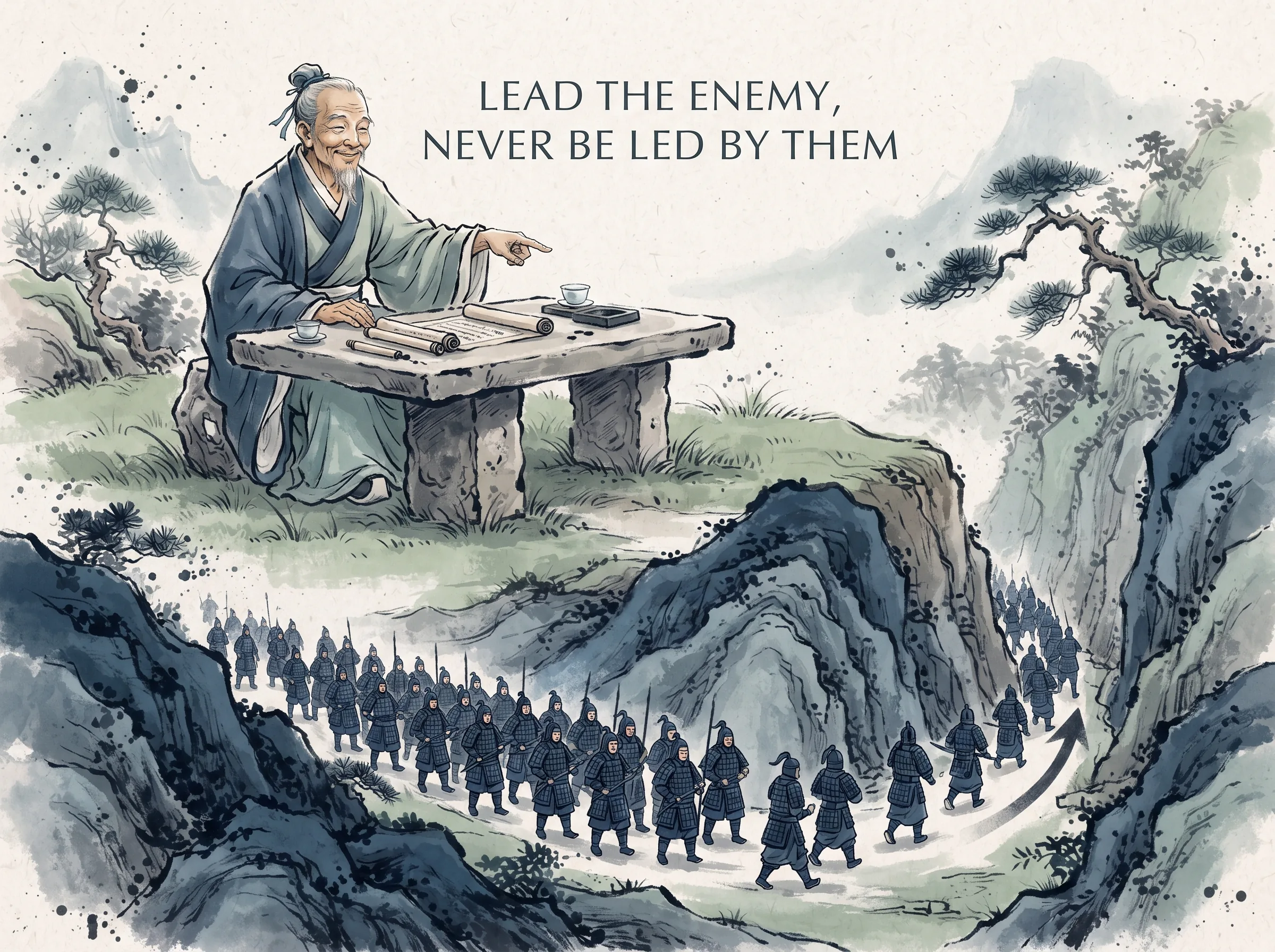
The practical implication is subtle but powerful. When you focus only on building more capability—more budget, more features, more marketing spend—you are improving the stone. But you aren't yet thinking about the mountain. The more strategically attentive approach asks what terrain you can shape, what information flows you can direct, what assumptions you can tap into so that the opponent's own reasoning carries them where you need them to go. This is the heart of strategic design: working with the slope rather than pushing uphill.
Continue with the deeper interpretation and practical application.
ChiDestiny members get access to the full analysis, modern applications, and the growing Chinese Wisdom Library.
FAQ
Is this about manipulating or deceiving people? Not necessarily. The framework described here is about shaping the information environment and understanding how people naturally respond to it. There's a real difference between constructing a plausible narrative from mostly true information and fabricating false information entirely. The ethical dimension depends on intent and transparency. Shaping conditions is a legitimate part of strategy in business, negotiation, and leadership. Deliberate deception crosses a different line. The distinction matters.
Does this approach work in personal relationships, not just competition? Yes, though the application differs. In relationships, the goal is usually mutual benefit rather than advantage over an opponent. But the underlying principle—that people respond to the conditions and narratives around them, not just to raw facts—applies everywhere. Understanding what someone already believes, framing information in a way they can accept, and designing environments where positive behaviors become natural are all applicable outside of competitive contexts.
What's the difference between this and marketing or advertising? Marketing and advertising are specific applications of information design. The strategic approach described here is broader: it applies to negotiation, product positioning, policy design, and any situation where influencing another person's choices matters. The key difference is intentionality. Most marketing focuses on attracting customers. This framework asks you to think about which customers you want, what their decision-making patterns are, and how the information landscape around your offering shapes their conclusions before they even evaluate your product directly.
How do I know when I'm designing conditions versus just reacting to them? A useful test is to ask whether you're responding to a situation that already exists or whether you've shaped the situation before responding. If your main activity is reacting to competitors' moves, you're in reactive mode. If you're actively researching your opponent's cognitive patterns, designing the information environment, and positioning your resources in advance of their decisions, you're in strategic design mode. Most people spend most of their time in the first category. The shift to the second requires deliberate attention and patience.
Conclusion
The deepest insight from this tradition isn't that you should outthink your opponents. It's that you should stop assuming the battlefield is fixed. Every competitive situation has a shape—an information environment, a set of assumptions, a distribution of incentives—and that shape determines far more than raw ability ever does. When you understand the shape, you can redesign it. When you redesign it, your opponent's most natural choice becomes your advantage.
This doesn't require cynicism or deception. It requires attention. Pay attention to what people believe before you try to change their behavior. Pay attention to the information they're receiving and the narratives they're constructing from it. Pay attention to your own assumptions about where competition "should" happen—and consider whether the real opportunity lies elsewhere.
If you want to explore this further, start small. Pick one situation where you've been reacting rather than designing. Map your counterpart's assumptions. Identify the information they're relying on. Consider what a plausible, mostly true alternative narrative might look like—and how you'd position yourself once they follow it. The shift from reactive to strategic isn't dramatic. It's a change in where you direct your attention first, reflecting the enduring wisdom of Sun Tzu Chapter 11 Strategy.
To explore these themes from another angle, read our related reflection on Why Winning Too Hard Can Destroy You: What Sun Tzu’s Art of War Teaches About the Hidden Cost of Initiative.
For a deeper comparative examination of these ideas, explore our related study on Where the Road Ends: What Ancient Chinese Strategy Teaches Us About Knowing What We Can Actually Do.
Sources & Further Reading
[1] D-Day Deception: Operation Fortitude South | English Heritage — Details on the Allied deception operation before the Normandy landings
[2] Daniel Kahneman – Biographical – NobelPrize.org — Overview of Kahneman's research on dual-process thinking, loss aversion, and the endowment effect
[3] Papers & Books | The University of Chicago Booth School of Business — Richard Thaler's publications on behavioral economics, including work on the endowment effect
[4] D-Day Deception: Operation Fortitude South | English Heritage
[5] Daniel Kahneman – Biographical – NobelPrize.org







[…] To explore these themes from another angle, read our related reflection on Shaping the Battlefield: How Ancient Chinese Strategy Teaches You to Design Your Competitor’s …. […]