
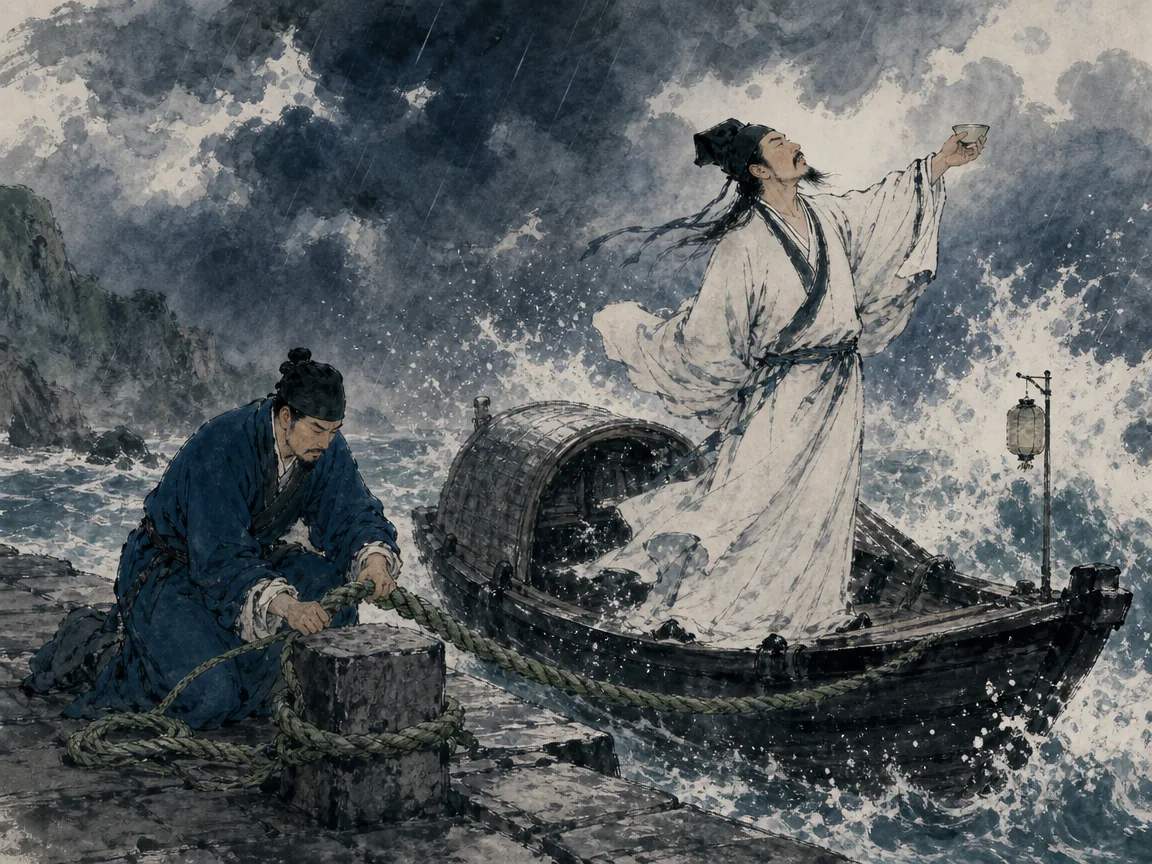
Most readers know Su Shi (苏轼): the brilliant poet who turned banishment into adventure and became one of the defining literary figures of the Song dynasty (宋朝). Far fewer remember the man who stood beside him through nearly every political storm—his younger brother, Su Zhe (苏辙, 1039–1112).
When Su Shi was imprisoned and accused of using poetry to attack the court, Su Zhe offered his own position in exchange for his brother’s safety. He shared the consequences of exile, read the poems of Tao Yuanming (陶渊明) to comfort his sick brother, and later helped preserve Su Shi’s memory. His story raises a question that is both historical and deeply human: when another person’s light helps define your world, is devotion a form of self-sacrifice—or another way of becoming fully yourself? This principle is central to Su Zhe Fraternal Duty Ti.
Su Zhe Fraternal Duty Ti: but Shouldn’t
Su Zhe was three years younger than Su Shi. The brothers grew up in Meizhou, Sichuan (四川眉州), in a family shaped by literary ambition and Confucian conviction. Their father, Su Xun (苏洵), chose the name “Zhe” (辙), meaning the track left by a wheel: inconspicuous, but essential evidence of the journey. From childhood onward, the brothers studied together, and their lives remained closely intertwined [1].
In 1057, at the ages of twenty-two and nineteen, the two brothers passed the imperial civil-service examination (科举) in the same year [1]. Their official careers repeatedly rose and fell together. The official History of Song (Song Shi, 《宋史》) observed that their fortunes were rarely far apart and that hardship only deepened their affection, without producing resentment or complaint—a bond the historians considered rare even in antiquity [1].
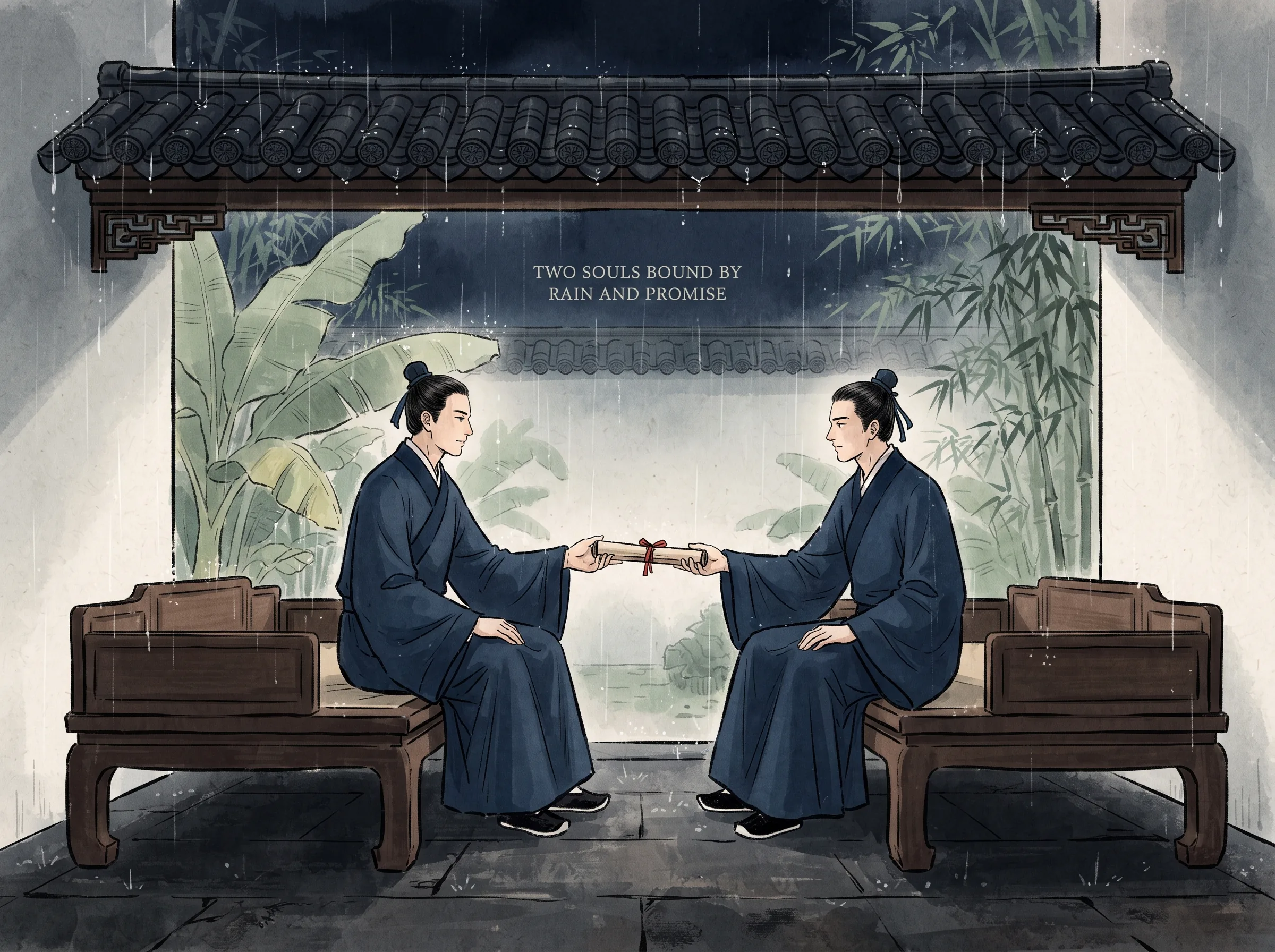
Su Zhe was not merely a supporting figure in his brother’s life. He was an important writer in his own right, recognized as one of the Eight Great Prose Masters of the Tang and Song (唐宋八大家). He also rose to the position of Vice Director of the Chancellery (Menxia Shilang, 门下侍郎), an office comparable to that of a vice chancellor, during the Yuanyou era (元祐, 1086–1094) [4]. Yet his considerable achievements have always been overshadowed by Su Shi’s fame. His life reminds us not to confuse visibility with importance.
A Lifetime of Showing Up
Su Zhe established his reputation for courage early. In a special examination on government policy, he submitted a blunt critique of the late Emperor Renzong’s reign (宋仁宗), attacking court extravagance and the failure to accept honest remonstrance [1]. The essay alarmed the examiners, but it also marked Su Zhe as someone prepared to speak plainly even when candor threatened his career.
The crisis that defined the brothers’ relationship came in 1079, during the Crow Terrace Poetry Case (Wutai Shi’an, 乌台诗案). Su Shi’s political opponents collected lines from his poems and presented them as evidence that he had mocked the New Policies associated with Wang Anshi (王安石) and insulted the imperial court [3]. He was arrested and imprisoned in the capital. For months, his life was in danger.
Su Zhe responded by submitting a memorial titled “A Memorial on Behalf of My Brother Shi, Imprisoned” (Wei Xiong Shi Xia Yu Shang Shu, 《为兄轼下狱上书》). In it, he offered to surrender his own official rank in exchange for Su Shi’s release [2]. He did not ask that every punishment be removed; he pleaded above all that his brother be spared imprisonment and death. It was an extraordinary gamble with his own career and possibly his freedom. Gain deeper perspective on weathering adversity through the poetic resilience explored in When the Path Is Blocked: What Classical Chinese Wisdom Teaches About Frustrated Ambition.
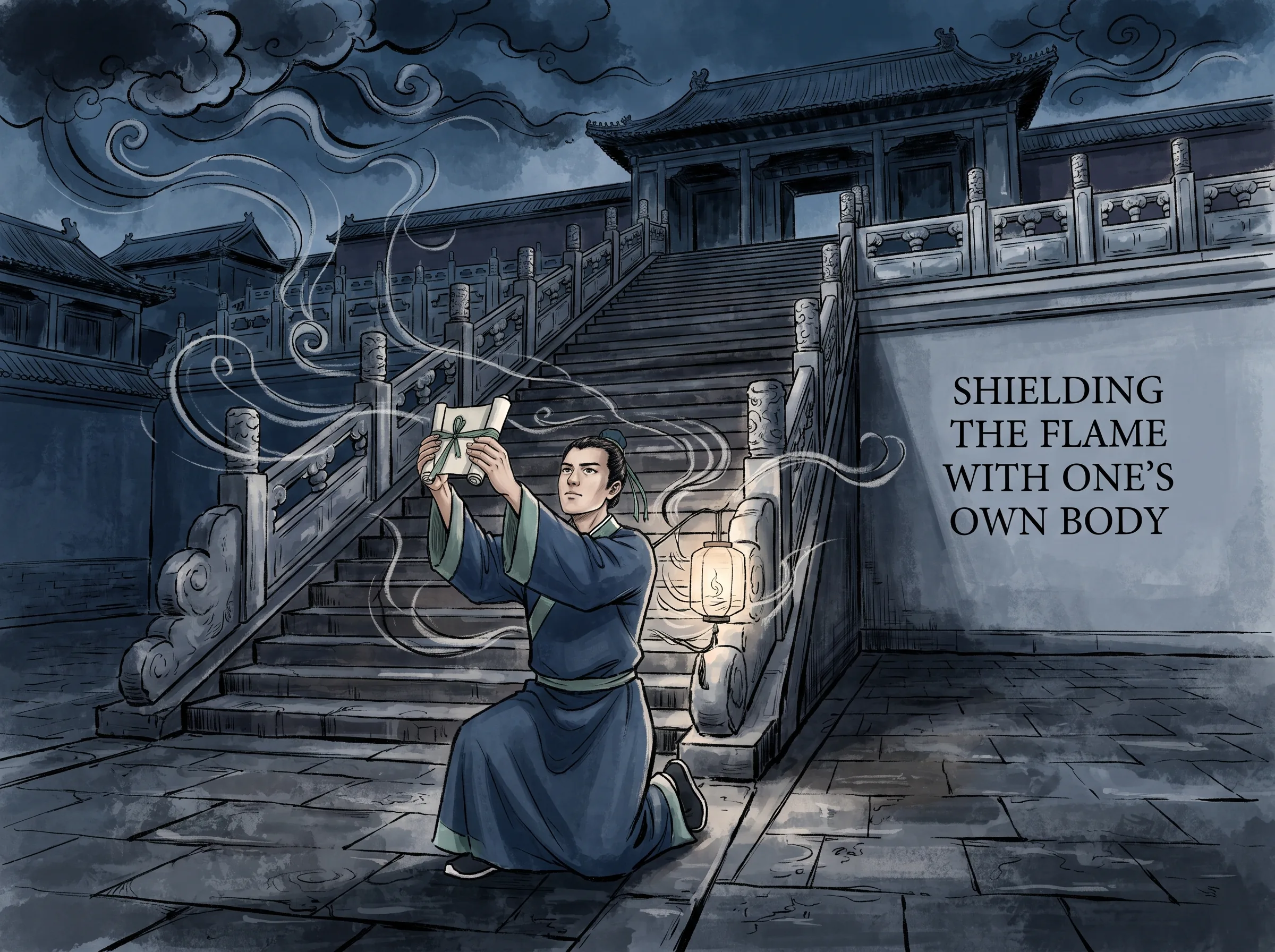
Su Shi was eventually spared execution and exiled to Huangzhou (黄州). During his imprisonment, he wrote two poems to his brother, later known as “Two Poems Sent to Ziyou from Prison” (Yu Zhong Ji Ziyou Er Shou, 《狱中寄子由二首》). One couplet imagines that his bones might be buried beneath any green mountain, while the greater sorrow would be leaving his brother alone to hear the night rain [3]. “Ziyou” (子由) was Su Zhe’s courtesy name. The image recalled the brothers’ earlier wish to retire together and listen to rain at night—a private promise transformed into a possible farewell
Su Zhe also paid a price for the case and was demoted. When political circumstances improved in the late eleventh century, he rose rapidly and eventually reached the senior office of Vice Director of the Chancellery (门下侍郎) [4]. Yet official success never separated him from his brother’s difficulties. He continued to use his resources and influence to help Su Shi through transfers, financial hardship, and repeated exile.
In 1097, Su Shi was sent to Danzhou on Hainan Island (海南儋州), then regarded as the remote edge of the empire. Su Zhe was exiled to Leizhou (雷州) in present-day Guangdong. The elderly brothers met briefly on the journey. Su Shi was ill and unable to sleep, and Su Zhe read the poetry of Tao Yuanming (陶渊明) aloud to him. After decades of examinations, court debates, promotions, prisons, and banishments, their bond appeared in its simplest form: one brother reading to another in the dark.
Su Shi died in 1101. Su Zhe lived for another eleven years and died in 1112 [1].
Devotion Beyond Brotherhood
Su Zhe’s commitment to relationships extended beyond his brother. He married a woman from the Shi family, Lady Shi (史氏), while both were still young. His writing suggests a marriage marked by familiarity, affection, and shared hardship. Unlike many elite men of the Northern Song (北宋), he appears not to have taken concubines, although the surviving evidence does not allow us to know his motives with certainty.
The couple had three sons and seven daughters, two of whom died young. Providing dowries for five surviving daughters placed real pressure on the household, a burden Su Zhe sometimes addressed with dry humor in his poetry. These details matter because they prevent us from romanticizing devotion. His loyalty—to his brother, his wife, and his children—was not abstract or cost-free. It was sustained through repeated choices under conditions of financial strain and political danger.
Fraternal duty (tì, 悌) belongs to a wider Confucian ethic of relational faithfulness. It asks not only what an individual can accomplish, but also what kind of person is formed by caring well for those nearby.
What Fraternal Duty (Tì, 悌) Can Teach Us Today
Su Zhe’s story is not a blueprint. It is a mirror.
Modern culture celebrates the self-made individual: the entrepreneur, the innovator, the person who “becomes themselves.” Su Zhe represents another possibility—a life whose meaning is woven through loyalty to others. His devotion was not passive. It required the courage to criticize power, risk his career for his brother, and endure repeated exile without allowing suffering to turn into resentment.
This is not an argument for abandoning personal ambition. Su Zhe was a capable administrator, a respected writer, and one of the highest officials of his age. His life was not about disappearing into another person’s story. It was about integrating achievement with commitment.
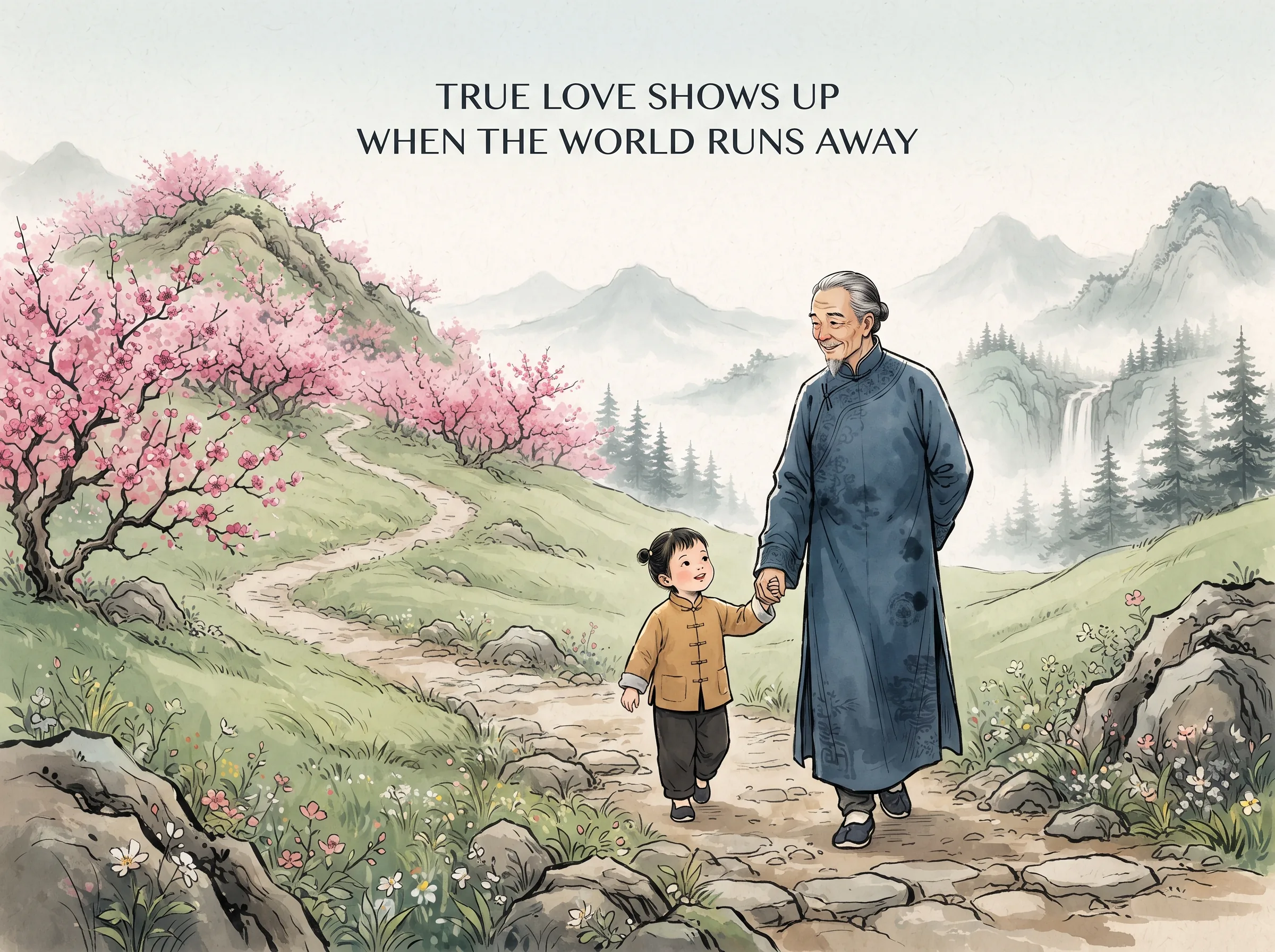
The question he leaves us is simple and difficult: whom are you helping to hold up? Can devotion be freely chosen rather than merely imposed by duty or tradition?
The Confucian answer, expressed through fraternal duty (tì, 悌), is that devotion is a moral practice. Character is shaped not only by grand gestures, but by the accumulated weight of small and consistent choices. Su Zhe’s life was not as spectacular as his brother’s. It was steadier—and that steadiness was its own form of greatness.
FAQ
Was Su Zhe jealous of his brother’s greater fame?
There is no clear evidence of jealousy in the historical record. The History of Song (《宋史》) emphasizes the absence of complaint or resentment between the brothers [1]. Su Zhe’s memorials and letters consistently show concern and affection rather than bitterness.
Did Su Zhe have an independent literary legacy?
Yes. He is recognized as one of the Eight Great Prose Masters of the Tang and Song (唐宋八大家), and a substantial body of his writing survives. Later scholars also valued works such as his Collected Explanations of the Spring and Autumn Annals (Chunqiu Jijie, 《春秋集解》) [1]. His reputation is smaller than Su Shi’s, but it is not insignificant.
What happened to Su Zhe after Su Shi died?
Following years of political exile, Su Zhe settled in Yingchang (颍昌) and lived relatively quietly until his death in 1112 [1]. He also played an important role in preserving his brother’s writings and memory.
Is fraternal duty (tì, 悌) still relevant today?
Its traditional ritual forms belong to a premodern society, but its central insight remains accessible: close relationships can be sites of moral growth, not merely matters of personal preference. Caring for parents, supporting a sibling through hardship, or remaining faithful to a partner all ask a related question—what kind of person do we become through sustained care? This is the lasting lesson of Su Zhe Fraternal Duty Ti.
Gain deeper perspective on weathering adversity through the poetic resilience explored in How Fan Zhongyan Found Purpose Beyond Himself: Ancient Wisdom for Modern Burnout.
Deepen your understanding of these principles in our reflection on How Could a Civilization Win by Absorbing Its Conquerors? The Surprising Power of Chinese Cultural Gravity.
Sources & Further Reading
[1] Wikisource — ** “Biography of Su Zhe” in the History of Song, chapter 339 (《宋史·苏辙传》, 卷339).** Includes the official account of Su Zhe’s career, death, and relationship with Su Shi.
[2] “A Memorial on Behalf of My Brother Shi, Imprisoned” (《为兄轼下狱上书》). — Su Zhe’s memorial offering his official rank in an effort to save Su Shi during the 1079 poetry case.
[3] Commentary on “Two Poems Sent to Ziyou from Prison” (《狱中寄子由二首》). — Context for Su Shi’s prison poems and the line about green mountains and night rain.
[4] Wikisource — ** Chronological Record of Song Chief Councillors, chapter 10 (《宋宰辅编年录》, 卷10).** Records Su Zhe’s senior appointments during the Yuanyou era (元祐). ### Recommended Reading
[5] “Biography of Su Zhe” in the History of Song (《宋史·苏辙传》), compiled in 1345.
[6] Su Shi, “Two Poems Sent to Ziyou from Prison” (苏轼《狱中寄子由二首》).
[7] Su Zhe, Collected Works of Luancheng (苏辙《栾城集》).
[8] The Columbia History of Chinese Literature, edited by Victor H. Mair, for wider context on Song literary culture and the Su family.






