
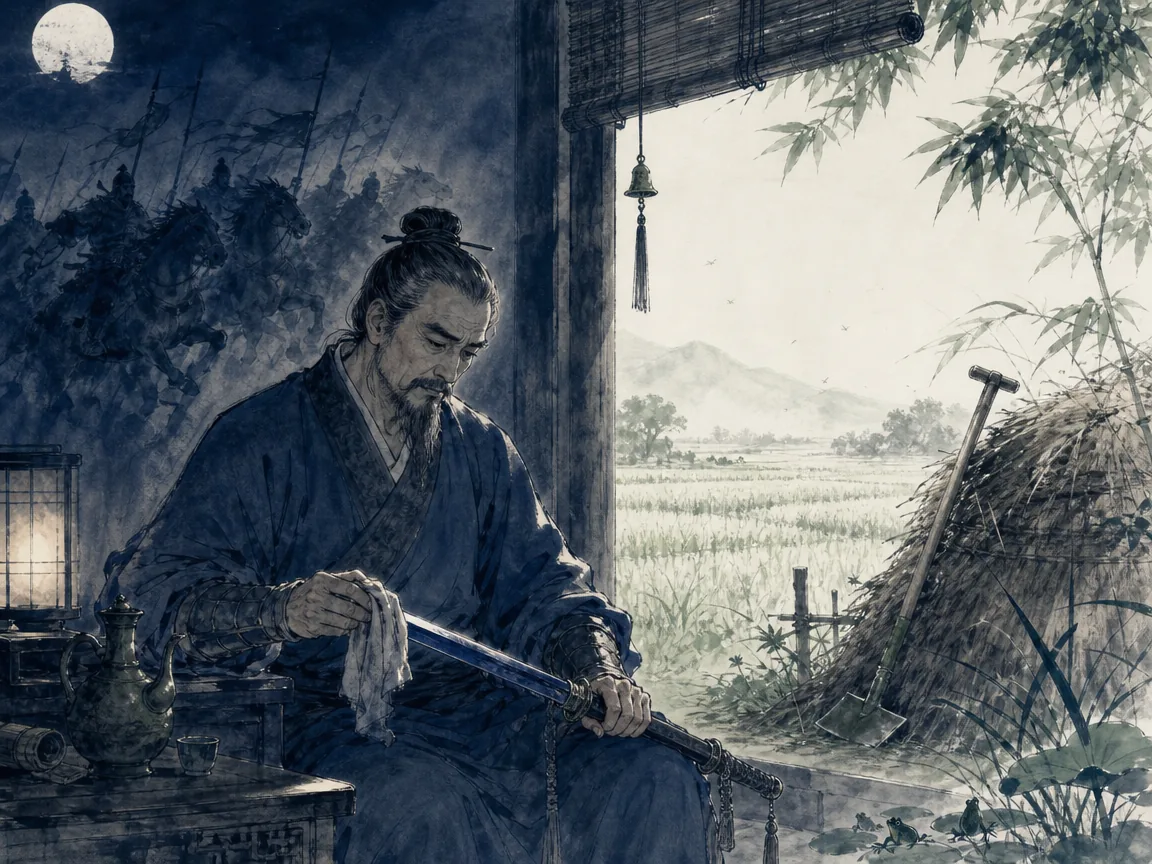
Classical Chinese Poetry on Ambition: Core Thesis
Xin Qiji's life—an ambitious warrior-scholar repeatedly denied the opportunity to serve his country—embodies a timeless dilemma. Confucian and Daoist thought offer complementary ways to live with frustration, redirect purpose, and find meaning beyond institutional recognition.
Section 1: When Purpose Meets Obstruction
There is a particular kind of pain that comes not from failure, but from being refused the chance to try. You have prepared, you know your calling, and yet the world offers only closed doors. What should a person do when persistence begins to look like delusion?
The Southern Song dynasty produced a man whose life reads like a sustained meditation on that question. Xin Qiji (辛弃疾, 1140–1207) was born in territory occupied by the Jurchen-led Jin dynasty. From an early age, he devoted himself to recovering the lost northern territories for the Song. At twenty-one, he raised more than two thousand rebels. By twenty-three, he had ridden into an enemy camp, captured the traitor who had killed his commander, and brought him back in chains [1].
Why, then, did this proven warrior spend most of his life writing poetry rather than leading armies?
The answer was institutional distrust. The Southern Song court classified Xin as a “returnee from the north” (guizhengren, 归正人), a label that made officials question his loyalty. He received administrative posts far from the frontier. His strategic works—Ten Essays on Aids to War (Meiqin Shilun, 《美芹十论》) and Nine Discussions (Jiuyi, 《九议》)—were largely ignored while the court pursued accommodation with the Jin. Eventually, he retired to an estate called Jiaxuan (稼轩, literally “Farmside”), the literary name by which he is also known.
The modern parallel is familiar: the expert excluded by office politics, the artist rejected by every platform, or the teacher whose deepest convictions meet systemic indifference. Xin Qiji's life asks not whether frustration is inevitable, but how we can live inside it without losing ourselves.
Section 2: The Confucian Response — Loyalty and Righteousness (忠与义)
Confucianism distinguishes acting from moral duty (yi, 义) from acting for reward. The exemplary person (junzi, 君子) does what is right because it is right—not because the world notices, praises, or pays.
When Xin Qiji captured the traitor Zhang Anguo (张安国), he was not calculating what the court might give him. He acted from obligation. The History of Song (Song Shi, 《宋史》) describes him as one who “understood the greater righteousness and returned to the Song” (知大义而归宋) [1]. His purpose came from an internal commitment rather than an external appointment.
Much modern frustration grows from an implicit contract: if I work hard, then I will be recognized. When the world breaks that contract, we feel cheated. The Confucian response rewrites it. Your duty does not require a witness, a title, or an audience. This is not passive acceptance of injustice; it is a shift from external validation to internal conviction.
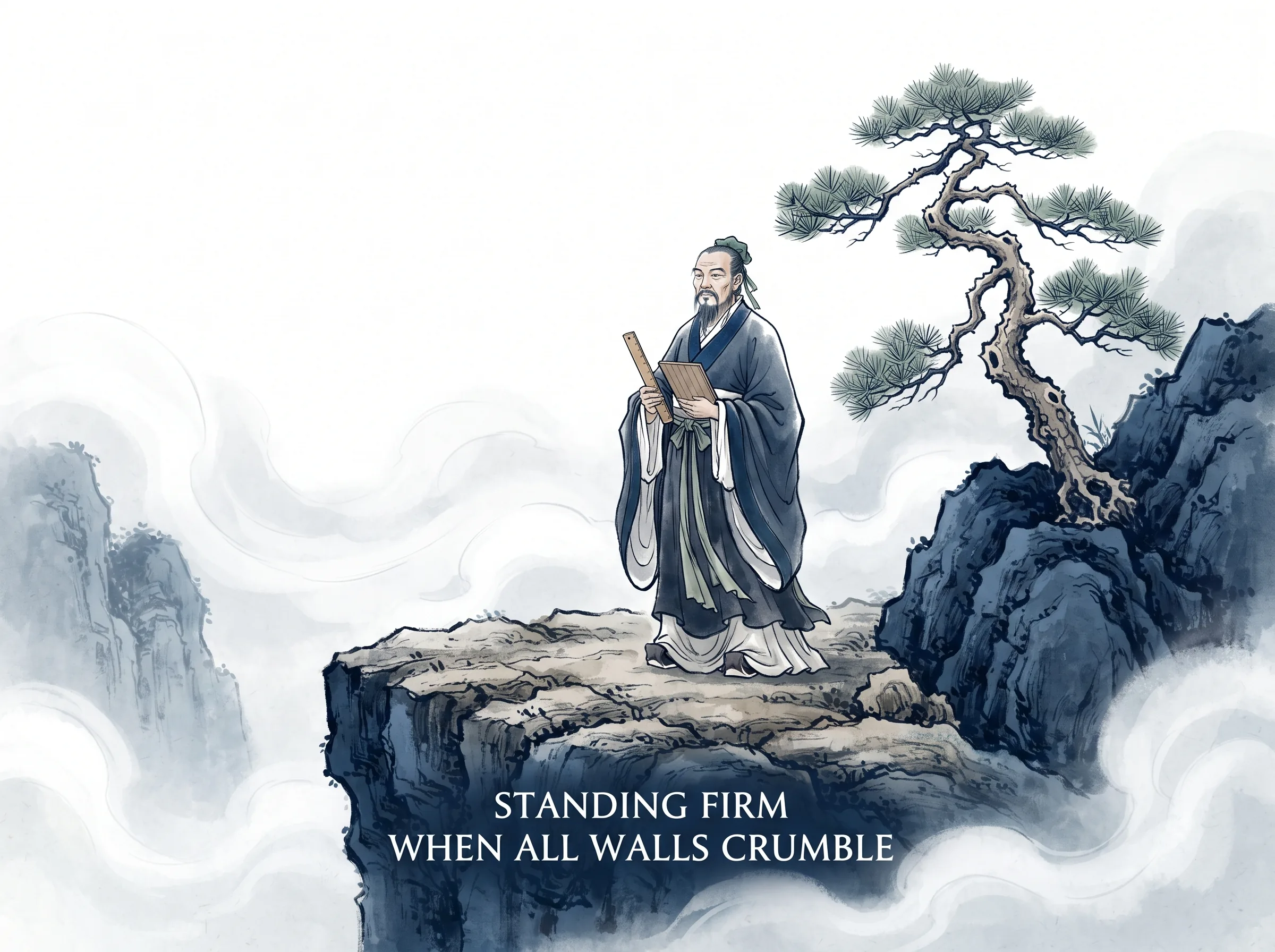
Ask yourself: what would I still do if no one ever knew I had done it? If the answer still points toward action, you have found a source of purpose that rejection cannot easily destroy.
Section 3: The Daoist Response — Non-coercive Action and Following the Flow (无为与顺势)
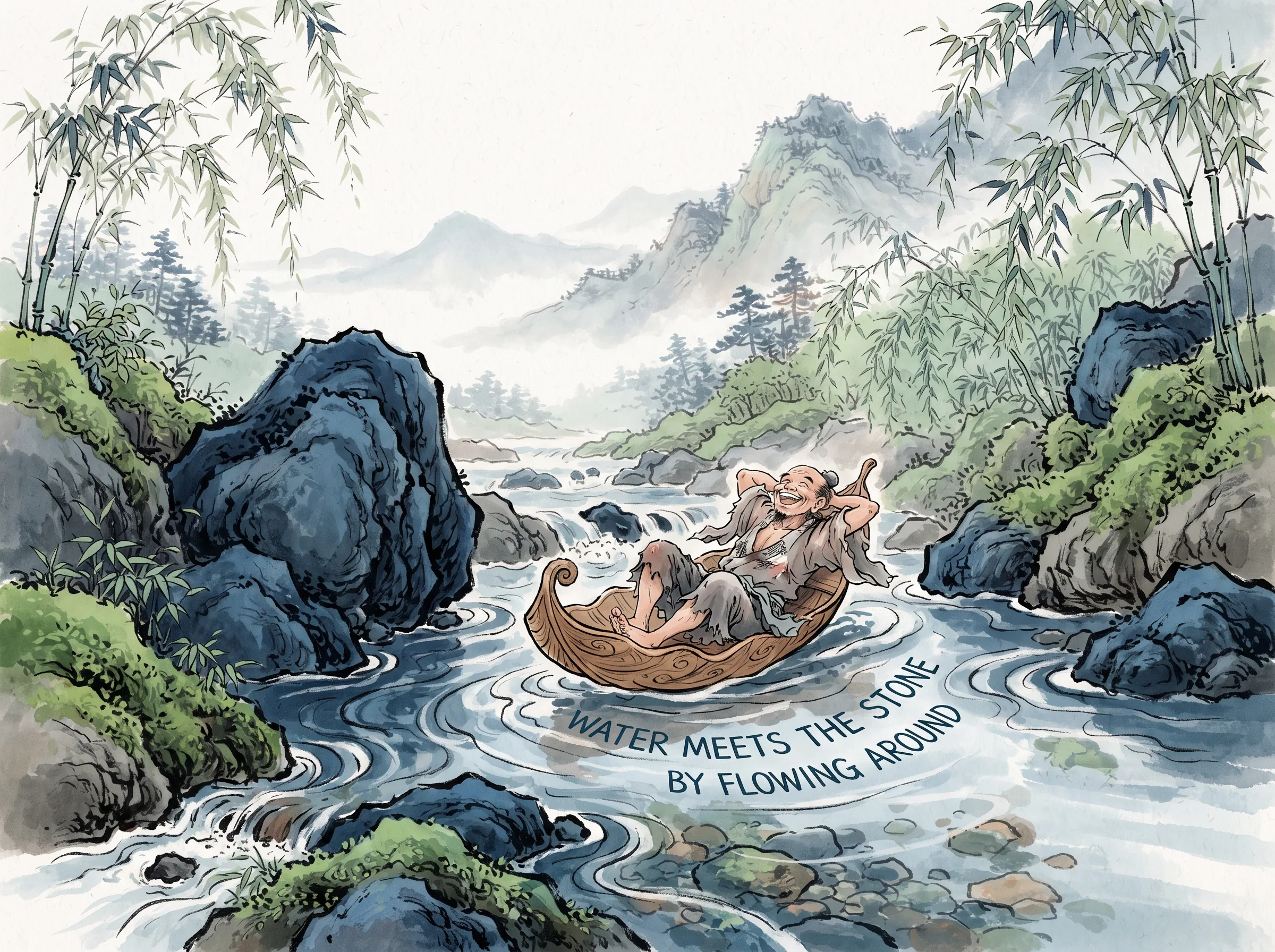
Where Confucianism teaches steadfast duty, Daoism asks us to notice when force has become futile. Its key idea, wu wei (无为), is often translated as “non-action,” but “non-coercive action” is more helpful: act with the grain of circumstances rather than trying to impose an impossible outcome.
At Jiaxuan, Xin Qiji could not force the court to value his military talent. He redirected his energy into ci (词), lyric poetry written to established tune patterns. His poems combine martial intensity, natural observation, and philosophical reflection. This was not necessarily surrender. It was purpose finding another channel. Gain deeper perspective on weathering adversity through the poetic resilience explored in Shoulders Behind the Storm: Su Zhe and the Lost Virtue of Fraternal Duty (*tì*, 悌).
The closing lines of The Lantern Festival: To the Tune “The Green Jade Table” (《青玉案·元夕》) describe someone sought everywhere and discovered only after the seeker turns away:
I searched for her a thousand times in the crowd.
Suddenly I turned my head—and there she was,
where the lantern light was fading.
(众里寻他千百度。蓦然回首,那人却在,灯火阑珊处。)
The image can suggest romantic longing, spiritual solitude, or political allegory [3]. Its openness is part of its wisdom: what we seek may appear in a form or place we did not expect.
Daoist flexibility asks: is this obstacle a wall or a bend in the road? A wall calls for stopping; a bend calls for changing direction. Xin Qiji's turn from military strategy to poetry did not make his original purpose worthless. It allowed the energy behind that purpose to survive.
Section 4: A Third Way — Sublimation Through Creativity
Xin Qiji neither simply accepted his fate nor abandoned his ideals. He transformed frustration into creative work.
The historian Sima Qian (司马迁) described this pattern in his Letter to Ren An (《报任安书》), written after a punishment intended to destroy his dignity and future. He observed that many enduring works were born from blocked lives: King Wen developed the Book of Changes (Yijing, 《易经》) in prison; Qu Yuan wrote Encountering Sorrow (Li Sao, 《离骚》) in exile; and other thinkers committed their indignation and intentions to writing [2]. Obstruction became raw material for work that outlived it.
Roughly six hundred of Xin Qiji's ci poems survive. His celebrated war poem To the Tune “Breaking the Formation” (《破阵子·为陈同甫赋壮词以寄之》) ends with a painful reversal: “What a pity—white hair has already appeared” (可怜白发生). The poem records the gap between imagined action and enforced inaction, yet its existence proves that his imagination could not be confined.
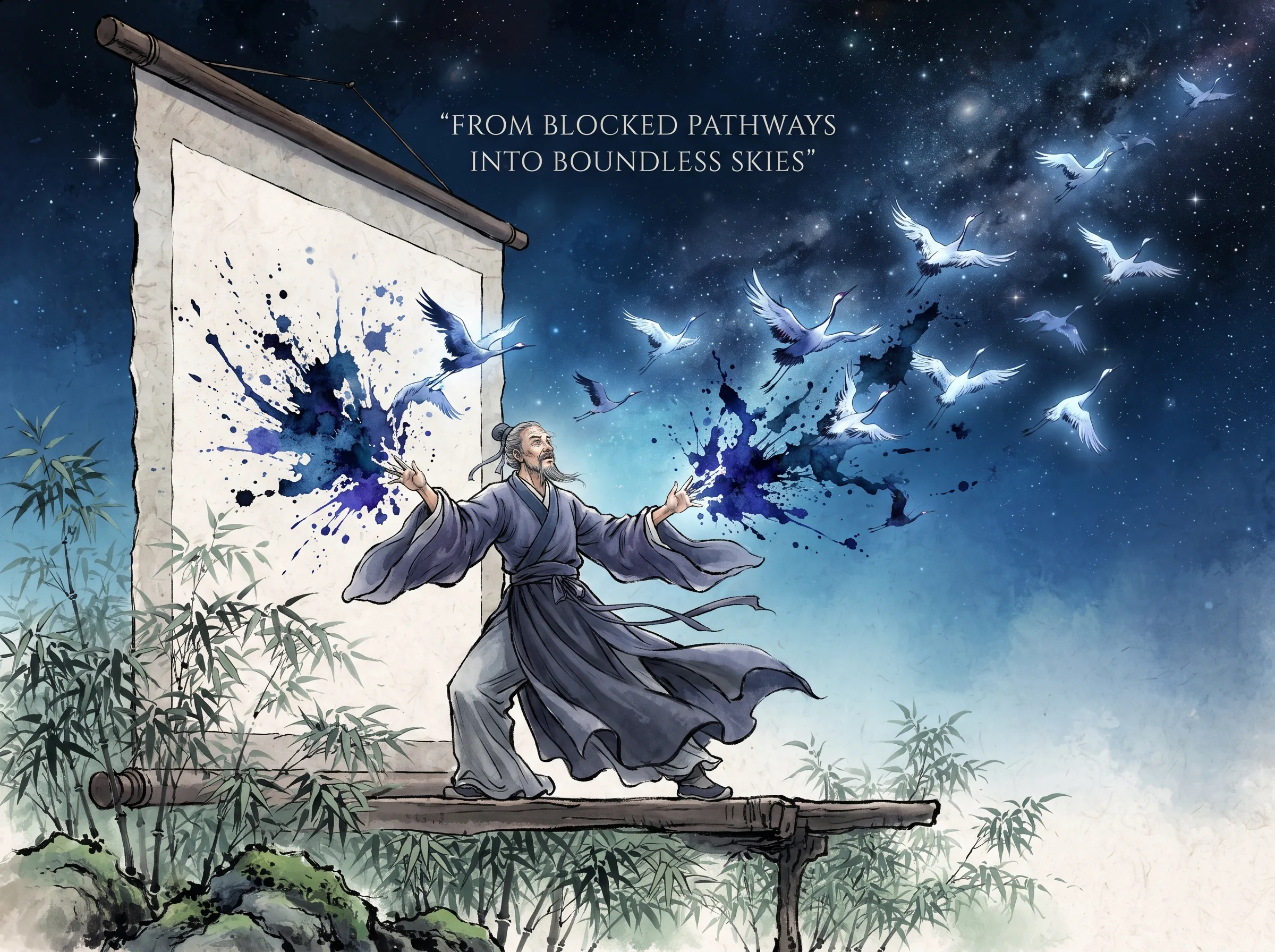
The modern lesson does not require becoming a poet. When a primary goal is blocked, identify the drive beneath it. Leadership may become mentorship; competition may become coaching; public office may become community service; professional expertise may become teaching or writing. The form changes, but the purpose can remain.
Section 5: Did Xin Qiji Find Peace?
The History of Song says that Xin Qiji received a senior military appointment but died before assuming it [1]. Later tradition adds a dramatic scene: on his deathbed, he repeatedly cried, “Kill the invaders!” (杀贼). The story may be legend, but it endured because it expresses something recognizable about him—his purpose remained alive even when action was no longer possible.
A Daoist might see an inability to let go; a Confucian might see loyalty maintained to the end. Neither view treats his life as wasted. Xin never led the army he dreamed of commanding or recovered the territories he hoped to reclaim, but he refused to pretend that these things did not matter. That refusal, and the work it produced, became another kind of triumph.
Practical Guidance
Separate the goal from the drive. Ask what lies beneath your ambition: leadership, protection, mastery, service, or legacy? The underlying purpose may have more than one possible expression.
Distinguish a wall from a bend. Persistence is not always virtue; sometimes it is exhaustion in disguise. Changing direction can be an act of strategic honesty rather than surrender.
Create something that outlasts the frustration. A project, essay, mentorship, or community initiative can turn blocked energy into evidence that it was not wasted.
Do not confuse recognition with validation. Confucian ethics locates worth in the quality of commitment, not merely in the reward granted by institutions.
FAQ
Did Xin Qiji really shout “Kill the invaders!” on his deathbed?
Later traditions preserve the story, but the official History of Song only records that he died before assuming a senior military appointment [1].
Is wu wei (无为) the same as giving up?
No. It means avoiding forced, misaligned action. Redirecting energy when the original route is blocked can be flexibility rather than resignation.
How many of Xin Qiji's poems survive?
Approximately six hundred ci poems are attributed to him, though totals vary by compilation.
Summary
Xin Qiji's life reveals the tension between purpose and circumstance. Classical Chinese wisdom does not promise that every blocked path will open. It offers something more durable: act from conviction, adapt without betraying your values, and transform frustration into work that can outlive the obstacle. A meaningful life is measured not only by what the world permits you to achieve, but also by the integrity and creativity with which you respond when it refuses, reflecting the enduring wisdom of Classical Chinese Poetry on Ambition.
Connect these enduring values to the broader cultural heritage explored in How China’s Climate Wrote Its Literature (And What It Teaches Us About Living Well).
For a deeper comparative examination of these ideas, explore our related study on What Can Ancient Chinese Aesthetics Teach Us About Living a Calmer, More Intentional Life Today?.
Sources & Further Reading
[1] History of Song: Biography of Xin Qiji (宋史·辛弃疾传) – Wikisource — Records Xin Qiji's early military rebellion, capture of Zhang Anguo, and official appointments.
[2] Sima Qian: Letter to Ren An (司马迁《报任安书》) – Wikisource — Classical reflection on hardship and literary creation.
[3] Xin Qiji: Qingyu'an: Lantern Festival (辛弃疾《青玉案·元夕》) – Wikisource — Famous poem on searching for the ideal figure in the crowd.
Further Reading
- Selected Ci Poetry of Xin Qiji, with Annotations (《辛弃疾词选注》).
- Sima Qian's Letter to Ren An (司马迁《报任安书》).
- The Cambridge History of China, Vol. 5: The Song Dynasty and Its Precursors.






