
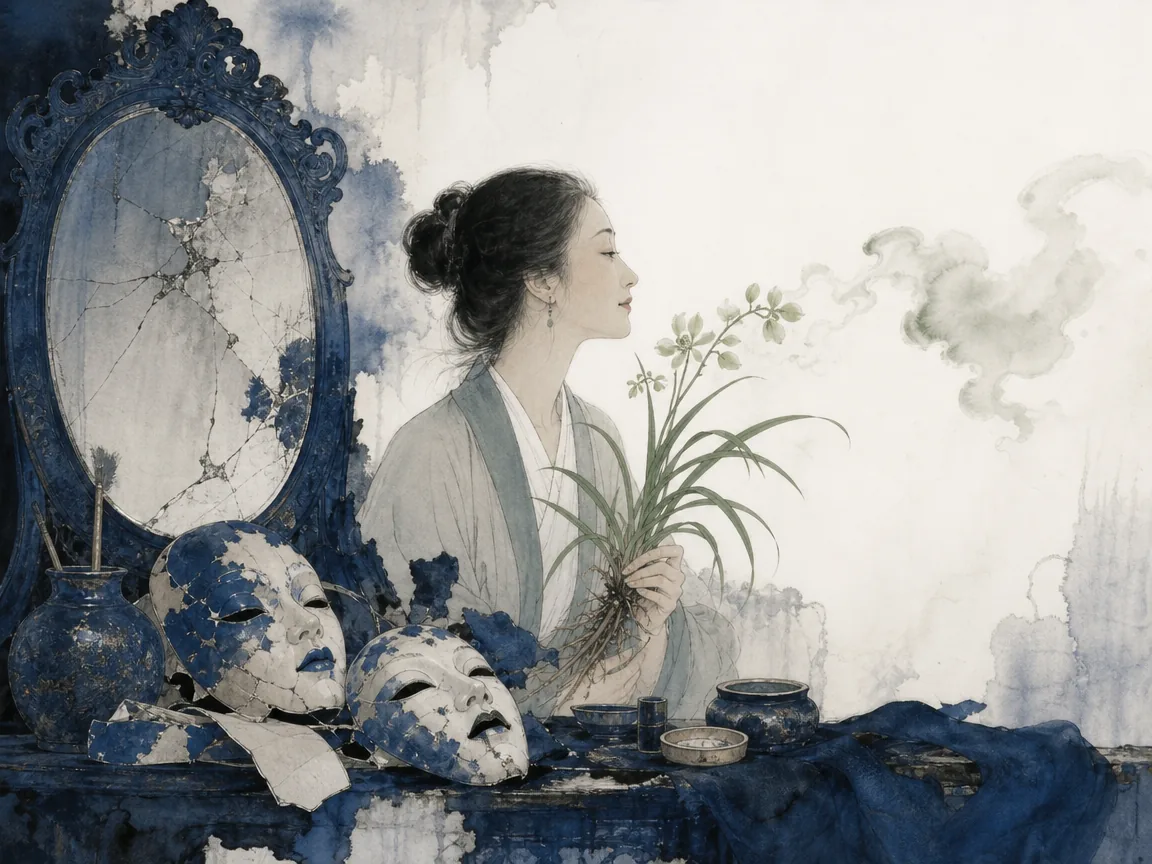
Marguerite Duras opens her novel The Lover with a line that has haunted readers ever since: a man tells her narrator that he prefers her face "as it is now, ravaged" over the face she had in her youth [1]. It is an unsettling confession, one that turns conventional assumptions about beauty inside out. If we follow ordinary logic, aging should diminish attractiveness. Wrinkles, thinning skin, the softening of features — these are widely treated as losses. And yet Duras' narrator seems to convey something more complicated: that what we value in another person may shift with time in ways that have little to do with physical symmetry.
This observation is not merely literary. It points to a question that arises in everyday life: why do some people seem to grow more beautiful as they age, while others simply fade? What is it about a lined face or silver hair that can feel more compelling than the smooth complexion of youth? The answer, at least from certain strands of Chinese thought, does not lie in cosmetics, skincare routines, or the preservation of outward form. It lies in something deeper and harder to grasp — an invisible presence that accumulates rather than decays—a foundational perspective explored in Invisible Presence in Chinese Art.
Chinese aesthetics has long distinguished between two kinds of visibility. One is what the tradition calls outward form (xíng, 形), the concrete, tangible shape of things. The other is symbolic atmosphere (xiàng, 象), energy, or spiritual quality that form conveys. The first is relatively fixed; the second is fluid, felt rather than seen directly. Understanding this distinction offers a practical lens for reimagining aging, self-cultivation, and what makes a person — or a civilization — compelling over time.
Invisible Presence in Chinese Art: The Visible Form and the Invisible Presence
To see how this framework works, consider an example most readers will recognize even if they have never studied Chinese poetry. The eighth-century poem Spring River on a Moonlit Night by Zhang Ruoxu is among the most celebrated works in the classical canon [2]. On its surface, the poem describes a scene: a river, a spring, moonlight, flowers along the bank. These elements are physical form (xíng, 形) — visible, describable, tangible. But the poem's lasting power does not come from the sum of its images. It comes from the atmosphere those images generate when placed together.
The poem moves from description to reflection, asking when the river moon first shone upon a human face and noting that human generations succeed one another endlessly while the moon remains much the same [2]. The river is concrete; its flow is constant. The flowers are beautiful; they bloom and fall. The moon waxes and wanes. When these images intersect, they produce something that is not any single image but a feeling of timeless movement — a sense of the universe unfolding across time. That feeling is symbolic presence (xiàng, 象).
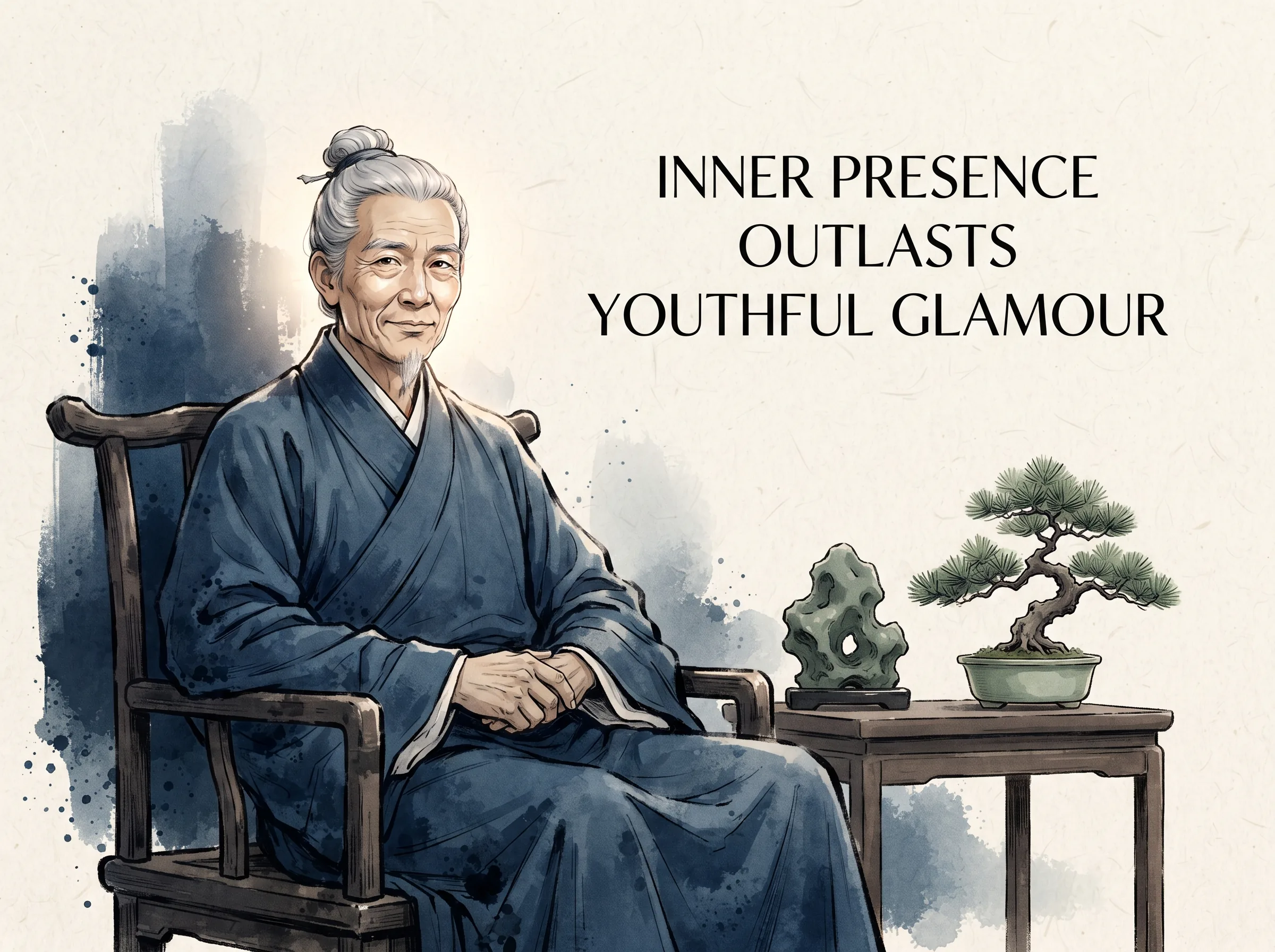
This is not an abstract argument. It is an observation about how meaning works in Chinese artistic practice. Individual elements exist, but what lingers in the mind is the quality they create together. Applied to human beings, the same principle suggests that physical appearance is only one element. The deeper impression a person leaves depends on qualities that cannot be measured with a mirror — calmness, depth, integrity, the quiet confidence that comes from having lived reflectively.
How Classical Tradition Names This Distinction
The distinction between form (xíng, 形) and atmosphere (xiàng, 象) is not merely a modern invention. It has deep roots in classical Chinese philosophy.Invisible Presence in Chinese Art of the Dao De Jing describes the greatest image as having no fixed form. The point is not that beauty disappears, but that true symbolic presence (xiàng, 象) transcends rigid physicality. What endures is not a particular arrangement of features but an energy that can radiate from many different forms.
This insight recurs across traditions. In Buddhist thought, expressions such as "one flower contains one world" suggest that even small, ordinary forms can reveal vast, invisible meaning. The particular shape of a petal is form (xíng, 形); the sense of totality it evokes is symbolic presence (xiàng, 象). Classical Chinese aesthetic practice consistently returns to this idea: the value of a work lies not in its surface resemblance to something external but in the depth it opens. Cultivate quiet mindfulness in everyday living through the meditative tea ritual in A Cup of Tea Holds a World: Six Chinese Philosophies for Modern Living.
A famous poem by the Yuan-dynasty writer Ma Zhiyuan illustrates this clearly. Autumn Thoughts opens with a sequence of images — withered vine, old tree, evening crow — that on their own are stark and perhaps unappealing [3]. Together, they create a desolate atmosphere that no single image could produce. The lines do not simply add up; they intersect, each reinforcing the mood of the others, producing a sense of solitude that extends beyond the poem's frame. This is symbolic presence (xiàng, 象) at work: invisible, cumulative, felt.

Chinese characters offer another window into the same principle. The character for dawn, dàn (旦), depicts a horizon with a rising sun, conveying a sense of openness and transparency that goes beyond its visual components. The character for past, xī (昔), has been interpreted in multiple ways — some scholars read it as depicting floodwaters above a sun, others as showing sun-dried meat — and each interpretation opens a different atmosphere. Whether one reads it as a scene of catastrophic flooding or of preserved food under the sun, the character carries a sense that exceeds its literal shape. The form invites the mind into a wider field of meaning.
When Civilization, Like a Person, Grows Older
The distinction between form (xíng, 形) and atmosphere (xiàng, 象) is not only useful for understanding art. It applies to larger questions as well. Any civilization — or any individual life — risks confusion if it equates visible markers with lasting value. GDP figures, highway networks, luxury automobiles, and towering buildings are all outward form (xíng, 形). They are real and measurable. But they are not sufficient.
What survives beyond the visible is the invisible presence: the spirit of a culture, the moral character of its people, the energy behind collective action. A society that invests exclusively in form may look impressive for a time, but it lacks the deeper resources that carry it through difficulty. The same observation applies to a single life.
The Qing-dynasty scholar Wang Guowei captured this reality in a well-known line: "What the world cannot keep is the rosy face leaving the mirror, the flower leaving the tree" [4]. The imagery is gentle but unflinching. Youthful beauty, like seasonal flowers, follows a natural trajectory. No amount of vigilance can arrest it completely. Recognizing this is not a call to despair. It is a call to redirect attention toward what can endure.
If physical appearance is a form that inevitably changes, then cultivating symbolic presence (xiàng, 象) becomes a more reliable investment. This does not mean neglecting the body or dismissing care for one's appearance. It means understanding that the most lasting impression a person makes is built on character, calmness, wisdom, and the capacity to be present without performance.
Practical Reflections for Modern Life
The question "Why do some people grow more beautiful with age?" can be reframed through this lens. Some people grow more compelling because their inner atmosphere (xiàng, 象) has developed alongside their outward form (xíng, 形). Their experiences have deepened their empathy. Their struggles have tempered their patience. Their choices have clarified their values. The face may show wear, but the energy behind it carries weight.
Conversely, a person whose outward form (xíng, 形) is carefully maintained but whose inner spirit (xiàng, 象) is neglected may look polished without being memorable. This is not a moral judgment. It is an observation about how presence works. A smooth surface reflects light; a developed presence absorbs it and re-emits it as something steadier.
Practical implications follow. Rather than treating aging primarily as a problem to be solved, it can be approached as a process in which inner presence (xiàng, 象) can be cultivated. Some ways this happens — without prescribing any particular routine or claiming medical or psychological outcomes — include:
- Reflective reading. Classical texts, philosophy, and literature encourage slow engagement with ideas rather than rapid consumption of information. The goal is not accumulation but integration.
- Mentorship and reciprocity. Teaching others and learning from them creates relationships that build character and deepens one's sense of purpose.
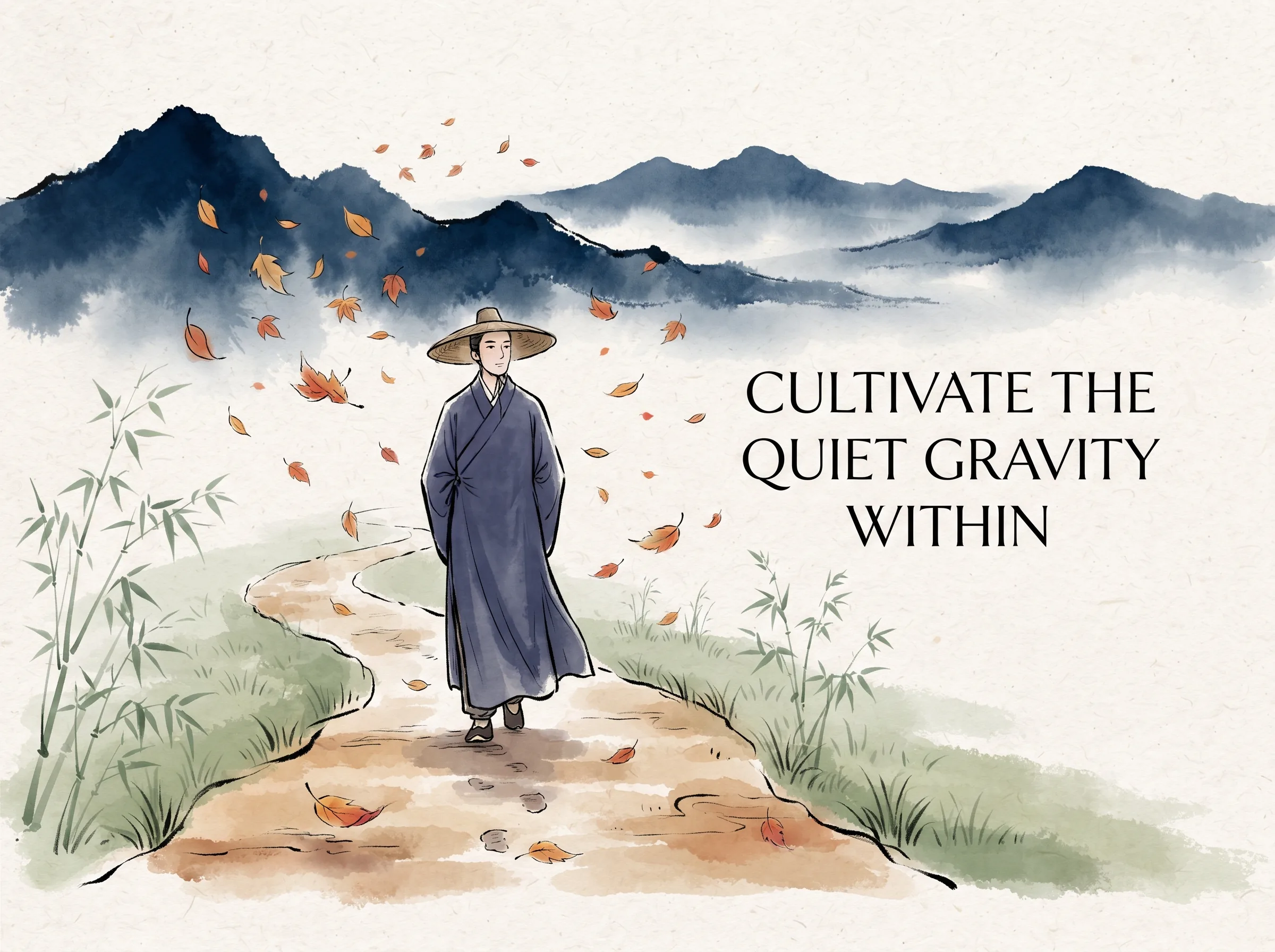
- Cultivation of calm. Practices such as walking in nature, keeping a reflective journal, or studying traditional arts can support a steadier inner rhythm.
- Attention to relationships. Investing in genuine connection rather than image management shifts the focus from being seen to being present.
These suggestions are not guarantees. They are directions of travel. Different people will find different paths. The underlying principle — that invisible presence matters more than visible form in the long run — is what the tradition emphasizes.
Social Media Angles
This topic lends itself naturally to several platforms:
- Instagram / Pinterest: A visual contrast between a youthful portrait with shallow presence and an older face with depth. Caption with the Duras observation.
- LinkedIn: A professional-angle post exploring how career longevity depends less on titles and credentials (形) and more on the energy and character one brings (象).
- X / Twitter thread: Five Chinese aesthetic concepts that reframe how we think about beauty, aging, and meaning.
- YouTube short: A concise walkthrough of the form and spirit (xíng / xiàng, 形/象) distinction with visual examples from Chinese poetry and art.
Some people grow more beautiful with age because beauty, understood deeply, is not a matter of surface alone. The Chinese tradition of distinguishing form (xíng, 形) from spirit (xiàng, 象) offers a vocabulary for this insight. Physical form ages; invisible presence can deepen. The question is not how to stop the former but how to nurture the latter.
If you found this perspective useful, consider exploring further readings on Chinese aesthetics and classical philosophy. Short reflections on aging, presence, and what makes a life compelling can be woven into future posts.
Cultivate quiet mindfulness in everyday living through the meditative tea ritual in How to Be Like a Good Cup of Tea: Ancient Chinese Wisdom for Modern Life.
Sources & Further Reading
[1] "A Man and a Woman, Say What You Like, They're Different": On Marguerite Duras — Confirms the opening of The Lover features a man expressing preference for the narrator's ravaged face over her youth.
[2] Zhang Ruoxu: Spring River on a Moonlit Night (春江花月夜) – Wikisource — Records the poem's attribution to Zhang Ruoxu (Tang dynasty) and included in the Yuefu Shiji and Complete Tang Poems (全唐诗).
[3] Ma Zhiyuan: Autumn Thoughts (天淨沙・秋思) – Classical Chinese Literature — Confirms Ma Zhiyuan's authorship and the opening lines of Autumn Thoughts.
[4] Wang Guowei: "Most Fleeting in Human Life" (最是人间留不住) Appreciation – Guwen Island — Confirms the line's origin in Wang Guowei's ci poem the ci poem Butterflies Lingering Over Flowers (蝶恋花) rather than Renjian Cihua (人间词话).
Further Reading
- Transcript from Bilibili video: Chinese Aesthetics Discovery, Ep. 06 by Li Xiaoyu (李小鱼) — Background reference on the form/spirit (xíng / xiàng, 形/象) framework (unverified; not cited as authoritative source).
- Laozi's Daodejing — Classical text referenced for the concept of "the great image has no form" (dà xiàng wú xíng, 大象无形); specific chapter attributions are debated in scholarly literature and were not independently verified in this article.
- Buddhist sayings on one flower containing one world — Attributed to broader Buddhist tradition; exact textual origins vary across sources.






