
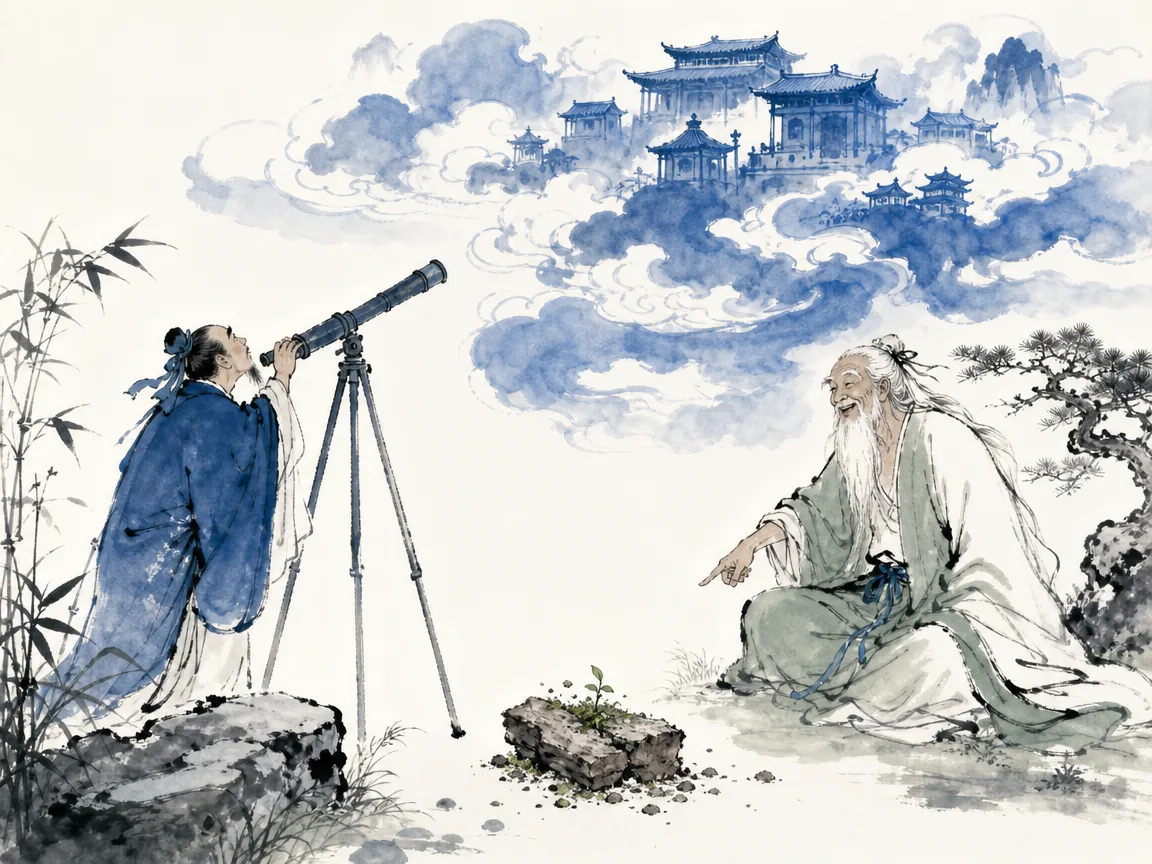
We live in an age of optimization. Self-help books, productivity systems, retreats, affirmations, and digital courses all share a quiet assumption: fulfillment lives somewhere else. You just haven't found it yet. Change your job. Deepen your meditation practice. Read the right book. Meet the right person. Reach the right state. The message is always the same—something more awaits just beyond your current horizon.
But what if the very habit of searching is the problem? This principle is central to Zhuangzi Chapter 22 Meaning.
Over two thousand years ago, a Chinese thinker named Zhuangzi posed a question that cuts straight through this restless drive. His answer was not subtle. The Dao—the fundamental pattern and source from which all things arise—is not hidden in distant mountains, rare experiences, or elevated states of consciousness. It is already here. Already woven into the ordinary world you walk through every day. The barrier is not that the Dao is far away. The barrier is that we have trained ourselves not to see it.
This idea is not easy to accept, because modern life has made us experts at looking past what is in front of us. We are taught to filter reality—accepting only the beautiful, curated, productive versions of existence while dismissing the mundane, the messy, the unfinished. Zhuangzi would likely call this a form of blindness. Not ignorance. A refusal to see.
Zhuangzi Chapter 22 Meaning: Why We Keep Looking Elsewhere
One of the most striking images in the Zhuangzi text is a figure simply called "Zhi"—which can mean knowledge, awareness, or the intellect itself. Zhi travels northward, asking question after question, seeking the Dao from one teacher to the next. On the surface, this is a story about a seeker. But read more closely, it is also a portrait of the modern mind: restless, striving, convinced that understanding lies just beyond the next mile.
The paradox Zhuangzi reveals is this. The more actively you search for the Dao, the more it slips away. Not because it is elusive by nature. But because the act of searching assumes absence. Every time you say, "I need to find something I do not yet have," you reinforce the belief that what you seek is elsewhere. You train yourself to look past the present moment, past the ordinary world, past the very ground you stand on.
This is not a new problem. It is perhaps the defining problem of our time. We scroll through feeds of other people's lives, hoping to catch a glimpse of meaning we feel we are missing. We consume content about purpose, presence, and inner peace while rarely sitting still long enough to notice what is already happening. We treat wisdom as a commodity to be acquired rather than a way of seeing to be awakened to.
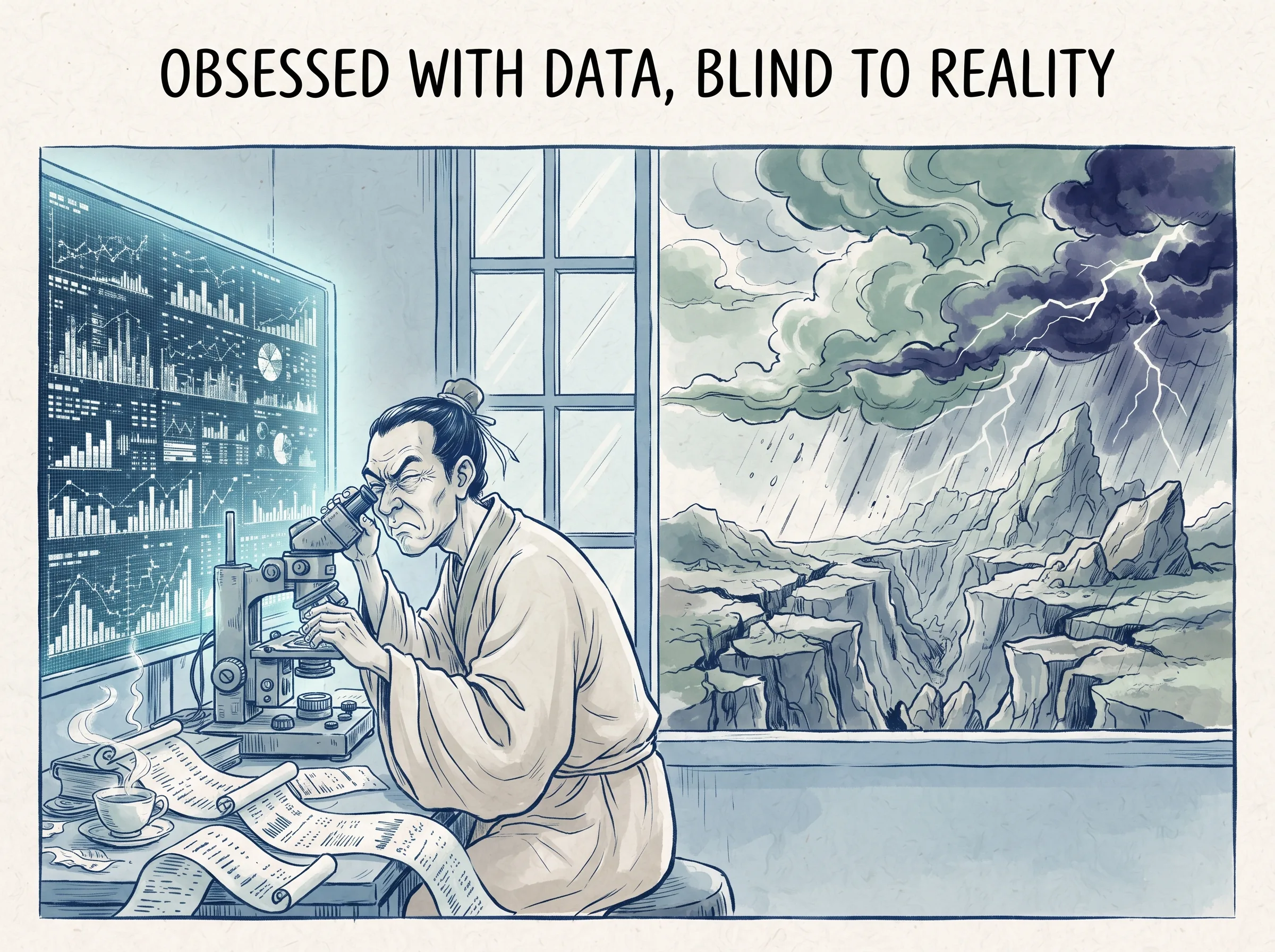
Zhuangzi does not dismiss the search outright. He questions the direction. If the Dao is already present—in everything, without exception—then northward travel may be the wrong metaphor. What if the real journey is simply learning to stop running?
Continue with the deeper interpretation and practical application.
ChiDestiny members get access to the full analysis, modern applications, and the growing Chinese Wisdom Library.
FAQ
Is the Zhuangzi text saying we should stop trying to improve ourselves? No. The text critiques a specific kind of striving—one that assumes fulfillment is always elsewhere and that the present moment is insufficient. Self-improvement becomes problematic when it is rooted in rejection of who you are right now. The alternative is not stagnation. It is engagement grounded in acceptance rather than lack.
Does this mean everything is equally meaningful? Not in the sense that all experiences feel equally pleasant. Pain, loss, and difficulty are real. The claim is narrower: the Dao—the underlying pattern of reality—is not absent from any of it. Meaning is not reserved for the beautiful or successful. It is available in the whole of experience, including what we would rather avoid.
Can this perspective coexist with ambition and goals? Yes. The text warns against the assumption that happiness depends on external conditions. It does not say goals are worthless. It asks whether your sense of worth is tied exclusively to achieving them. You can pursue outcomes while recognizing that your grounding is already here, independent of results.
How is this different from positive thinking or toxic optimism? Toxic optimism tells you to replace negative feelings with positive ones. It denies the full range of human experience. The Zhuangzi teaching does the opposite—it invites you to meet reality as it is, including difficulty, without immediately trying to fix or reframe it. The goal is clarity, not cheerfulness.
The search for meaning is not a mistake. It is one of the most human instincts we have. But the direction of the search matters. If meaning is already present—in the ordinary, in the imperfect, in the very moments we are inclined to rush through—then the most powerful shift may be the simplest one: stop looking elsewhere and learn to see what is already here.
You do not need to travel north to find it. You do not need to wait for the right conditions. Start where you are. Look at what you have been dismissing. The Dao does not ask for your perfection. It asks only for your attention, reflecting the enduring wisdom of Zhuangzi Chapter 22 Meaning.
To explore these themes from another angle, read our related reflection on Beyond Good Intentions: Zhuangzi’s Warning About Who Gets to Decide What’s Better.
For a deeper comparative examination of these ideas, explore our related study on Letting Go of the Fight: What the Zhuangzi’s Sword Teaching Says About True Strength.
Sources & Further Reading
[1] Zhuangzi — Stanford Encyclopedia of Philosophy. Academic overview of Zhuangzi's philosophy, textual debates regarding authorship of inner versus outer chapters, and key concepts including language and the Dao.
Further Reading
- Berman, Paul. The Game of Zhuangzi: A New Translation of the Zhuangzi with Commentary. An accessible English translation with extensive interpretive notes.
- Watson, Burton (trans.). Chuang Tzu: Basic Writings. A widely used translation of key Zhuangzi chapters, including selections from the outer and miscellaneous chapters.
- Ames, Roger T. and David L. Hall. Dao De Jing / Book of The Way. Companion volume offering context for classical Daoist thought alongside the Zhuangzi tradition.
- Cleary, Thomas (trans.). The Book of Zhuangzi. Complete translation of the full text with commentary drawing on both traditional and contemporary readings.






