
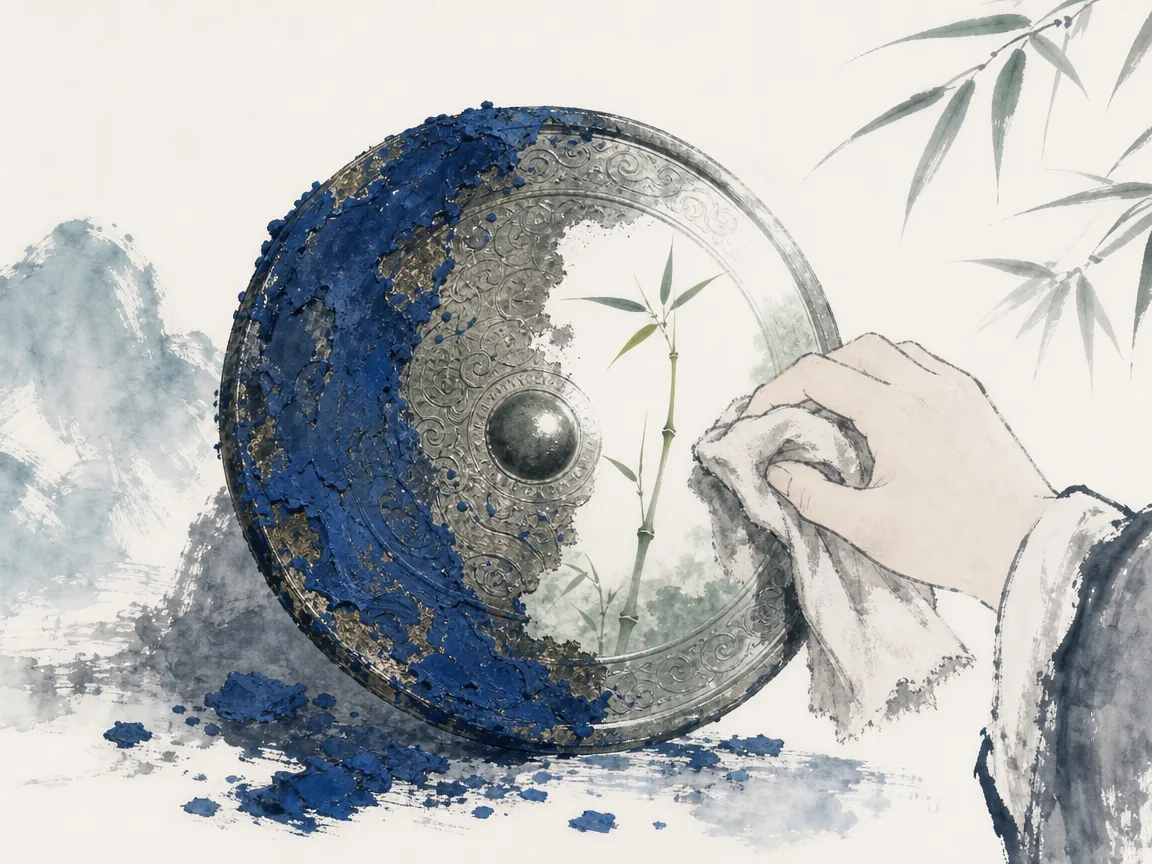
We feel anxious, so we consume more self-help content. We feel scattered, so we adopt tighter productivity systems. We feel empty, so we pursue more achievement. The modern promise is simple: if you just learn the right frameworks, optimize the right habits, and manage your time better, you will become someone whole. And yet the result often feels like the opposite—more techniques, more pressure, more ways to measure yourself against an ever-shifting standard, and less clarity about who you actually are beneath all of it.
Zhuangzi, writing more than two thousand years ago, diagnosed something strikingly similar in what is traditionally known as the chapter Shan Xing (缮性). He observed that people who feel damaged often try to repair themselves using the very tools that contributed to the damage: worldly learning, restless calculation, external validation, and performance. From his perspective, the problem is not that we lack enough; it is that we have allowed too much noise, comparison, and borrowed standard to crowd out what was already functioning. True cultivation, in this view, is not the construction of a better self. It is the recovery of a nature that has been buried—a foundational perspective explored in Zhuangzi Chapter 16 Meaning.
This is not an argument against effort, learning, or discipline. It is an argument about direction. If the self has been frayed by constant adaptation, more adaptation will not restore it. If relentless striving has exhausted the mind, striving more efficiently will not heal it. What Zhuangzi points toward is a different movement: not adding layers to a worn surface, but clearing what obscures the surface so that the original grain becomes visible again.
Zhuangzi Chapter 16 Meaning: Using More to Fix What More Broke
Modern culture treats growth as accumulation. The implicit model of the self is a machine that can be upgraded: add skills, subtract weaknesses, install routines, track metrics, and repeat. When something feels wrong, the default response is to acquire more—more information, more methods, more self-knowledge, more optimization.
But there is a structural problem with this approach when the source of the problem is also the proposed solution. If restlessness is generated by constant comparison, then filling the day with more comparison-managing techniques does not address the restlessness; it reproduces it in a slightly more sophisticated form. If the anxiety of falling behind comes from measuring yourself against external benchmarks, then mastering more productivity systems does not remove the benchmark—it merely gives you better tools to chase it.
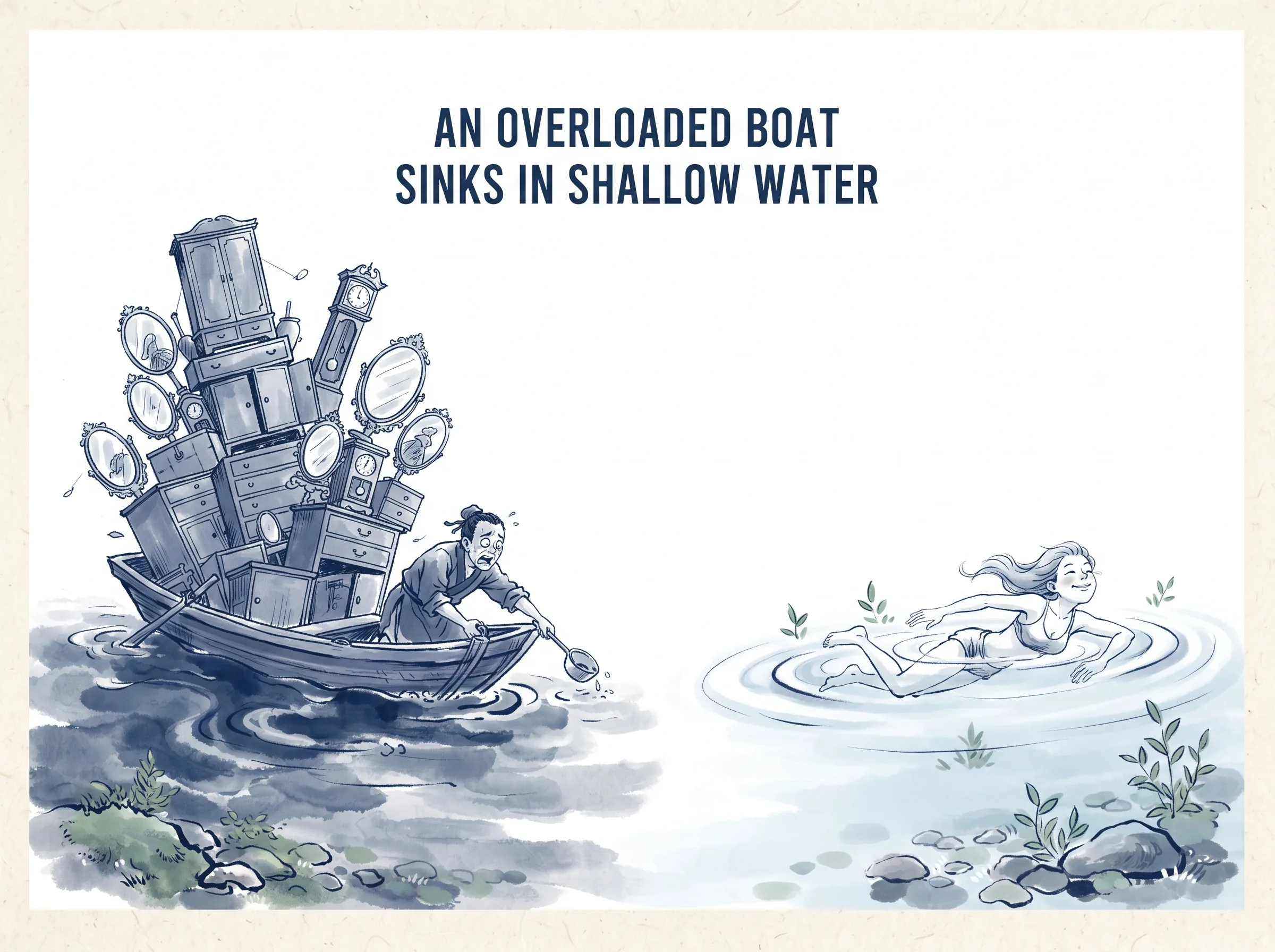
In the Shan Xing chapter, Zhuangzi describes people who try to mend their nature using secular learning and worldly thinking. The image he implies is not of someone building upward, but of someone wrapping more vines around a tree that is already weighed down and calling it growth. The remedy mirrors the cause. This pattern is one of the oldest and most overlooked cycles in the self-improvement tradition.
Continue with the deeper interpretation and practical application.
ChiDestiny members get access to the full analysis, modern applications, and the growing Chinese Wisdom Library.
FAQ
Is Zhuangzi saying we should stop learning and working? No. The concern is not knowledge or effort itself, but using external standards to overwrite inner clarity. Learning and work are compatible with this approach when they arise from discernment rather than from compulsion or performance.
How is this different from laziness or avoidance? Stillness without discernment can become escape. Zhuangzi describes a cycle in which tranquility nourishes wisdom and wisdom protects tranquility. The point is balanced cultivation, not the abandonment of engagement.
Can this apply to people who are already successful by conventional standards? Yes. The text is concerned with inner coherence, not external status. Success that rests on borrowed values can still be fragile. A clearer relationship to one's own nature tends to improve decision-making regardless of current achievement.
What should someone do if they feel too overwhelmed to practice stillness? Begin with micro-interventions: a few minutes of quiet breathing, a short walk without audio input, or a single deliberate pause before responding to messages. The goal is not to add another discipline, but to create small pockets where the nervous system can reset.
Conclusion: The Point Is Not Perfection—It Is Direction
The fatigue of modern self-improvement often comes not from working hard, but from working in the wrong direction. Adding more techniques to a scattered mind usually produces a more polished version of the same scatter. Zhuangzi's Shan Xing offers a different axis: recover the nature that has been buried, rather than building a new identity on top of it.
This does not require rejecting the world. It requires entering it without handing over your center. It asks you to notice when you are using more noise to solve a problem caused by noise, when you are optimizing a self that was never the issue, and when you are mistaking adaptation for growth.
If you want to go further, consider reading selected passages from the Zhuangzi, particularly chapters that explore nature, ease, and the limits of control. You may also find it useful to keep a simple weekly review in which you track not only what you accomplished, but what felt coherent and what felt forced. Over time, that distinction often becomes its own guide, reflecting the enduring wisdom of Zhuangzi Chapter 16 Meaning.
To explore these themes from another angle, read our related reflection on Letting Be: Why the Will to Control Is the Root of Modern Suffering (A Lesson from Zhuangzi’s Zai You).
For a deeper comparative examination of these ideas, explore our related study on Why Are We Exhausting Ourselves Performing Correctness? Zhuangzi’s Answer.
Sources & Further Reading
[1] A NOTE CONCERNING THE RELATIONSHIP BETWEEN "BUTCHER DING" AND "NOURISHING LIFE" IN THE TRADITIONAL ZHUANGZI COMMENTARIES — Early China, Cambridge Core — discusses traditional scholarly connections between the Cook Ding story and themes of nourishing life in the Zhuangzi.
[2] Zhuangzi — Stanford Encyclopedia of Philosophy (Spring 2026 Edition) — provides an overview of the Zhuangzi as a composite text with inner, outer, and miscellaneous chapters.
Further Reading
- Burton Watson, Chuang Tzu: Basic Writings — accessible translation and introduction to key Zhuangzi chapters.
- Robert Henricks, Chuang-tzu: The Inner Chapters — detailed translation and commentary focused on the core sections of the text.
- Zhuangzi (Chinese Text Project) — searchable parallel-text edition for readers who want to consult original passages.







[…] For a deeper comparative examination of these ideas, explore our related study on True Cultivation Is Not Adding—It’s Recovering: Zhuangzi’s Lost Art of Restoring Inbor…. […]