
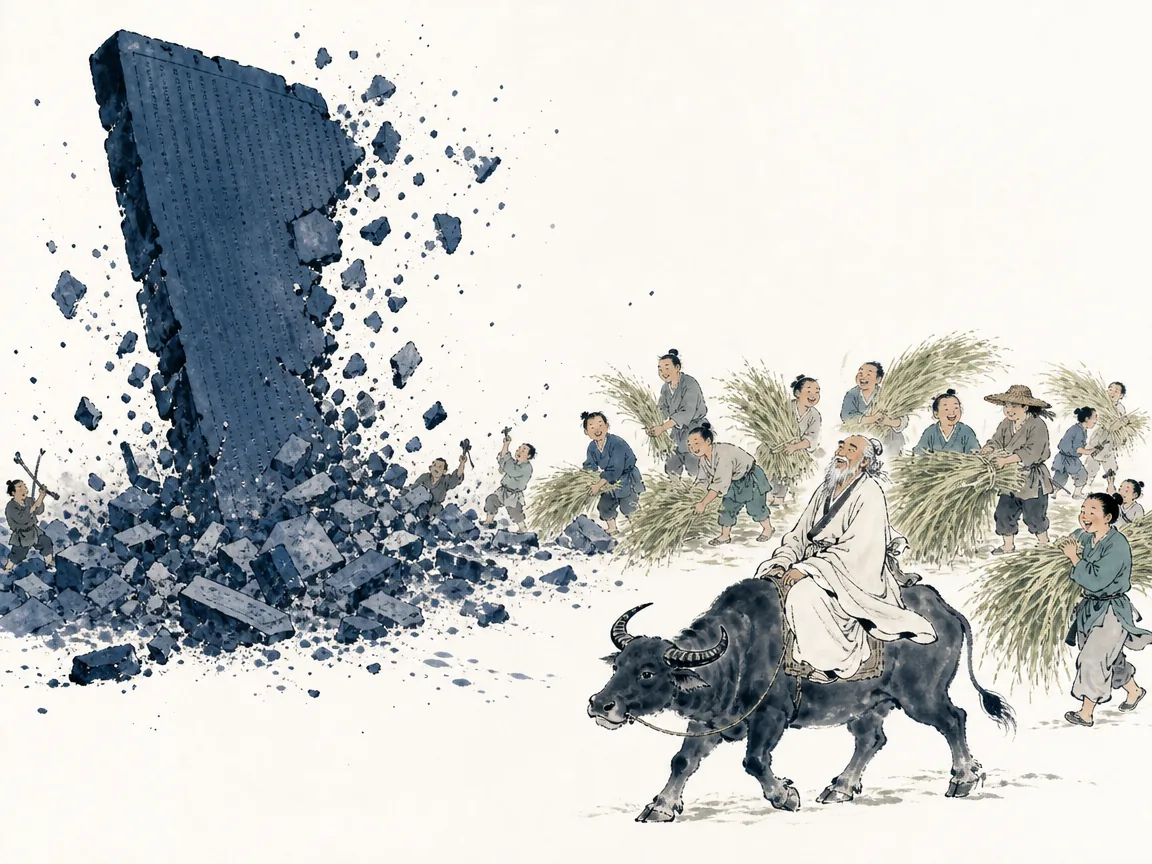
淳風章第五十七
Key Takeaway: "The more taboos and prohibitions there are, the poorer the people become. The more laws and orders are promulgated, the more thieves and bandits multiply." — Laozi, Daodejing Chapter 57
Govern a realm with integrity; command an army with surprise maneuvers; win the world through non-meddling. The more prohibitions exist, the poorer the people become; the more laws proliferate, the more bandits arise—a foundational perspective explored in Daodejing Chapter 57 Translation.
Daodejing Chapter 57 Translation: The Magic of Inaction
The wisdom of Daodejing Chapter 57 Translation addresses a fundamental human dynamic: how we navigate ambition, quietude, and the natural flow of existence. In the classical tradition, this passage serves as both a metaphysical mirror and a practical compass for daily living and leadership. Explore how this principle translates into contemporary daily life in our guide to Why Trying Harder to Control Everything Backfires — And What Ancient Wisdom Says Instead.
By shifting our focus from outer coercion to internal stillness, we uncover a more resilient way of relating to ourselves and the world around us.
Complete Chapter Translation: Modern Western Reading
“Kingdoms can only be governed if rules are kept; Battles can only be won if rules are broken.” But the adherence of all under heaven can only be won by letting-alone. How do I know that it is so?
By this. The more prohibitions there are, the more ritual avoidances, The poorer the people will be. The more “sharp weapons” there are, The more benighted will the whole land grow.
The more cunning craftsmen there are, The more pernicious contrivances will be invented. The more laws are promulgated, The more thieves and bandits there will be.
Therefore a sage has said: So long as I “do nothing” the people will of themselves be transformed. So long as I love quietude, the people will of themselves go straight. So long as I act only by inactivity the people will of themselves become prosperous.
So long as I have no wants the people will of themselves return to the “state of the Uncarved Block”.
道德经中文原文与对照
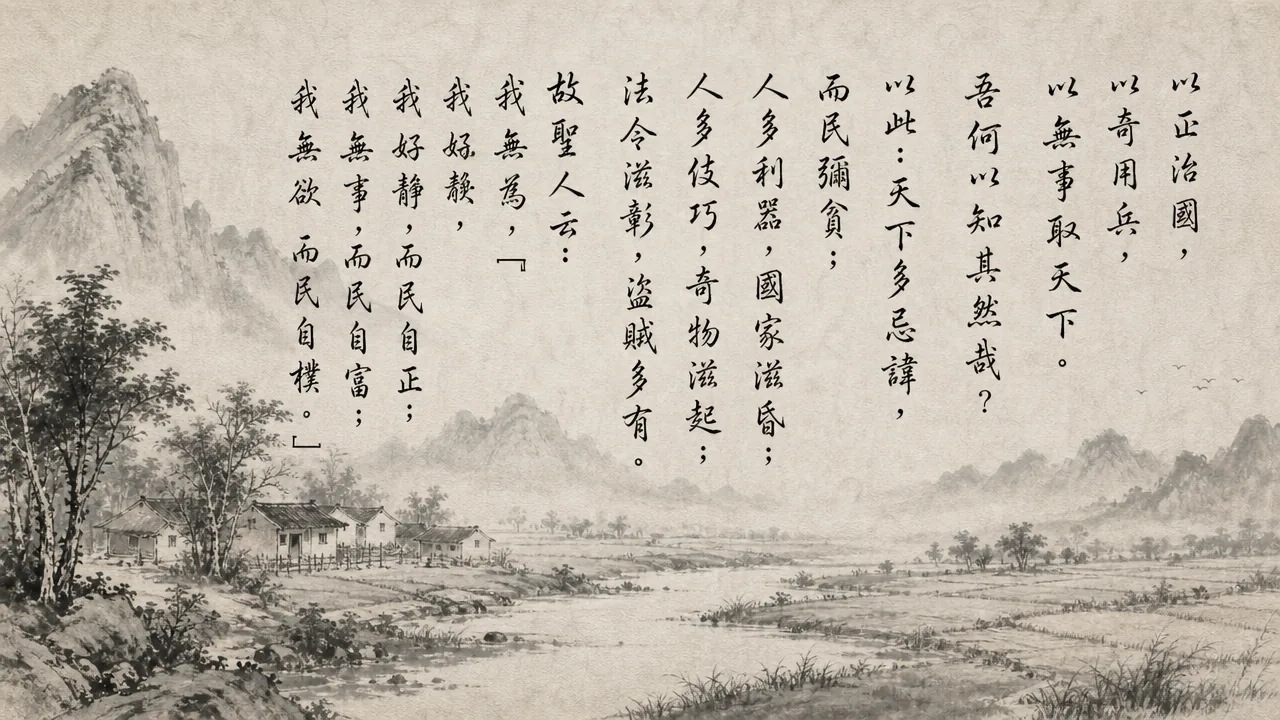
【原文】 以正治國,以奇用兵,以無事取天下。吾何以知其然哉?以此:天下多忌諱,而民彌貧;人多利器,國家滋昏;人多伎巧,奇物滋起;法令滋彰,盜賊多有。故聖人云:「我無爲,而民自化;我好靜,而民自正;我無事,而民自富;我無欲,而民自樸。」
核心要义解析 (Philosophical Insights)
- 道义发微:本章通过“淳風章第五十七”阐发了《道德经》的核心精髓。从“有”与“无”、“动”与“静”的辩证转化中,提醒我们在日用常行中摒弃过度的功利执念,回归纯粹本真的生命状态。
- 现代启示:当外界喧嚣与评判标准不断施加压力时,保持内心的虚静与不争,反而是最强大的定力与智慧。
Follow the sequential development of the text in Laozi’s next philosophical movement in Flowing with Transformation: Misfortune Leaning on Blessing.
For a deeper comparative examination of these ideas, explore our related study on The Three Treasures: Compassion, Frugality, and Not Daring to Be First.






