
養德章第五十一
Key Takeaway: "The Tao gives them life; Virtue nurtures them. To produce without possessing, to rear without controlling—this is called Mysterious Virtue." — Laozi, Daodejing Chapter 51
The Tao gives birth to them; Virtue nurtures them; matter shapes them; environment completes them. Therefore, all creatures revere the Tao and honor Virtue without coercion, resting in natural harmony—a foundational perspective explored in Daodejing Chapter 51 Translation.
Daodejing Chapter 51 Translation: The Unfathomable Mysterious Power
The wisdom of Daodejing Chapter 51 Translation addresses a fundamental human dynamic: how we navigate ambition, quietude, and the natural flow of existence. In the classical tradition, this passage serves as both a metaphysical mirror and a practical compass for daily living and leadership. Explore how this principle translates into contemporary daily life in our guide to Why True Nurturing Never Claims Ownership.
By shifting our focus from outer coercion to internal stillness, we uncover a more resilient way of relating to ourselves and the world around us.
Complete Chapter Translation: Modern Western Reading
Tao gave them birth; The “power” of Tao reared them, Shaped them according to their kinds, Perfected them, giving to each its strength.
Therefore of the ten thousand things there is not one that does not worship Tao and do homage to its “power”. No mandate ever went forth that accorded to Tao the right to be worshipped, nor to its “power” the right to be worshipped, nor to its “power” the right to receive homage. It was always and of itself so. Therefore as Tao bore them and the “power” of Tao reared them, made them grow, fostered them, harboured them, brewed for them, so you must Rear them, but not lay claim to them, Control them, but never lean upon them, Be chief among them, but not manage them.
This is called the mysterious power.”
道德经中文原文与对照
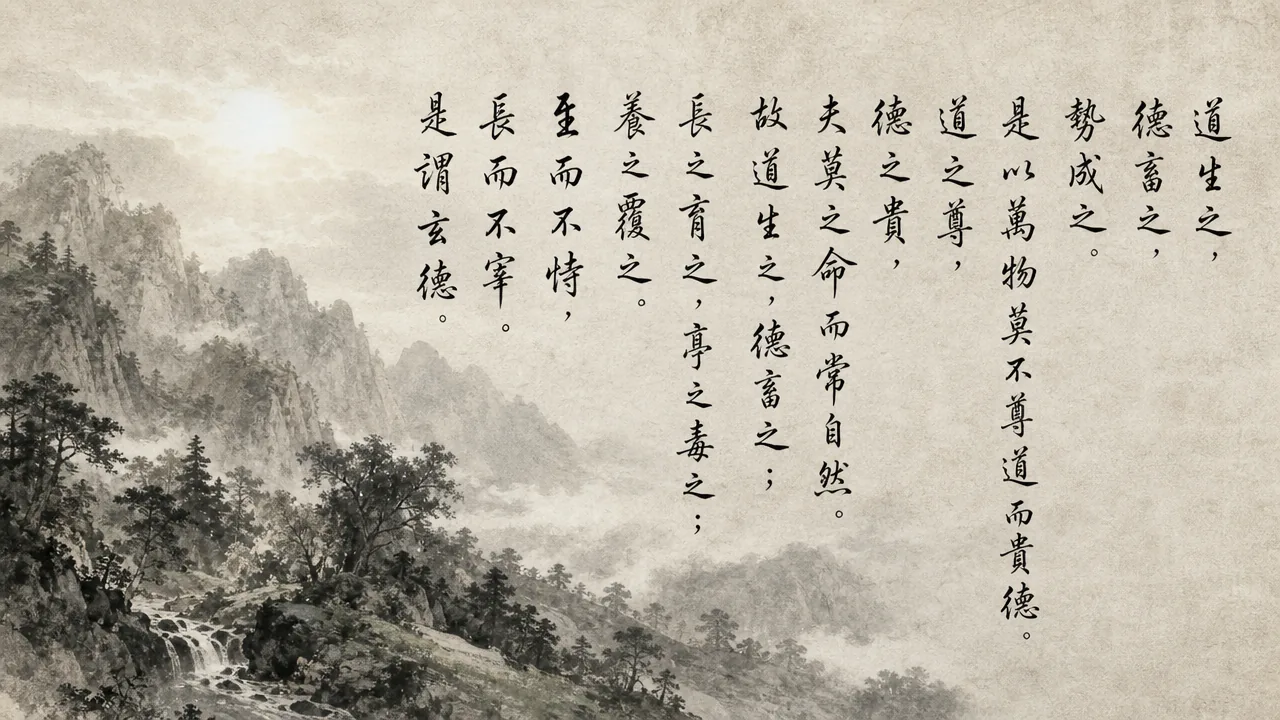
【原文】 道生之,德畜之,物形之,勢成之。是以萬物莫不尊道而貴德。道之尊,德之貴,夫莫之命而常自然。故道生之,德畜之;長之育之;亭之毒之;養之覆之。生而不有,爲而不恃,長而不宰。是謂玄德。
核心要义解析 (Philosophical Insights)
- 道义发微:本章通过“養德章第五十一”阐发了《道德经》的核心精髓。从“有”与“无”、“动”与“静”的辩证转化中,提醒我们在日用常行中摒弃过度的功利执念,回归纯粹本真的生命状态。
- 现代启示:当外界喧嚣与评判标准不断施加压力时,保持内心的虚静与不争,反而是最强大的定力与智慧。
Follow the sequential development of the text in Laozi’s next philosophical movement in Returning to the Source: Knowing the Children by Holding Fast to the Mother.
For a deeper comparative examination of these ideas, explore our related study on Pure Virtue: The Ancient Masters Who Fostered Genuine Simplicity.






