
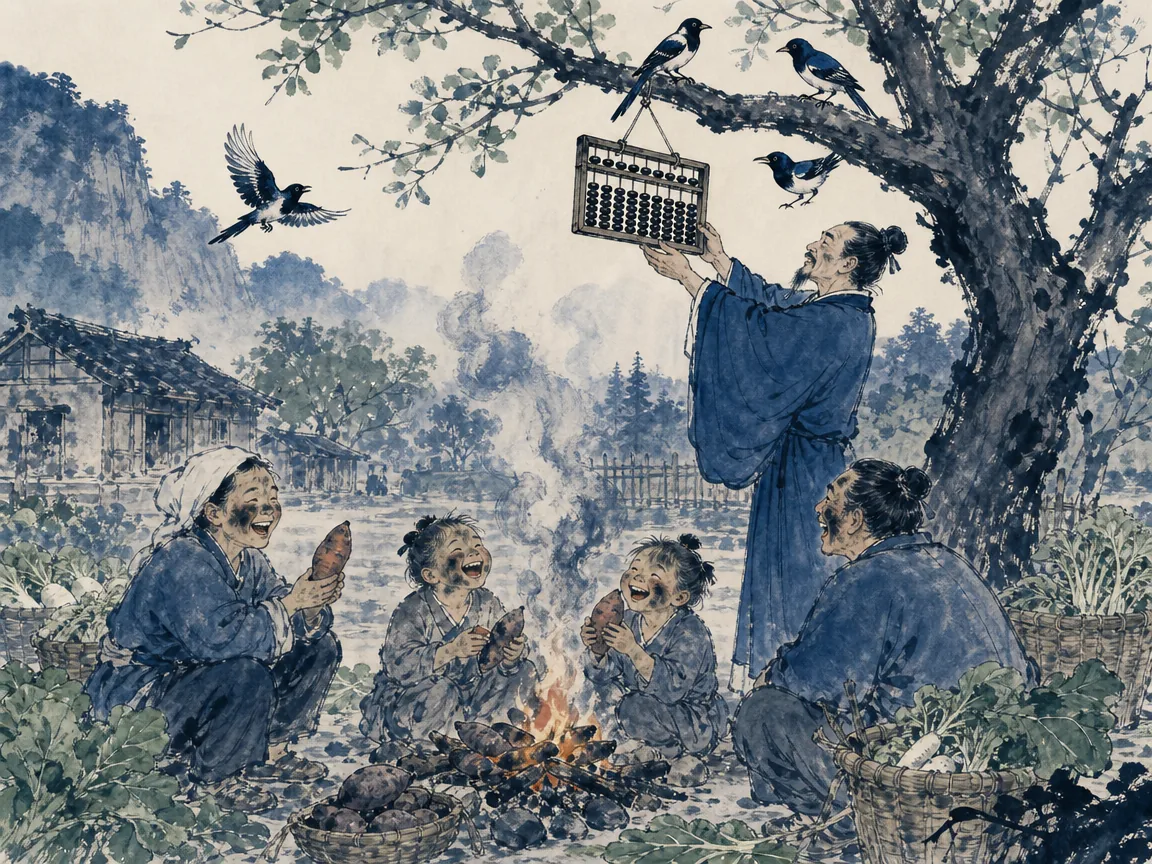
淳德章第六十五
Key Takeaway: "Those of ancient times who were skilled in the Tao did not use it to enlighten people, but to keep them simple." — Laozi, Daodejing Chapter 65
Ancient practitioners of the Tao did not use it to make people craftily sophisticated, but to keep them genuine and simple. Governing by calculating cleverness breeds trouble; governing by simplicity brings blessing—a foundational perspective explored in Daodejing Chapter 65.
Daodejing Chapter 65: Aligning with the Profound Flow of Nature
The wisdom of Chapter 65 addresses a fundamental human dynamic: how we navigate ambition, quietude, and the natural flow of existence. In the classical tradition, this passage serves as both a metaphysical mirror and a practical compass for daily living and leadership. Follow the sequential development of the text in Laozi’s next philosophical movement in Placing Oneself Behind: How Rivers and Seas Become Kings of the Valleys.
By shifting our focus from outer coercion to internal stillness, we uncover a more resilient way of relating to ourselves and the world around us.
Complete Chapter Translation: Modern Western Reading
In the days of old those who practiced Tao with success did not, by means of it, enlighten the people, but on the contrary sought to make them ignorant. The more knowledge people have, the harder they are to rule. Those who seek to rule by giving knowledge Are like bandits preying on the land.
Those who rule without giving knowledge Bring a stock of good fortune to the land. To have understood the difference between these who things is to have a test and standard To be always able to apply this test and standard Is called the mysterious “power”, so deep-penetrating, So far-reaching, That can follow things back — All the way back to the Great Concordance.
道德经中文原文与对照
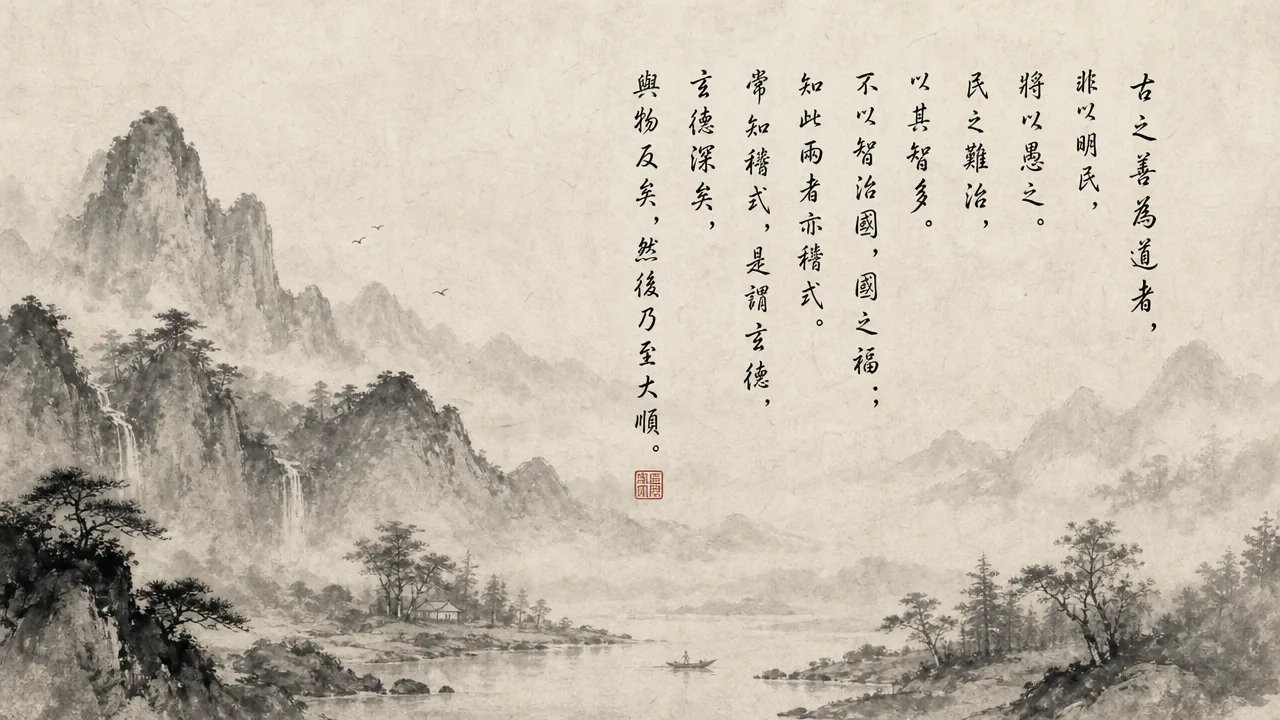
【原文】 古之善爲道者,非以明民,將以愚之。民之難治,以其智多。故以智治國,國之賊;不以智治國,國之福。知此兩者亦稽式。常知稽式,是謂玄德。玄德深矣,遠矣,與物反矣,然後乃至大順。
核心要义解析 (Philosophical Insights)
- 道义发微:本章通过“淳德章第六十五”阐发了《道德经》的核心精髓。从“有”与“无”、“动”与“静”的辩证转化中,提醒我们在日用常行中摒弃过度的功利执念,回归纯粹本真的生命状态。
- 现代启示:当外界喧嚣与评判标准不断施加压力时,保持内心的虚静与不争,反而是最强大的定力与智慧。
To explore these themes from another angle, read our related reflection on The Deepest Strength: Why Laozi’s Chapter 4 Is the Antidote to Modern Burnout.
For a deeper comparative examination of these ideas, explore our related study on Trusting the Watercourse: Nothing Is Softer and More Yielding Than Water.






