
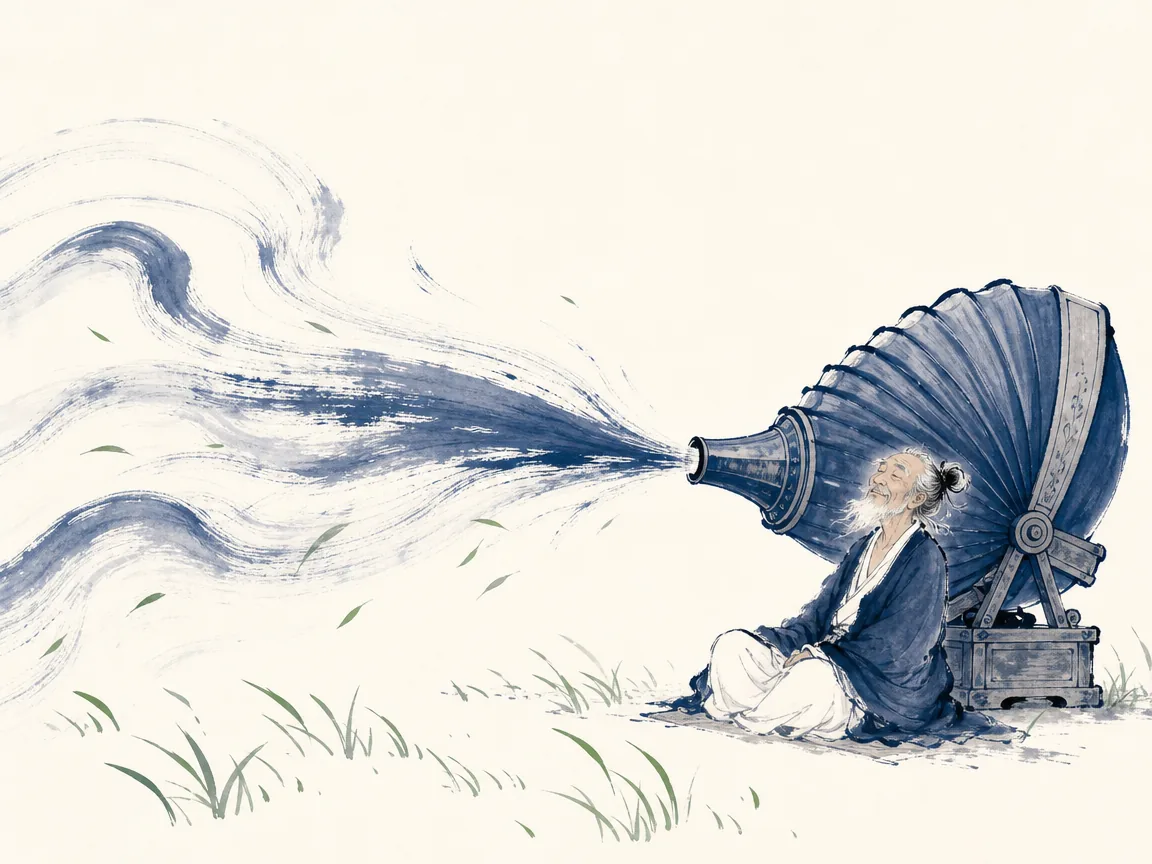
虛用章第五
Key Takeaway: "Heaven and Earth are ruthless; they see the ten thousand things as straw dogs." — Laozi, Daodejing Chapter 5
Heaven and Earth do not indulge in personal favoritism; they treat the myriad things with unbiased naturalness. Like a blacksmith's bellows, the universe remains hollow yet endlessly productive when moved—a foundational perspective explored in Daodejing Chapter 5 Translation.
Daodejing Chapter 5 Translation: Holding to the Quiet Center
The wisdom of Daodejing Chapter 5 Translation addresses a fundamental human dynamic: how we navigate ambition, quietude, and the natural flow of existence. In the classical tradition, this passage serves as both a metaphysical mirror and a practical compass for daily living and leadership. Explore how this principle translates into contemporary daily life in our guide to Why the Best Leaders Don’t Play Favorites — Ancient Wisdom for Modern Life.
By shifting our focus from outer coercion to internal stillness, we uncover a more resilient way of relating to ourselves and the world around us.
Complete Chapter Translation: Modern Western Reading
Heaven and Earth are ruthless; To them the Ten Thousand things are but as straw dogs. The Sage too is ruthless; To him the people are but as straw dogs.
Yet Heaven and Earth and all that lies between Is like a bellows In that it is empty, but gives a supply that never fails. Work it, and more comes out.
Whereas the force of words is soon spent. Far better is it to keep what is in the heart.
道德经中文原文与对照
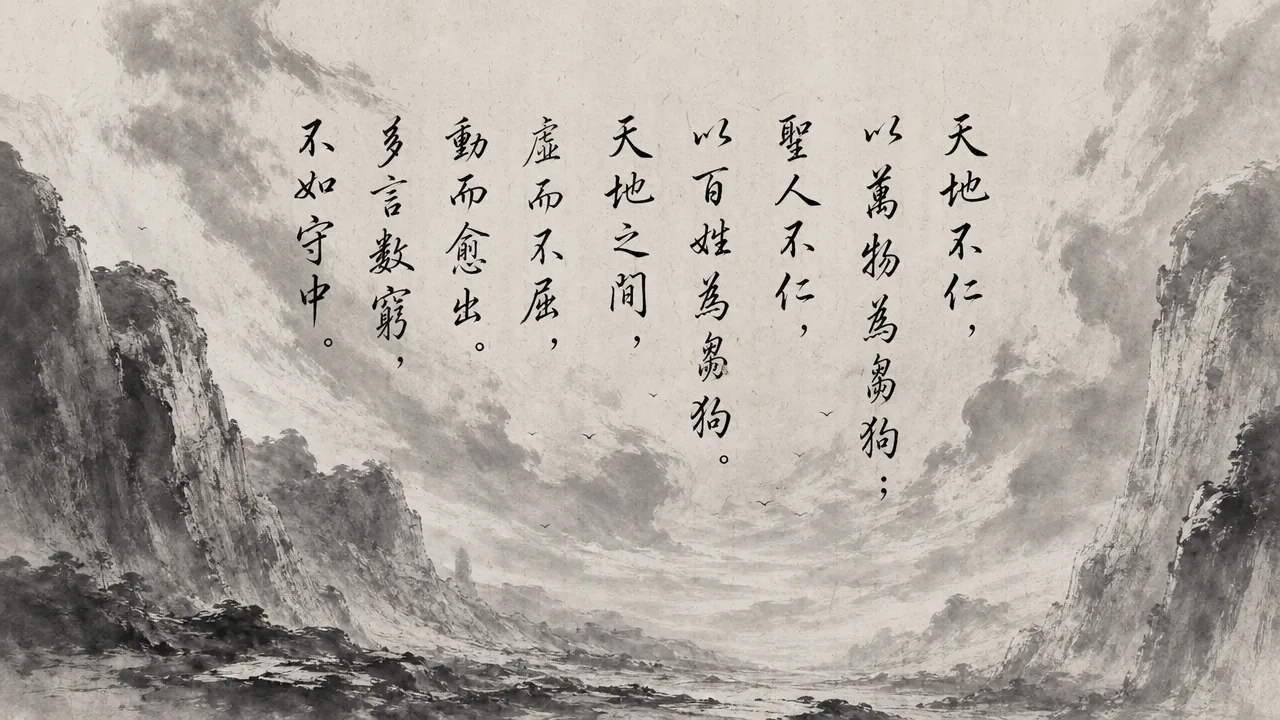
【原文】 天地不仁,以萬物爲芻狗;聖人不仁,以百姓爲芻狗。天地之間,其猶橐龠乎?虛而不屈,動而愈出。多言數窮,不如守中。
核心要义解析 (Philosophical Insights)
- 道义发微:本章通过“虛用章第五”阐发了《道德经》的核心精髓。从“有”与“无”、“动”与“静”的辩证转化中,提醒我们在日用常行中摒弃过度的功利执念,回归纯粹本真的生命状态。
- 现代启示:当外界喧嚣与评判标准不断施加压力时,保持内心的虚静与不争,反而是最强大的定力与智慧。
Follow the sequential development of the text in Laozi’s next philosophical movement in The Formation of Form: The Valley Spirit and the Primal Mother.
For a deeper comparative examination of these ideas, explore our related study on The Primal Archetype: The Tao Modeling Itself on Nature.







[…] Follow the sequential development of the text in Laozi’s next philosophical movement in The Function of Emptiness: The Cosmic Bellows and Impartial Care. […]
[…] For a deeper comparative examination of these ideas, explore our related study on The Function of Emptiness: The Cosmic Bellows and Impartial Care. […]