
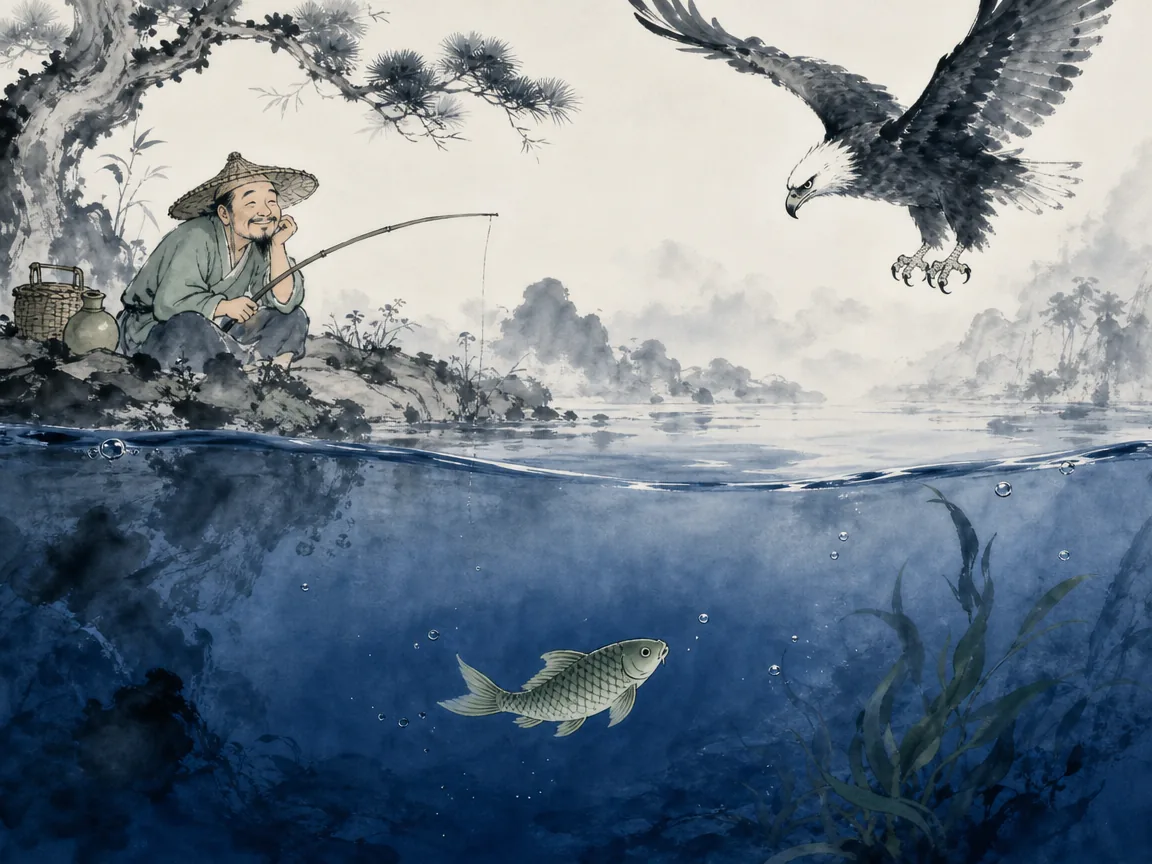
微明章第三十六
Key Takeaway: "The soft and yielding overcomes the hard and strong." — Laozi, Daodejing Chapter 36
That which is destined to shrink must first be allowed to expand; that which is to be weakened must first be strengthened. Fish must not leave the deep water; state weapons must not be paraded openly—a foundational perspective explored in Daodejing Chapter 36 Translation.
Daodejing Chapter 36 Translation: The Paradoxical Law of Reversal
The wisdom of Daodejing Chapter 36 Translation addresses a fundamental human dynamic: how we navigate ambition, quietude, and the natural flow of existence. In the classical tradition, this passage serves as both a metaphysical mirror and a practical compass for daily living and leadership. Explore how this principle translates into contemporary daily life in our guide to When You Feel Strongest, You May Be Weakest: Ancient Wisdom for Seeing Change Early.
By shifting our focus from outer coercion to internal stillness, we uncover a more resilient way of relating to ourselves and the world around us.
Complete Chapter Translation: Modern Western Reading
What is in the end to be shrunk Must first be stretched. Whatever is to be weakened Must begin by being made strong.
What is to be overthrown Must begin by being set up. He who would be a taker Must begin as a giver.
This is called “dimming” one's light. It is thus that the soft overcomes the hard And the weak, the strong. “It is best to leave the fish down in his pool; Best to leave the State's sharpest weapons wherenone can see them.”
道德经中文原文与对照
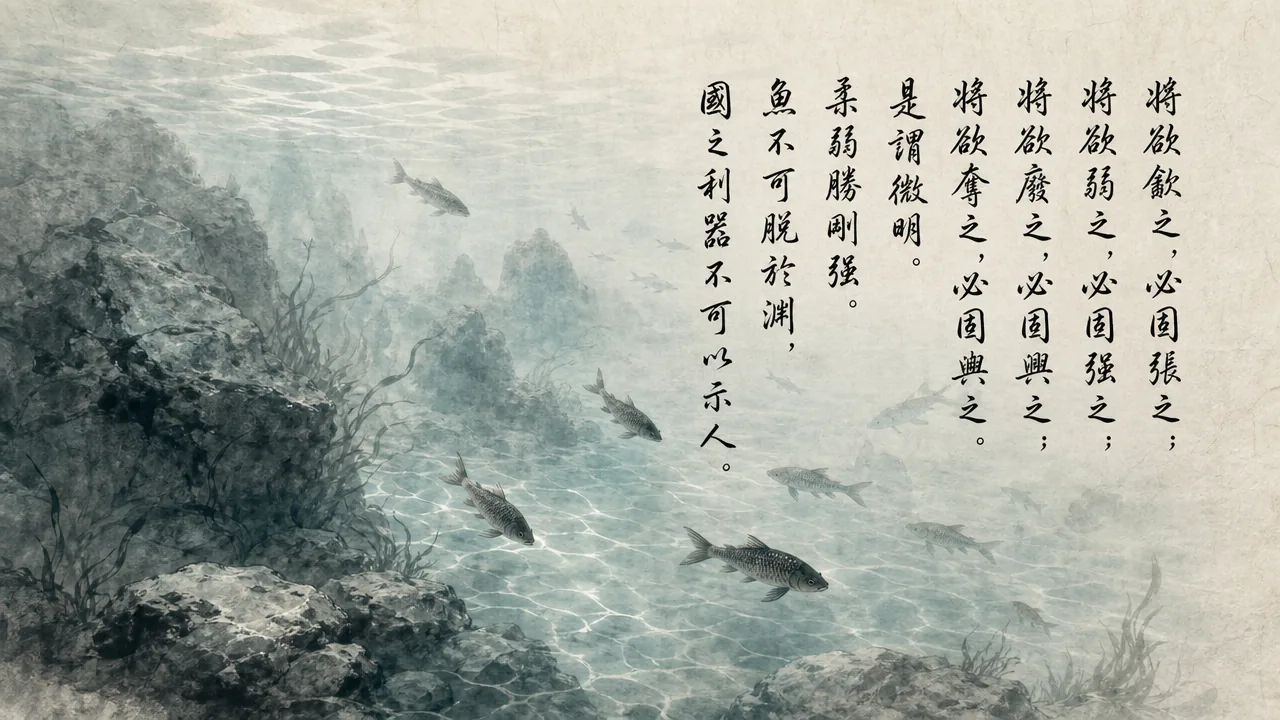
【原文】 將欲歙之,必固張之;將欲弱之,必固強之;將欲廢之,必固興之;將欲奪之,必固與之。是謂微明。柔弱勝剛強。魚不可脫於淵,國之利器不可以示人。
核心要义解析 (Philosophical Insights)
- 道义发微:本章通过“微明章第三十六”阐发了《道德经》的核心精髓。从“有”与“无”、“动”与“静”的辩证转化中,提醒我们在日用常行中摒弃过度的功利执念,回归纯粹本真的生命状态。
- 现代启示:当外界喧嚣与评判标准不断施加压力时,保持内心的虚静与不争,反而是最强大的定力与智慧。
Follow the sequential development of the text in Laozi’s next philosophical movement in Governing Through Stillness: The Tao Never Acts, Yet Leaves Nothing Undone.
For a deeper comparative examination of these ideas, explore our related study on Praising the Mysterious: The Formless Form and the Invisible Continuum.






