
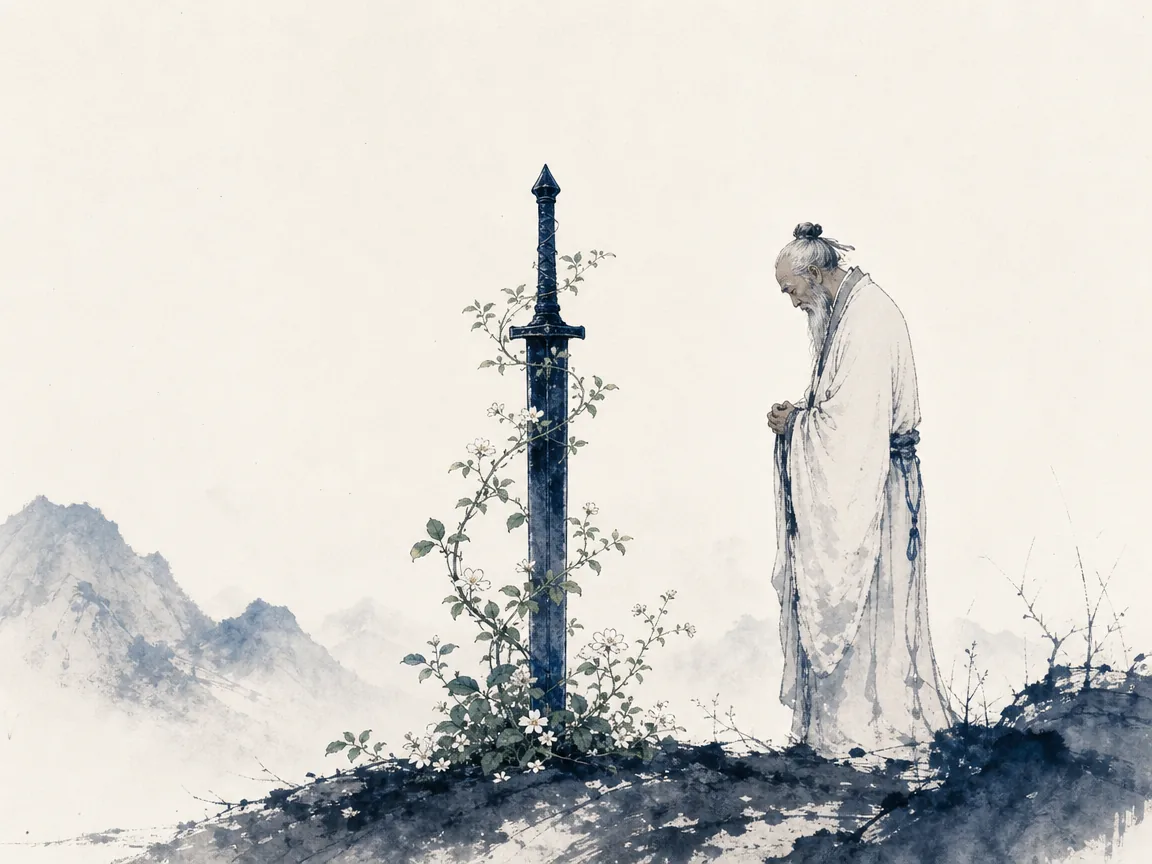
偃武章第三十一
Key Takeaway: "Weapons are instruments of ill omen, not tools of a noble person. He uses them only when compelled, holding tranquility highest." — Laozi, Daodejing Chapter 31
Fine weapons are instruments of ill omen, detested by living beings. When compelled to wield them, calm detachment is supreme. Victory achieved through violence is observed with the solemnity of funeral rites—a foundational perspective explored in Daodejing Chapter 31 Translation.
Daodejing Chapter 31 Translation: The Ethos of Tranquil Restraint
The wisdom of Daodejing Chapter 31 Translation addresses a fundamental human dynamic: how we navigate ambition, quietude, and the natural flow of existence. In the classical tradition, this passage serves as both a metaphysical mirror and a practical compass for daily living and leadership. Explore how this principle translates into contemporary daily life in our guide to Should You Celebrate Victory? Laozi’s Radical Answer.
By shifting our focus from outer coercion to internal stillness, we uncover a more resilient way of relating to ourselves and the world around us.
Complete Chapter Translation: Modern Western Reading
Fine weapons are none the less ill-omened things. (people despise them, therefore, those in possession of the Tao do not depend on them.) That is why, among people of good birth, in peace the left-hand side is the place of honour, but in war this is reversed and the right-hand side is the place of honour. (Weapons are ill-omened things, which the superior man should not depend on. When he has no choice but to use them, the best attitude is to retain tranquil and peaceful.) The Quietist, even when he conquers, does not regard weapons as lovely things. For to think them lovely means to delight in them, and to delight in them means to delight in the slaughter of men. And he who delights in the slaughter of men will never get what he looks for out of those that dwell under heaven. (Thus in happy events, the left-hand side is the place of honour, in grief and mourning, the right-hand is the place of honour. The lieutenant general stands on the left, while the supreme general stands on the right, which is arranged on the rites of mourning.) A host that has slain men is received with grief and mourning; one who has conquered in battle is received with rites of mourning.
道德经中文原文与对照
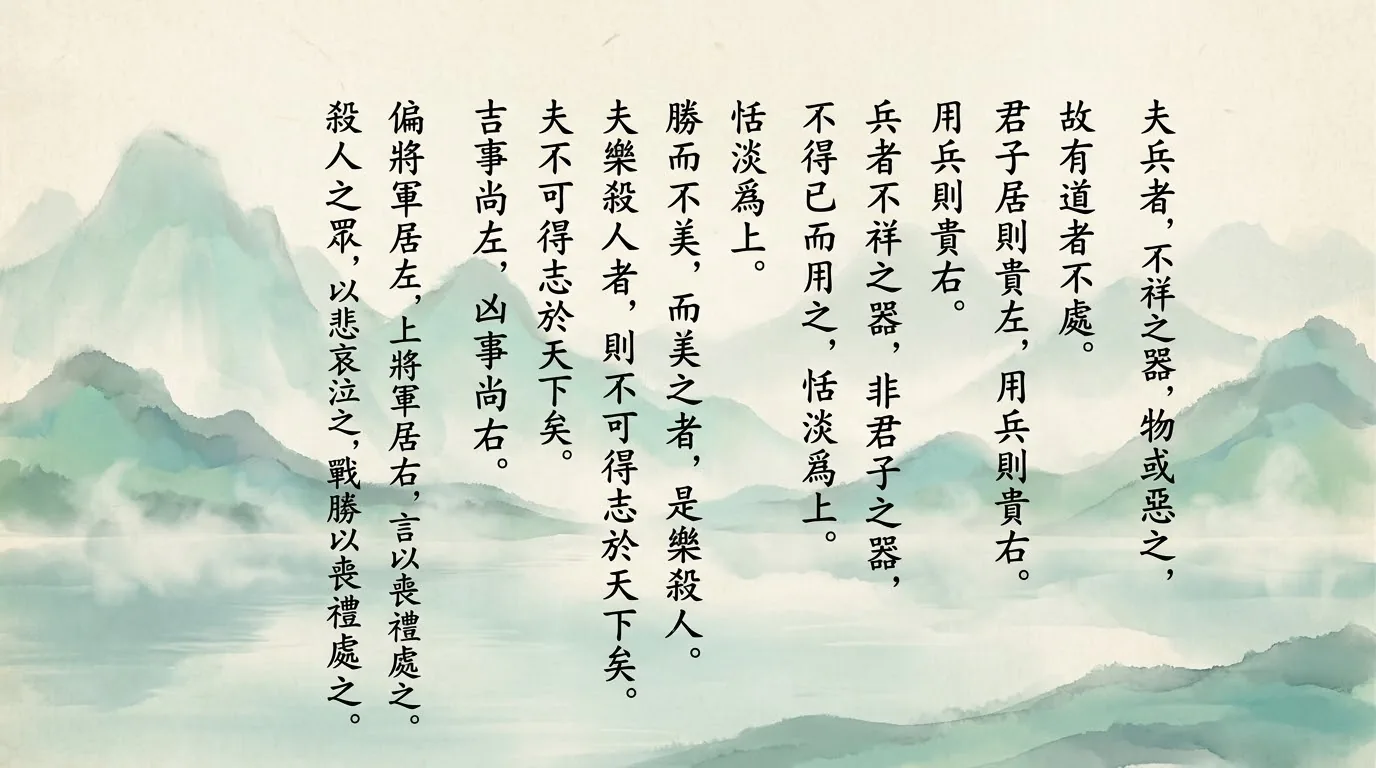
【原文】 夫兵者,不祥之器,物或惡之,故有道者不處。君子居則貴左,用兵則貴右。兵者不祥之器,非君子之器,不得已而用之,恬淡爲上。勝而不美,而美之者,是樂殺人。夫樂殺人者,則不可得志於天下矣。吉事尚左,凶事尚右。偏將軍居左,上將軍居右,言以喪禮處之。殺人之眾,以悲哀泣之,戰勝以喪禮處之。
核心要义解析 (Philosophical Insights)
- 道义发微:本章通过“偃武章第三十一”阐发了《道德经》的核心精髓。从“有”与“无”、“动”与“静”的辩证转化中,提醒我们在日用常行中摒弃过度的功利执念,回归纯粹本真的生命状态。
- 现代启示:当外界喧嚣与评判标准不断施加压力时,保持内心的虚静与不争,反而是最强大的定力与智慧。
Follow the sequential development of the text in Laozi’s next philosophical movement in Sacred Virtue: The Nameless Uncarved Block That Sweet Dew Obeys.
For a deeper comparative examination of these ideas, explore our related study on The Way of Heaven: Wheelwright Bian and the Book of Dead Men’s Dregs.






