
Laozi Chapter 14 Meaning: Seeing What Isn't There
We live in an age of visibility. Every success is filmed, every failure is performed, every anxiety is posted. When someone succeeds, we confidently reduce it to a method. When someone fails, we blame one choice. When a trend rises, we think we understand its cause. We are trained to judge the world by what appears, and to treat surface results as if they were the whole story.
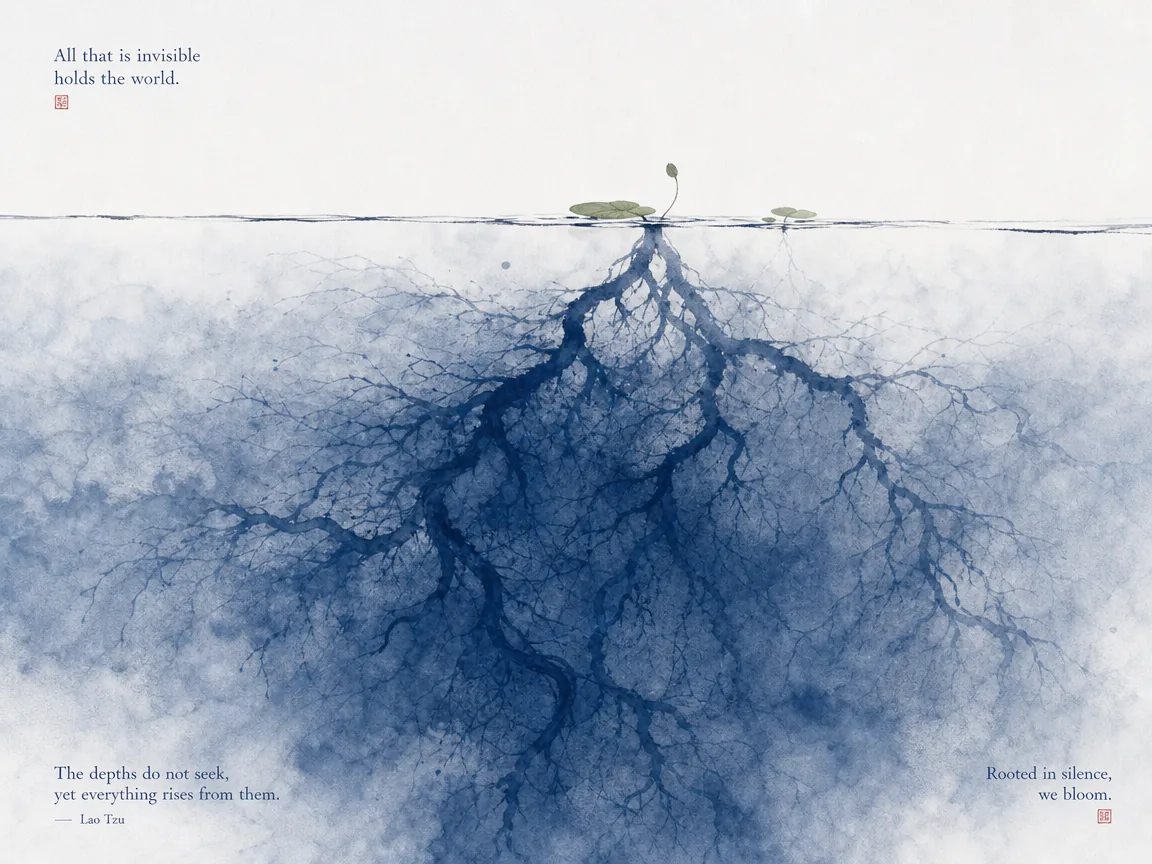
But the deepest patterns shaping our lives—our relationships, our struggles, our sense of direction, even the events we call sudden—rarely announce themselves clearly to the senses. Look at a person's current crisis and you see the breakdown. Look at a person's success and you see the achievement. What you do not see are the years of invisible processes that led to either: cognitive habits, emotional patterns, accumulated choices, belief systems, the slow shape of a life forming beneath the visible surface.
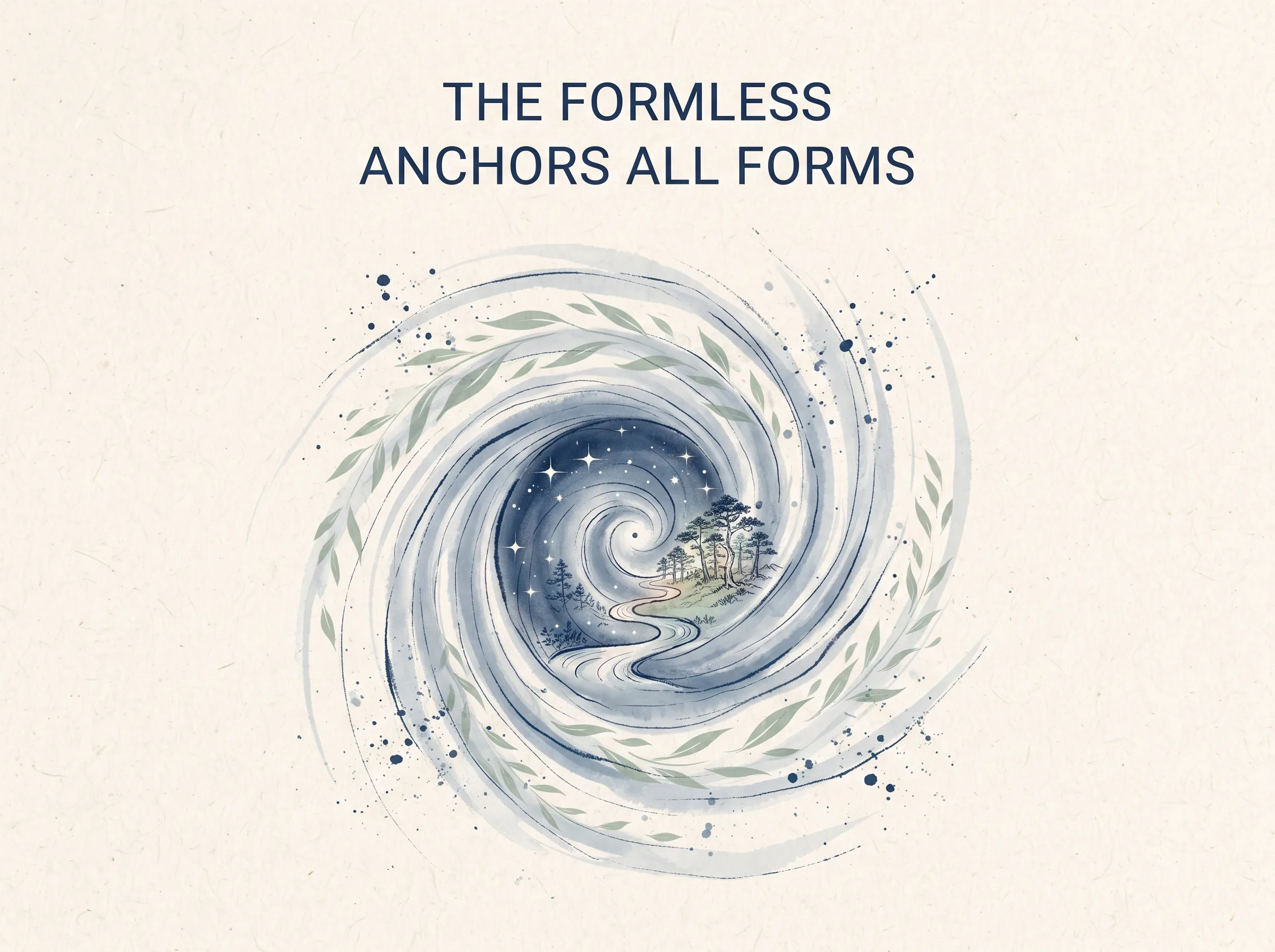
Laozi confronted this exact blind spot more than two thousand years ago. In the 14th chapter of the Dao De Jing, he wrote that the fundamental order of things cannot be captured by vision, hearing, or touch: "Look, and you cannot see it—this is called the invisible. Listen, and you cannot hear it—this is called the inaudible. Grasp, and you cannot hold it—this is called the intangible" [1]. These three resist analysis, and so they merge into one. The point is not that reality is hidden from us because it is mysterious. The point is that our senses, our first tools for knowing, have boundaries. What matters most lies just beyond those boundaries.
Continue with the deeper interpretation and practical application.
ChiDestiny members get access to the full analysis, modern applications, and the growing Chinese Wisdom Library.
Frequently Asked Questions
Is Laozi saying we should ignore what we can see? No. He is saying that what we can see is incomplete. The visible world is real, but it is not the whole story. Ignoring surface phenomena is just as unwise as treating them as sufficient. The practice is to see both: the event and the structure behind it.
Does Chapter 14 mean the Dao is unknowable? Not unknowable, but not capturable by ordinary perception alone. Laozi describes it as accessible through sustained observation and practice, not through sensory inspection or conceptual definitions. The Stanford Encyclopedia of Philosophy notes that various interpretive frameworks—metaphysical, cosmological, ethical—have been developed by scholars, reflecting the text's openness to multiple readings [2].
What exactly is meant by "ancient Dao" in modern terms? It refers not to historical customs but to stable patterns: the consistent shapes of human motivation, the recurring dynamics of cause and effect, the rhythms of growth and decline that appear across different eras and contexts. The specific wording in transmitted versions varies, but the directional meaning remains consistent across scholarly readings.
Can this way of thinking replace practical decision-making? No. It is a lens, not a substitute for action. The value is in making better-informed decisions—not by knowing everything, but by noticing what most people overlook: the deeper order beneath surface events.
Final Thought
True clarity is not seeing more surface data. It is perceiving what generates the data. Laozi's 14th chapter does not ask us to abandon the visible world. It asks us not to mistake it for the whole picture. When a problem arises, the useful question is not only what is happening but what invisible order is making this happen.
"Go to meet it, and you cannot see its beginning. Follow it, and you cannot see its end" [1]. The Dao is not a line to be traced from start to finish. It is a field to be inhabited. The more we learn to perceive what lies beneath the visible, the less we are swept by what merely appears.
To explore these themes from another angle, read our related reflection on Why True Strength Is Not Expanding Forever: Laozi’s Lesson on Knowing When to Close the Door.
For a deeper comparative examination of these ideas, explore our related study on The More You Try to Control Everything, the More You Lose It All — Laozi’s Warning for Modern Life.
Sources & Further Reading
[1] Tao Te Ching (Chapter 14) — trans. Wikisource. Available at
[2] Laozi — Stanford Encyclopedia of Philosophy (Fall 2024 Edition).
Further Reading (not cited directly in this article)
- The Dao De Jing has been translated and interpreted by numerous scholars, including Wing-Tsit Chan, D.C. Lau, and Stephen Mitchell. Different translations may vary in wording and emphasis, reflecting the textual complexity of the work.
- Additional manuscript traditions, including the Mawangdui silk texts and Guodian bamboo slips, offer variant readings that scholars continue to study for insights into the development of the text.






