
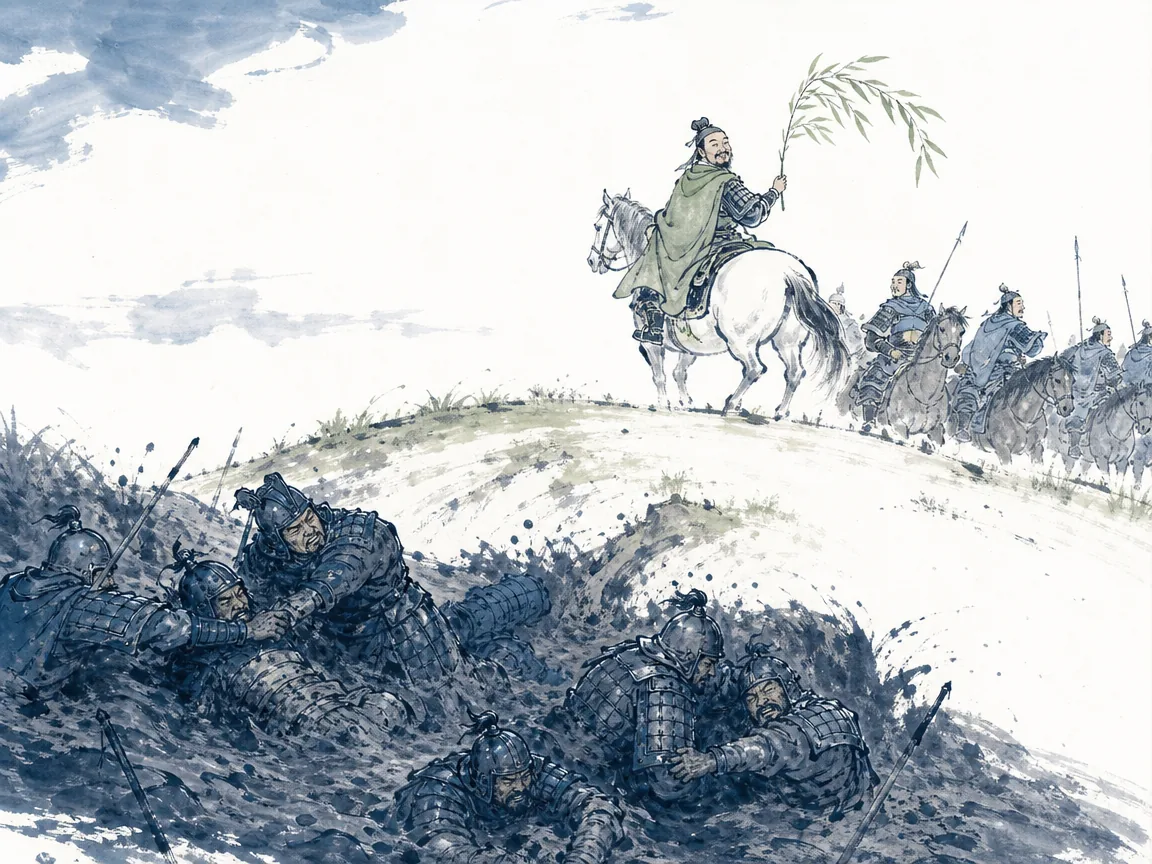
You've felt it before — the moment you realize you're in a fight you can't win. The argument with someone who refuses to listen. The project you joined because everyone else called it a once-in-a-lifetime opportunity. The competitor who keeps cutting prices below your cost. By the time awareness arrives, you're usually deep enough in that walking away feels like admitting defeat. So you keep fighting. And keep losing.
But what if the real strategic question wasn't how to win, but whether to enter the fight at all? This principle is central to Sun Tzu When Not to Fight.
Ancient Chinese thinkers, particularly within the tradition captured in Sun Tzu's Art of War, placed the decision of whether to engage above the decision of how to win. The most advanced form of strategic wisdom, in this view, is not winning a battle — it is recognizing and avoiding battles you should never have entered. This principle applies far beyond the battlefield, reaching into career decisions, business strategy, relationships, and the daily choices that shape where your energy and attention go.
Sun Tzu When Not to Fight: Why the Worst Failures Aren't About Losing
Most people understand failure as something that happens during a fight — poor execution, bad timing, a stronger opponent. But the deepest failures often happen before the fight begins, in the decision to enter a contest that was structurally unwinnable from the start.
Some games are rigged by design. A salary negotiation where the range was already fixed. A market where every advantage has been consolidated by incumbents. A relationship dynamic where one person holds all the leverage. In these situations, success depends less on your skill than on whether the structure favors you at all.
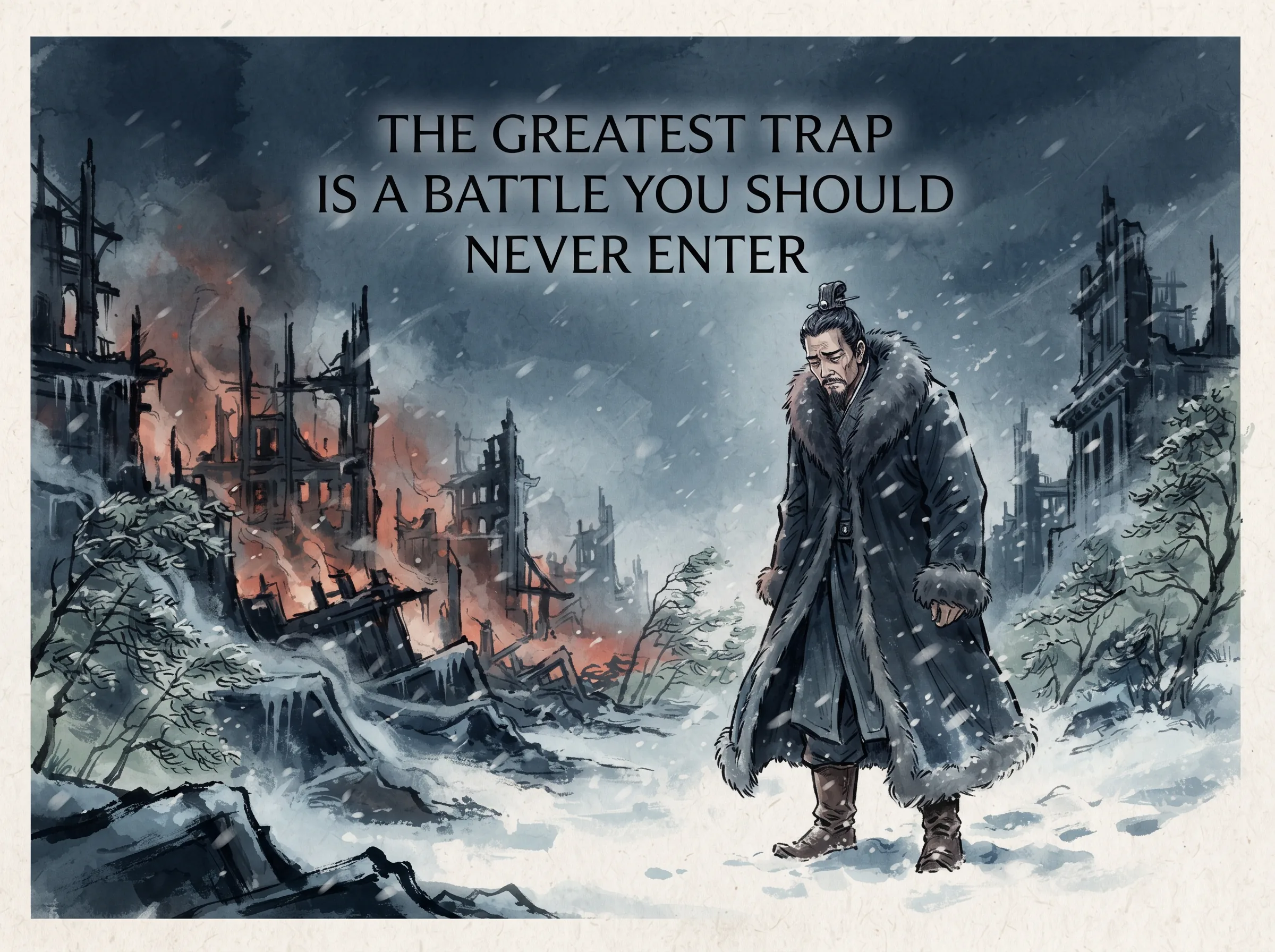
When the ground beneath you is tilted, no amount of better footing will help. The real mistake isn't losing — it's having committed resources, attention, and opportunity to a game where the architecture was never on your side.
Sun Tzu's Warning: The Art of Not Fighting
Sun Tzu's Art of War opens with a principle that should give anyone facing a high-stakes decision pause: war is a matter of life and death, a pathway of survival and ruin, and it demands careful examination [1]. The underlying idea is that some commitments carry costs so steep that the default position must be caution, not aggression.
Beyond this opening warning, the text repeatedly emphasizes calculating before acting. The tradition teaches that victory comes not from boldness in battle but from thorough assessment beforehand — of resources, of the opponent's strength, of terrain, and of whether the campaign can be sustained over time. True mastery, in this framework, is measured less by how many battles you win and more by how many harmful ones you avoid.
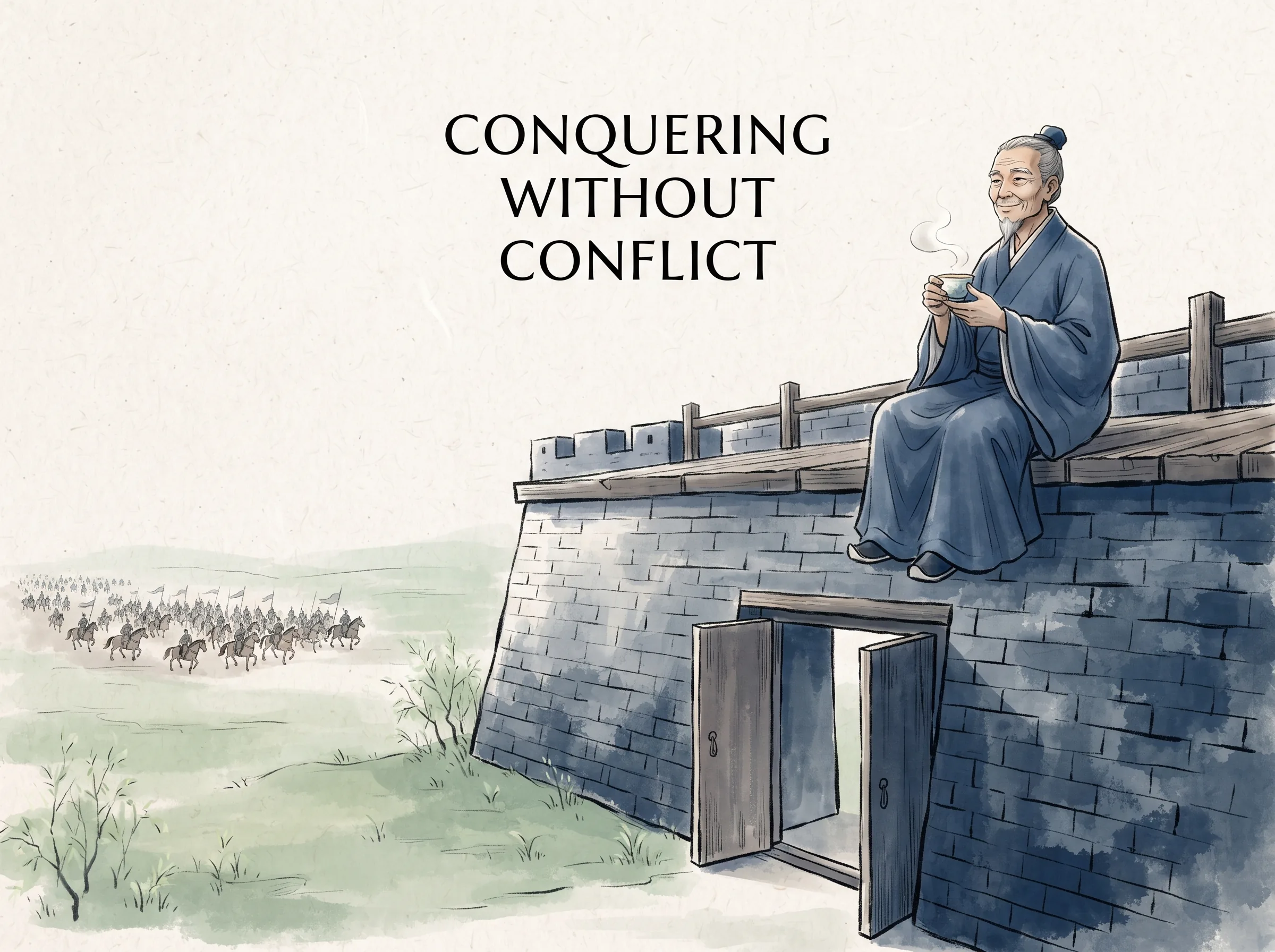
Ordinary thinking asks, "How do I win?" Strategic thinking asks, "Should I be playing this game?" Reversing that order — deciding to fight first and then figuring out how — is where costly mistakes are born.
The Psychology Behind Bad Entry Decisions
If the principle is so simple — don't enter fights you can't win — why do we do it anyway?
The answer lies in predictable patterns of human judgment. Cognitive science has identified two biases that make us especially vulnerable: overconfidence bias, the tendency to systematically overestimate our abilities and underestimate risks, and optimism bias, the tendency to recognize danger but discount how badly it could affect us personally. Together, these create a compounding illusion that pushes people into contests they are structurally unfit to play [1].
There is also the sunk-cost pull: once you've started down a path, walking away feels like waste. There is the identity trap: admitting you picked the wrong fight can feel like admitting you lack courage. And there is a subtle cultural bias that equates action with virtue and restraint with weakness — when in reality, the discipline to not engage is often the harder and rarer skill.
These impulses are not character flaws. They are built-in features of human cognition. Recognizing them is the first step toward making a different choice. For the original military treatise and commentary, read the complete strategic translation and classical commentary of Waging War: The Economic Burden, Swift Operations, and Foraging on the Enemy.
A Historical Warning: Napoleon's Russian Campaign
One of history's clearest examples of entering an unwinnable contest is Napoleon Bonaparte's invasion of Russia in 1812. At the time, Napoleon was widely regarded as the most formidable military leader in Europe. In June of that year, he assembled a force of approximately 615,000 troops — a staggering concentration of power — and crossed the Niemen River into Russian territory [1].
From the outside, this looked like overwhelming strength. In reality, the campaign was structured against him. Russia's vast territory meant that Napoleon's greatest asset — rapid, decisive battle — could not be brought to bear. Instead, Russian forces pursued a strategic retreat combined with scorched-earth tactics, destroying crops, bridges, and supplies as they withdrew and denying the French army anything of value [1].
By the third week of July, before the famous Russian winter even arrived, more than 80,000 French troops were already dead or seriously ill from diseases such as typhus and dysentery [1]. The Battle of Borodino in September was the bloodiest single day of the Napoleonic Wars, with around 300,000 men involved and roughly 80,000 killed or wounded [1]. And when the harsh winter set in during November, with temperatures dropping to -30°C, soldiers faced snow blindness, frostbite, and starvation [1]. Of the 615,000 who had crossed into Russia, fewer than 100,000 would stagger back across the border half a year later [1].
Napoleon was not defeated by a single battle or by the cold alone. He was defeated by a war whose structure — long supply lines, enormous territory, attrition over time — was designed to exhaust him. He brought his best qualities to a contest where those qualities counted for very little. The lesson is not that Napoleon was incompetent, but that even exceptional skill cannot compensate for entering a game that was never structured in your favor.
In modern life, equivalent traps appear when companies expand into unfamiliar markets, when professionals chase opportunities that look impressive but offer no structural advantage, or when people invest heavily in relationships that are fundamentally unbalanced. In each case, the structural conditions are what determine the outcome — not effort, talent, or determination.
Applying Ancient Wisdom to Modern Life
The principle behind Sun Tzu's Art of War — evaluate before you enter — translates directly into the domains where we make our most consequential decisions.
Career. Not every promotion, title, or opportunity deserves pursuit. A role may look attractive on the surface, but if the organizational culture, compensation structure, or power dynamics work against you, no amount of hard work will change the calculus. The question to ask is not "How do I get this?" but "Is this a game I'm built to win?"
Business. Some market opportunities are genuine; others are illusions created by hype, timing, or speculative fervor. Expanding into a category where you lack a structural advantage — whether that's distribution, expertise, or capital — is the commercial equivalent of marching into Russia. Distinguishing between a real opportunity and a trap requires honest assessment of resources, competitive positioning, and long-term sustainability.
Relationships. Certain dynamics are fundamentally unbalanced from the start. Recognizing this early — before emotional investment, shared history, or social pressure make exit feel impossible — is one of the most practical forms of self-protection.
Personal growth. Comparison is a game that is rigged by design. Social media, professional networks, and cultural narratives constantly present arenas where you are measured against standards you did not choose and conditions that favor others. Choosing your arena deliberately — and walking away from arenas that were never yours — is itself a form of growth.
The Parallel Wisdom of Charlie Munger
Centuries after Sun Tzu, the investor Charlie Munger articulated a remarkably similar insight using a different vocabulary. He advised thinking in reverse: rather than asking how to succeed, identify where failure is certain and avoid those paths entirely. The underlying logic is the same — survival comes from avoiding fatal mistakes, not from making brilliant moves.
In the Chinese strategic tradition, this is sometimes expressed as placing yourself beyond defeat before seeking victory. The idea is not passive caution. It is active preparation. You secure your position first. You reduce the chances of catastrophic error. You create conditions where, when an opportunity does arise, you are still standing to take it.
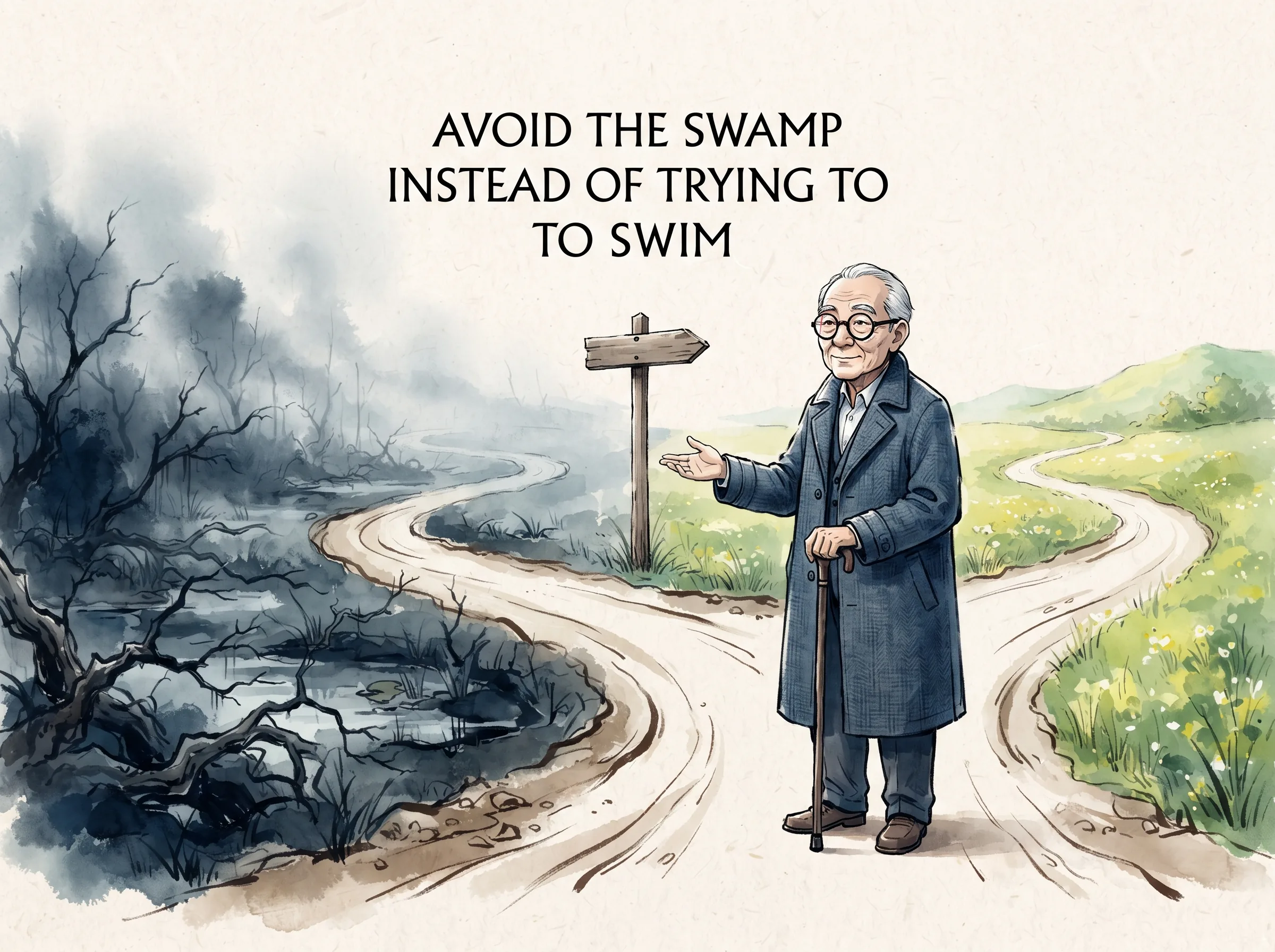
This is also why reduction — fewer decisions, higher-quality ones — is a discipline worth cultivating. Every commitment costs attention, energy, and opportunity. Each unnecessary battle drains resources that could be concentrated where they matter. The goal is not to avoid all difficulty, but to avoid chosen difficulty in contests where the odds are stacked against you.
Practical Takeaways
Applying this framework to daily life does not require monumental decisions. It requires a pause — a deliberate shift from reaction to assessment.
Before committing to any high-stakes decision, ask yourself: Should I be playing this game? This single question reframes everything that follows. If the answer is no, you have saved yourself from expenditure that would have been irreversible. If the answer is yes, you now enter with clearer eyes and a more realistic sense of what the fight will cost.
Consider four conditions that any serious decision should clear:
- Are your resources sufficient for the long haul, not just the opening phase?
- Is your opponent's strength being honestly assessed, or dismissed?
- Is the terrain — the structural conditions of the contest — something you can control or at least navigate effectively?
- Can you sustain this over time, or does it rely on a quick resolution that may not come?
Building the habit of strategic restraint is itself a competitive advantage. The ability to walk away from a losing game is rarer than the ability to fight through adversity — and in most cases, more valuable.
Frequently Asked Questions
Isn't avoiding a fight just another word for giving up?
Not necessarily. Giving up implies you entered a fight and then lost the will to continue. Avoiding a fight means you assessed the conditions before entering and chose not to participate. The difference is between surrender and strategy. One is a response to loss; the other is a decision made before loss becomes likely.
How do I know whether a situation is truly unwinnable or just difficult?
A difficult contest has structural conditions that are favorable or at least neutral to you — you have resources, skills, or positioning that give you a realistic chance. An unwinnable contest has structural conditions that work against you regardless of effort — the rules, the terrain, or the opponent's advantages are oriented toward your failure. The key question is not whether the task is hard, but whether the architecture of the situation favors you at all.
What if walking away isn't an option?
Sometimes you cannot simply leave — a contract, a relationship, a legal dispute, or a professional obligation may tie you in. In those cases, the principle shifts from avoiding the fight to minimizing the damage. Focus on defense, preserve your resources, and look for the narrowest path through rather than seeking a sweeping victory. The goal becomes survival and reduction of loss, not triumph.
Can entering a losing battle ever be worthwhile?
In some frameworks, yes. A strategically lost battle can sometimes serve a larger purpose — gathering intelligence, buying time, or demonstrating principle. But this requires intention, not accident. The danger is mistaking a poorly chosen fight for a meaningful sacrifice. If a battle is entered deliberately and its cost is understood, it can be part of a larger plan. If it is entered impulsively or out of pride, it is simply a loss.
Conclusion
The most dangerous mistake is not losing a battle — it is entering one you cannot win. Ancient Chinese strategic thought, as preserved in texts like the Art of War, places the question of whether to fight above the question of how to win. This is not a doctrine of passivity. It is a doctrine of clarity: assess before you commit, protect your resources, and enter only those contests where the conditions favor you.
Modern life presents countless opportunities to fight — professional rivalries, social comparisons, business competitions, personal conflicts. Most of them do not deserve your energy. The skill that matters most is not fighting harder, but choosing better.
Start by asking a simpler question before your next big decision: Is this a game I should be playing? You may find that the answer — and the freedom that comes with it — is more valuable than any single victory, reflecting the enduring wisdom of Sun Tzu When Not to Fight.
To explore these themes from another angle, read our related reflection on When the Fire Burns You First: Sun Tzu’s Warning on Borrowing Momentum.
For a deeper comparative examination of these ideas, explore our related study on The Game You’re Playing Isn’t What You Think.
Sources & Further Reading
[1] Napoleon's Invasion of Russia — World History Encyclopedia — Napoleon's Invasion of Russia – World History Encyclopedia — details on the scale, logistics, and outcomes of the 1812 campaign
Further Reading
- Sun Tzu, Art of War — foundational text on strategic assessment and the principle of cautious engagement
- Daniel Kahneman, Thinking, Fast and Slow — exploration of overconfidence bias, optimism bias, and systematic judgment errors
- Charlie Munger, Poor Charlie's Almanack — applications of inversion thinking and the value of avoiding fatal mistakes
Prefer the complete edition?
Read the full text in a beautifully designed bilingual digital edition.






