
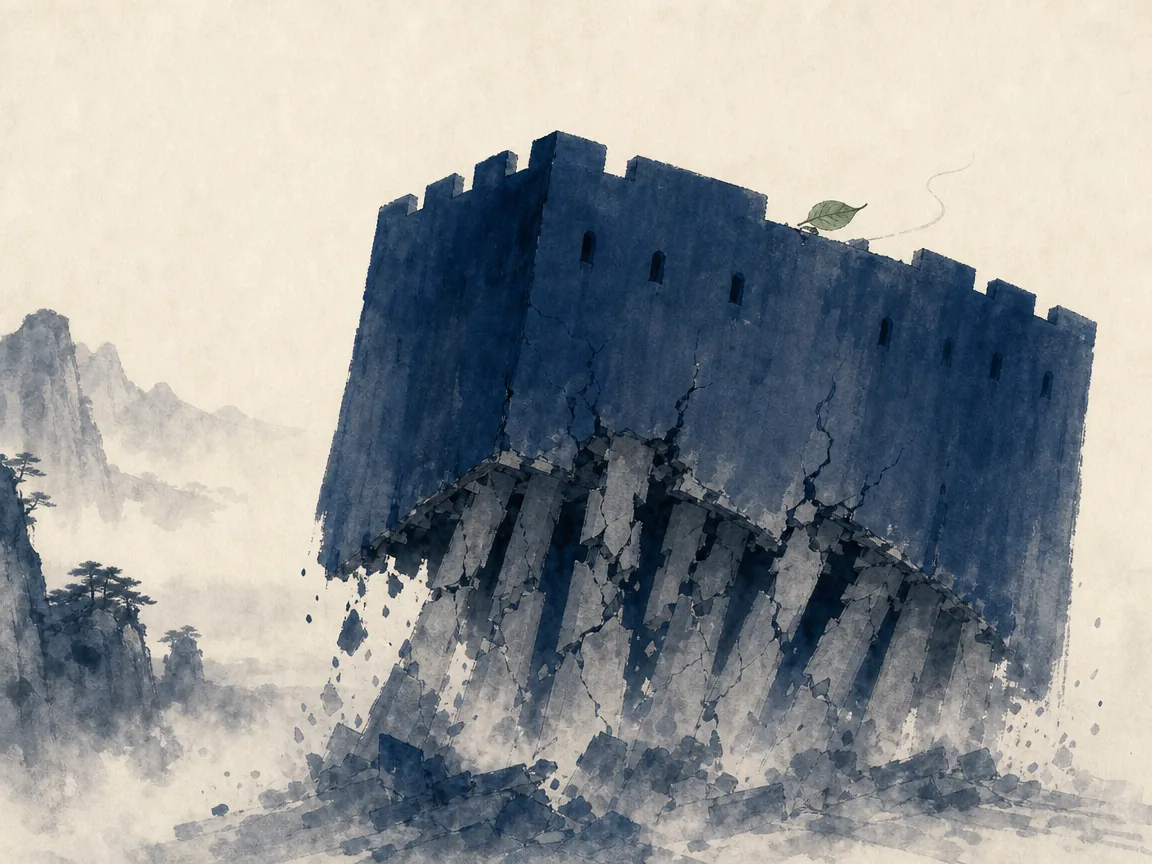
Strong organizations often collapse in ways that make no sense to the people watching them. A company that seemed untouchable one quarter can stumble within months. A leader who projected absolute confidence can make decisions that feel like they came from nowhere. We tend to explain this by pointing to bad strategy, hidden flaws, or sudden market shifts — as if strength alone should have been enough to sustain itself.
But there is another dimension at work, one that ancient Chinese strategists understood centuries before modern management theory had names for it. Sun Tzu, writing roughly 2,500 years ago in what is now known as the Art of War (Sunzi Bingfa), identified something that most observers miss: the energy rhythm of an opponent, what he called qi (气). This is not a metaphor for emotion or morale in the casual sense. It is a dynamic curve — a measurable shift in attention, judgment, resilience, and reaction speed that changes from moment to moment, often without the person experiencing it realizing it—a foundational perspective explored in Sun Tzu Chapter 22 Strategy.
Understanding qi changes how you read competition. Instead of asking only "how strong is my opponent?" you begin to ask "where on their energy curve is my opponent right now?" The answer to that second question often explains things the first question cannot — including why the strongest opponents sometimes fall without warning, and why the smartest response is rarely to push harder but to wait for the right beat.
Sun Tzu Chapter 22 Strategy: What Sun Tzu Meant by Qi (气)
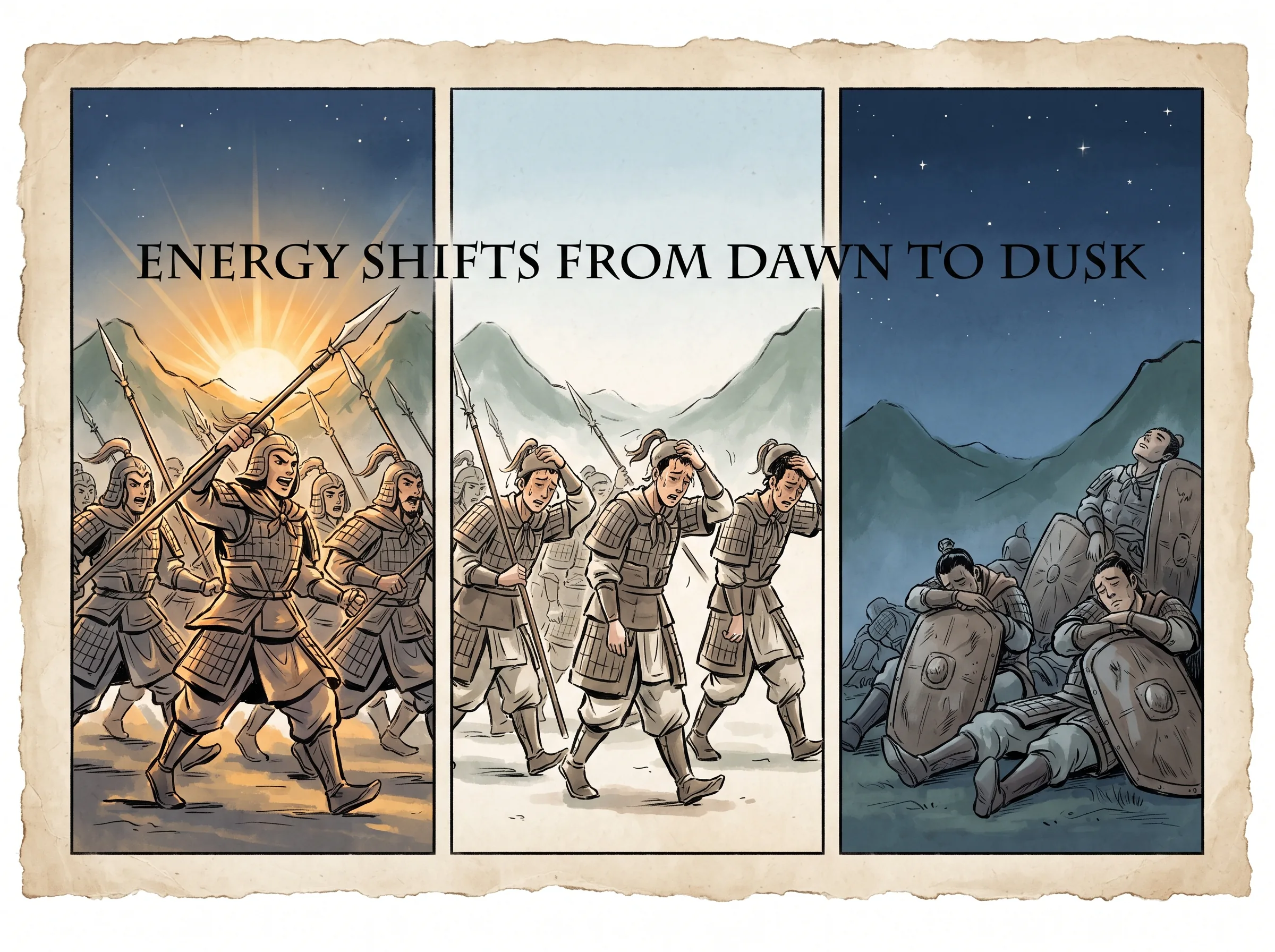
The passage most often cited on this topic comes from Sun Tzu Chapter 22 Strategy of the Art of War, known as the Military Contest chapter. The text reads: "The morale of an army at dawn is sharp and keen; at midday it grows sluggish; by evening it tends toward retreat. Therefore the skilled commander avoids the enemy when their spirit is sharp, strikes when it is sluggish, and targets it when it is retreating" (from the classical maxim: "avoid their keen spirit, strike when they grow sluggish and retreat; this is the management of morale" — bì qí ruì qì, jī qí duò guī, cǐ zhì qì zhě yě, 避其锐气,击其惰归,此治气者也). The full passage begins with the observation that "the qi of an army can be stripped away; the will of a general can be shaken" [1].
The three phases — morning sharpness (zhāo qì ruì, 朝气锐), midday sluggishness (zhòu qì duò, 昼气惰), and evening weariness (mù qì guī, 暮气归) — describe a dynamic curve, not a fixed trait. A team that makes brilliant decisions at 9 a.m. may make costly ones by 4 p.m., even though nothing externally has changed. A competitor that seems invincible in one season may falter in the next, not because their resources shrank, but because their qi shifted.
What matters is that qi tracks multiple variables at once: attention span, judgment quality, patience, willingness to take risks, and the ability to absorb setbacks. When qi is high, a strong opponent can absorb pressure and respond effectively. When qi has declined, the same opponent may crumble under circumstances that would have seemed trivial hours earlier. The curve is not about motivation — it is about the actual capacity to think clearly and act well under pressure.
This is why static analysis often fails. Measuring resources — revenue, headcount, market share — tells you what an opponent has. Reading their qi tells you what they can do with it right now.
Continue with the deeper interpretation and practical application.
ChiDestiny members get access to the full analysis, modern applications, and the growing Chinese Wisdom Library.
FAQ
Is "qi" in Sun Tzu the same as the concept of energy in martial arts or meditation? The term qi (气) is used in many Chinese traditions and carries different meanings depending on context. In the Art of War, scholars generally understand it as the collective energy, morale, and decision-making capacity of an army at a given moment — not as a mystical force but as a practical, observable pattern. It overlaps with related concepts in other traditions, but Sun Tzu's usage is specifically strategic.
Can I use this framework in business without thinking of it as "war"? Yes. The underlying principle — reading energy rhythms rather than just measuring static strength — applies to any competitive situation. Business strategy, negotiations, and even personal goal-setting involve the same dynamics of timing, escalation, and restraint that Sun Tzu described. The military origin of the text does not limit its applicability.
What should I do if I realize I am on the downward slope of my own energy curve? The framework suggests two options: compress the encounter so it ends before the decline worsens, or delay it until conditions improve. In practice, this means recognizing when you are operating below your best judgment and either accelerating toward closure or stepping back to restore capacity — rather than pushing forward with full confidence while making decisions you would not make at your peak.
Does Sun Tzu say anything about reading your own qi, or only your opponent's? The text primarily addresses reading the opponent's energy. However, the observation that people are unreliable judges of their own state is implicit throughout the work. The practical implication is that you should build external checkpoints — feedback from others, objective measures of decision quality, periodic reviews — rather than relying solely on your own sense of readiness.
To explore these themes from another angle, read our related reflection on Why the Best Leaders Stop Searching for Heroes.
For a deeper comparative examination of these ideas, explore our related study on Why Plans Fail After They Start: Sun Tzu on Control in Motion.
Sources & Further Reading
[1] The Art of War (《孙子兵法》) – Chinese Wikisource — Original Chinese text of the Art of War, including the Military Contest (Jūn Zhēng, 军争) chapter containing the passages on morale (qì, 气), regulating psychological rhythm (zhì qì, 治气), and tactical rules on retreating forces.
[2] Apple Reinvents the Phone with iPhone – Apple — Apple's official press release announcing the iPhone on January 9, 2007, referenced for its historical timeline context.
Further Reading
-
Sun Tzu: The Art of War — Multiple English translations are available, including those by Samuel B. Griffith and Thomas Cleary. The Military Contest chapter (Chapter 7) is the primary source for the concepts discussed here.
-
Studies on organizational decision-making and cognitive fatigue offer modern parallels to the ancient observation about declining judgment quality under sustained pressure.
-
The Records of the Three Kingdoms (Sanguozhi) contains accounts of the Battle of Mount Dingjun and the role of advisors such as Fa Zheng, though specific details about this engagement are subject to scholarly interpretation.






