
Why do the most capable organizations often look unpolished? Why does the wisest person in the room sometimes seem awkward in conversation? These questions may sound counterintuitive, especially in an age that rewards visibility, personal branding, and the careful curation of seamless appearances. Yet over two thousand years ago, Laozi wrote one of the most quietly radical chapters in the Dao De Jing — one that reframes how we judge maturity, success, and strength.
In Daodejing Chapter 45 opens with five paradoxes that turn our ordinary intuitions upside down:
"Great perfection appears flawed, yet its use is never impaired. Great fullness appears empty, yet its use is inexhaustible. Great straightness appears bent; great skill appears clumsy; great eloquence appears stammering." (Dà chéng ruò quē, qí yòng bù bì; dà yíng ruò chōng, qí yòng bù qióng; dà zhí ruò qū; dà qiǎo ruò zhuō; dà biàn ruò nè, 大成若缺,其用不弊;大盈若冲,其用不穷;大直若屈;大巧若拙;大辩若讷。)[1]
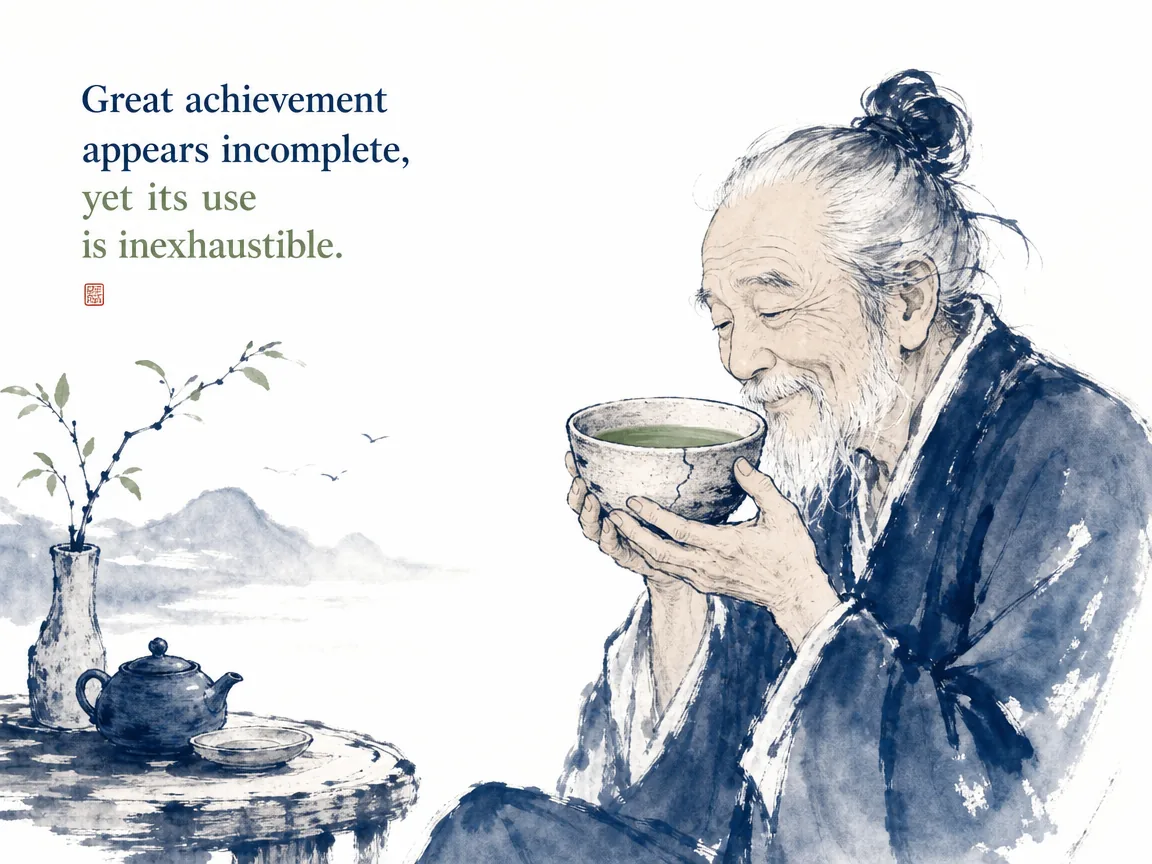
Great achievement appears incomplete. Great fullness appears empty. Great straightness appears bent. Great skill appears clumsy. Great eloquence appears hesitant.
The crucial word here is "as if" (ruò, 若), which means "as if" or "appears to be" — not "is." Laozi is not saying that great achievement is incomplete, nor that a truly wise person is awkward. He is making a sharper observation: the outward appearance of mature, durable success often runs counter to what we instinctively expect. And that observation carries real weight for how we build, lead, and measure success today.
The Chinese philosopher Wang Bi, writing his celebrated commentary two centuries later, explained the first paradox this way: "Forms itself according to the situation, does not fix one form, therefore it appears incomplete" [1]. True greatness, on this reading, does not seal itself into a single finished shape. It remains open to what comes next.
That openness is exactly what makes it durable.
Daodejing Chapter 45: Why We Obsess Over Surface Perfection
There is a reason the paradox feels so counterintuitive. Surface perfection is easy to display; real function takes time to verify.
A crack in a vase is visible instantly. Whether that vase can withstand shifts in temperature, handling, and use over ten years requires patience. A speech sounds fluent in the moment. Whether the speaker's conclusions hold up under scrutiny over months or years is another question entirely. A policy can be written to cover every anticipated scenario. Whether it produces new distortions once applied to messy reality demands observation over time.
In organizations, this gap between appearance and endurance plays out repeatedly. Companies often respond to uncertainty by building increasingly rigorous processes — tighter controls, denser checklists, more comprehensive metrics. At first, this reduces visible chaos. But when conditions shift, organizations built to eliminate every uncertainty become brittle. Line workers may notice that established procedures no longer fit the reality they face, yet lack the authority to adjust them. The process remains formally complete; its function has already begun to decay.
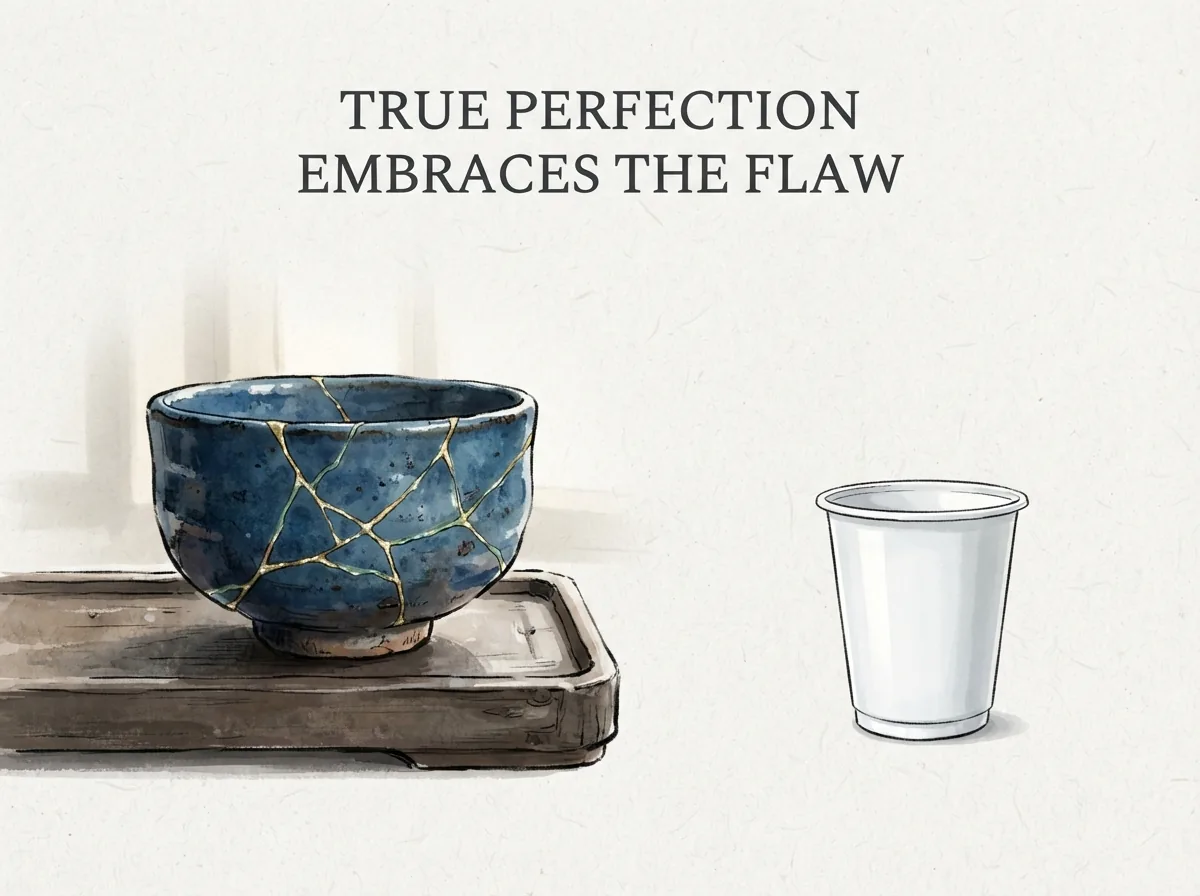
On a personal level, the perfectionist image exacts a similar cost. Maintaining the appearance of having everything together requires constant self-defence — every mistake must be explained away, every ambiguity concealed. That defensive labour drains energy that could otherwise go toward building real capability.
This tension is partly what connects Daodejing Chapter 45 to the previous chapter. Chapter 44 warns that "knowing when to stop prevents danger" and that the endless pursuit of more eventually turns gain into loss. But once a person or organization has stopped chasing excess, a new psychological hurdle appears: Is it acceptable to look unfinished? This is the deeper question Chapter 45 answers. Laozi is not simply telling us to be humble. He is reframing what "completion" actually means.
Continue with the deeper interpretation and practical application.
ChiDestiny members get access to the full analysis, modern applications, and the growing Chinese Wisdom Library.
FAQ
Does Laozi mean that great achievement always looks bad? No. The word "as if" (ruò, 若) means "appears as if," not "is." Laozi is observing that mature, durable achievement often does not match the polished appearance we expect. The appearance of incompleteness serves a purpose — it preserves the capacity to adapt — but without genuine function, what looks incomplete is simply unfinished.
How do I know the difference between genuine openness and simple negligence? The test is function over time. Openness that preserves the capacity to respond and endure is a sign of depth. Negligence leaves the structure unable to carry its intended load. Look at whether the system continues to work under changing conditions, not just whether it looks tidy in ideal circumstances.
Can this apply to personal relationships as well? Yes. Relationships that demand flawless consistency from each partner often collapse under the weight of performance. Those that allow space for growth, correction, and honest limitation tend to endure. The principle is the same: appearance of seamlessness is not the measure of lasting quality.
Is this just an excuse for lowering standards? No. Laozi repeatedly grounds his paradoxes in function (用). The standard remains high — the bar simply shifts from visual perfection to real, sustained effectiveness. Something that looks rough but works reliably over years is closer to great achievement (dà chéng, 大成) than something that looks flawless and breaks within months.
True maturity is not about appearing flawless. It is about retaining the capacity to adapt, to respond, and to endure. Laozi's paradox reminds us that the most sustainable success often does not announce itself with polish — it reveals itself with time.
Consider where in your own work or organisation you have confused closure with completion. Where have you sealed something off so tightly that it can no longer breathe? The answer may point you toward the next step: not adding more, but preserving the space that lets what you build keep working.
To explore these themes from another angle, read our related reflection on When You Feel Strongest, You May Be Weakest: Ancient Wisdom for Seeing Change Early.
For a deeper comparative examination of these ideas, explore our related study on The Surprising Power of Going Back: What Laozi Knew About Real Change.
Sources & Further Reading
[1] Digital Classic Website — Laozi Daodejing, Chapter 45 with Wang Bi Commentary (老子道德經 第四十五章 王弼注) — Wang Bi received text and commentary on "Great perfection seems flawed, great fullness seems empty" (大成若缺,大盈若沖).
Further Reading
- Dao De Jing, Chapter 15 — on "not desiring fullness" and the capacity for renewal.
- Dao De Jing, Chapter 44 — on knowing when to stop and the danger of endless accumulation.
- Dao De Jing, Chapter 11 — on the functional importance of emptiness and space.
- Historical and textual studies on the Mawangdui silk texts and their significance for interpreting Chapter 45 variants, including the differing readings of fullness (yíng, 盈) and eloquence (biàn, 辩).







[…] The wisdom of Daodejing Chapter 45 Translation addresses a fundamental human dynamic: how we navigate ambition, quietude, and the natural flow of existence. In the classical tradition, this passage serves as both a metaphysical mirror and a practical compass for daily living and leadership. Explore how this principle translates into contemporary daily life in our guide to Why Great Achievement Looks Imperfect — Laozi’s Lesson for Modern Success. […]