
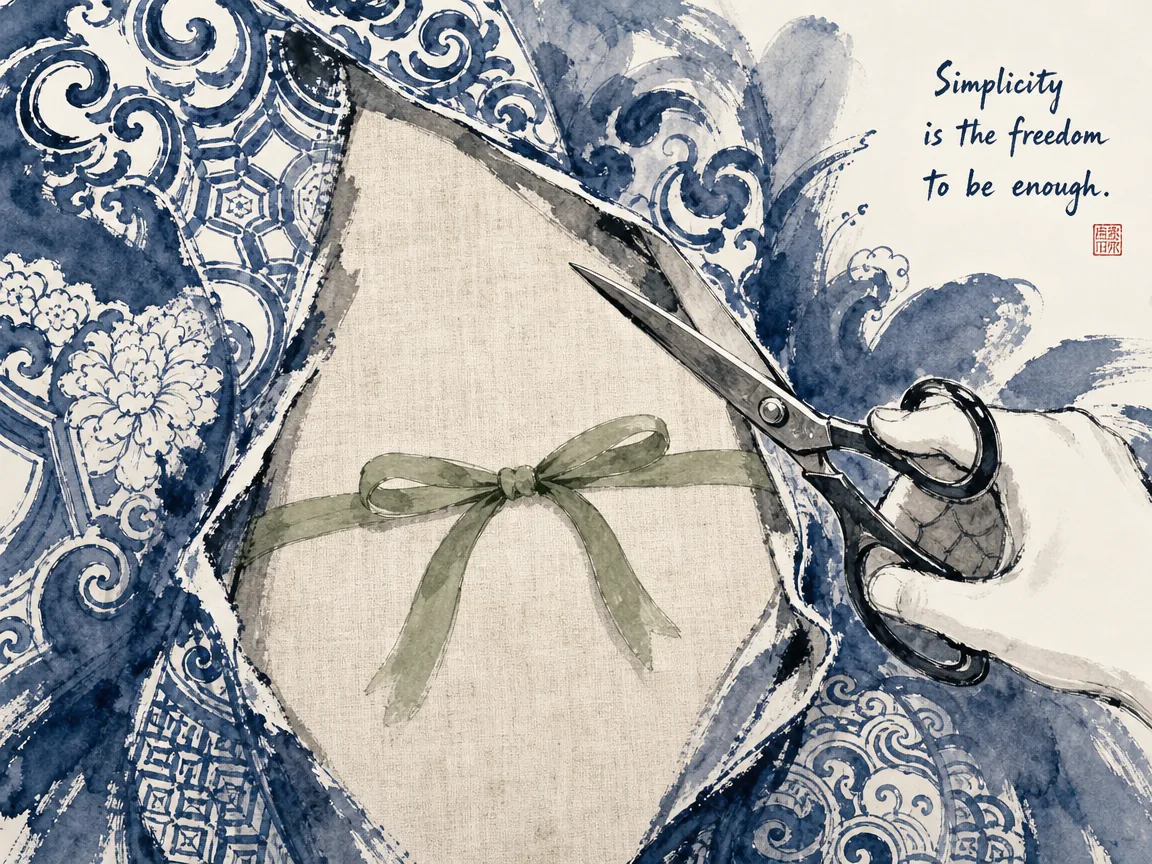
Have you ever noticed that some societies loudly champion integrity while corruption thrives just beneath the surface? That families repeatedly invoke filial duty while generational bonds quietly fracture? That organizations celebrate dedication while burnout becomes the norm? We tend to take such virtue-slogans at face value — as proof that a culture is healthy, or as encouragement to try harder to be better. But there is another way of reading these signals, one that has been puzzling and provoking readers for centuries.
A traditional reading of the Dao De Jing — a text whose received version comes down to us largely through the commentaries of the third-century CE scholar Wang Bi — offers one of the sharpest diagnostics for this paradox. Its eighteenth chapter does something unusual: it places four virtues we instinctively praise — benevolence, wisdom, filial devotion, loyalty — inside conditional clauses that suggest they are not the cause of a society's health, but rather evidence of its loss. The text does not argue that these qualities are bad. It asks a quieter, more unsettling question: if these virtues are so important, why do they need to be shouted about so constantly? This principle is central to Daodejing Chapter 19.
This is not a cynical reading. It is a diagnostic one. The goal is not to dismiss virtue, but to learn how to read virtue-slogans as symptoms — indicators of what may already be missing beneath the surface.
Daodejing Chapter 19: When the Great Way Fails, Benevolence and Righteousness Appear
The opening line of the chapter runs, in a widely circulated traditional rendering: "When the Great Way is abandoned, benevolence and righteousness appear." The term often translated as the "Great Way" (dao) refers not to a moral rule or a policy platform, but to the natural, unforced order of things — the way relationships, communities, and institutions function when they are genuinely aligned. In such an order, people cooperate, trust, and care without needing to be told to. Virtue is embedded in the structure of daily life, not announced from above.
The logic of the passage is straightforward: when the root order holds, the patch is unnecessary. Health does not require constant medical intervention. When medication becomes the default, it is usually because the body is already ill. Similarly, ren yi — often translated as "benevolence and righteousness" — becomes socially prominent only when the natural relational order has weakened. This does not mean that benevolence and righteousness are worthless. It means they occupy a different level (céngjí, 层级) than the deep, structural harmony they are called upon to compensate for.
A modern parallel is easy to see. A company that must constantly mandate "integrity" through compliance training, mission statements, and performance reviews may be addressing a symptom — a compensation structure or incentive system that quietly rewards cutthroat behavior. A community that endlessly promotes "tolerance" in banners and bulletins may be papering over divisions that have never been honestly confronted. The virtue is real. The need to advertise it relentlessly is the signal worth examining.
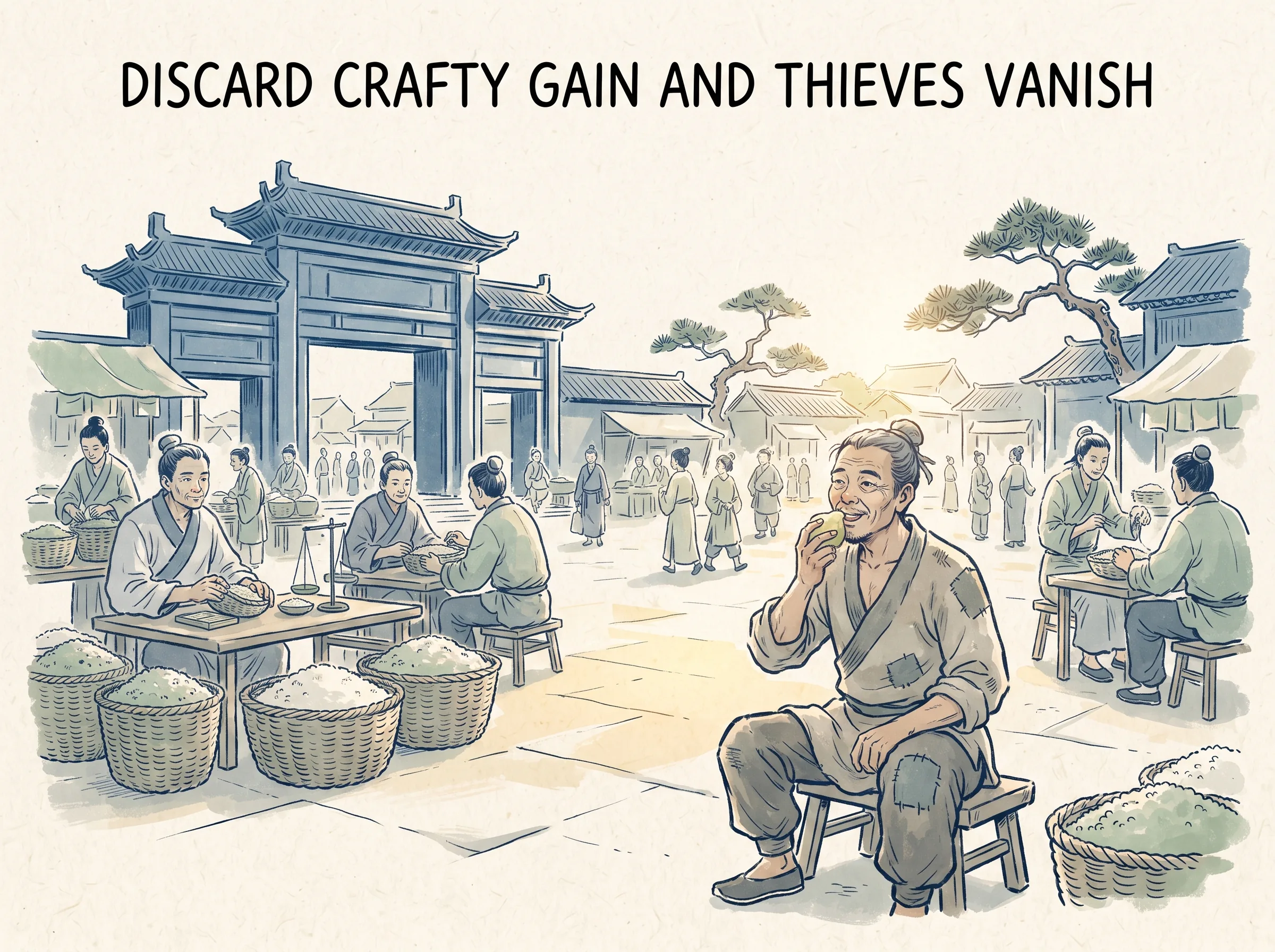
What the passage invites us to ask is not "Is this virtue good?" — it almost certainly is — but "Why does this virtue need to be so loudly, so urgently, so constantly promoted?" The gap between the slogan and the lived reality is where the diagnosis begins.
Continue with the deeper interpretation and practical application.
ChiDestiny members get access to the full analysis, modern applications, and the growing Chinese Wisdom Library.
Frequently Asked Questions
Is Laozi saying that virtues like honesty and loyalty are bad?
No. The traditional reading — and the one supported by surrounding passages in the Dao De Jing — is that Laozi does not reject virtue. He argues that virtue is most authentic when it arises naturally from a healthy underlying order, rather than being enforced through slogans and moral pressure. The concern is with virtue-as-patch, not virtue itself.
Does this mean we should stop talking about moral values altogether?
Not at all. The chapter acknowledges that benevolence, wisdom, devotion, and loyalty have real value, especially in times of disorder. The point is to avoid mistaking the temporary remedy for the permanent condition. A society that relies exclusively on virtue-slogans without addressing the structures that make those slogans necessary is treating symptoms while ignoring the disease.
How do I apply this insight without becoming cynical or morally indifferent?
The diagnostic is meant to deepen moral attention, not replace it. Cynicism says "virtue is fake." This reading says "virtue is real, but its prominence may reveal what is missing." The difference matters. One leads to withdrawal. The other leads to clearer action — addressing the root conditions so that virtues can return to their natural, unforced state.
Is this interpretation consistent across scholarly traditions?
Interpretations of the Dao De Jing vary, and ethical readings in particular are debated among scholars. The reading presented here — that the chapter diagnoses virtue as a response to prior disorder rather than rejecting virtue outright — is one widely held among Daoist interpreters, but it is not the only one. The text itself is dense and allows for multiple layers of meaning.
Conclusion
A society that constantly preaches virtues like honesty, loyalty, and kindness is not necessarily a hypocritical one. It may be a society that has lost the deeper order these virtues were meant to reflect. The Dao De Jing does not mock those virtues. It asks us to look past their announcement and examine what makes the announcement necessary.
The task is not to replace virtue with skepticism, but to add a diagnostic layer to moral life — to ask, alongside any appeal to goodness, what conditions would make such an appeal unnecessary. When those conditions are met, virtues do not disappear. They simply stop being slogans and start being ordinary.
The next time you encounter a culture, organization, or relationship that insists loudly on a particular virtue, consider letting the insistence disturb you — not into cynicism, but into curiosity. Look for the root. The deepest order is rarely the loudest one, reflecting the enduring wisdom of Daodejing Chapter 19.
Discover the historical and philosophical roots in the classical foundation in On True and False Virtue: High Virtue Does Not Cling to Form.
For a deeper comparative examination of these ideas, explore our related study on Cultivating Observation: Firmly Rooted Virtue That Cannot Be Uprooted.
Sources & Further Reading
[1] Laozi | Stanford Encyclopedia of Philosophy — scholarly overview of the Dao De Jing, its textual history, and key interpretive debates
[2] Dao De Jing (Chinese Text Project) — parallel-text edition of the received version
[3] The Project Gutenberg eBook of Dao De Jing — translation and introduction discussing textual traditions and the Wang Bi version






